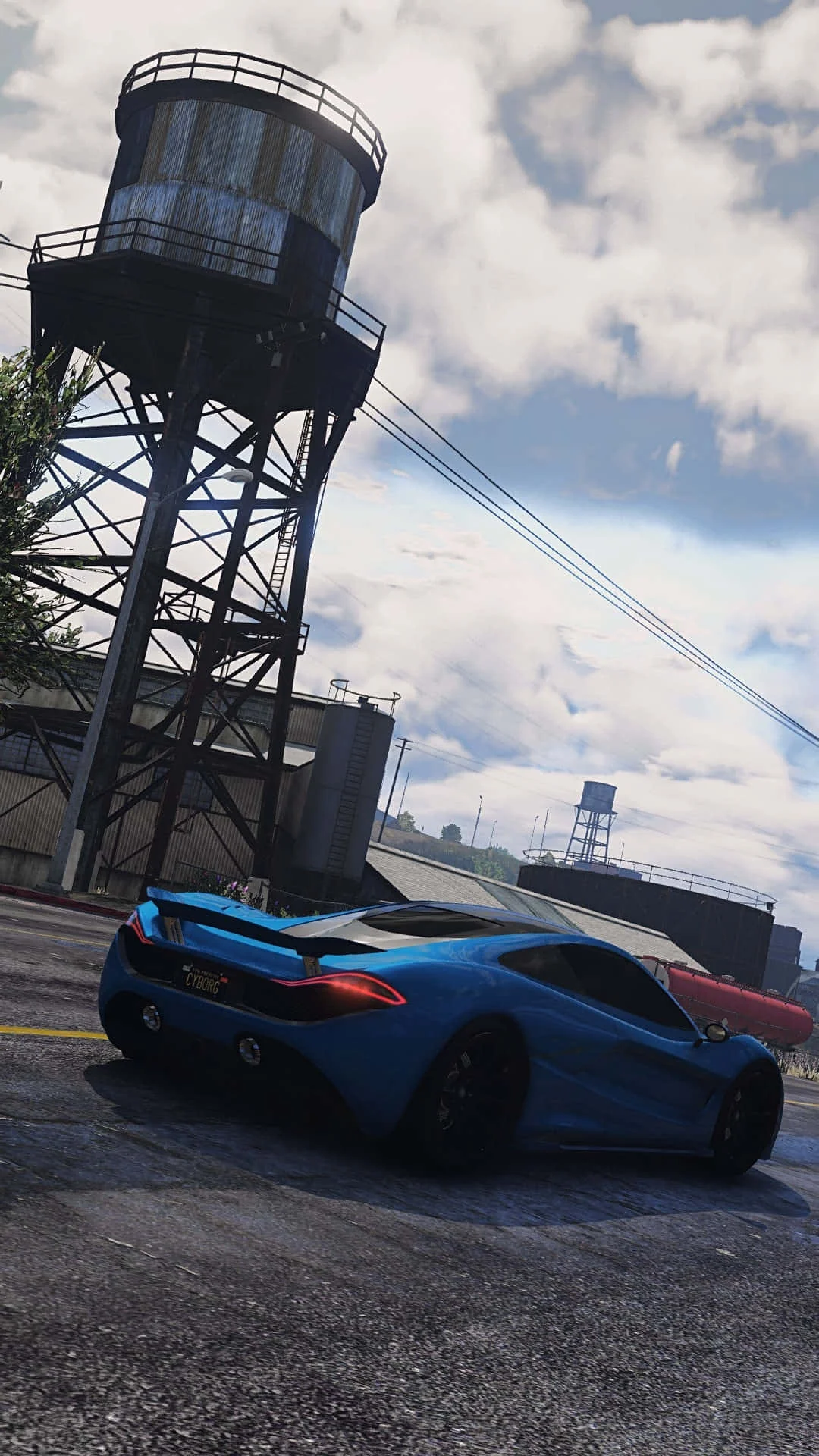
Fivem
FPS performance data for different CPU and GPU combinations
Play on customized dedicated servers with FiveM, the ultimate multiplayer modification framework for Grand Theft Auto V.
Minimum Requirements
- CPU: Intel Core i5-3470 / AMD X8 FX-8350
- GPU: NVIDIA GTX 660 2GB / AMD HD 7870 2GB
- RAM: 8 GB
- Storage: 72 GB (Base Game) + 20 GB (Mod Cache)
FPS Performance Dashboard
Compare FPS performance across different hardware configurations. Add systems to see how they perform at various resolutions and quality settings.
About Fivem
FiveM is not really a game in the usual sense, and that distinction matters for every number on this page. It is the Cfx.re multiplayer modification framework for Grand Theft Auto V, the platform that turned Rockstar's 2015 PC port into the most-played roleplay ecosystem on the internet, with servers like NoPixel drawing more concurrent viewers on Twitch than most AAA launches. Since Rockstar brought the Cfx.re team in-house in 2023, FiveM is officially sanctioned, but the hardware reality is unchanged: you are running a decade-old RAGE engine, heavily modified by server owners you have never met, on scripts of wildly varying quality. Across 3,707 measured CPU and GPU combinations in our database, the average system records 101 FPS at 1080p Ultra, 66 FPS at 1440p Ultra, and 37 FPS at 4K Ultra. The fastest combinations reach 402 FPS at 1080p Low; the slowest crawl at 23 FPS at 1080p Ultra. That 17x spread between ceiling and floor is the widest in our library for a game this old, and it tells you everything: FiveM performance is a hardware question wrapped inside a server question.
The RAGE engine, modded past recognition
Underneath everything, FiveM runs on Rockstar Advanced Game Engine, the same technology as GTA V's single player. That engine was well optimized for 2015 hardware, and at its core it still is: Los Santos at stock settings is light work for any modern GPU. The complication is that almost nobody plays stock. Roleplay servers layer on custom maps, custom vehicles, custom clothing packs, voice chat over Mumble or PMA-Voice, and hundreds of Lua and JavaScript resources that execute every frame. The base engine's efficiency is real, but it is the floor, not the experience.
The practical consequence is a game that is CPU-bound far more often than its age suggests. The engine's simulation, traffic, pedestrian AI, and script execution lean hard on single-thread performance and cache, the same profile as GTA V but amplified by server resources that were never profiled by a professional optimization team. A 32-player drift server with light scripts feels like GTA V. A 200-player roleplay server at peak hour, with custom interiors streamed in and police pursuit scripts firing, behaves like a different and much heavier game. Frame rate on the same rig can halve between the two.
Memory is the second pillar, and here FiveM is genuinely demanding in a way the base game never was. Custom asset packs live in RAM, the client caches streamed content aggressively, and 16 GB is the practical floor for smooth play on modded servers. Players on 8 GB systems experience the hitching and texture pop that the community blames on servers but that usually starts at home. Fast dual-channel DDR5 helps measurably, because the engine's streaming system is bandwidth-hungry. The GPU, at 1080p with anything close to stock visuals, is the third priority. It only takes the lead at higher resolutions or when a server piles on high-resolution texture packs and NVE-style visual overhauls.
One more hardware note that catches people: storage. FiveM downloads server assets constantly, and its cache directory grows without bound if you let it. An NVMe SSD does not just shorten load screens, it reduces the micro-stutter when the client streams new content mid-session. This is one of the cheapest real upgrades for the game.
1080p: the average lies in both directions
At 1920x1080, the 101 FPS average at Ultra sounds comfortable, and on light servers it is. Most modern gaming PCs will hold that number and well beyond on stock or lightly modded servers. But the average conceals the two tails that define actual FiveM play. At the top, the 402 FPS ceiling at Low settings shows how much headroom the engine has when scripts stay out of the way, and competitive players on low-pop servers chasing 240Hz monitor refresh rates genuinely use it. At the bottom, the 23 FPS floor at Ultra is what heavy roleplay servers do to weak systems: custom assets, high entity counts, and unoptimized scripts drag frame rate down until the game stutters through every drive through Legion Square.
The measured recipe for good 1080p play is consistent across our data: strong single-thread CPU performance first, 16 GB of fast RAM in dual channel second, and a mid-range GPU third. That ordering is the reverse of what most generic gaming PC build advice suggests, and it is the single most common mistake FiveM players make. A graphics card upgrade for a 1080p FiveM rig with an old quad-core and 8 GB of RAM buys almost nothing. A CPU upgrade on that same rig transforms it.
1440p and 4K: where the GPU earns its keep
At 2560x1440 the average falls to 66 FPS at Ultra, and the component balance shifts in a predictable way. The graphics card takes a real share of the constraint for the first time, though the CPU never stops mattering on busy servers. Upper-mid-range cards paired with strong processors hold 60 FPS here comfortably. Builds that spent everything on the GPU and kept a weak processor still stutter in crowded roleplay scenes, because no amount of VRAM fixes a script that executes slowly.
At 3840x2160 the 37 FPS average at Ultra makes the graphics card the primary bottleneck for most builds, and a high-end card becomes genuinely necessary. This is one of the few scenarios in FiveM where GPU spending is the right first answer. The honest message from the data, though, is that 4K is a screenshot and cruising resolution for this game. Serious roleplay and any competitive driving or shooting happen at 1080p or 1440p with high refresh, and the players who matter on your server are running exactly that. Upscaling via FSR helps at both higher resolutions if your server allows it, recovering a meaningful slice of frame rate for minimal image cost at 1440p and 4K.
If you are weighing a 144Hz or 240Hz monitor purchase for FiveM, the data supports it at 1080p, where the engine's high ceiling is reachable on strong hardware. At 1440p, 144Hz is the realistic target. At 4K, high refresh is flagship-only territory, and even there the server's script load will interrupt smoothness before your panel's refresh rate does.
Settings: what actually moves the needle
FiveM's graphics menu is GTA V's graphics menu, plus whatever the server adds, and the options split cleanly into CPU-side and GPU-side costs. Knowing which is which matters because the game is usually CPU-bound.
The CPU-side reductions recover the most real performance on busy servers. Extended distance scaling and population density are the first things to lower: they control how much of the world the processor simulates and how many draw calls it prepares, and they cost the engine more than any shader option. Shadow quality at High rather than Very High, and reflection quality at High rather than Ultra, are the next tier, expensive and barely visible in actual play. Grass quality is a well-known frame thief in GTA V and remains one here; High is the sweet spot.
On the GPU side, MSAA is the expensive one. 4x MSAA looks lovely and costs a fortune; FXAA alone, or 2x MSAA with FXAA, is the sensible trade. Post FX at High keeps most visual effects while skipping the heaviest passes. One setting to leave alone unless you know why you are touching it: frame scaling mode, which renders below native resolution and scales up. It is a legitimate last resort on weak GPUs, but FSR upscaling does the same job better where available.
A tuned profile along these lines typically recovers a third or more of frame rate over full Ultra in our data, and on FiveM that margin is often the difference between holding 60 through a crowded scene and watching the frame rate fold in half.
What hardware do you need?
Entry level (older quad-core, 8 GB RAM, older mid-tier card): Expect 1080p Low at 30 to 50 FPS on light servers, with the honest warning that this tier suffers most on the servers people actually want to play. FiveM's weakest point, CPU and RAM, is exactly where budget builds are weakest. The single fix that changes this tier most is moving to 16 GB of dual-channel memory.
Mid-range (modern 6-core, 16 GB fast RAM, mid-tier GPU): 1080p tuned at 80 to 120 FPS on typical roleplay servers, 1440p tuned at 55 to 80 FPS. This is the sensible target for regular play, smooth in most situations with only the worst server-side chaos touching the floor. This tier is also where a build stops being the reason you lose a pursuit.
High-end (X3D or fastest current Intel, 32 GB fast RAM, strong GPU): 1080p tuned at 140 to 200+ FPS, 1440p at 90 to 140 FPS. Large CPU caches pay their clearest dividend in exactly the scenes FiveM stresses hardest, crowded areas with heavy script load. This tier makes a 240Hz monitor at 1080p a rational purchase rather than an aspiration.
Flagship: 4K tuned at 60 to 90 FPS with upscaling, plus the steadiest minimums the game can offer. Even here, a badly optimized 200-player server sets the real ceiling. FiveM humbles everything eventually; the flagship tier just gets humbled last.
Laptops: playable, with caveats
Gaming laptops with HX-class processors run FiveM well, because their CPUs are desktop-class and that is the component the game actually starves for. The caveats are the usual laptop ones, amplified. Thin-and-light machines and anything with integrated graphics struggle hard, because FiveM's CPU and memory demands land precisely where light laptops are weakest. Laptop RAM configurations deserve special attention: many ship with a single stick, and single-channel memory costs this engine real frame rate. If your gaming laptop has one SODIMM slot populated, adding the second stick is the cheapest FPS you will ever buy for this game. Thermal limits matter more than usual too, since long roleplay sessions hold the CPU under sustained load in a way short benchmark runs do not capture.
Streaming and content creation
FiveM is, per viewer-hour, probably the most-streamed content in the GTA ecosystem, and roleplay streaming is a career path at this point. The hardware lesson from our data is that the game already saturates single-thread CPU performance, so CPU x264 encoding competes directly with the frames you are trying to broadcast. Hardware encoding is effectively mandatory for a clean result: NVENC on NVIDIA cards or AMF on AMD produces a clean 1080p60 stream for single-digit FPS cost, and current-generation encoders are good enough that x264's quality edge no longer justifies the frame-rate hit.
The second consideration is variance. Even strong systems stutter when a server's scripts spike, and that stutter is visible on stream. Capping your frame rate 10 to 15 percent below your system's ceiling steadies both your play and the broadcast. If you edit FiveM content afterward, the workstation math favors the same components the game does: a strong CPU and 32 GB of RAM matter more for timeline scrubbing and render times than another GPU tier, unless your editing effects are GPU-accelerated. Voice-heavy roleplay streams also benefit from a clean audio chain, but that is beyond this page's scope; the hardware answer for video is encoder first, CPU second, everything else third.
Common problems and fixes
Great FPS on one server, terrible on another. This is FiveM working as designed. Server script quality is the variable no benchmark controls. Light drift servers will run near the engine's ceiling; heavy roleplay servers at peak can run 30 to 50 percent below our measured averages on the same hardware. Judge your rig by its worst server, not its best.
Stuttering that gets worse the longer you play. Memory pressure and the FiveM cache. The client caches every server's assets in a local directory that grows indefinitely. Clear the cache folder periodically, and on 16 GB systems restart the client every few hours. Both measurably restore minimums.
Texture pop-in and blurred roads at speed. Usually memory or storage, occasionally a server's texture pack exceeding your VRAM. 16 GB of RAM and the game on an NVMe SSD fixes most of it. If it persists on one specific server with a huge custom asset pack, that is the server's problem, not yours.
Sudden drops in crowded areas with many players on screen. Entity and script load on the CPU, the FiveM wall. Lower extended distance scaling and population density first. No GPU setting touches this, and no graphics card upgrade fixes it.
Crashes or infinite loading when joining a server. Almost always a corrupted cache or a resource conflict. Clear the cache, verify GTA V files, and make sure the base game runs clean before blaming FiveM itself.
Upgrade priorities for FiveM players
If your system falls short of the experience you want, FiveM has a firm upgrade order, and it is not the usual one. First, RAM: reaching 16 GB of fast dual-channel memory is the highest-value fix for this game, and 32 GB is justified if you stream or keep many servers cached. Nothing else comes close for the price. Second, the processor: single-thread speed and cache are what the engine starves for, and AMD's X3D parts hold the steadiest floors in our data for exactly that reason. A CPU upgrade here beats a GPU upgrade for the majority of 1080p players. Third, storage: an NVMe SSD transforms loading and mid-session streaming stutter, and it is cheap. Only fourth comes the graphics card, necessary for 1440p and 4K and nearly irrelevant at 1080p behind a strong CPU. Most upgrade regret in FiveM comes from buying that order backwards, purchasing the best graphics card for a game that was never going to use it.
Frequently asked questions
Q: Is FiveM more CPU or GPU intensive?
A: Strongly CPU-intensive at 1080p, with single-thread speed, cache, and RAM doing most of the work. The GPU only becomes the main constraint at 1440p and especially 4K, where our averages drop to 66 and 37 FPS.
Q: Why do I get worse FPS than the benchmarks with the same hardware?
A: Servers. Our measured averages come from controlled runs. Heavy roleplay servers with custom assets and hundreds of resources load the CPU beyond that, commonly 30 to 50 percent lower on identical hardware.
Q: How much RAM do I need for FiveM?
A: 16 GB is the practical floor, and 8 GB systems hitch as server assets stream in. Fast dual-channel DDR5 helps measurably. 32 GB is worthwhile if you stream or play many servers.
Q: What is the best graphics card for FiveM?
A: For 1080p high-refresh play, a mid-range current card behind a strong CPU is enough, because the engine rarely saturates a GPU at that resolution. For 1440p, step up one tier. For 4K, a genuinely high-end card is required to beat the 37 FPS average at Ultra.
Q: Does FiveM support DLSS or FSR upscaling?
A: FSR is available through the engine's frame scaling and community implementations, and it helps meaningfully at 1440p and 4K. At 1080p the game is usually CPU-bound, so upscaling recovers little.
Q: Will a faster CPU help even on light servers?
A: Yes, but less dramatically. On light servers the engine's high ceiling, up to 402 FPS at 1080p Low in our data, is reachable with a strong CPU. On heavy servers, the same CPU is what keeps you above 60 when the scripts pile on.
In short: FiveM's place in 2026
FiveM occupies a strange position in our library. It is technically a framework for an eleven-year-old game, yet it pulls more players and more stream viewers than most releases from this decade, and it stresses hardware in ways the base game never did. The 101 FPS average at 1080p Ultra sounds like a light game. The 23 FPS floor and the 402 FPS ceiling reveal the truth: FiveM is as heavy as the server you join, and your hardware is the buffer between you and somebody else's unoptimized Lua.
For new players, the accessibility is real. A mid-range modern build plays well on most servers with tuned settings. For veterans, the pattern in the data is the honest guide: CPU, cache, and memory first, GPU last, and judge every component by the worst server you play, not the best. In 2026, with Rockstar's backing and the roleplay scene still growing, FiveM's hardware question is not whether your PC can run GTA V. It is whether your PC can run everyone else's idea of what GTA V should be.