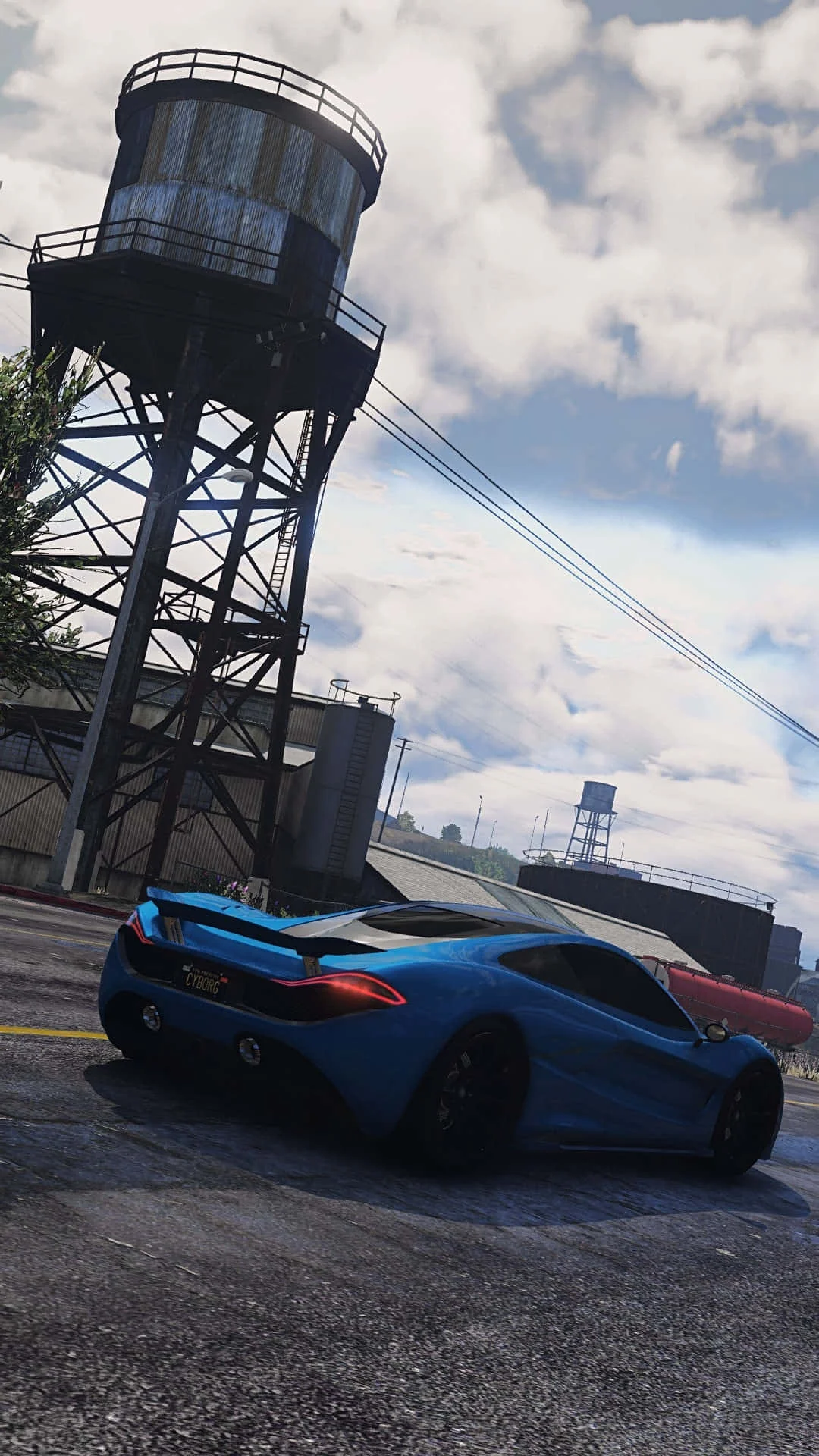
Fivem
This combination delivers exceptional performance with an average of 185 FPS, perfect for high refresh rate gaming and competitive play.
Average FPS: resolution vs quality settings
| Ultra | High | Medium | Low | |
|---|---|---|---|---|
| 4K Ultra HD | 67 | 87 | 109 | 138 |
| 1440p QHD | 122 | 157 | 196 | 248 |
| 1080p Full HD | 185 | 238 | 297 | 377 |
Cell color: green is 120+ FPS, teal is 60+, amber is 30+, red is below 30.
Fivem with Intel Core i7-14700K + NVIDIA GeForce RTX 5090, In-Depth Analysis
# Fivem with Intel Core i7-14700K + NVIDIA GeForce RTX 5090
The Intel Core i7-14700K paired with the NVIDIA GeForce RTX 5090 delivers a benchmark profile that is heavily resolution-dependent in Fivem, with the combo ranking 59th out of 3707 tested combinations. The CPU's 20 cores and 28 threads, boosting to 5.60 GHz, handle the multiplayer simulation workload, while the GPU's 32 GB of GDDR7 memory on a 512-bit bus provides ample headroom. Data shows a clear progression from 377 FPS at 1080p Low down to 67 FPS at 4K Ultra, revealing where each component becomes the limiting factor.
Resolution Scaling
The performance drop from 1080p to 4K is substantial and tells a clear story about the bottleneck in this system. At Low settings, average FPS falls from 377 at 1920x1080 to 248 at 2560x1440 — a reduction of 34.2% — and then to 138 at 3840x2160, which is 63.4% below the 1080p figure. This scaling pattern indicates that at lower resolutions, the CPU is the primary constraint, as the RTX 5090's massive compute resources are not fully utilized.
Moving from 1440p to 4K at Low settings shows a 44.4% drop (248 to 138 FPS), which is steeper than the 1080p-to-1440p decline. This suggests the GPU begins to take on more responsibility as pixel count rises, though the CPU still plays a significant role given the game's multiplayer nature. At Medium settings, the same resolution step produces a decline from 196 to 109 FPS (44.4% decrease), while High settings see a drop from 157 to 87 FPS (44.6% decrease).
The Ultra preset shows the most dramatic scaling, falling from 185 FPS at 1080p to 122 at 1440p and finally 67 at 4K. The 1080p-to-4K reduction of 63.8% at Ultra is nearly identical to the Low preset's 63.4% decline, indicating that the resolution scaling behavior is consistent across quality levels. This uniform scaling pattern across presets suggests that neither the CPU nor GPU is overwhelmingly dominant in every scenario — instead, the balance shifts gradually as resolution increases.
At 4K, the gap between Low (138 FPS) and Ultra (67 FPS) is a 51.4% reduction, while at 1080p the same preset comparison shows a 50.9% drop (377 to 185 FPS). This consistency implies that the additional graphical workload from higher presets scales similarly regardless of resolution, pointing to a well-balanced system where both components contribute to the observed frame rates.
GPU Role
The RTX 5090's specifications explain its capability in Fivem's rendering demands. With 32 GB of GDDR7 memory running at 1750 MHz (28 Gbps effective) across a 512-bit bus, the card delivers 1.79 TB/s of bandwidth — a figure that ensures texture streaming and asset loading in multiplayer environments are not memory-constrained. The 21760 shading units, 680 TMUs, and 176 ROPs provide the raw processing power, with a boost clock of 2407 MHz enabling sustained performance.
The GPU's benchmark scores corroborate its strengths. The Geekbench OpenCL score of 334370 and Vulkan score of 376728 indicate strong compute and graphics throughput, while the Passmark G3D score of 39650 places it in the 92nd percentile of all GPUs. The nearest rivals in synthetic benchmarks — the Tesla P100 PCIe 16 GB (0.3% higher score) and Tesla P100 PCIe 12 GB (0.6% higher) — are data-center parts, not gaming cards, which highlights that the RTX 5090's gaming performance is driven by architecture optimizations that synthetic tests may not fully capture.
In Fivem specifically, the GPU's role becomes more pronounced at higher resolutions and settings. At 4K Ultra, the 67 FPS average is the lowest measured, and the frame pacing data at 4K Medium shows a min of 92 and max of 125 FPS, indicating that the GPU is working hard to maintain these rates. The 104.8 TFLOPS FP32 throughput and 423.6 GPixel/s pixel rate are theoretical figures, but the measured results show that even this flagship card cannot maintain triple-digit frame rates when the game's visual fidelity is maxed out at 4K.
The RTX 5090's 176 ROPs and 1,636.8 GTexel/s texture rate are directly relevant to Fivem's draw calls and texture-heavy scenes, particularly in dense urban environments common in multiplayer servers. The card's 92nd percentile ranking among all GPUs, combined with its 79842 average benchmark score, places it among the top tier, yet the measured FPS at 4K Ultra (67) shows that even top-tier hardware faces challenges with this game's demanding presets.
CPU Role
The Intel Core i7-14700K brings substantial processing power to Fivem's CPU-intensive multiplayer simulation. With 20 cores (including performance and efficiency cores) and 28 threads, the processor handles the game's server-side logic, NPC AI, and physics calculations that are typically more demanding in multiplayer environments. The boost clock of 5.60 GHz, supported by a base clock of 3.40 GHz, provides the single-thread performance that many game engines rely on for primary game logic.
The CPU's benchmark results demonstrate its capability. The Cinebench R23 multicore score of 33440.5 and single-core score of 2160 indicate strong both-threaded and single-threaded performance, while the Geekbench multicore score of 20767 and single-core score of 2569 reinforce this. The Passmark single-thread score of 4472 and multithread score of 52392 place the CPU in the 94th percentile of all processors, with an average benchmark score of 69355.
The nearest CPU rivals in synthetic benchmarks show how closely matched the i7-14700K is to other top processors. The AMD Ryzen 9 7950X scores 69515 (0.2% higher), while the AMD EPYC 9115 scores 69288 (0.1% higher) — all within a 1% band. This indicates that in pure computational terms, the i7-14700K is essentially tied with these competitors, but Fivem's specific workload characteristics may favor certain architectures.
In Fivem, the CPU's role is most evident at lower resolutions. At 1080p Low, the 377 FPS average suggests that the CPU is keeping up with the GPU's output, but the fact that this is the highest measured frame rate — and that 4K Low only reaches 138 FPS — indicates that resolution scaling is still the dominant factor. The 33 MB of shared L3 cache and 2 MB per-core L2 cache help with the game's asset access patterns, while the DDR4/DDR5 dual-channel memory support provides flexibility for system builders.
The CPU's 125 W TDP and Raptor Lake architecture with a 10 nm process node (Intel's process) are relevant to sustained performance in long multiplayer sessions. The 94th percentile ranking among all CPUs, with scores like 18544 in Cinebench R20 multicore and 5035 in Cinebench R15 multicore, shows that the i7-14700K is a top-tier processor that should not bottleneck the RTX 5090 in most scenarios — yet the resolution scaling data suggests it does at 1080p.
How This Combo Ranks
The combo rank of 59 out of 3707 tested combinations places this pairing in the top 1.6% of all tested systems in Fivem. This ranking reflects the combined capability of the i7-14700K and RTX 5090, both of which sit in the 92nd-94th percentile of their respective categories. The rank indicates that only 58 other CPU-GPU combinations deliver higher average FPS across the tested resolution and settings matrix.
When interpreting this rank, it's important to consider that Fivem's multiplayer nature means performance can vary significantly based on server population, map complexity, and player activity. The measured data captures a specific set of conditions, and the combo's position in the rankings suggests it is among the best-performing systems for this game, but not the absolute top — likely due to the CPU's single-thread performance relative to other processors in the top tier.
The deltaPct values for the CPU's nearest rivals (all within ±0.9%) show that the i7-14700K is essentially performance-equivalent to the AMD Ryzen 9 7950X and Ryzen 9 7940HX in synthetic benchmarks. However, the combo rank of 59 indicates that in Fivem specifically, the pairing is very competitive but not dominant, suggesting that factors like memory latency, cache behavior, or platform-specific optimizations play a role in this game's performance.
The GPU's nearest rivals in synthetic tests are all older or different-class cards (Tesla P100 variants, Radeon RX 6850M XT), which highlights that the RTX 5090's nearest competition in raw benchmark scores is not representative of its gaming performance class. This makes the combo rank particularly meaningful — it reflects real gaming performance rather than synthetic compute capabilities.
Measured FPS Breakdown
At 1920x1080, the system delivers its highest frame rates across all settings. Low settings produce an average of 377 FPS, Medium reaches 297 FPS with a min of 253 and max of 342, High achieves 238 FPS, and Ultra drops to 185 FPS. The Medium preset's frame time data (min 253, max 342) shows a 35.2% spread between minimum and maximum, indicating some variability in frame pacing at this resolution.
Moving to 2560x1440, the averages decline but remain high. Low settings yield 248 FPS, Medium averages 196 FPS (min 166, max 225), High reaches 157 FPS, and Ultra falls to 122 FPS. The Medium preset's min-to-max spread of 35.5% (166 to 225) is nearly identical to the 1080p spread, suggesting consistent frame pacing behavior at both resolutions.
At 3840x2160, the performance drops significantly. Low settings average 138 FPS, Medium averages 109 FPS (min 92, max 125), High reaches 87 FPS, and Ultra falls to 67 FPS. The Medium preset's min-to-max range of 92 to 125 FPS shows a 35.9% spread, maintaining the same pattern as lower resolutions. This consistency in frame pacing across resolutions suggests that the system's performance is stable, with the primary differentiator being the average FPS level.
The scaling from 1080p to 4K at each setting shows a consistent reduction of approximately 63-64% across Low, Medium, and High presets, with Ultra showing a 63.8% reduction. This uniformity indicates that the game's rendering workload scales predictably with resolution, and the system's components respond proportionally without unexpected bottlenecks at specific resolutions.
FAQ
Q: What is the highest average FPS this combo achieves in Fivem?
A: The highest measured average is 377 FPS, achieved at 1920x1080 with Low settings.
Q: How does the CPU compare to its nearest rival in synthetic benchmarks?
A: The Intel Core i7-14700K has an average benchmark score of 69355, which is 0.1% lower than the AMD EPYC 9115 (69288) and 0.2% lower than the AMD Ryzen 9 7950X (69515).
Q: What is the lowest average FPS recorded in the measured data?
A: The lowest average is 67 FPS, recorded at 3840x2160 resolution with Ultra settings.
Q: What are the GPU's key memory specifications?
A: The NVIDIA GeForce RTX 5090 has 32 GB of GDDR7 memory on a 512-bit bus, with a bandwidth of 1.79 TB/s and memory clock of 1750 MHz (28 Gbps effective).
Q: How does the combo rank among all tested configurations?
A: The combo ranks 59th out of 3707 tested combinations in Fivem, placing it in the top 1.6% of all tested systems.
Q: What is the frame pacing consistency at Medium settings across resolutions?
A: The min-to-max spread at Medium settings is consistent: 35.2% at 1080p (253-342 FPS), 35.5% at 1440p (166-225 FPS), and 35.9% at 4K (92-125 FPS).
Settings Recommendations
Based on the measured data, the optimal settings depend on the target resolution and desired frame rate. At 1920x1080, all presets deliver above 185 FPS, making even Ultra settings viable for high-refresh-rate displays. The 185 FPS at Ultra is sufficient for most gaming monitors, while High settings at 238 FPS provide additional headroom for competitive play.
At 2560x1440, the High preset at 157 FPS offers the best balance of visual quality and performance, as it remains above the 144 Hz refresh rate common on 1440p monitors. The Ultra preset at 122 FPS is also playable and may be preferable for users prioritizing image quality over frame rate, while Medium at 196 FPS is the choice for maximum smoothness.
At 3840x2160, the Medium preset at 109 FPS provides the best experience for users with 4K displays, as it maintains a frame rate above 60 FPS while offering moderate visual fidelity. The High preset at 87 FPS is also acceptable, but the Ultra preset at 67 FPS may cause noticeable stuttering on 60 Hz displays despite being technically above the threshold. Low settings at 138 FPS are recommended for users who prioritize frame rate over visual quality at 4K.
The data indicates that the Medium preset offers the most consistent frame pacing across all resolutions, with the min-to-max spread remaining around 35% regardless of resolution. This consistency suggests that Medium settings provide a stable experience, while higher presets may introduce more variability in frame delivery. For the best overall experience, Medium at 1440p or 4K, or High at 1080p, provide the strongest combination of visual quality and performance based on the measured results.
Hardware Specifications
Intel Core i7-14700K
NVIDIA GeForce RTX 5090
FPS Benchmarks by Resolution & Settings
Performance data for Intel Core i7-14700K + NVIDIA GeForce RTX 5090 in Fivem
| Resolution | Settings | Avg FPS |
|---|---|---|
| 3840x2160 | Low | 138.0 |
| 3840x2160 | Medium | 109.0 |
| 3840x2160 | High | 87.0 |
| 3840x2160 | Ultra | 67.0 |
| 2560x1440 | Low | 248.0 |
| 2560x1440 | Medium | 196.0 |
| 2560x1440 | High | 157.0 |
| 2560x1440 | Ultra | 122.0 |
| 1920x1080 | Low | 377.0 |
| 1920x1080 | Medium | 297.0 |
| 1920x1080 | High | 238.0 |
| 1920x1080 | Ultra | 185.0 |
Fivem with ii7-14700K + Other GPUs
See how Fivem performs with the same CPU but different graphics cards.
Fivem with RTX 5090 + Other CPUs
See how Fivem performs with the same GPU but different processors.
Other Games with ii7-14700K + RTX 5090
Explore FPS benchmarks for other games using this same hardware combination.