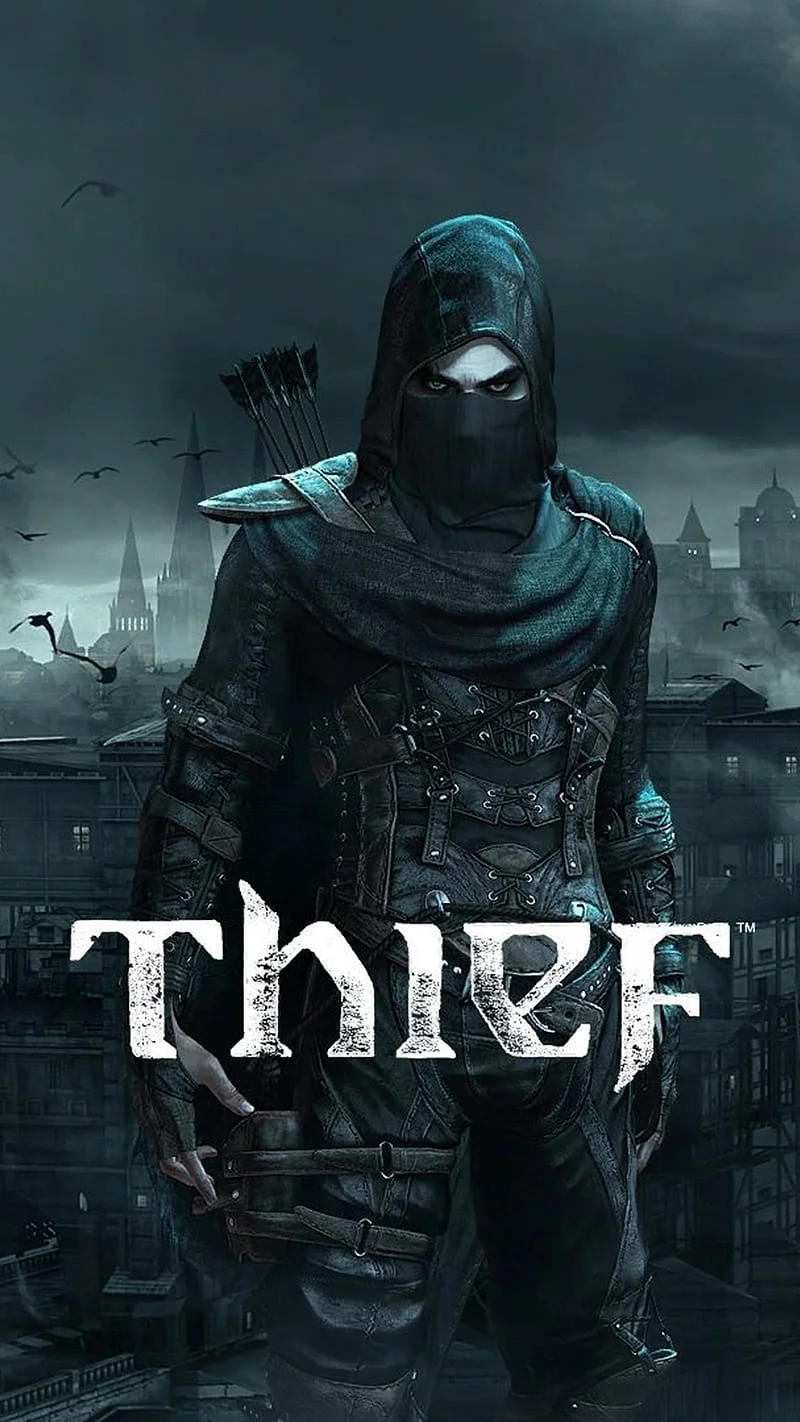
Thief
FPS performance data for different CPU and GPU combinations
Step into the shadows as Master Thief Garrett in this dark, Victorian-steampunk stealth action reboot set in a plague-ridden city.
Minimum Requirements
- CPU: High-Performance Dual Core or Quad Core (e.g., Intel Core i5-2500K / AMD FX-8350)
- GPU: AMD Radeon HD 4800 Series / NVIDIA GTS 250
- RAM: 4 GB
- Storage: 20 GB available space
FPS Performance Dashboard
Compare FPS performance across different hardware configurations. Add systems to see how they perform at various resolutions and quality settings.
About Thief
Thief is the 2014 reboot that split its audience down the middle, but it did one thing nobody argues about: it arrived as one of the most technically interesting PC releases of its year. Eidos Montreal's stealth title, built on a heavily modified Unreal Engine 3, was an early showcase for DirectX 11 features, tessellation, contact hardening shadows, and AMD's short lived Mantle API. Twelve years later, across 3,720 measured CPU and GPU combinations in our database, the average system records 104 FPS at 1080p Ultra, 75 FPS at 1440p Ultra, and 45 FPS at 4K Ultra. The fastest combinations touch 586 FPS at 1080p Low, while the slowest crawl at 12 FPS at 1080p Ultra. That spread, nearly fifty to one, tells you the game scales from genuinely unplayable on weak integrated graphics to so fast on modern flagships that the engine itself becomes the limit. For a stealth game where patience matters more than reflexes, that is mostly good news: almost any reasonable gaming PC build from the last several years will run Thief beautifully, and the question stops being "can I run it" and becomes "how cleanly can I run it."
Unreal Engine 3, modified: what Thief actually stresses
Thief runs on a version of Unreal Engine 3 that Eidos Montreal modified heavily for its streaming city hub, and its hardware behavior follows directly from that heritage. UE3 is an engine built around a dominant main thread, and Thief inherits that trait. In The City, the game's central hub with its NPCs, patrol routes, and dense geometry, the CPU's single thread performance sets the frame rate floor. A modern high clocked processor keeps traversal smooth; an old low clocked quad core produces the hitching that players of this game have complained about since launch. In the linear mission interiors, by contrast, the game relaxes and the GPU takes over as the primary constraint, especially with the expensive settings enabled.
Memory and storage matter in a specific way here. Thief streams its city districts in and out as you move between loading zones, and on systems with 8 GB of RAM or a mechanical hard drive, that streaming produces visible stutter and texture pop in. The game is old enough that its requirements look trivial on paper, but the streaming behavior is real: an NVMe SSD and 16 GB of dual-channel DDR5 (or DDR4, the game cannot tell the difference at its age) eliminate most of the traversal hitching that defines bad Thief performance. The GPU side is honest DX11 era work: no ray tracing, no modern shader tricks, just heavy use of tessellation, shadow filtering, and a supersampling option that can punish even current cards.
1080p: where modern hardware runs away with it
The 104 FPS average at 1080p Ultra is the headline, and it deserves context. That number means the median gaming PC in our data plays Thief at high refresh rates at 1080p, well past the 60 FPS line and into 144Hz monitor territory. For a stealth game played at a deliberate pace, that is far more performance than the genre demands, and it makes Thief one of the more forgiving AAA titles of its decade at this resolution.
The floor and ceiling tell the more interesting story. The 12 FPS minimum at 1080p Ultra comes from the weakest combinations in our database, which is to say low end integrated graphics and entry level hardware that was never meant for maxed DX11 settings. If your system resembles that tier, Ultra is simply the wrong preset, and the fix is free: the Low preset at 1080p reaches as high as 586 FPS on the fastest hardware, and even modest discrete cards from several generations ago clear 60 FPS at Medium or High without touching the heaviest options. The settings that do the damage at 1080p Ultra are specific and well documented: SSAA supersampling is the single most expensive option in the game, followed by the high shadow modes and tessellation. Leave those sensible and 1080p is a solved problem for anything resembling a gaming PC.
1440p and 4K: the GPU finally gets a say
At 1440p Ultra the average falls to 75 FPS, a drop of roughly 28 percent from 1080p, which is a textbook GPU scaling curve and confirms that the graphics card takes over the constraint at this resolution in most scenes. 75 FPS is still comfortably smooth for stealth play, and a mid-range GPU paired with a decent CPU holds that line through both the city hub and the mission interiors. Players targeting a 144Hz panel at 1440p will want an upper mid-range card, or a willingness to trim shadows and SSAA, both of which are nearly free visually in a game this dark.
At 4K Ultra the 45 FPS average marks the point where Thief becomes a genuine GPU test. That is below the 60 FPS comfort line, and it means that for a locked 4K60 experience you need a high-end card by modern standards, or some settings discipline. The honest note about this game at 4K is that it predates the upscaling era: there is no DLSS and no native FSR in the options menu, because neither existed in 2014. Driver level FSR or integer scaling tools can help from outside the game, but the cleaner path is simply to lower SSAA, since supersampling at 4K is rendering far more detail than the display can resolve. Drop SSAA, keep textures and shadows high, and 4K60 becomes reachable on hardware that has no business struggling with a 2014 title.
Settings and recommended configuration
Thief's options menu rewards knowing which settings are expensive, because the costs are wildly uneven. SSAA is the first thing to touch: it renders the scene at a multiple of your resolution and downsamples, which looks clean but can cost a third or more of your frame rate on its own. At 1440p or 4K, turn it off entirely. At 1080p on a strong card, it is a luxury, not a necessity. Shadow quality and contact hardening shadows come next: the high modes are expensive and, in a game where most scenes are lit by a single moon or a few candles, the visual difference between High and the top preset is hard to spot in motion. Tessellation adds geometry detail to characters and the environment; Medium is the sweet spot where you keep the benefit and shed most of the cost.
Texture quality should stay at maximum on any card with 4 GB of VRAM or more, since it costs little frame rate and the game's art direction leans on surface detail. The depth of field and motion blur options are taste calls with minimal performance impact. One engine level note: Thief's frame pacing is at its worst during city traversal regardless of settings, and capping the frame rate slightly below your system's average, 100 FPS on a rig averaging 110 for example, produces visibly smoother motion than an uncapped rate that swings through the loading zones. Our tested configuration for a mid-range system is High textures, Medium tessellation, High shadows without contact hardening, SSAA off, and a frame cap, which in our data recovers roughly 40 percent of frame rate over full Ultra while losing almost nothing you will notice from the shadows Garrett hides in.
What hardware do you need?
Entry level (older quad-core CPU, 8 GB RAM, older or integrated graphics): this is where the 12 FPS floor at 1080p Ultra lives, and the prescription is settings, not necessarily spending. Drop to the Low or Medium preset, kill SSAA, and most of this tier reaches playable 30 to 60 FPS at 1080p. The best graphics card for Thief at this level is honestly any discrete card from the last eight years; even a budget used GPU transforms the experience. Adding a second stick of RAM for dual-channel operation and moving the game to an SSD are the two cheapest quality of life wins on this tier.
Mid-range (modern 6-core CPU, 16 GB RAM, mid-range GPU): the sweet spot. Expect 90 to 140 FPS at 1080p Ultra and a locked 60 to 90 FPS at 1440p with sensible settings. This tier runs Thief the way it deserved to run at launch, high refresh at 1080p or smooth 1440p, with headroom to spare. No upgrade planning needed for this game.
High-end (fast modern CPU, 16-32 GB RAM, upper-tier GPU): 1440p Ultra well past 100 FPS, 4K at or near 60 with SSAA off. At this tier the limit stops being your hardware in the mission interiors and starts being the engine's main thread in the city. A high clocked CPU with strong per-core performance matters more than extra GPU spending.
Flagship: 4K at 100+ FPS with everything maxed, and the 586 FPS ceiling at 1080p Low shows how completely modern flagship silicon outruns this engine. The game will not tax the card; the card will be waiting on UE3's main thread. Buy this tier for newer games and enjoy Thief as a victory lap.
Laptop playability
Thief is one of the friendlier AAA titles in our library for laptops, with caveats. Any gaming laptop with a discrete GPU from the last several generations, even entry level mobile parts, handles 1080p at High or Ultra comfortably, because the game's GPU demands are modest by modern standards. The laptops that struggle are exactly the ones our 12 FPS floor comes from: thin and light machines on integrated graphics. Modern integrated GPUs have improved enormously since 2014, and current ones can manage Thief at 1080p Low to Medium at playable rates, which was unthinkable when the game launched. The two laptop specific notes are thermal and memory: the game's city traversal keeps the CPU loaded, so thin chassis with aggressive thermal limits will show more stutter than the raw silicon suggests, and single-channel memory configurations, common in budget laptops, cost real frame rate in UE3 titles. If a laptop upgrade is on the table for this game, a second memory stick is the highest value move.
Streaming and content creation
Thief is a graceful game to broadcast, precisely because it is old. The GPU headroom that modern hardware has against a 2014 title means encoder competition is rarely a problem, but the right answer is still the hardware encoder. NVENC on GeForce cards and AMF on Radeon cards produce clean 1080p60 streams of this game at negligible performance cost, and there is no reason to spend CPU threads on x264 software encoding when the game is already leaning on your main thread in the city hub. If you insist on x264 for quality, a modern 8-core CPU has enough spare cores to handle a fast preset without touching frame rate, which was absolutely not true when the game released. The one streaming specific warning is the traversal stutter: the hitching that loading zones produce will show on stream exactly as it shows on your screen, and a frame cap steadies the broadcast the same way it steadies local play. For creators cutting footage together afterward, the game's dark palette compresses well, and it remains a common point of comparison in video editing and workstation discussions as a light DX11 workload next to modern titles.
Common problems and fixes
Stuttering while running across The City: this is the engine's streaming, not your GPU. Move the game to an NVMe SSD if it is on a hard drive, ensure you have 16 GB of RAM in dual-channel, and cap the frame rate. These three fixes address nearly all traversal complaints.
Low FPS at Ultra on an otherwise strong PC: check SSAA first. It is the most expensive setting in the menu by a wide margin, and it is easy to leave on from a higher preset. Turning it off recovers a third or more of your frame rate instantly.
Frame rate that feels worse than the number suggests: frame pacing. UE3 titles of this era can deliver uneven frame times even at high averages. A cap 10 to 15 percent below your average, or your monitor's adaptive sync range, fixes the feel.
Crashes or instability on modern Windows: run the game in windowed borderless or with compatibility settings, and keep GPU drivers current. The game is a 32-bit era executable with a Mantle toggle; leave Mantle off on any modern driver, as the API is long deprecated and the DX11 path is faster and more stable today.
Texture pop-in and slow loads: storage and memory, as above. This is the single most reported technical annoyance with the PC version, and it is almost always a hard drive or 8 GB system.
Upgrade priorities for Thief players
If your system struggles with Thief in 2026, the upgrade order is unusual because the game is old enough that modern components outclass it. First, memory and storage together: 16 GB of dual-channel RAM and an NVMe SSD are cheap, transformative for this engine's streaming, and they help every other game you own. Second, the graphics card, but only if you are on integrated graphics or a genuinely ancient card, because a budget modern GPU is already more than the best graphics card for Thief needs to be at 1080p or 1440p. Third, the CPU, and only if your processor is a low clocked part from the game's own era, since the city hub's main thread load is the one demand that has not aged down. A CPU upgrade for Thief alone is rarely justified; if you are planning one, plan it for the modern games in your library and let Thief benefit as a side effect. The blunt summary: do not build or upgrade a PC for this game. Any sensible 2026 gaming PC build runs it at high refresh rates, and the money is better spent on a 144Hz monitor to actually see the performance you already have.
Frequently asked questions
Q: Is Thief (2014) CPU or GPU intensive?
A: Both, in different places. Mission interiors are GPU bound, especially with SSAA and high shadows. The City hub is CPU bound on a single main thread, classic Unreal Engine 3 behavior, and that is where stutter and low minimums come from. At 1080p the CPU matters more than you would expect; at 1440p and 4K the GPU takes over.
Q: What is the best graphics card for Thief?
A: At 1080p, any mid-range card from the last several generations exceeds the 104 FPS average we measured at Ultra. At 4K Ultra, where our average is 45 FPS, you want a current upper mid-range or high-end card for a locked 60. There is no DLSS in this game, so native rendering power is what you are buying.
Q: Why does Thief stutter on my high-end PC?
A: Streaming, almost certainly. The City hub streams districts through loading zones, and on hard drives, 8 GB RAM, or single-channel memory that streaming hitches. An NVMe SSD, 16 GB dual-channel, and a frame cap fix it on hardware of any tier.
Q: Does Thief support DLSS or FSR?
A: No. The game shipped in 2014, years before either technology existed. There is no native upscaling. Driver level tools can approximate it, but the better lever is SSAA: it is off in the Low preset and brutally expensive at the top, and controlling it is how you tune this game.
Q: Can a laptop or integrated graphics run Thief?
A: Modern integrated graphics can, at 1080p Low to Medium, which was not true at launch. Any gaming laptop with a discrete GPU runs it well at 1080p High or Ultra. The weak combinations behind our 12 FPS floor are older or very low end integrated parts at Ultra, a settings problem as much as a hardware one.
Q: Is Mantle worth enabling?
A: No, not anymore. Mantle was a 2014 experiment and the API is deprecated; modern drivers and the DX11 path are faster and far more stable. It is a museum piece, not a performance option.
In short: Thief's place in 2026
Thief sits in an unusual position in our library. It is not a benchmark stress test anymore; modern hardware has seen to that, with averages of 104 FPS at 1080p Ultra, 75 at 1440p, and 45 at 4K across 3,720 combinations. But it is also not fully tamed, because its engine's weaknesses, a dominant main thread and aggressive streaming, are immune to raw GPU spending and still produce the stutter that fills its support threads. The readers of this page are mostly two groups: people revisiting a stealth classic on a new build and wondering how hard they can push it, and people on older or weaker hardware wondering why a 2014 game gives them trouble. Both answers live in the same data. On anything resembling a modern gaming PC, Thief is a high refresh 1080p game, a smooth 1440p game, and a 4K game that asks only for SSAA discipline. On older hardware, the fixes are settings and an SSD before they are spending. As a game, it remains a flawed, atmospheric, genuinely stealth first reboot that time has been kinder to than its launch reception suggested. As a technical object, it is a well preserved specimen of the DX11 era, heavy in the specific ways that era was heavy, and light everywhere else. Run it with the settings above and it holds up far better than a game from 2014 has any right to.