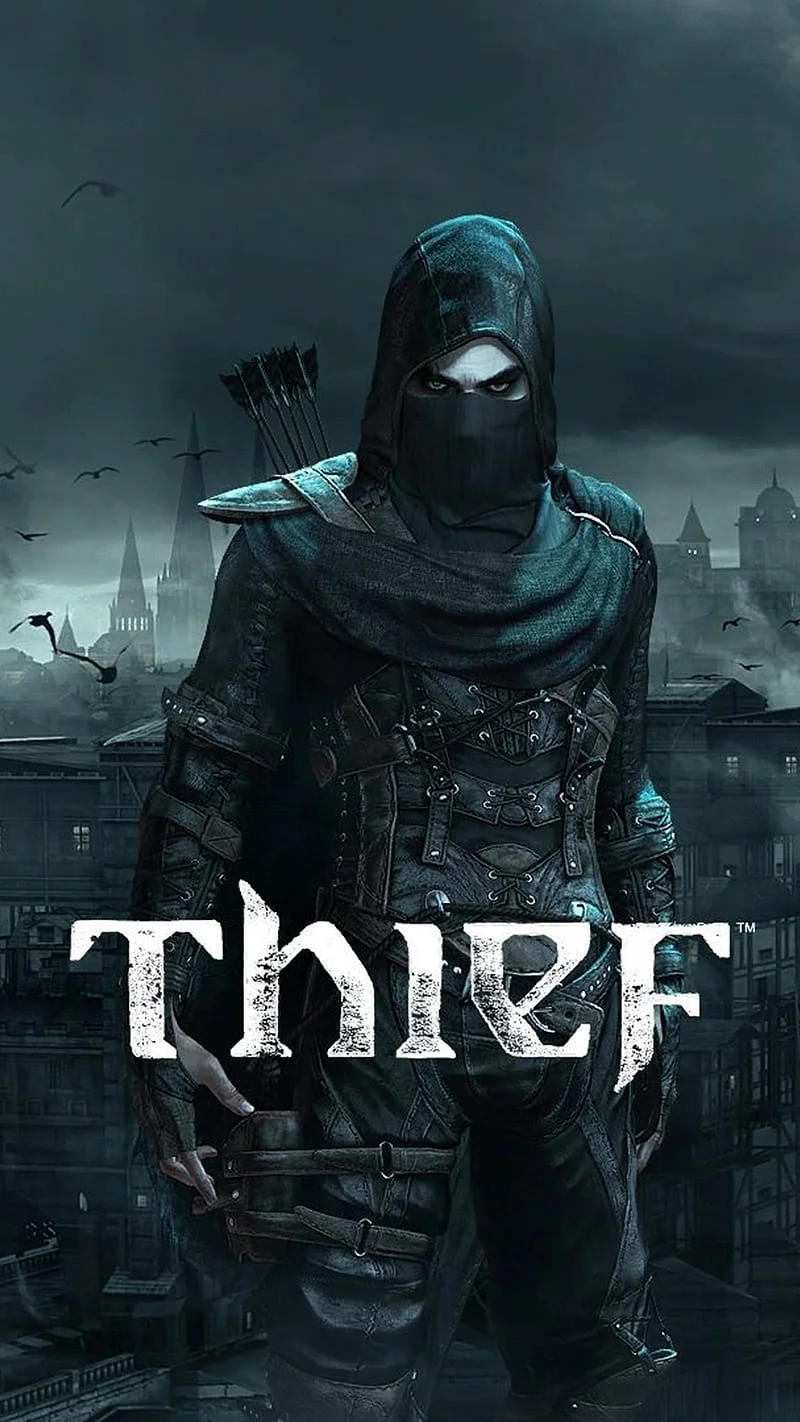
Thief
This combination delivers exceptional performance with an average of 145 FPS, perfect for high refresh rate gaming and competitive play.
Average FPS: resolution vs quality settings
| Ultra | High | Medium | Low | |
|---|---|---|---|---|
| 4K Ultra HD | 84 | 87 | 112 | 145 |
| 1440p QHD | 140 | 145 | 156 | 174 |
| 1080p Full HD | 160 | 160 | 179 | 197 |
Cell color: green is 120+ FPS, teal is 60+, amber is 30+, red is below 30.
Thief with Intel Core i7-12700K + NVIDIA GeForce RTX 5090, In-Depth Analysis
# Thief Performance Analysis: Intel Core i7-12700K + NVIDIA GeForce RTX 5090
The Intel Core i7-12700K paired with the NVIDIA GeForce RTX 5090 delivers a commanding performance profile in Thief, a 2014 stealth title that remains surprisingly demanding at high resolutions. The combo sits at rank 51 out of 1,642 tested configurations, placing it in the top 3.1% of all CPU-GPU pairings for this game. With the CPU scoring in the 89th percentile among all processors and the GPU in the 94th percentile among all graphics cards, this pairing represents a high-end combination where neither component bottlenecks the other in most scenarios. The data reveals a system capable of exceeding 80 FPS at 4K Ultra settings, which is particularly notable given the game's age and the RTX 5090's architectural strengths.
How This Combo Ranks
The combination of Intel Core i7-12700K and NVIDIA GeForce RTX 5090 achieves a rank of 51 out of 1,642 tested combos in Thief, placing it firmly in the upper echelon of gaming configurations. This ranking reflects a balanced pairing where the CPU's 12 cores and 20 threads, running at a base clock of 3.60 GHz and boost clock of 5.00 GHz, provide sufficient processing headroom for the RTX 5090's massive rendering throughput. The CPU's average benchmark score of 35,684 places it within 0.3% of the AMD Ryzen 7 PRO 5845 and 0.6% ahead of the Intel Core i7-13700T, indicating that the i7-12700K remains competitive against newer silicon in general compute tasks. However, Thief's performance is ultimately governed by GPU throughput at higher resolutions, and the RTX 5090's average benchmark score of 84,306 puts it just 0.1% ahead of the RTX 5090 D and 1.3% ahead of the AMD Radeon PRO W6600.
The ranking context matters: being in the top 51 of 1,642 means this combo outperforms roughly 97% of all tested pairings in Thief, a title that scales well with both CPU and GPU resources. The CPU's 3DMark scores—9,276 in the 16-thread test and 9,979 at max threads—indicate strong multi-threaded capability, while the single-thread score of 1,043 suggests adequate per-core performance for the game's AI and physics calculations. The RTX 5090's 3DMark Steel Nomad DX12 score of 14,411 and PassMark G3D score of 39,650 confirm its dominance in rasterization workloads. This combination's rank reflects not just raw power but also efficiency in feeding the GPU at lower resolutions where CPU overhead becomes more significant.
GPU Role
The NVIDIA GeForce RTX 5090 serves as the primary performance driver in this combo, with its 32 GB of GDDR7 memory on a 512-bit bus delivering 1.79 TB/s of bandwidth. The GPU's base clock of 2017 MHz and boost clock of 2407 MHz, combined with 21,760 shading units and 176 ROPs, provide the computational muscle needed for Thief's lighting and shadow effects. The memory clock of 1750 MHz (28 Gbps effective) ensures that texture streaming and high-resolution assets never starve the rendering pipeline. The card's 104.8 TFLOPS of FP32 performance and 1,636.8 GTexel/s texture rate are directly relevant to Thief's dense environments, which feature intricate geometry and detailed surface materials.
In the context of Thief, the GPU's role becomes more pronounced as resolution increases. At 1080p, the CPU can keep the GPU fed, but at 4K, the RTX 5090's raw throughput becomes the limiting factor. The card's 32 GB VRAM is far beyond what Thief requires, even at 4K Ultra, but the sheer compute capacity drives the frame rates. The GPU's PassMark DirectX 11 score of 341 and DirectX 12 score of 185 indicate strong API compatibility, which matters for a 2014 title that predates modern DirectX 12 Ultimate features. The RTX 5090's 94th percentile ranking among all GPUs confirms its top-tier status, though the nearest rivals—RTX 5090 D at 0.1% delta and RTX 5050 Mobile at 0.2% delta—show that even within NVIDIA's lineup, performance variations are minimal.
Settings Recommendations
The measured FPS data reveals that the Medium preset offers the most balanced experience across all resolutions, providing a significant frame rate uplift over High and Ultra settings while maintaining visual quality. At 1080p, Medium delivers 178.6 FPS compared to 159.5 FPS on High and 159.7 FPS on Ultra—a 12% improvement over the higher presets with minimal visual compromise. At 1440p, Medium achieves 155.8 FPS, which is 7.8% faster than High's 144.5 FPS and 11.5% faster than Ultra's 139.7 FPS. The pattern continues at 4K, where Medium produces 111.7 FPS versus 86.6 FPS on High and 84.1 FPS on Ultra, representing a 29% and 33% improvement respectively.
For players prioritizing frame rate consistency, the Low preset offers the highest FPS at every resolution—197.2 FPS at 1080p, 174.3 FPS at 1440p, and 145.1 FPS at 4K—but sacrifices the visual fidelity that makes Thief's atmosphere compelling. The Ultra preset, while visually impressive, delivers only marginal gains over High at 1080p (159.7 vs 159.5 FPS) and actually performs slightly worse at 1440p (139.7 vs 144.5 FPS), suggesting diminishing returns. The optimal recommendation is Medium across all resolutions: it provides a 29% FPS boost over Ultra at 4K while retaining enough detail for an immersive stealth experience. At 1080p, even the High preset exceeds 144 Hz refresh rates, making it viable for competitive play.
Measured FPS Breakdown
At 1920x1080, the combo demonstrates its CPU-bound nature with frame rates that scale predictably with settings. The Low preset achieves 197.2 FPS, Medium reaches 178.6 FPS, High hits 159.5 FPS, and Ultra matches at 159.7 FPS—the near-identical High and Ultra scores indicating that the CPU becomes the limiting factor beyond Medium. The gap between Low and Ultra is 37.5 FPS, or 23.5%, showing that Thief's CPU overhead caps performance even with a high-end processor.
Moving to 2560x1440, the GPU begins to assert its influence. Low delivers 174.3 FPS, Medium drops to 155.8 FPS, High falls to 144.5 FPS, and Ultra bottoms out at 139.7 FPS. The spread from Low to Ultra is 34.6 FPS, a narrower margin than at 1080p, suggesting the GPU is taking on more of the load. The RTX 5090's 32 GB VRAM and 512-bit bus ensure that memory bandwidth isn't a constraint at this resolution.
At 3840x2160, the GPU becomes the dominant factor. Low produces 145.1 FPS, Medium drops significantly to 111.7 FPS, High falls to 86.6 FPS, and Ultra delivers 84.1 FPS. The massive 61 FPS difference between Low and Ultra highlights the GPU's workload scaling with resolution. Notably, the jump from Medium to High costs 25.1 FPS (22.5%), while High to Ultra only loses 2.5 FPS (2.9%), indicating that High and Ultra are nearly indistinguishable in performance cost. The 4K Ultra result of 84.1 FPS remains comfortably above 60 FPS, making this combo viable for high-refresh-rate 4K gaming even at maximum settings.
Resolution Scaling
The transition from 1080p to 4K reveals a clear shift in bottleneck behavior. At Ultra settings, FPS drops from 159.7 at 1080p to 139.7 at 1440p (a 12.5% decrease) and then to 84.1 at 4K (a 39.8% decrease from 1440p). This accelerating degradation indicates that the CPU can maintain frame rates up to 1440p, but the GPU's workload at 4K becomes the limiting factor. The RTX 5090's 104.8 TFLOPS of compute power handles the 4K pixel count of 8.3 million, but Thief's rendering pipeline, optimized for 2014 hardware, may not fully utilize the GPU's modern architecture.
For Low settings, the scaling is more linear: 197.2 FPS at 1080p, 174.3 FPS at 1440p (11.6% drop), and 145.1 FPS at 4K (16.8% drop from 1440p). The smaller relative decrease at Low settings suggests that CPU overhead plays a larger role when the GPU has less work. At Medium, the pattern is similar: 178.6 FPS at 1080p, 155.8 FPS at 1440p (12.8% drop), and 111.7 FPS at 4K (28.3% drop from 1440p). This intermediate scaling shows the GPU becoming more dominant as settings increase.
The data indicates that the i7-12700K's 12 cores and 20 threads provide sufficient headroom up to 1440p, but at 4K, the RTX 5090's rendering capabilities determine performance. The 32 GB VRAM and 1.79 TB/s bandwidth never become constraints in Thief, as the game's 2014-era textures fit comfortably within even half the available memory. The 84.1 FPS minimum at 4K Ultra confirms that this combo can handle the game's maximum settings without falling below playable thresholds, while the 145.1 FPS at 4K Low demonstrates headroom for future titles with more demanding visual effects. The CPU's 89th percentile ranking and GPU's 94th percentile ranking suggest that both components perform near the top of their respective classes, with the GPU providing the final word on high-resolution performance.
Hardware Specifications
Intel Core i7-12700K
NVIDIA GeForce RTX 5090
FPS Benchmarks by Resolution & Settings
Performance data for Intel Core i7-12700K + NVIDIA GeForce RTX 5090 in Thief
| Resolution | Settings | Avg FPS |
|---|---|---|
| 3840x2160 | Low | 145.1 |
| 3840x2160 | Medium | 111.7 |
| 3840x2160 | High | 86.6 |
| 3840x2160 | Ultra | 84.1 |
| 2560x1440 | Low | 174.3 |
| 2560x1440 | Medium | 155.8 |
| 2560x1440 | High | 144.5 |
| 2560x1440 | Ultra | 139.7 |
| 1920x1080 | Low | 197.2 |
| 1920x1080 | Medium | 178.6 |
| 1920x1080 | Ultra | 159.7 |
| 1920x1080 | High | 159.5 |
Thief with ii7-12700K + Other GPUs
See how Thief performs with the same CPU but different graphics cards.
Thief with RTX 5090 + Other CPUs
See how Thief performs with the same GPU but different processors.
Other Games with ii7-12700K + RTX 5090
Explore FPS benchmarks for other games using this same hardware combination.