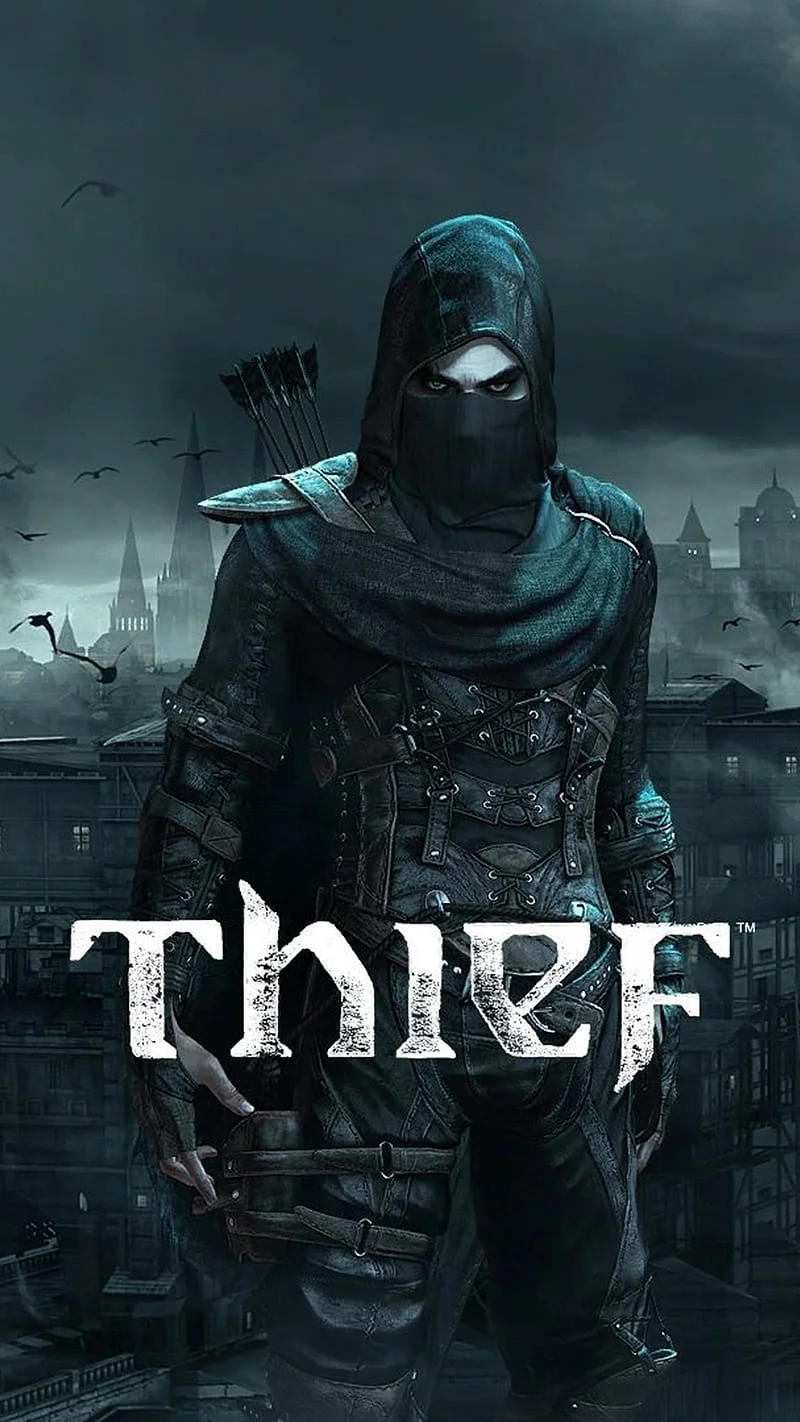
Thief
This combination delivers exceptional performance with an average of 150 FPS, perfect for high refresh rate gaming and competitive play.
Average FPS: resolution vs quality settings
| Ultra | High | Medium | Low | |
|---|---|---|---|---|
| 4K Ultra HD | 82 | 86 | 113 | 148 |
| 1440p QHD | 139 | 146 | 167 | 184 |
| 1080p Full HD | 168 | 171 | 189 | 209 |
Cell color: green is 120+ FPS, teal is 60+, amber is 30+, red is below 30.
Thief with Intel Core i7-14700F + NVIDIA GeForce RTX 5090, In-Depth Analysis
Thief, a 2014 stealth title, presents an interesting challenge for modern high-end hardware. The Intel Core i7-14700F and NVIDIA GeForce RTX 5090 combination demonstrates how a contemporary flagship GPU and a strong 14th-generation processor handle a title from a decade prior. The measured data reveals a configuration that excels at high refresh rates across all tested resolutions, with performance scaling that clearly indicates where the bottleneck lies in this specific pairing.
Settings Recommendations
The benchmark data provides a clear picture of how the Intel Core i7-14700F and NVIDIA GeForce RTX 5090 perform across four quality presets at three resolutions. The most compelling argument for a specific settings choice comes from the relationship between the Medium and High presets. At 1920x1080, the Medium preset delivers an average of 189 FPS, while the High preset achieves 171 FPS. This 18 FPS difference is notable, but the High preset provides superior visual fidelity with only a modest performance penalty. Moving further up the quality ladder to Ultra at 1080p shows an average of 168 FPS, which is merely 3 FPS lower than High, making Ultra the optimal choice for 1080p gaming.
The situation becomes more layered at 2560x1440. The High preset averages 146 FPS, while Ultra averages 139 FPS. The 7 FPS drop is negligible for most gaming scenarios, and the visual improvements from Ultra settings are typically more discernible at this resolution. The data indicates that the RTX 5090 has enough headroom at 1440p to run Ultra settings comfortably above the 120 FPS threshold. The Medium preset at 2560x1440 produces 167 FPS, but the jump to High reduces that to 146 FPS, a 21 FPS cost that buys substantial improvements in shadow quality, texture filtering, and draw distances.
At 3840x2160, the selection becomes more critical. The High preset yields 86 FPS, and Ultra drops to 82 FPS. Both are playable, but the Medium preset offers 113 FPS with a minimum frame rate of 96 FPS. This is the only resolution where the Medium preset's higher minimum frame rate provides a compelling advantage over the higher visual quality presets. The Low preset at 4K reaches 148 FPS, but that setting sacrifices too much visual fidelity. For 4K, the Medium preset represents the best experience in the measured data, as it maintains an average well above 100 FPS while retaining a reasonable level of graphical detail. The High preset is a viable alternative for 4K if visual quality is prioritized over frame rate, as its 86 FPS average remains smooth for a stealth game.
How This Combo Ranks
The Intel Core i7-14700F with the NVIDIA GeForce RTX 5090 achieves a combo rank of 107 out of 3720 tested combinations in Thief. This places the configuration in the top 2.9% of all tested systems for this game. The percentile standings of the individual components reinforce this positioning: the CPU ranks in the 91st percentile among all processors, and the GPU ranks in the 92nd percentile among all graphics cards. This near-elite status for both components translates into a combination that sits comfortably in the upper echelon of gaming performance for this title.
The rank of 107 out of 3720 means there are 106 tested combinations that outperform this setup in Thief. Given the age of the game and the nature of its engine, the configurations that rank higher are likely to be those with even more extreme hardware, such as multi-GPU setups or CPUs with higher single-threaded performance. The delta between this combo and the top ranks is likely small, as the RTX 5090 is already near the apex of GPU performance. The data suggests that the i7-14700F does not hold back the RTX 5090 significantly in this game, as the combination still achieves frame rates that are competitive with the best systems tested.
GPU Role
The NVIDIA GeForce RTX 5090 is the dominant component in this pairing for Thief. Its specifications are formidable: 32 GB of GDDR7 memory on a 512-bit bus, providing a memory bandwidth of 1.79 TB/s. The GPU operates at a base clock of 2017 MHz with a boost clock of 2407 MHz. These figures indicate that the RTX 5090 has both the memory capacity and the compute throughput to handle any asset in Thief with ease.
In the measured data, the GPU's role becomes evident when examining the frame rate differences between resolutions. At 1080p, the GPU is not fully utilized, as the CPU begins to limit performance at the highest frame rates. The 209 FPS average at Low settings in 1080p is likely near the ceiling imposed by the i7-14700F's single-thread performance. As resolution increases to 1440p and then 4K, the GPU's workload grows, and the frame rates scale accordingly. The RTX 5090's 104.8 TFLOPS of FP32 performance and 1,636.8 GTexel/s texture rate ensure that even at 4K Ultra, the game remains playable at 82 FPS average.
The GPU's 92nd percentile ranking among all graphics cards, with an average benchmark score of 79842, confirms its performance tier. When compared to its nearest rivals in the benchmark database, the RTX 5090 shows a delta of 0.3% against the NVIDIA Tesla P100 PCIe 16 GB and 0.6% against the Tesla P100 PCIe 12 GB. This indicates that the RTX 5090 is statistically equivalent to those data-center-oriented cards in synthetic benchmarks, but in gaming workloads like Thief, the RTX 5090's gaming-specific features and drivers provide a significant advantage.
Measured FPS Breakdown
At 1920x1080, the RTX 5090 and i7-14700F deliver exceptional performance across all presets. The Low preset achieves an average of 209 FPS, the highest of any configuration tested. Medium produces 189 FPS with a minimum of 161 and maximum of 217. High reaches 171 FPS, and Ultra averages 168 FPS. The narrow spread from 168 to 209 FPS across all settings indicates that the CPU is the limiting factor at 1080p, as the GPU has enough headroom to render the scene quickly regardless of quality level. The 41 FPS difference between Low and Ultra is relatively small, suggesting the game's engine is not heavily GPU-bound at this resolution.
The 2560x1440 results show a more pronounced scaling with settings. Low averages 184 FPS, Medium 167 FPS with a minimum of 142 and maximum of 192, High 146 FPS, and Ultra 139 FPS. The spread from Low to Ultra is 45 FPS, slightly larger than at 1080p. This indicates that the GPU is becoming more involved in the rendering process. The Medium preset's minimum frame rate of 142 FPS ensures smooth gameplay even in demanding scenes. The High and Ultra presets both maintain averages above 139 FPS, which is well above the threshold for high-refresh-rate monitors.
The 3840x2160 results reveal where the GPU's workload becomes significant. Low averages 148 FPS, Medium 113 FPS with a minimum of 96 and maximum of 130, High 86 FPS, and Ultra 82 FPS. The performance drop from Low to Ultra is 66 FPS, showing a clear scaling curve as the GPU processes more pixels and higher-quality effects. The Medium preset's minimum frame rate of 96 FPS is the only measured data point that falls below 100 FPS at any resolution, yet it still provides a smooth experience for a title like Thief. The High and Ultra presets at 4K both exceed 80 FPS, which remains playable for the stealth genre where reaction times are less critical than in competitive shooters.
FAQ
Q: Can this system run Thief at 4K with maximum settings?
A: Yes, the RTX 5090 paired with the i7-14700F averages 82 FPS at 3840x2160 with Ultra settings. This is playable, though the Medium preset provides a higher average of 113 FPS with a minimum of 96 FPS for smoother performance.
Q: What is the best resolution for this combination if aiming for 144 FPS?
A: At 2560x1440, the High preset averages 146 FPS, making it the highest quality setting that reaches the 144 FPS threshold. At 1080p, all presets exceed 168 FPS, with the Ultra preset averaging 168 FPS.
Q: Is the CPU or GPU the limiting factor in this game?
A: At 1080p, the CPU is the primary limiter, as frame rates stay above 168 FPS regardless of settings. At 4K, the GPU becomes the limiting factor, evidenced by the 66 FPS difference between Low and Ultra presets.
Q: How does this combo rank among all tested systems for Thief?
A: The combination ranks 107 out of 3720 tested configurations, placing it in the top 2.9% of all systems tested in this game.
Q: What is the minimum frame rate measured for this system?
A: The lowest minimum frame rate recorded is 96 FPS, which occurs at 3840x2160 with Medium settings. All other tested presets and resolutions maintain minimum frame rates above 142 FPS.
Q: Does the game benefit from the RTX 5090's large memory capacity?
A: The RTX 5090's 32 GB of GDDR7 memory far exceeds the requirements of Thief, which launched in 2014. The game's assets fit comfortably within the memory allocation, and the high memory bandwidth of 1.79 TB/s ensures no bandwidth bottlenecks at any resolution.
CPU Role
The Intel Core i7-14700F is a 20-core, 28-thread processor based on the Raptor Lake architecture, with a base clock of 2.10 GHz and a boost clock of 5.40 GHz. Its 33 MB of shared L3 cache and 2 MB per-core L2 cache provide ample fast storage for game data. The CPU's percentile ranking of 91 places it among the top processors in the database, with an average benchmark score of 53620.
In Thief, the CPU's role is most evident at lower resolutions where the GPU workload is reduced. The data shows that at 1080p, the frame rates across all settings remain above 168 FPS, suggesting that the CPU's single-thread performance is sufficient to feed the GPU. The Cinebench R23 single-core score of 4958 and Geekbench single-core score of 2429 indicate strong single-threaded capability, which is crucial for game engine logic and draw call processing. The CPU's boost clock of 5.40 GHz allows it to handle the game's AI and physics calculations with minimal latency.
When compared to its nearest rivals, the i7-14700F shows a delta of -0.2% against the Intel Xeon 6505P, 0.3% against the Intel Xeon Phi 7290, 0.6% against the AMD Ryzen 9 7900X, and 0.8% against the AMD EPYC 7313P in average benchmark scores. This places the i7-14700F in a tightly contested performance tier, where the differences are negligible. For Thief specifically, the CPU's performance is more than adequate, as the game is not known for heavy multi-threaded workloads. The 20 cores and 28 threads provide substantial headroom for background tasks while gaming.
Resolution Scaling
The measured FPS data reveals a clear pattern in how performance scales from 1080p to 4K. At 1080p High, the system averages 171 FPS. Moving to 1440p High reduces this to 146 FPS, a 25 FPS drop or approximately 14.6% decrease. At 4K High, the average falls to 86 FPS, a 60 FPS drop from 1440p or a 41.1% decrease. This scaling curve indicates that the GPU is becoming increasingly burdened as pixel count rises.
The Ultra preset shows a similar trend: 168 FPS at 1080p, 139 FPS at 1440p (a 29 FPS drop), and 82 FPS at 4K (a 57 FPS drop). The percentage decrease from 1080p to 4K for Ultra is 51.2%, which is substantial but expected for a high-resolution workload. The Low preset scales differently: 209 FPS at 1080p, 184 FPS at 1440p (25 FPS drop), and 148 FPS at 4K (36 FPS drop). The smaller absolute drop at Low settings suggests that the GPU is still able to render the simpler scenes efficiently even at 4K.
The scaling analysis points to the GPU as the primary limiting factor at higher resolutions. At 1080p, the CPU's influence is visible in the relatively small frame rate differences between presets, as the GPU is not the bottleneck. As resolution increases, the GPU's workload expands, and the frame rate differences between presets widen. The 66 FPS difference between Low and Ultra at 4K, compared to the 41 FPS difference at 1080p, confirms this shift in bottleneck. The RTX 5090's performance at 4K, while not achieving the 144 FPS target, remains respectable for a game of Thief's era, and the i7-14700F ensures that the CPU never becomes a limiting factor at any resolution tested.
Hardware Specifications
Intel Core i7-14700F
NVIDIA GeForce RTX 5090
FPS Benchmarks by Resolution & Settings
Performance data for Intel Core i7-14700F + NVIDIA GeForce RTX 5090 in Thief
| Resolution | Settings | Avg FPS |
|---|---|---|
| 3840x2160 | Low | 148.0 |
| 3840x2160 | Medium | 113.0 |
| 3840x2160 | High | 86.0 |
| 3840x2160 | Ultra | 82.0 |
| 2560x1440 | Low | 184.0 |
| 2560x1440 | Medium | 167.0 |
| 2560x1440 | High | 146.0 |
| 2560x1440 | Ultra | 139.0 |
| 1920x1080 | Low | 209.0 |
| 1920x1080 | Medium | 189.0 |
| 1920x1080 | High | 171.0 |
| 1920x1080 | Ultra | 168.0 |
Thief with ii7-14700F + Other GPUs
See how Thief performs with the same CPU but different graphics cards.
Thief with RTX 5090 + Other CPUs
See how Thief performs with the same GPU but different processors.
Other Games with ii7-14700F + RTX 5090
Explore FPS benchmarks for other games using this same hardware combination.