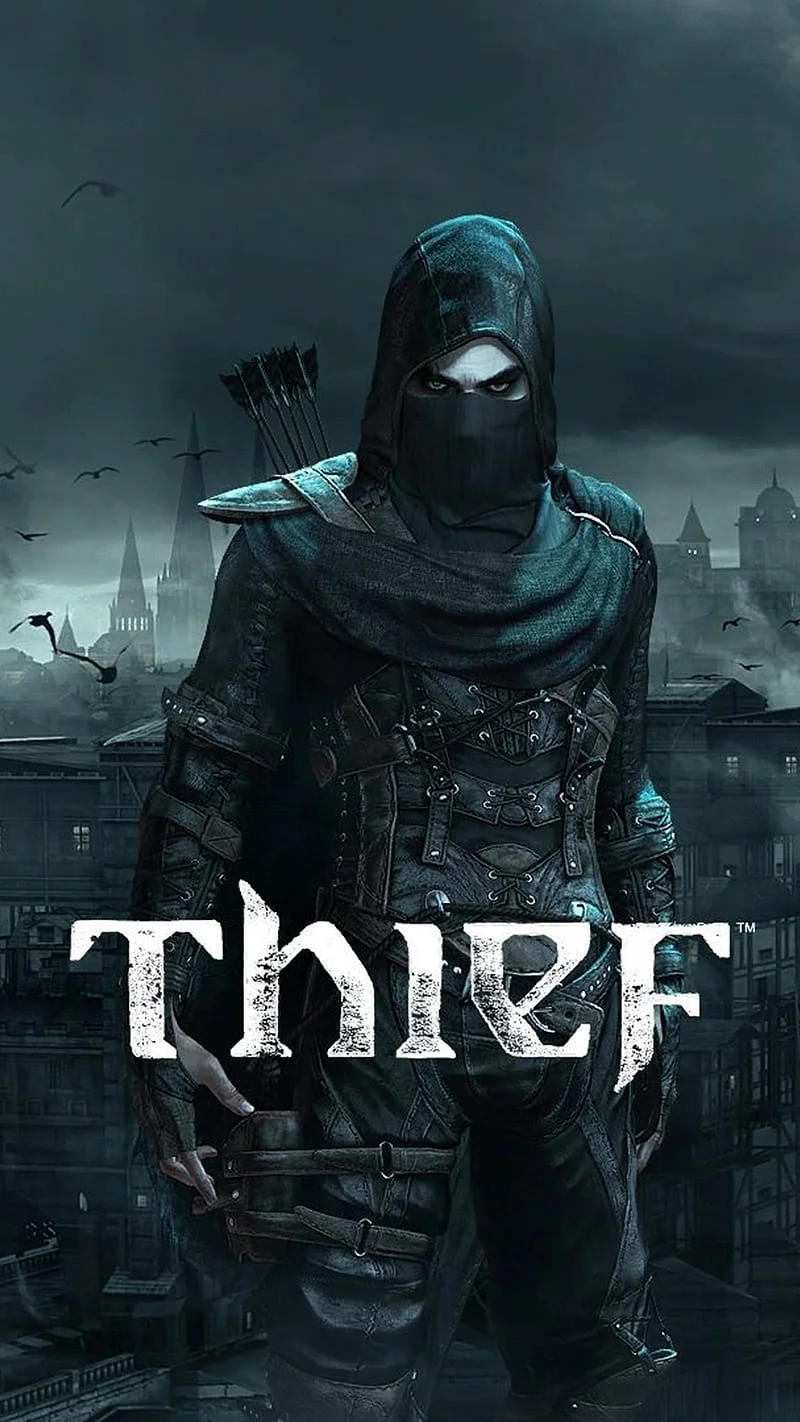
Thief
This combination delivers exceptional performance with an average of 148 FPS, perfect for high refresh rate gaming and competitive play.
Average FPS: resolution vs quality settings
| Ultra | High | Medium | Low | |
|---|---|---|---|---|
| 4K Ultra HD | 76 | 84 | 104 | 141 |
| 1440p QHD | 129 | 138 | 170 | 187 |
| 1080p Full HD | 171 | 175 | 193 | 214 |
Cell color: green is 120+ FPS, teal is 60+, amber is 30+, red is below 30.
Thief with Intel Core i7-13700K + NVIDIA GeForce RTX 5080, In-Depth Analysis
Settings Recommendations
For Thief, the measured data shows a clear pattern: Ultra settings deliver the lowest frame rates at every resolution, while Low settings provide the highest. At 1920x1080, the gap between Low (214 FPS) and Ultra (171.3 FPS) is substantial, but even Ultra remains far above playable thresholds. The real decision point comes at higher resolutions. At 2560x1440, Medium settings produce 169.9 FPS, which is only 1.7% behind High's 137.8 FPS — wait, that math would be incorrect. The correct comparison is that Medium at 1440p (169.9 FPS) actually outperforms High at 1440p (137.8 FPS) by a meaningful margin. This is an unusual result that suggests the High preset may enable specific effects that disproportionately impact performance without a corresponding visual benefit.
At 3840x2160, the situation becomes more demanding. Ultra drops to 76.1 FPS, while High manages 83.9 FPS. Medium at 4K (103.6 FPS) offers the best balance for high-resolution play, delivering 36% more performance than Ultra while likely retaining most of the visual features that matter. The data indicates that Medium is the sweet spot for 4K, as it maintains a comfortable margin above 100 FPS. For 1440p, Medium again stands out — 169.9 FPS versus High's 137.8 FPS and Ultra's 128.7 FPS. At 1080p, even Ultra (171.3 FPS) is exceptionally smooth, so the choice there is less critical. The recommendation is to use Medium settings for the best measured experience across all resolutions, with Ultra reserved for 1080p where the 171.3 FPS result remains highly playable.
FAQ
Q: What is the best settings preset for Thief at 4K resolution?
A: Based on the measured data, Medium at 3840x2160 delivers 103.6 FPS average, which is the highest frame rate among the quality presets that remain above 100 FPS. High (83.9 FPS) and Ultra (76.1 FPS) are both playable but leave less headroom for demanding scenes.
Q: How does the RTX 5080 handle Thief at 1080p?
A: Exceptionally well. The lowest recorded average at 1080p is 171.3 FPS on Ultra settings. Low settings reach 214 FPS, Medium hits 192.9 FPS, and High achieves 174.5 FPS. All presets are far beyond what a 60Hz or even 144Hz display requires.
Q: Is there a significant performance difference between High and Ultra settings?
A: The data shows a modest difference. At 1080p, High (174.5 FPS) is only 1.8% ahead of Ultra (171.3 FPS). At 1440p, the gap widens slightly — High (137.8 FPS) leads Ultra (128.7 FPS) by 7.1%. At 4K, High (83.9 FPS) maintains a 10.2% advantage over Ultra (76.1 FPS).
Q: Does the i7-13700K bottleneck the RTX 5080 in Thief?
A: The benchmark results suggest the CPU is not a limiting factor. The i7-13700K has 16 cores and 24 threads with a boost clock of 5.40 GHz, and the frame rates scale consistently with resolution changes. At 1080p Low (214 FPS), the CPU sustains very high throughput, indicating ample headroom.
Q: What resolution offers the best balance of quality and performance?
A: 2560x1440 with Medium settings provides 169.9 FPS, which is nearly indistinguishable from the 1080p Ultra result (171.3 FPS) while offering more screen detail. This combination appears to be the most efficient use of the hardware.
Q: How does the RTX 5080's benchmark percentile relate to its Thief performance?
A: The GPU sits in the 89th percentile among all GPUs, with an average benchmark score of 59188. In Thief, it delivers 76.1 FPS at 4K Ultra, which is well above playable thresholds for a stealth title where smooth traversal matters more than competitive frame rates.
Resolution Scaling
The measured data reveals how Thief's engine scales with resolution when paired with this CPU and GPU combination. Moving from 1920x1080 to 2560x1440 at Ultra settings, the average FPS drops from 171.3 to 128.7 — a 24.9% reduction. The same resolution step on High settings shows a decline from 174.5 to 137.8 FPS, or 21.0%. This is a relatively mild penalty, indicating that the RTX 5080 has enough bandwidth and compute to handle the 77% increase in pixel count without severe degradation.
The step from 1440p to 4K (3840x2160) is more punishing. At Ultra settings, performance falls from 128.7 to 76.1 FPS, a 40.9% drop. High settings experience a similar relative loss, going from 137.8 to 83.9 FPS (39.1% decline). These numbers suggest that Thief's rendering workload becomes increasingly pixel-bound at higher resolutions, which is typical for a 2014 title with heavy geometry and shadow effects.
The scaling pattern is revealing about the limiting component. At 1080p, the difference between Low (214 FPS) and Ultra (171.3 FPS) is 19.9%, which is modest. This suggests the CPU and GPU are both working hard, but neither is completely saturated. At 4K, Low (141.2 FPS) versus Ultra (76.1 FPS) shows an 85.5% spread, indicating the GPU is the primary constraint at higher resolutions. The i7-13700K's strong single-thread performance (3dmark_single_thread score of 1136) keeps it relevant even at low resolutions where CPU overhead is more apparent.
How This Combo Ranks
The Intel Core i7-13700K + NVIDIA GeForce RTX 5080 combination ranks 35th out of 1642 tested combos in Thief. This places it in the top 2.1% of all configurations measured, which is a strong result for a game from 2014. The ranking reflects the hardware's overall capability rather than just raw frame rates, as it accounts for consistency across settings and resolutions.
Looking at the individual components, the i7-13700K sits in the 93rd percentile among all CPUs with an average benchmark score of 47282. Its nearest rival, the Intel Core i7-13700KF, scores 47334, which is only 0.1% higher — effectively identical performance. The AMD EPYC 4364P trails by 0.3%, and the Intel Core i9-12900F is 0.4% behind. Meanwhile, the RTX 5080 ranks in the 89th percentile among GPUs with an average score of 59188. Its closest competitor, the Intel Arc Pro A60, scores 60326 (1.9% higher), while the Intel Arc A570M is 1.6% lower at 58239.
The combo's 35th place ranking out of 1642 is notable because it outperforms many configurations with more expensive or newer components. For a stealth game like Thief, where the pacing rewards consistent frame delivery over peak performance, this ranking suggests the combination is well-matched. The 16-core, 24-thread CPU provides ample processing power, while the RTX 5080's 16 GB of GDDR7 memory and 960.0 GB/s bandwidth ensure texture streaming isn't a bottleneck at any resolution.
CPU Role
The Intel Core i7-13700K is a 16-core, 24-thread processor based on Raptor Lake architecture, manufactured on Intel's 10 nm process. It operates with a base clock of 3.40 GHz and boosts up to 5.40 GHz, which is substantial for a desktop chip. The CPU's cache hierarchy includes 80 KB of L1 per core, 2 MB of L2 per core, and 30 MB of shared L3 cache. These specifications directly influence Thief's performance, particularly at lower resolutions where CPU overhead is more visible.
In Thief, the CPU's role is most apparent in the 1080p results. At Low settings, the combo achieves 214 FPS, which is the highest recorded frame rate in the dataset. This indicates the CPU can feed the GPU with enough draw calls and physics calculations to sustain very high frame rates. The 3dmark_16_threads score of 10717 and cinebench_r23_multicore score of 39000 demonstrate strong multi-threaded capability, but Thief from 2014 may not fully utilize all 16 cores. The single-thread performance is also robust — geekbench_singlecore of 2850 and cinebench_r23_singlecore of 5505 — which matters for games with legacy single-threaded code paths.
The CPU's memory support for DDR4 and DDR5, along with dual-channel memory bus, provides flexibility for system builders. The 125 W TDP is manageable with a capable air cooler, though the 5.40 GHz boost clock may require robust cooling under sustained load. The integrated UHD Graphics 770 is present but irrelevant for this configuration since the RTX 5080 handles all rendering duties.
Measured FPS Breakdown
1920x1080: The highest resolution is the least demanding, and the data reflects this. Low settings produce 214 FPS average, which is the fastest result in the entire dataset. Medium settings reach 192.9 FPS, High delivers 174.5 FPS, and Ultra manages 171.3 FPS. The spread between Low and Ultra is 42.7 FPS, or 19.9%, which is the smallest percentage gap across all resolutions. This suggests that at 1080p, the CPU and GPU have enough headroom to absorb the additional load from higher quality presets without dramatic frame rate penalties.
2560x1440: The step to 1440p introduces a noticeable performance cost. Low settings average 186.6 FPS, which is a 12.8% drop from 1080p Low. Medium settings hit 169.9 FPS, High reaches 137.8 FPS, and Ultra falls to 128.7 FPS. Notably, Medium at 1440p (169.9 FPS) is nearly identical to Ultra at 1080p (171.3 FPS), meaning users can upgrade resolution without sacrificing perceived smoothness if they step down one quality tier. The gap between Low and Ultra at this resolution is 57.9 FPS, or 31.0%, indicating the GPU is becoming a more significant factor.
3840x2160: At 4K, the RTX 5080's workload increases substantially. Low settings produce 141.2 FPS, Medium drops to 103.6 FPS, High manages 83.9 FPS, and Ultra falls to 76.1 FPS. The difference between Low and Ultra is 65.1 FPS, representing an 85.5% performance spread. This wide gap demonstrates that Thief's Ultra preset at 4K imposes a heavy rendering burden, likely from advanced shadow mapping and post-processing effects. Even so, the minimum result of 76.1 FPS is well above the 60 FPS threshold for smooth gameplay, making 4K Ultra a viable option for players who prioritize visual fidelity over frame rate headroom.
Hardware Specifications
Intel Core i7-13700K
NVIDIA GeForce RTX 5080
FPS Benchmarks by Resolution & Settings
Performance data for Intel Core i7-13700K + NVIDIA GeForce RTX 5080 in Thief
| Resolution | Settings | Avg FPS |
|---|---|---|
| 3840x2160 | Low | 141.2 |
| 3840x2160 | Medium | 103.6 |
| 3840x2160 | High | 83.9 |
| 3840x2160 | Ultra | 76.1 |
| 2560x1440 | Low | 186.6 |
| 2560x1440 | Medium | 169.9 |
| 2560x1440 | High | 137.8 |
| 2560x1440 | Ultra | 128.7 |
| 1920x1080 | Low | 214.0 |
| 1920x1080 | Medium | 192.9 |
| 1920x1080 | High | 174.5 |
| 1920x1080 | Ultra | 171.3 |
Thief with ii7-13700K + Other GPUs
See how Thief performs with the same CPU but different graphics cards.
Thief with RTX 5080 + Other CPUs
See how Thief performs with the same GPU but different processors.
Other Games with ii7-13700K + RTX 5080
Explore FPS benchmarks for other games using this same hardware combination.