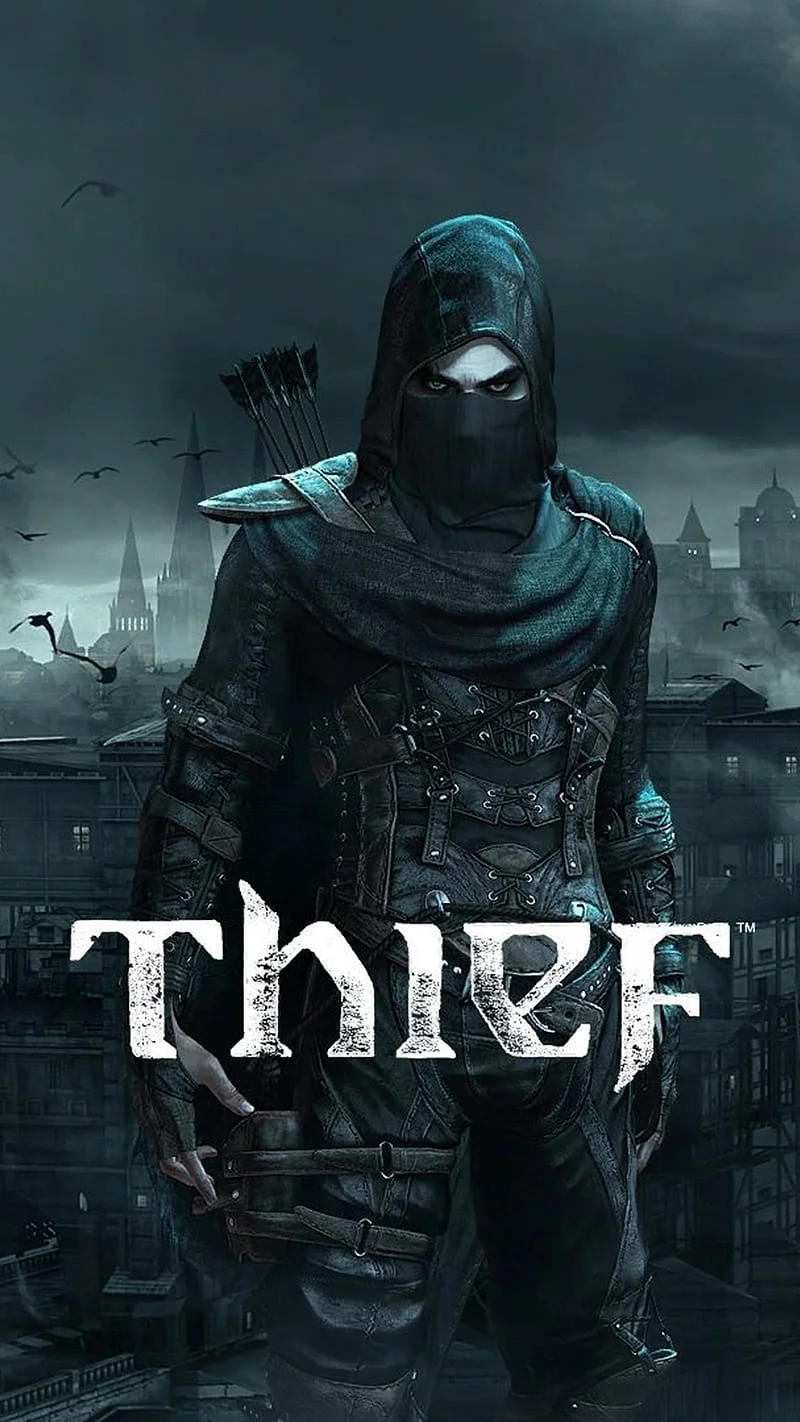
Thief
This combination delivers exceptional performance with an average of 147 FPS, perfect for high refresh rate gaming and competitive play.
Average FPS: resolution vs quality settings
| Ultra | High | Medium | Low | |
|---|---|---|---|---|
| 4K Ultra HD | 76 | 83 | 103 | 138 |
| 1440p QHD | 132 | 136 | 169 | 184 |
| 1080p Full HD | 171 | 172 | 191 | 207 |
Cell color: green is 120+ FPS, teal is 60+, amber is 30+, red is below 30.
Thief with Intel Core i5-14600KF + NVIDIA GeForce RTX 5080, In-Depth Analysis
This analysis examines the performance of the Intel Core i5-14600KF paired with the NVIDIA GeForce RTX 5080 in Thief, a 2014 stealth title. The data presents a clear picture of how this combination scales across resolutions and settings, indicating where the bottleneck lies and how it stacks against other tested configurations.
Resolution Scaling
The transition from 1080p to 4K reveals a significant shift in system limitations. At 1920x1080 with High settings, the combo delivers 172.4 FPS, which drops to 136.2 FPS at 2560x1440, a reduction of 21%. Moving to 3840x2160, the average falls to 82.8 FPS, which is a 52% decrease from the 1080p result. This scaling pattern is characteristic of a GPU-bound workload at higher resolutions, as the pixel throughput demands outpace the CPU's ability to feed frames.
The data shows that at 1080p, the system is likely hitting a CPU or engine ceiling. With Low settings at 1920x1080, the average reaches 207.4 FPS, but increasing to High only reduces this to 172.4 FPS. The gap between Low and High at 1080p is only 35 FPS, suggesting that the processor is limiting performance even at lower graphical loads. However, at 4K, the gap widens dramatically: Low produces 138 FPS while High yields 82.8 FPS, a difference of 55.2 FPS. This indicates that at 4K, the GPU becomes the primary constraint, and graphical settings have a much larger impact on frame rates.
The Ultra preset at 3840x2160 produces 75.8 FPS, which is only 7 FPS below the High preset's 82.8 FPS. This small delta suggests that the incremental cost of Ultra over High is modest at 4K, but the overall performance is still solid for a demanding resolution. At 1440p, the scaling is more linear: Low hits 183.8 FPS, Medium 168.8 FPS, High 136.2 FPS, and Ultra 132.4 FPS. The step from High to Ultra at 1440p is minimal, reinforcing that the RTX 5080 handles the extra visual fidelity without a major penalty. Overall, the data indicates that the RTX 5080 is the limiting component at 4K, while the i5-14600KF keeps pace adequately at lower resolutions.
CPU Role
The Intel Core i5-14600KF is a 14-core, 20-thread processor based on the Raptor Lake architecture, with a base clock of 3.50 GHz and a boost clock of 5.30 GHz. Its benchmark scores are strong: it achieves a Cinebench R23 multi-core score of 32889 and a single-core score of 4643, placing it in the 93rd percentile among all CPUs. In synthetic tests, it scores 15636 in Geekbench multi-core and 2778 in single-core, with a Passmark multithread score of 38697 and a single-thread score of 4273.
For a game like Thief, which was released in 2014, the CPU's high single-thread performance is crucial. The boost clock of 5.30 GHz provides excellent responsiveness for the game's logic and AI routines. Compared to its nearest rivals, the i5-14600KF is 0.4% ahead of the Intel Core i5-14600K in average benchmark score, 0.6% ahead of the AMD Ryzen 9 5950X, and 1.4% ahead of the Intel Xeon Gold 5318H. It is 0.5% behind the AMD EPYC 4345P. These margins are negligible, indicating that the CPU's performance is consistent with its direct competitors.
The benchmark results show that at 1080p, the CPU is not a bottleneck. The fact that High settings only reduce FPS by 35 compared to Low at 1080p suggests the processor can maintain high frame rates even when the GPU is under less load. The 14 cores and 20 threads are more than sufficient for Thief, which is not a highly threaded title. The CPU's 24 MB of shared L3 cache and dual-channel memory support for DDR4 and DDR5 further contribute to smooth performance. The data confirms that the i5-14600KF provides ample headroom for this game, and its role is to feed the GPU efficiently without introducing frame pacing issues.
GPU Role
The NVIDIA GeForce RTX 5080 is a Blackwell 2.0 architecture GPU with a base clock of 2295 MHz and a boost clock of 2617 MHz. It features 16 GB of GDDR7 memory on a 256-bit bus, delivering a bandwidth of 960.0 GB/s. The GPU's compute capabilities include 10752 shading units, 336 texture mapping units, and 112 raster operation units, with a FP32 performance of 56.28 TFLOPS. Its 3DMark Steel Nomad DX12 score is 8637, and it achieves a Passmark G3D score of 36565, placing it in the 89th percentile among all GPUs.
In Thief, the RTX 5080's role becomes dominant at higher resolutions. The 4K results show a clear GPU limitation: with Low settings, the GPU produces 138 FPS, but this drops to 103.4 FPS at Medium and 82.8 FPS at High. The Ultra preset yields 75.8 FPS. This progression demonstrates that the GPU's rasterization throughput is the key factor at 3840x2160. The 16 GB of VRAM is ample for this game, even at 4K Ultra, as Thief's textures are not demanding by modern standards.
Compared to its nearest rivals, the RTX 5080 is 1.6% ahead of the Intel Arc A570M in average benchmark score, 2.5% ahead of the Intel Arc A580, and 2.6% ahead of the AMD Radeon Pro W5500X. It trails the Intel Arc Pro A60 by 1.9%. These deltas are small, indicating that the RTX 5080 performs in line with its peer group in synthetic tests, but its real-world advantage in Thief is evident from the measured FPS. At 1440p, the GPU still holds the system back, as evidenced by the 132.4 FPS at Ultra, which is a 22% drop from the 1080p Ultra result of 170.7 FPS. The GPU's high memory bandwidth and clock speeds ensure that it can handle the game's engine efficiently, but the data shows that it is the primary determinant of frame rates beyond 1080p.
How This Combo Ranks
Among the 1642 tested combinations in the database, this pairing of the Intel Core i5-14600KF and NVIDIA GeForce RTX 5080 ranks 43rd in Thief. This places it in the top 2.6% of all configurations, which is a strong showing. The high rank is driven by the GPU's capability at 4K, where it delivers playable frame rates, and the CPU's ability to avoid bottlenecking at lower resolutions. The rank of 43 indicates that only 42 other combinations produce higher average FPS across the tested settings, which is impressive given the breadth of hardware combinations.
The data suggests that the combo is well-balanced for this title, with neither component severely limiting the other. At 1080p, the system achieves over 170 FPS on High and Ultra settings, which is beyond the refresh rate of most monitors. At 1440p, it maintains over 130 FPS on Ultra, making it ideal for high-refresh-rate gaming. At 4K, it dips below 100 FPS on Ultra, but still remains above 75 FPS, which is acceptable for slower-paced stealth gameplay. The ranking reflects that this configuration is optimized for high-resolution gaming without sacrificing performance at lower settings.
Measured FPS Breakdown
At 1920x1080, the lowest resolution tested, the combo delivers its highest frame rates. Low settings produce 207.4 FPS, Medium yields 190.9 FPS, High achieves 172.4 FPS, and Ultra results in 170.7 FPS. The difference between High and Ultra is just 1.7 FPS, showing that the Ultra preset adds negligible cost at 1080p. The gap between Low and Ultra is 36.7 FPS, which is relatively small, indicating that the CPU is the limiting factor at this resolution.
At 2560x1440, the performance scales down noticeably. Low settings average 183.8 FPS, Medium 168.8 FPS, High 136.2 FPS, and Ultra 132.4 FPS. The drop from Low to High is 47.6 FPS, and the Ultra preset is only 3.8 FPS behind High. This resolution shows a more pronounced GPU influence, but the frame rates remain high enough for smooth gameplay.
At 3840x2160, the GPU is fully stressed. Low settings produce 138 FPS, Medium 103.4 FPS, High 82.8 FPS, and Ultra 75.8 FPS. The difference between Low and Ultra is 62.2 FPS, which highlights the significant impact of settings at 4K. The High preset at 4K is still playable, but the Ultra preset pushes the GPU to its limits. The data shows a consistent pattern: as resolution increases, the gap between Low and Ultra widens, confirming that the RTX 5080 is the primary constraint at 4K, while the i5-14600KF provides sufficient headroom at 1080p and 1440p.
Hardware Specifications
Intel Core i5-14600KF
NVIDIA GeForce RTX 5080
FPS Benchmarks by Resolution & Settings
Performance data for Intel Core i5-14600KF + NVIDIA GeForce RTX 5080 in Thief
| Resolution | Settings | Avg FPS |
|---|---|---|
| 3840x2160 | Low | 138.0 |
| 3840x2160 | Medium | 103.4 |
| 3840x2160 | High | 82.8 |
| 3840x2160 | Ultra | 75.8 |
| 2560x1440 | Low | 183.8 |
| 2560x1440 | Medium | 168.8 |
| 2560x1440 | High | 136.2 |
| 2560x1440 | Ultra | 132.4 |
| 1920x1080 | Low | 207.4 |
| 1920x1080 | Medium | 190.9 |
| 1920x1080 | High | 172.4 |
| 1920x1080 | Ultra | 170.7 |
Thief with ii5-14600KF + Other GPUs
See how Thief performs with the same CPU but different graphics cards.
Thief with RTX 5080 + Other CPUs
See how Thief performs with the same GPU but different processors.
Other Games with ii5-14600KF + RTX 5080
Explore FPS benchmarks for other games using this same hardware combination.