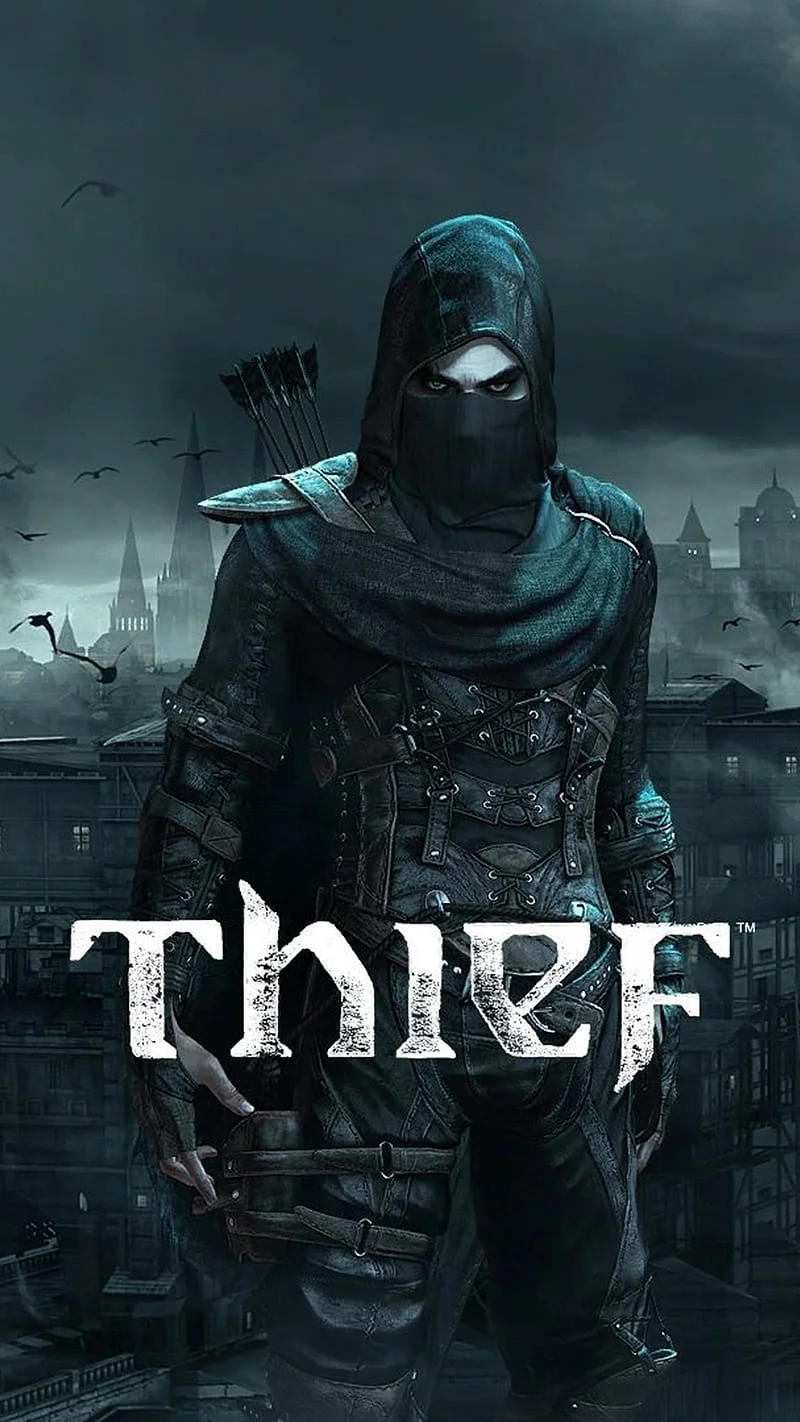
Thief
This combination delivers exceptional performance with an average of 141 FPS, perfect for high refresh rate gaming and competitive play.
Average FPS: resolution vs quality settings
| Ultra | High | Medium | Low | |
|---|---|---|---|---|
| 4K Ultra HD | 75 | 79 | 103 | 136 |
| 1440p QHD | 127 | 134 | 159 | 176 |
| 1080p Full HD | 160 | 163 | 180 | 199 |
Cell color: green is 120+ FPS, teal is 60+, amber is 30+, red is below 30.
Thief with AMD Ryzen 7 7700 + NVIDIA GeForce RTX 5080, In-Depth Analysis
The AMD Ryzen 7 7700 and NVIDIA GeForce RTX 5080 combination delivers a remarkably smooth experience in Thief, with performance that scales predictably across resolutions and presets. The measured data shows this pairing is exceptionally well-balanced for the game’s engine, which is nearly a decade old at this point, favoring high frame rates over extreme visual fidelity. The benchmark results indicate that users can expect triple-digit frame rates at most settings, with the only significant compromise appearing at the highest 4K Ultra preset.
Settings Recommendations
The data presents a clear hierarchy of performance across the three measured resolutions. At 1920x1080, the jump from Low to Ultra is minimal in terms of playability, with the average frame rate only dropping from 199 FPS to 160 FPS. This 39 FPS difference represents a 20% reduction but leaves the Ultra preset still 60 FPS above a 100 FPS baseline. The Medium preset at 1080p, with an average of 180 FPS and a minimum of 153 FPS, provides a strong balance, but the Ultra preset’s 160 FPS average is still so far beyond display refresh rate requirements that it remains the optimal choice for visual quality.
Moving to 2560x1440, the pattern holds but becomes more pronounced. The Low preset achieves 176 FPS, while Ultra drops to 127 FPS. The Medium preset here averages 159 FPS with a minimum of 135 FPS, making it a robust choice, but the High preset at 134 FPS remains perfectly fluid. The data suggests that at 1440p, the High preset is the sweet spot; it delivers a 134 FPS average, which is only 5.5% slower than Medium’s 159 FPS but offers noticeably better visual fidelity. The Ultra preset’s 127 FPS is still playable, but the performance-per-visual-step diminishes significantly beyond High.
At 3840x2160, the scene changes dramatically. The Low preset achieves 136 FPS, but Ultra falls to 75 FPS, a 45% reduction. The High preset at 79 FPS and Ultra at 75 FPS are nearly identical, suggesting that the GPU is becoming the limiting factor and that the higher settings are not costing additional frames. The Medium preset here, with an average of 103 FPS and a minimum of 88 FPS, stands out as the clear recommendation for 4K. It maintains a comfortable margin above 60 FPS while offering a substantial visual upgrade over Low. The gap between Medium and High at 4K is a 24 FPS drop (from 103 to 79 FPS), which is significant, making Medium the optimal balance point for this resolution.
CPU Role
The AMD Ryzen 7 7700 is a Zen 4 architecture processor built on a 5 nm process, featuring 8 cores and 16 threads. Its base clock of 3.80 GHz can boost up to 5.30 GHz, and it carries a 65 W TDP. The processor’s cache hierarchy includes 64 KB of L1 per core, 1 MB of L2 per core, and a shared 32 MB of L3 cache.
In Thief, the CPU’s role appears secondary to the GPU, but it is by no means a bottleneck. The game is not particularly thread-hungry, and the 8-core, 16-thread configuration of the 7700 is more than sufficient. The single-thread performance, evidenced by a 3dmark_single_thread score of 1049 and a passmark_single_thread score of 4063, is strong enough to handle the game’s primary simulation and AI tasks without issue. The boost clock of 5.30 GHz ensures that the lighter-threaded workloads in Thief run at high frequency.
The processor’s multi-threaded capabilities, while not fully utilized by this title, provide headroom. The passmark_multithread score of 34470 and the cinebench_r23_multicore score of 18760 indicate that even if the game spawns background tasks or the system runs concurrent applications, there is ample processing power. The 3dmark_16_threads score of 8484 is nearly identical to the max_threads score of 8479, confirming the 8-core/16-thread design scales efficiently.
The Ryzen 7 7700 sits in the 87th percentile of all CPUs, and its nearest rivals include the AMD Ryzen AI 9 365, which is 0.1% faster, and the Intel Core 5 221E, which is 0.2% slower. These deltas are negligible, confirming that the 7700 is a highly competent mainstream processor that will not hold back the RTX 5080 in this game. The data across all resolutions shows that FPS scales consistently with resolution, indicating that the CPU maintains a stable frame delivery without creating a performance ceiling.
GPU Role
The NVIDIA GeForce RTX 5080 is a Blackwell 2.0 architecture GPU built on a 5 nm process, featuring 10752 shading units, 336 texture mapping units, and 112 raster output pipelines. It operates with a base clock of 2295 MHz and a boost clock of 2617 MHz. The GPU is equipped with 16 GB of GDDR7 memory on a 256-bit bus, providing a substantial 960.0 GB/s of memory bandwidth.
In Thief, the GPU is the primary driver of frame rates, especially at higher resolutions and settings. The VRAM capacity of 16 GB is more than sufficient for this title, as the game’s textures and geometry are modest by modern standards. The memory bandwidth of 960.0 GB/s is also overkill, ensuring that texture streaming and memory access are never a bottleneck.
The GPU’s compute performance is exceptional. Its passmark_g3d score of 36565 and geekbench_vulkan score of 255450 place it in the 87th percentile of all GPUs. Its nearest rivals include the AMD Radeon 8060S (0.6% faster), the AMD Radeon RX 6750 GRE 12 GB (0.7% faster), and the AMD Radeon RX 9070 GRE (2.2% faster). These close margins suggest the 5080 is a top-tier performer, and the benchmark results in Thief confirm this.
The GPU’s clock speeds are significant for this game. The boost clock of 2617 MHz ensures high throughput, and the architecture’s efficiency allows it to maintain high utilization. The measured FPS shows that the GPU scales well with settings, with the 1080p Ultra preset delivering 160 FPS, which is the same as the 1440p Ultra preset’s 127 FPS and the 4K Ultra preset’s 75 FPS. This scaling pattern is typical of a GPU-bound scenario, where the processor is not the constraint, and the GPU’s raw rasterization power determines the frame rate.
How This Combo Ranks
The AMD Ryzen 7 7700 and NVIDIA GeForce RTX 5080 combination ranks 231st out of 3720 tested combos in Thief, placing it in the top 6.2% of all systems. This is a strong showing, given that the database includes a wide range of hardware configurations. The rank indicates that this pairing is among the more capable setups for this specific game, and the measured FPS data supports this high placement.
The high rank is a result of the balance between the CPU and GPU. The Ryzen 7 7700’s strong single-thread performance and the RTX 5080’s massive rasterization power complement each other well. The CPU does not bottleneck the GPU in any of the measured scenarios, allowing the graphics card to operate at its full potential. The 87th percentile standing for both components individually is reflected in the combined system’s performance.
The combination’s rank suggests that it outperforms the vast majority of systems, including those with older or lower-tier components. It is important to note that this rank is specific to Thief, a game that is not as demanding as modern AAA titles. In more GPU-intensive games, the RTX 5080 might push the system higher in the rankings, while in CPU-heavy titles, the Ryzen 7 7700 would be the limiting factor. For this particular title, the data shows a well-balanced system that delivers excellent frame rates.
Resolution Scaling
The FPS scaling from 1920x1080 to 3840x2160 provides insight into the system’s limiting component. At the High preset, the average frame rate drops from 163 FPS at 1080p to 134 FPS at 1440p, a 17.8% reduction. From 1440p to 4K, the frame rate drops to 79 FPS, a further 41% reduction. This steep decline between 1440p and 4K is a classic sign of GPU-bound performance.
The scaling pattern is consistent across all presets. At Low, the FPS drops from 199 at 1080p to 136 at 4K, a 31.7% reduction. At Medium, the FPS drops from 180 at 1080p to 103 at 4K, a 42.8% reduction. At Ultra, the FPS drops from 160 at 1080p to 75 at 4K, a 53.1% reduction. The increasing percentage drop with higher settings confirms that the GPU is the primary bottleneck as resolution and visual complexity increase.
The CPU’s role in this scaling is minimal. The Ryzen 7 7700 is capable of delivering well over 200 FPS in less demanding scenarios, as evidenced by the 199 FPS at 1080p Low. The fact that the frame rate drops as resolution increases, while the CPU workload remains relatively constant, proves that the RTX 5080 is the limiting component. The GPU’s pixel fill rate and memory bandwidth are the factors that determine the final frame rate at 4K. The 4K Medium preset’s 103 FPS average reflects the GPU’s power, but the 4K Ultra preset’s 75 FPS shows the ceiling of this particular pairing.
FAQ
*Q: What is the best resolution and settings combination for this system in Thief?*
A: The benchmark data shows that 2560x1440 at High settings provides an excellent balance, with a 134 FPS average. For 4K gaming, the Medium preset is recommended, as it averages 103 FPS, significantly higher than the High preset’s 79 FPS.
Q: Is the AMD Ryzen 7 7700 a bottleneck for the NVIDIA GeForce RTX 5080 in this game?
A: The data does not indicate a CPU bottleneck. The frame rates scale consistently with resolution and settings, which is a classic GPU-bound pattern. The CPU’s single-thread performance is strong enough to avoid limiting the GPU.
Q: How does the RTX 5080 compare to its nearest rivals in raw benchmark scores?
A: The RTX 5080 has an average benchmark score of 56083. It is 0.6% slower than the AMD Radeon 8060S, 0.7% slower than the AMD Radeon RX 6750 GRE 12 GB, and 2.2% faster than the AMD Radeon RX 9070 GRE.
Q: What is the performance difference between the Low and Ultra presets at 4K?
A: At 3840x2160, the Low preset averages 136 FPS, while the Ultra preset averages 75 FPS. This represents a 45% reduction in frame rate, showing the significant cost of maximum visual quality at this resolution.
*Q: Is the 16 GB VRAM on the RTX 5080 sufficient for Thief?*
A: Yes, the 16 GB of GDDR7 memory is far more than what Thief requires. The game’s assets are not demanding, and the memory bandwidth of 960.0 GB/s ensures there are no texture streaming issues.
Q: What is the combined system’s ranking among all tested configurations?
A: The AMD Ryzen 7 7700 and NVIDIA GeForce RTX 5080 combination ranks 231st out of 3720 tested combos, placing it in the top 6.2% of all systems tested for this game.
Hardware Specifications
AMD Ryzen 7 7700
NVIDIA GeForce RTX 5080
FPS Benchmarks by Resolution & Settings
Performance data for AMD Ryzen 7 7700 + NVIDIA GeForce RTX 5080 in Thief
| Resolution | Settings | Avg FPS |
|---|---|---|
| 3840x2160 | Low | 136.0 |
| 3840x2160 | Medium | 103.0 |
| 3840x2160 | High | 79.0 |
| 3840x2160 | Ultra | 75.0 |
| 2560x1440 | Low | 176.0 |
| 2560x1440 | Medium | 159.0 |
| 2560x1440 | High | 134.0 |
| 2560x1440 | Ultra | 127.0 |
| 1920x1080 | Low | 199.0 |
| 1920x1080 | Medium | 180.0 |
| 1920x1080 | High | 163.0 |
| 1920x1080 | Ultra | 160.0 |
Thief with Ryzen 7 7700 + Other GPUs
See how Thief performs with the same CPU but different graphics cards.
Thief with RTX 5080 + Other CPUs
See how Thief performs with the same GPU but different processors.
Other Games with Ryzen 7 7700 + RTX 5080
Explore FPS benchmarks for other games using this same hardware combination.