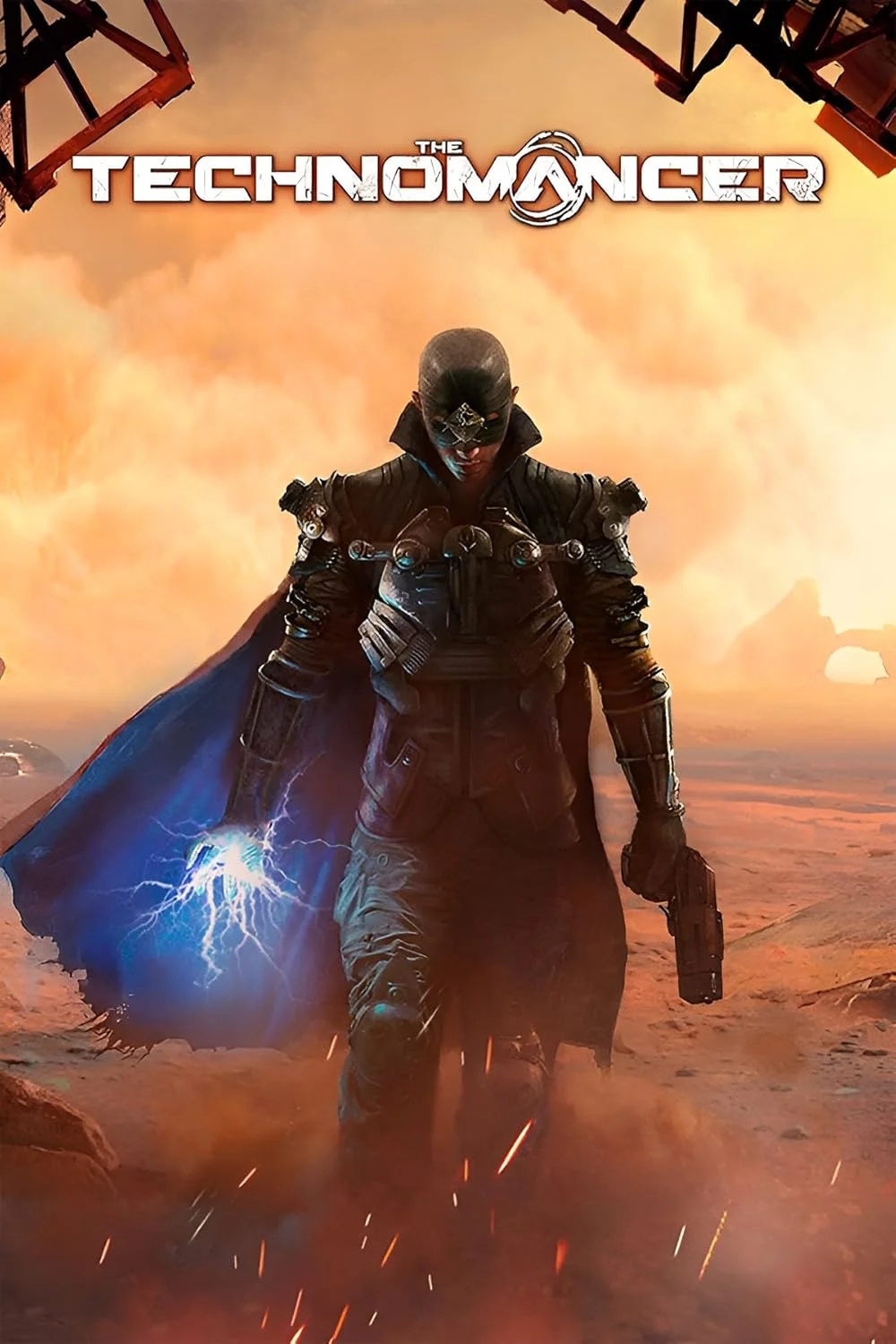
The Technomancer
FPS performance data for different CPU and GPU combinations
Survive the harsh realities of Mars as a lightning-wielding warrior in this sci-fi action RPG.
Minimum Requirements
- CPU: Intel Core i5-2500 (3.3 GHz) / AMD FX-4100 (3.6 GHz)
- GPU: NVIDIA GeForce GTX 560 / AMD Radeon HD 6950 (1GB VRAM)
- RAM: 4 GB
- Storage: 11 GB available space
FPS Performance Dashboard
Compare FPS performance across different hardware configurations. Add systems to see how they perform at various resolutions and quality settings.
About The Technomancer
The Technomancer is Spiders' 2016 action RPG about electrically gifted enforcers on a drought-stricken Mars, and it lands in our database in an unusual position: it is old enough and light enough that the performance question has flipped. Nobody asks whether their rig can max it anymore. They ask whether their old laptop can run it at all, or how hard their new build can push it. Our measurements give a clean answer. Across 3,696 tested CPU and GPU combinations, the average system records 95 FPS at 1080p Ultra, 62 FPS at 1440p Ultra, and 34 FPS at 4K Ultra. The fastest combinations reach 594 FPS at 1080p Low, the slowest crawl at 12 FPS at 1080p Ultra. That spread tells you almost everything about the game: trivially easy for modern hardware, still capable of embarrassing genuinely ancient hardware, and GPU-bound in the classic way once the resolution climbs.
The Silk engine: light, simple, and GPU-bound
The Technomancer runs on Silk, the in-house engine Spiders built for Bound by Flame and later refined into the tech behind GreedFall. Silk is a DirectX 11 era engine of modest ambitions: hub-based levels rather than a streaming open world, contained geometry, lighting that does little that is exotic by 2016 standards, let alone 2026 ones. The result is a game whose hardware demands are easy to reason about because nothing in it is weird.
The CPU side is the simplest part. The game threads across a few cores, asks little of any of them, and simulation load is light because the world is small and mostly static. Any quad-core processor from the last decade clears its needs with room to spare, and in our data the differences between a budget modern CPU and a flagship are minor at 1080p. A CPU upgrade is essentially never the answer for this game on its own.
Memory is equally forgiving. The 2016 requirement of 8 GB still holds up as the practical floor, and 16 GB is comfortable headroom for a modern Windows install with a browser and Discord open. Because the engine is so light, memory bandwidth matters less here than in CPU-bound titles; running dual-channel DDR5 on a current platform is good practice for any gaming PC build, but The Technomancer will not punish single-channel memory the way Rust or Escape from Tarkov would.
The GPU is where the real behavior lives, and the resolution scaling proves it. Going from 95 FPS at 1080p Ultra to 62 at 1440p Ultra and 34 at 4K Ultra is textbook GPU-limited scaling, roughly a 35 to 45 percent cost per resolution step. The engine feeds the graphics card as much work as the card can take, and the card's raw shading power sets the frame rate. VRAM needs are modest; 4 GB is plenty at 1080p, and 6 to 8 GB covers 4K comfortably. One honest caveat for a 2016 title: there is no DLSS, no FSR, no upscaling of any kind, because the game predates all of it. Every pixel you ask for is rendered natively, which matters most at 4K.
The engine's one historical weakness is frame pacing. Silk engine games earned a reputation for uneven frame delivery on some systems even when average FPS looked fine. Modern hardware mostly brute-forces past this, but it is the reason some of the advice later in this article involves frame caps rather than maximum frame rates.
1080p: where the average almost tells the whole story
The 95 FPS average at 1080p Ultra is remarkable in context: our database includes hardware stretching back a decade, so a figure that close to triple digits means typical modern gear has real headroom. A current mid-range graphics card will hold 100 FPS or more at Ultra, which makes a 144Hz monitor a realistic pairing rather than a fantasy. If you want to use a 240Hz monitor, the data says even that is on the table: the 594 FPS ceiling at 1080p Low proves the engine has no meaningful frame rate cap in gameplay, and flagship hardware at reduced settings can feed very high refresh panels. For a story-driven single-player RPG, refresh beyond 144Hz is luxury rather than necessity, but it is nice to know the engine does not stand in the way.
The floor deserves a sentence of honesty. The slowest tested combinations manage only 12 FPS at 1080p Ultra, and those are genuinely ancient, integrated-graphics-class systems. If your machine is from the era when this game was new and you never upgraded the GPU, you are in lowered-settings territory, not Ultra territory. The important nuance is that modern integrated graphics are vastly stronger than the 2012-era parts dragging our floor down; the weakest silicon sold today is a different species from the weakest silicon in our data.
1440p and 4K: the GPU tax, paid in full
At 1440p Ultra the average drops to 62 FPS, and this is the resolution where The Technomancer is most pleasant to play on a modern machine. A mid-range card holds the 60 FPS line at max settings, and upper-mid-range cards push into triple digits, which pairs beautifully with the 1440p 144Hz panels that dominate the market now. The balance between components stays GPU-tilted; the processor remains a footnote.
At 4K Ultra the 34 FPS average is the one genuinely demanding number in this article. Averaging the whole library down to 34 means that typical hardware cannot do 4K60 here, and because the game has no upscaling to lean on, there is no DLSS or FSR quality mode to rescue a marginal card. If 4K60 at Ultra is your target, you need a legitimately high-end graphics card, full stop. The flip side is a candid observation about the visuals themselves: these are 2016 textures and 2016 effects, and the jump from 1440p to 4K flatters them less than it would a modern title. Unless you already own a 4K panel, 1440p at high refresh is the sweet spot for this game, and the 62 FPS average says you do not need to spend heavily to get there.
Recommended settings: our tested configuration
The honest starting point for The Technomancer on anything built in the last five years is simple: set everything to maximum and check your frame rate once. Most readers will be done there. For systems closer to the floor, the settings that matter, in order of performance recovered per visual cost, are shadows first (drop them one notch and you recover a meaningful chunk of frame rate for a barely noticeable change in Mars's harsh lighting), ambient occlusion second (SSAO is one of the pricier effects in the engine and the game reads fine without it), and post-processing third (motion blur off is a personal recommendation that costs nothing and helps clarity in the dodge-heavy combat). Texture quality should stay high on any card with 4 GB or more of VRAM, because the textures carry most of the game's art and cost almost nothing in frame rate. Anti-aliasing is worth keeping on; the engine's geometry aliasing is noticeable at 1080p without it.
Two non-obvious recommendations from the data. First, consider a frame rate cap at 60 or 120 rather than running uncapped, even on fast hardware. It smooths the engine's occasionally uneven frame pacing, keeps thin laptops cool, and loses you nothing in a single-player RPG. Second, if you are borderline at 4K, dropping to 1440p is a better trade than gutting every setting, precisely because there is no upscaler to split the difference.
What hardware do you need?
Entry level (older quad-core, 8 GB RAM, aging budget card): 1080p at lowered settings, 40 to 70 FPS depending on how old the card is. The game was built for 2016's mid-range, so 2016's mid-range still works. The systems that fail, the 12 FPS floor in our data, are integrated graphics from the early 2010s and below. If your PC has any discrete gaming card from the last ten years, you are above the floor.
Mid-range (modern 6-core, 16 GB RAM, current mid-tier GPU): 1080p Ultra at 95 to 120 FPS and 1440p Ultra around the 62 FPS average, exactly the experience the game was designed around. When people ask for the best graphics card for The Technomancer, the honest answer is a mid-range one: spending more buys you frame rates the game's art cannot really reward.
High-end (strong modern CPU, 16 to 32 GB RAM, upper-tier GPU): 1440p Ultra at 100 FPS and beyond, 4K Ultra at or above 60. This is the tier where the 4K question gets answered properly, and where a 144Hz or 165Hz monitor at 1440p is fully fed.
Flagship: 4K Ultra in triple digits, or the silly end of the curve at 1080p Low where our fastest combinations approach 600 FPS. Utterly unnecessary, but the smoothest frame pacing the engine can deliver, and proof that nothing in Silk has a ceiling worth worrying about.
Laptop playability
The Technomancer is one of the more laptop-friendly games in our library by 2026 standards. Any gaming laptop from the last several years, even entry models with mobile mid-range GPUs, will max it at 1080p without breaking a sweat, and the light engine load means fans stay quieter than they would in a modern AAA title. Capping the frame rate at 60 turns it into a genuinely cool, quiet experience on hardware that would scream running anything current.
Integrated graphics deserve a careful answer. The combos sitting at our 12 FPS floor include old integrated parts, and those are not playable. But modern integrated graphics, the RDNA-based and Arc-class iGPUs in current laptops, are several times faster than those parts, and they handle The Technomancer at 1080p Low to Medium at playable frame rates. One practical quirk on hybrid-graphics laptops: if the game launches on the wrong GPU or performs far below expectations, force the discrete GPU, or the high-performance iGPU profile, in your driver control panel. Old DX11 titles occasionally pick wrong on their own.
Streaming and content creation
A single-player RPG from 2016 is not a streaming juggernaut, but it has a real niche audience, mostly GreedFall fans working backward through Spiders' catalog and RPG completionists doing Mars runs. The good news is that this is one of the easiest games to broadcast in existence. The engine loads neither CPU nor GPU heavily on a modern machine, so a hardware encoder, NVENC on GeForce or AMF on Radeon, produces a clean 1080p60 stream for a cost you will not measure in gameplay. Even x264 CPU encoding, usually the first casualty of a demanding game, is viable here because the processor is mostly idle; a medium preset on a modern 8-core costs you a handful of frames at most. For anyone building a modest streaming setup, The Technomancer is close to a free pass. The same lightness carries into post-production: 4K footage of this game compresses and scrubs easily, and any recent workstation or creator PC will chew through a video editing session on it faster than it would handle captures from current AAA releases, where the footage itself is heavier and your machine is also tired from running the game.
Common problems and fixes
Uneven frame pacing despite good average FPS: the Silk engine's known trait. Cap the frame rate at 60 or 120 through the in-game limiter or your driver, and prefer borderless windowed mode if exclusive fullscreen stutters on your system.
Terrible performance on a laptop that should be fast: almost always the game running on the integrated GPU. Force the discrete GPU in the NVIDIA or AMD control panel and relaunch.
Long load times and texture pop-in: the game dates from the hard drive era and shows it. Moving the install to an NVMe SSD shortens loads dramatically; on a modern drive they are nearly a non-issue.
Crashes or a black screen at launch with overlays enabled: old DX11 titles and modern third-party overlays occasionally fight. Disable the Discord, GeForce Experience, or MSI Afterburner overlay one at a time to find the conflict; the Steam overlay itself is usually fine.
Below-average FPS on very old hardware: that is not a bug, it is the 12 FPS end of our data. Drop shadows and ambient occlusion first, resolution second.
Upgrade priorities
Here is the blunt version: if The Technomancer is the game you are upgrading for, you probably do not need to upgrade. Any machine built for gaming in the last five to seven years already exceeds it. If your system genuinely falls short, meaning you are near that 12 FPS floor, the order is GPU first (a used mid-range card from several generations ago transforms the experience for very little money), then RAM if you are below 8 GB, then storage, with an NVMe SSD being the cheapest quality-of-life improvement available. A CPU upgrade sits last on the list; the engine barely touches modern processors. The better way to read this page is as a reference point: if your PC runs The Technomancer at 95 FPS and above, that tells you something useful about where it lands for everything else in our database.
Frequently asked questions
Q: Is The Technomancer CPU or GPU intensive?
A: GPU, once you leave 1080p. The scaling from 95 FPS at 1080p Ultra to 62 at 1440p and 34 at 4K is classic graphics-bound behavior. The CPU requirements are light enough that any quad-core from the last decade is sufficient.
Q: What is the best graphics card for The Technomancer?
A: A mid-range one, and that is not a dodge. A current mid-tier GPU holds roughly 95 FPS at 1080p Ultra and about 60 at 1440p Ultra. Only 4K players, who face a 34 FPS library average with no upscaling to help, should shop higher.
Q: Does The Technomancer support DLSS or FSR?
A: No. It released in 2016, before either technology existed, and it renders every frame natively. There is no mod scene that adds meaningful upscaling either. Plan your resolution around what your GPU can do raw.
Q: Can I run it on integrated graphics?
A: Depends on the era. The ancient integrated parts at the bottom of our data manage 12 FPS and are not playable. Modern integrated graphics are far stronger and handle 1080p Low to Medium at playable frame rates.
Q: Is there a frame rate cap?
A: Not a meaningful one. Our fastest tested combinations reach 594 FPS at 1080p Low, so high-refresh monitors are fully usable. For smoother frame pacing, many players will still prefer capping at 60 or 120.
Q: How much RAM do I need?
A: 8 GB is the real floor and matches the original requirement. 16 GB is the sensible amount for any modern system, less because the game needs it and more because Windows and everything else you run does.
Ultimately: The Technomancer in 2026
A decade after release, The Technomancer sits in a specific place: it is the cult dry run for GreedFall, a janky, earnest AA RPG with a devoted audience and a steady trickle of new players who found Spiders through their later work. Its hardware page gets traffic not because the game is demanding but because it is old, and old games raise old questions. Will it run on my hand-me-down laptop? Does it scale on my new build? Is 4K worth it? The measured answers are clearer than they are for almost any modern title. At 95 FPS average at 1080p Ultra across 3,696 combinations, nearly any gaming PC plays it well. At 62 FPS at 1440p Ultra, mid-range hardware delivers the ideal experience. At 34 FPS at 4K Ultra with no upscaling in sight, 4K is the one place the game still asks for real GPU power. And at a 12 FPS floor, the machines that fail are old enough that their owners already know who they are. Play it at 1440p with everything maxed, cap the frame rate, and enjoy one of the last RPGs whose hardware demands have fully, permanently settled.