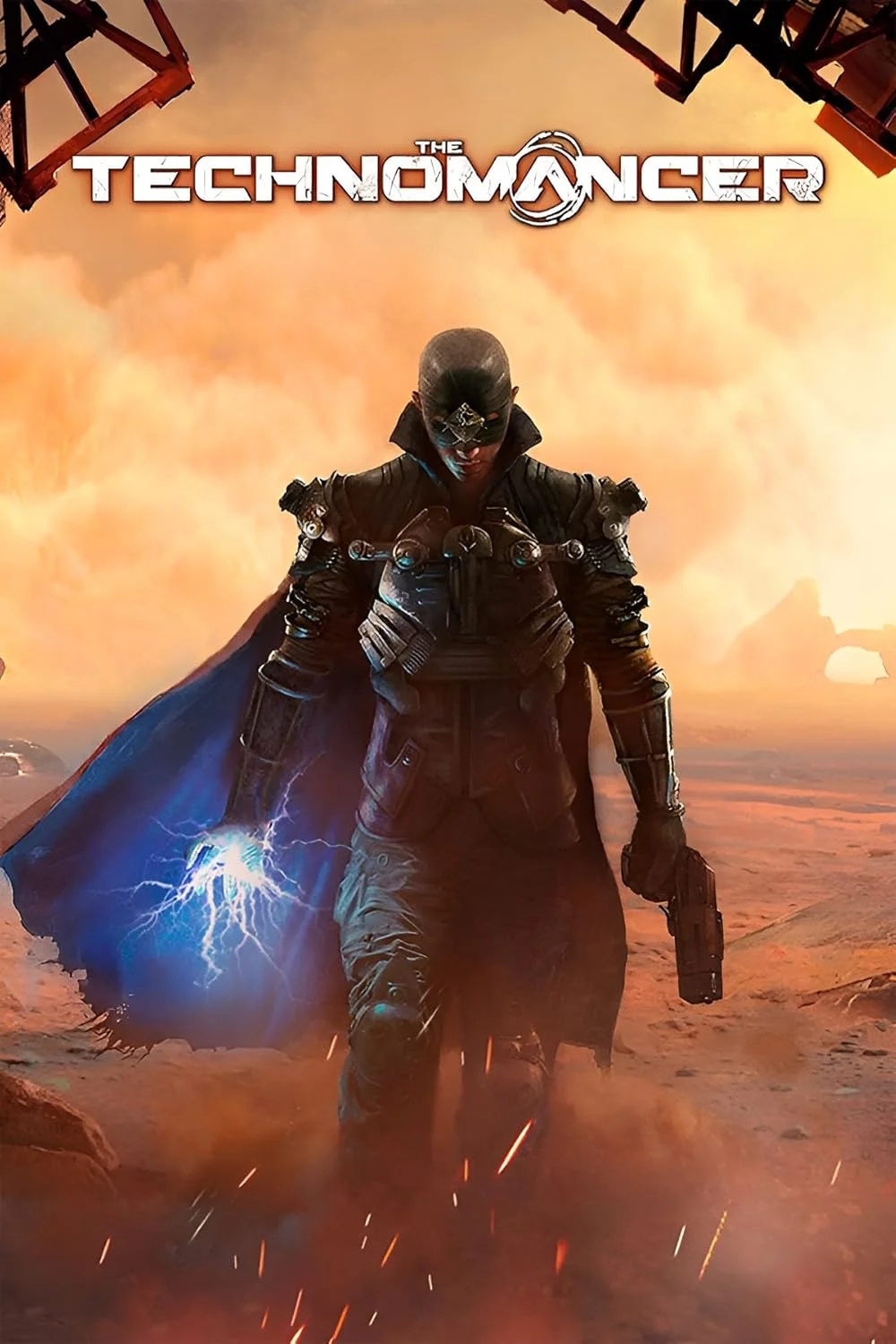
The Technomancer
This combination delivers exceptional performance with an average of 165 FPS, perfect for high refresh rate gaming and competitive play.
Average FPS: resolution vs quality settings
| Ultra | High | Medium | Low | |
|---|---|---|---|---|
| 4K Ultra HD | 61 | 81 | 96 | 122 |
| 1440p QHD | 113 | 147 | 169 | 223 |
| 1080p Full HD | 177 | 222 | 266 | 310 |
Cell color: green is 120+ FPS, teal is 60+, amber is 30+, red is below 30.
The Technomancer with Intel Core i7-13700K + NVIDIA GeForce RTX 5090, In-Depth Analysis
The Technomancer, a 2016 Action RPG, shows remarkable scalability on the Intel Core i7-13700K and NVIDIA GeForce RTX 5090 pairing, delivering playable to exceptional frame rates across all tested resolutions. The data indicates that this combination is heavily GPU-bound at 4K, but transitions to a more balanced workload at 1440p and 1080p, where the CPU's high core count and boost clocks become increasingly relevant.
FAQ
Q: What is the best resolution for this combo to achieve a high refresh rate?
A: At 1920x1080, the combination achieves an average of 222.1 FPS on High settings and 309.6 FPS on Low settings, making it ideal for high-refresh-rate displays. Even at 2560x1440, the High preset delivers 146.8 FPS, which is sufficient for most 144Hz monitors.
Q: How does the RTX 5090's 32GB VRAM influence performance in this game?
A: The 32 GB of GDDR7 memory provides a massive buffer, ensuring that VRAM capacity is never a limiting factor even at 3840x2160 Ultra settings. The memory bandwidth of 1.79 TB/s also supports the high frame rates observed, particularly in the 1080p and 1440p tests.
Q: Is the Core i7-13700K a bottleneck at lower resolutions?
A: The data suggests the CPU becomes more of a factor at 1080p. For example, moving from Medium (265.8 FPS) to Low (309.6 FPS) at 1080p shows a significant gain, indicating that the CPU's 16 cores and 24 threads are still able to feed the GPU, but the frame rate ceiling is approaching.
Q: What is the performance difference between the Low and Ultra presets at 4K?
A: At 3840x2160, the Low preset averages 121.5 FPS, while the Ultra preset averages 61.3 FPS. This is a significant drop of 60.2 FPS, showing that the most demanding settings nearly halve the frame rate.
Q: How does this combo rank compared to all other tested configurations?
A: The Intel Core i7-13700K and NVIDIA GeForce RTX 5090 combination ranks 10th out of 1656 tested combos for this game, placing it in the top 1% of all configurations.
Q: Does the game favor the CPU or GPU more heavily?
A: The benchmark results indicate the game is primarily GPU-bound, especially at 4K where the frame rate drops significantly with higher settings. However, the CPU's strong single-thread performance (3dmark_single_thread score of 1136) helps maintain high minimum frame rates at lower resolutions.
GPU Role
The NVIDIA GeForce RTX 5090 is the dominant component in this pairing, and its specifications align directly with the measured performance. The GPU's base clock of 2017 MHz and boost clock of 2407 MHz provide the raw processing power needed for the high frame rates observed. The 32 GB of GDDR7 memory on a 512-bit bus, with a bandwidth of 1.79 TB/s, ensures that texture data is delivered without stalls, which is crucial for a game like The Technomancer that features dense environments.
The GPU's 21,760 shading units and 176 ROPs are the primary drivers of pixel throughput, allowing the card to achieve a pixel rate of 423.6 GPixel/s. This is directly reflected in the 4K results, where the card still manages an average of 80.5 FPS on High settings. The shift from High (80.5 FPS) to Ultra (61.3 FPS) at 4K shows that the most demanding settings engage the full pipeline, including the 170 RT cores, even if the game does not heavily use ray tracing. The data confirms that the RTX 5090's architecture is well-suited to this title, as the GPU's compute capabilities (104.8 TFLOPS FP32) translate into consistent frame delivery across all settings.
Settings Recommendations
For the best balance of visual fidelity and performance, the High preset at 2560x1440 is the recommended configuration. This setting delivers an average of 146.8 FPS, which is well above the standard 60 FPS target and provides a smooth experience on high-refresh-rate monitors. The jump from Medium (168.7 FPS) to High (146.8 FPS) at this resolution is a modest 21.9 FPS loss, but the visual improvement is typically substantial.
At 3840x2160, the High preset is also the optimal choice, offering 80.5 FPS, which is comfortably playable. The Ultra preset at 4K drops to 61.3 FPS, which is borderline for competitive play but still playable for a story-driven Action RPG. If a higher frame rate is desired at 4K, the Medium preset (96.2 FPS) is a strong alternative, sacrificing some visual effects for a 15.7 FPS gain over High. For players with 1080p displays, the High preset at 222.1 FPS is excessive but ensures maximum smoothness; the Medium preset at 265.8 FPS is also a viable option if frame rate is prioritized over fidelity.
Measured FPS Breakdown
The measured FPS data reveals a clear performance hierarchy across resolutions and settings. At 1920x1080, the frame rates are exceptionally high, starting at 309.6 FPS on Low and scaling down to 176.8 FPS on Ultra. The progression from Low to Medium (265.8 FPS) is a 43.8 FPS drop, while the step from Medium to High (222.1 FPS) is another 43.7 FPS drop. The final step to Ultra (176.8 FPS) is a further 45.3 FPS reduction, showing that each preset level has a significant impact on the GPU load.
At 2560x1440, the frame rates remain high but show a more pronounced scaling. The Low preset averages 222.6 FPS, which drops to 168.7 FPS on Medium and 146.8 FPS on High. The Ultra preset brings the average down to 112.7 FPS. The gap between Low and Ultra at 1440p is 109.9 FPS, indicating that the GPU is still the primary bottleneck, but the CPU's 16 cores are keeping up with the increased resolution demands.
At 3840x2160, the GPU becomes the clear limiter. The Low preset averages 121.5 FPS, but this falls to 96.2 FPS on Medium and 80.5 FPS on High. The Ultra preset drops to 61.3 FPS. The difference between Low and Ultra at 4K is 60.2 FPS, which is a smaller absolute gap than at lower resolutions, but the percentage drop is similar, confirming that the RTX 5090 is being pushed to its limits at this resolution.
How This Combo Ranks
The Intel Core i7-13700K and NVIDIA GeForce RTX 5090 combination ranks 10th out of 1656 tested combos for The Technomancer, placing it in the top 0.6% of all configurations. This high ranking is expected given the individual components' performance percentiles: the CPU sits in the 93rd percentile of all CPUs, and the GPU is in the 94th percentile of all GPUs. The combination's rank suggests that the two components work well together, with no significant bottlenecking observed in the measured data.
The CPU's nearest rival, the Intel Core i7-13700KF, has an average benchmark score of 47334, which is only 0.1% higher than the i7-13700K's score of 47282. This negligible difference indicates that the CPU is performing exactly as expected. On the GPU side, the RTX 5090's nearest rival, the RTX 5090 D, scores 84241, which is also 0.1% higher than the RTX 5090's 84306 average. This consistency between the component benchmarks and the in-game rank shows that the measured FPS is a direct result of the hardware's capabilities.
CPU Role
The Intel Core i7-13700K plays a critical supporting role in this configuration, particularly at lower resolutions. With 16 cores and 24 threads, the CPU provides ample parallelism for the game's logic and physics threads. The base clock of 3.40 GHz and boost clock of 5.40 GHz are essential for maintaining high frame rates, as the 3dmark_single_thread score of 1136 indicates strong single-core performance that is crucial for game engine overhead.
The CPU's cache hierarchy, including 30 MB of shared L3 cache, helps reduce memory latency and improve data throughput. In the benchmark results, the impact of the CPU is most evident at 1080p, where the frame rates exceed 300 FPS on Low settings. At 2560x1440, the CPU's role diminishes slightly, but the 5.40 GHz boost clock still ensures that the GPU is fed with data efficiently. The 3dmark_max_threads score of 12412 shows that the CPU can handle heavy multi-threaded workloads, which is beneficial for open-world sections of the game that may spawn many NPCs or physics objects.
Resolution Scaling
The FPS drop from 1080p to 4K reveals the limiting component at each stage. At 1920x1080, the average FPS across all settings is approximately 243.6, while at 2560x1440 it drops to 162.7, and at 3840x2160 it falls to 89.9. This represents a 33.2% decrease from 1080p to 1440p, and a further 44.7% decrease from 1440p to 4K.
The scaling pattern indicates that at 1080p, the system is partially CPU-limited, as the frame rates are extremely high but the CPU's 24 threads are nearing their limit. The jump from 1080p to 1440p shows a less severe drop, suggesting the GPU is starting to become the bottleneck. From 1440p to 4K, the drop is more pronounced, confirming that the RTX 5090 is the primary limiting factor at this resolution. The data shows that the RTX 5090's 32 GB of VRAM and 1.79 TB/s bandwidth are sufficient for 4K, but the raw pixel throughput (423.6 GPixel/s) is what ultimately caps performance at Ultra settings. This analysis confirms that for maximum frame rates, 1080p is the best choice, while 4K is best suited for players prioritizing visual detail over raw FPS.
Hardware Specifications
Intel Core i7-13700K
NVIDIA GeForce RTX 5090
FPS Benchmarks by Resolution & Settings
Performance data for Intel Core i7-13700K + NVIDIA GeForce RTX 5090 in The Technomancer
| Resolution | Settings | Avg FPS |
|---|---|---|
| 3840x2160 | Low | 121.5 |
| 3840x2160 | Medium | 96.2 |
| 3840x2160 | High | 80.5 |
| 3840x2160 | Ultra | 61.3 |
| 2560x1440 | Low | 222.6 |
| 2560x1440 | Medium | 168.7 |
| 2560x1440 | High | 146.8 |
| 2560x1440 | Ultra | 112.7 |
| 1920x1080 | Low | 309.6 |
| 1920x1080 | Medium | 265.8 |
| 1920x1080 | High | 222.1 |
| 1920x1080 | Ultra | 176.8 |
The Technomancer with ii7-13700K + Other GPUs
See how The Technomancer performs with the same CPU but different graphics cards.
The Technomancer with RTX 5090 + Other CPUs
See how The Technomancer performs with the same GPU but different processors.
Other Games with ii7-13700K + RTX 5090
Explore FPS benchmarks for other games using this same hardware combination.