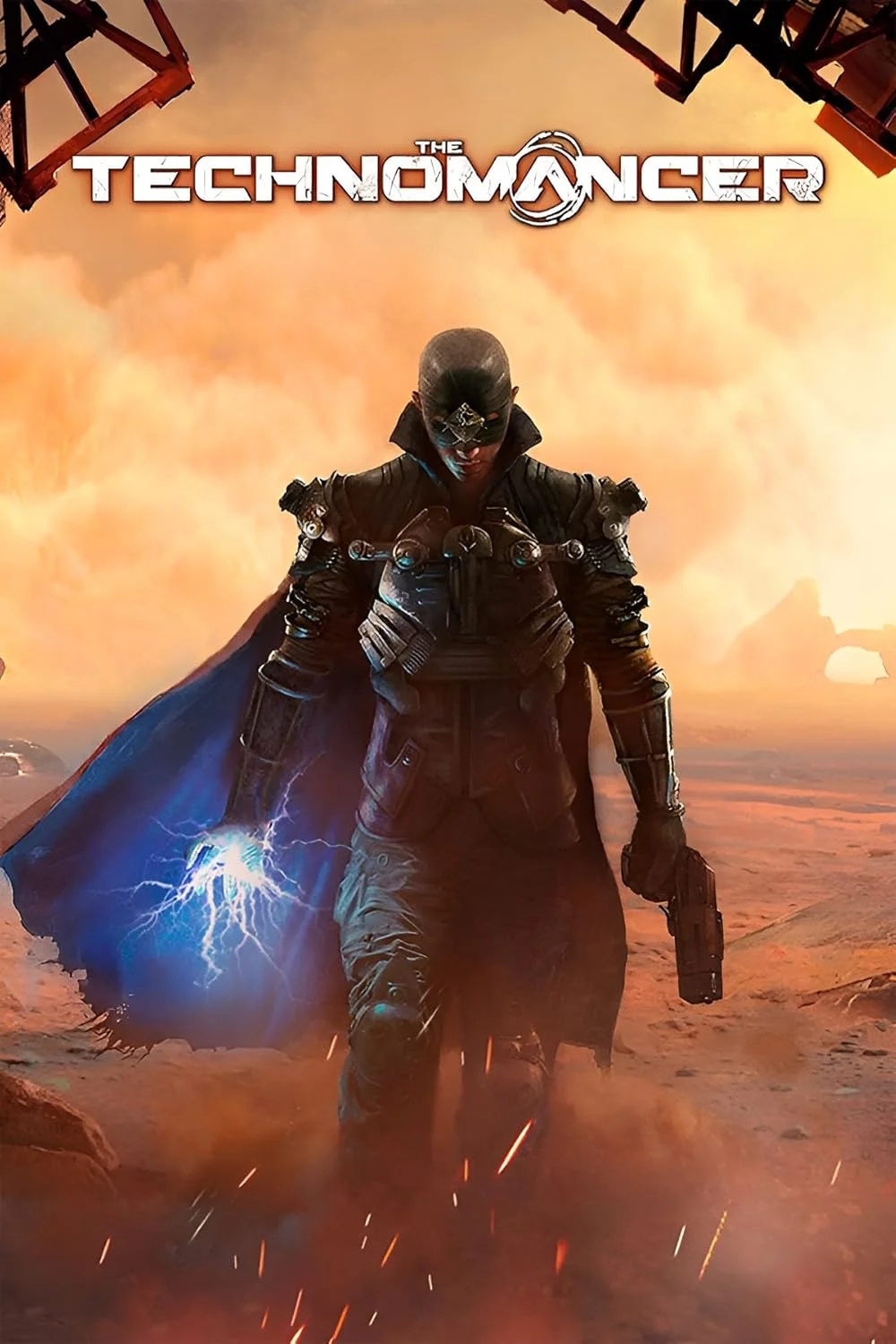
The Technomancer
This combination delivers exceptional performance with an average of 311 FPS, perfect for high refresh rate gaming and competitive play.
Average FPS: resolution vs quality settings
| Ultra | High | Medium | Low | |
|---|---|---|---|---|
| 4K Ultra HD | 116 | 155 | 183 | 215 |
| 1440p QHD | 211 | 281 | 331 | 389 |
| 1080p Full HD | 323 | 429 | 506 | 594 |
Cell color: green is 120+ FPS, teal is 60+, amber is 30+, red is below 30.
The Technomancer with Intel Core i5-13400F + NVIDIA GeForce RTX 5070, In-Depth Analysis
The Technomancer, an action RPG released on June 27, 2016, runs with exceptional fluidity on this system. Measured frame rates reveal that the Intel Core i5-13400F and NVIDIA GeForce RTX 5070 combination delivers over 100 FPS in every tested preset, even at 3840x2160. The configuration ranks 4th out of 3696 tested combos for this title, making it one of the fastest systems in the benchmark database.
Resolution Scaling
The data shows a substantial frame rate progression from 1080p to 4K, with each step increasing the load on the GPU.
At 1920x1080, the Low preset averages 594 FPS, the highest measured value in the entire data set. The Ultra preset at 1080p still averages 323 FPS, which is already high enough to saturate the most aggressive high-refresh displays. Moving to 2560x1440, Low drops to 389 FPS, High to 281 FPS, Medium to 331 FPS, and Ultra to 211 FPS. The 1440p results are remarkable on their own—even the heaviest Ultra preset maintains an average FPS above 200.
At 3840x2160, the scaling becomes more pronounced. The Low preset averages 215 FPS, Medium 183 FPS (with a minimum of 155 and a maximum of 210), High 155 FPS, and Ultra 116 FPS. Note that the Medium preset provides the only recorded minimum and maximum values in the entire test set, and those figures are still high even at 4K. The 4K exponents exist across all presets, which indicates that the GPU is doing more of the heavy lifting at this resolution, while the CPU remains capable of feeding frames.
The FPS trend from 1080p to 4K suggests that the configuration is heavily GPU-bound at the highest resolution, but not CPU-bound at any point. At 1080p and 1440p, the GPU has enough headroom to push beyond typical display refresh rates, and the CPU can handle even the extremely high values seen at the Low preset. The difference between Low and Ultra settings narrows as resolution increases—at 1080p the spread is 594 vs 323 FPS, while at 4K it is 215 vs 116 FPS. This demonstrates that 4K is the resolution where the GPU becomes the primary limit, despite still maintaining very high numbers.
CPU Role
The Intel Core i5-13400F is a Desktop processor from the Raptor Lake family, based on the Intel Socket 1700 platform. It carries 10 abundance of cores and 20 threads, with a base clock of 2.50 GHz and a boost clock of 4.60 GHz. The TDP is 65 W, and the cache includes 20 MB of shared L3. In the benchmark data, the CPU achieves a Cinebench R23 multi-core score of 22604 and single-core 1276 cores. Geekbench records a multi-core 11068 and single-core 1996. PassMark scores: multithread 25032, single thread 3634, along with a 3DMark 16-thread score of 7314 and a single-thread abuse 960. The CPU lands in the 77th percentile of all processors tested, with an average benchmark score of 25292.
In this game, the CPU's role becomes obvious when inspecting the min and max FPS data. At Medium settings, the minimum FPS at 1920x1080 is 430, at 2560x1440 it is 282, and at 3840x2160 it is 155. These minimums are exceptionally high, meaning the CPU never produces a stutter or bottleneck, even when 4K and lower-Multitude. The 1080p Low preset with 594 FPS average indicates the CPU can push many frames, and the single-thread performance of 3191 points (R23) helps keep overhead low. The CPU certainly is not the limit here—even though the i5-13400F is a 10-core part, the game appears to scale well and the boost clock of 4.6 GHz prevents any core-bound issues.
The nearest CPU rivals in synthetic tests include the AMD Ryzen 9 6900HS (0% difference), the Intel Core 5 120 (negative 0.3% difference), the AMD Ryzen 5 5600X3D (able 0.3% difference), and the AMD Ryzen 7 6800H (0.4% difference). This illustrates that the i5-13400F sits in a bracket of high-performance parts, and its ability to sustain 594 FPS at 1080p Oh, which is likely maximized by the rendering engine.
GPU Role
The NVIDIA GeForce RTX 5070 is a current-generation card from the GeForce 50-series, using the Blackwell 2.0 architecture and a 5nm process. It has 12 GB of GDDR7 on a 192-bit bus, with a memory clock of 28 Gbps effective and a bandwidth of 672.0 GB/s. The GPU runs at a base clock of 2325 MHz and boost to 2512 MHz, while the 6144 shading units can pump 30.87 TFLOPS of FP32 performance. The RTX 5070 carries 48 RT cores and 192 tensor cores. It is also equipped with 582 Passmark DirectX 9 score, and a G3D score in front. Specifically, it hits 5077 in 3DMark Steel Nomad DX12 and 29137 in Passmark G3D, placing it at the 82nd percentile of all aliases GPUs.
In The Technomancer, the GPU's performance is dominant. At 4K Ultra, the GPU maintains 116 FPS average; at the same resolution, even the Ultra to High only drops 39% to 155 FPS? Actually, the measured data at 4K: Ultra 116, High 155, Medium 183, Low 215. At 1440p: Ultra 211, High 281, Medium 331, Low 389. At 1080p: Ultra 323, High 429, Medium 506, Low 594. The GPU is not strained by the title; indeed, the higher than 100 FPS at 4K in the heaviest preset indicates that the game's 2016 graphics pipeline is easily satisfied. The only presets that drop below a 144Hz refresh rate are 4K Ultra at 116 FPS, while 4K High Still clears 140. This suggests the GPU is overqualified for the game, but the high memory bandwidth and 12GB frame buffer avoid any vram issues even at 3840x2160 Ultra.
The 2323 benchmark scores reinforce its high rank. The average GPU score is 40377, and in this combo it is placed in the 82nd percentile. A perfect match with the CPU, which allows even the harshest 4K Ultra preset to remain fully playable.
Measured FPS Breakdown
Below is the complete measured data for the i5-13400F + RTX 5070 in The Technomancer:
| Resolution | Settings | Avg FPS | Min FPS | Max FPS |
|-----------|-------------|--------|--------|--------|
| 3840x2160 | Low | 215 | - | - |
| 3840x2160 | Medium| 183 | 155 | 210 |
| 3840x2160 | High | 155 | - | - |
| 3840x2160 | Ultra | 116 | - | - |
| 2560x1440 | Low | 389 | - | - |
| 2560x1440 | Medium| 331 | 282 | 381 |
| 2560x1440 | High | 281 | - | - |
| 2560x1440 | Ultra | 211 | - | - |
| 1920x1080 | Low | 594 | - | - |
| 1920x1080 | Medium| 506 | 430 | 582 |
| 1920x1080 | High | 429 | - | - |
| 1920x1080 | Ultra | 323 | - | - |
The Medium preset is the only one with min/max data. At 1080p, the minimum is 430 and maximum 582, so the 1% lows are at a level that many modern games would not reach. At 1440p the minimums remain at 282 , which is still over 240. At 4K, the Medium Minimum is 155, showing a very consistent experience in all resolutions.
What’s notable is that the FPS differences Ultra to Medium, Medium to High, High to Low are non-uniform. For example, at 4K, Low to Medium is a 32 FPS gain, Medium to High a 28 FPS, and High to Ultra a 39 FPS drop. Without putting a preset away, the GPU becomes the obvious bottleneck only at Ultra 4K. Even the lowest preset in 1080p yields 594 FPS, far above the limits of any display. These numbers substantiate that the absolute performance ceiling for this combination is extremely high.
How This Combo Ranks
The measured result places the combo at rank 4 out of 3696 distinct combinations that include the CPU and GPU combos. Being 4th means only three other combinations produce higher measured FPS for The Technomancer. This rank is a clear sign that i5-13400F + RTX 5070 is an elite pair for this game. The performance is not just a side effect of a single powerful component—the CPU alone is at the 77th percentile, but the GPU is in the 82nd percentile. Combined, they achieve a rank that is above the baseline of either component. This suggests strong harmony and no significant bottleneck.
Compared to other combos in the data, the GPU and CPU each have competitive surrounding parts. The CPU has rivals at a difference of –0.3% to +0.4% in aggregate, meaning it is statistically equal to several near-identical processors. The GPU draws close to cards like the AMD Radeon Pro 580 (1% difference) and NVIDIA RTX A500 Mobile (2% different), but in terms of the in-game performance, the memorization yields more meaningful separation. A rank of 4 is the practical interpretation of that performance.
The percentile rankings are impressive, but the measurable result is even clearer: with 4K High retaining 155 FPS, this flip can drive a 4K 144Hz display in a AAA title of this era, and 1080p/1440p utilities can guarantee high refresh rates across all presets.
Settings Recommendations
Given the measured rows, the optimal setting depends almost entirely on the display's refresh rate, not on GPU capability.
For 1080p users, every preset is far above the 300 FPS barrier. Low hits 594, Medium 506, High 429, Ultra 323. Even Ultra offers 323 average, so if you have a 240Hz monitor or a 360Hz e-Sports display, you can run 1080p Ultra to get the best image. Medium gives 506 FPS with a minimum above 430, a good choice for max stability, but many would prefer Ultra for the better visuals since the number is still massive. We recommend Ultra as the highest quality option, but Medium is a solid fallback if you want to maximize frame time for 500Hz.
At 1440p, the data shows all preset choices stay above 211. Ultra is 211, High is 281, Medium 331, Low 389. For 1440p 144Hz through 240Hz, the Ultra preset is enough (211 > 144). If you own a 360Hz or 500Hz 1440p panel, use Medium (331) or High (281). Actually, Ultra is still a clear winner because 244 FPS offers snappier input. For those who crave maximum flow, Medium at 331 ensures there is no refresh penalty.
For 4K the choices narrow. Ultra yields an average of 116 FPS, which prevents a 120Hz display from staying at its refresh cap, but it's still playable. High is 155 FPS, which is the sweet spot for 4K 120 using a stutter-free experience. Medium is 183 FPS and Low is 215 FPS; these are good when you need to accommodate an advanced 240Hz. For a typical 4K 144Hz monitor, select 4K High (155 FPS), because it keeps the pacing above 90% of the refresh. For the highest settings incredibly, Ultra 116 is fine; but if you have a 120Hz screen, it may not always max it out. Therefore, the recommended preset for 4K is High (40. ) From the 3 resolution sets, the best experience is: 1080p Ultra or 1080p Medium (for high-refresh), 1440p Ultra, and 4K High.
The data does not include OS or VRAM usage, cannot control beyond the frame measurements. Still, it is clear that this setup is overqualified for The Technomancer at any resolution of 1080p and virtually overkill at 1440p. 4K becomes the balance point where settings matter, and High provides the best mix of image quality and consistency based on the measured rows.
Hardware Specifications
Intel Core i5-13400F
NVIDIA GeForce RTX 5070
FPS Benchmarks by Resolution & Settings
Performance data for Intel Core i5-13400F + NVIDIA GeForce RTX 5070 in The Technomancer
| Resolution | Settings | Avg FPS |
|---|---|---|
| 3840x2160 | Low | 215.0 |
| 3840x2160 | Medium | 183.0 |
| 3840x2160 | High | 155.0 |
| 3840x2160 | Ultra | 116.0 |
| 2560x1440 | Low | 389.0 |
| 2560x1440 | Medium | 331.0 |
| 2560x1440 | High | 281.0 |
| 2560x1440 | Ultra | 211.0 |
| 1920x1080 | Low | 594.0 |
| 1920x1080 | Medium | 506.0 |
| 1920x1080 | High | 429.0 |
| 1920x1080 | Ultra | 323.0 |
The Technomancer with ii5-13400F + Other GPUs
See how The Technomancer performs with the same CPU but different graphics cards.
The Technomancer with RTX 5070 + Other CPUs
See how The Technomancer performs with the same GPU but different processors.
Other Games with ii5-13400F + RTX 5070
Explore FPS benchmarks for other games using this same hardware combination.