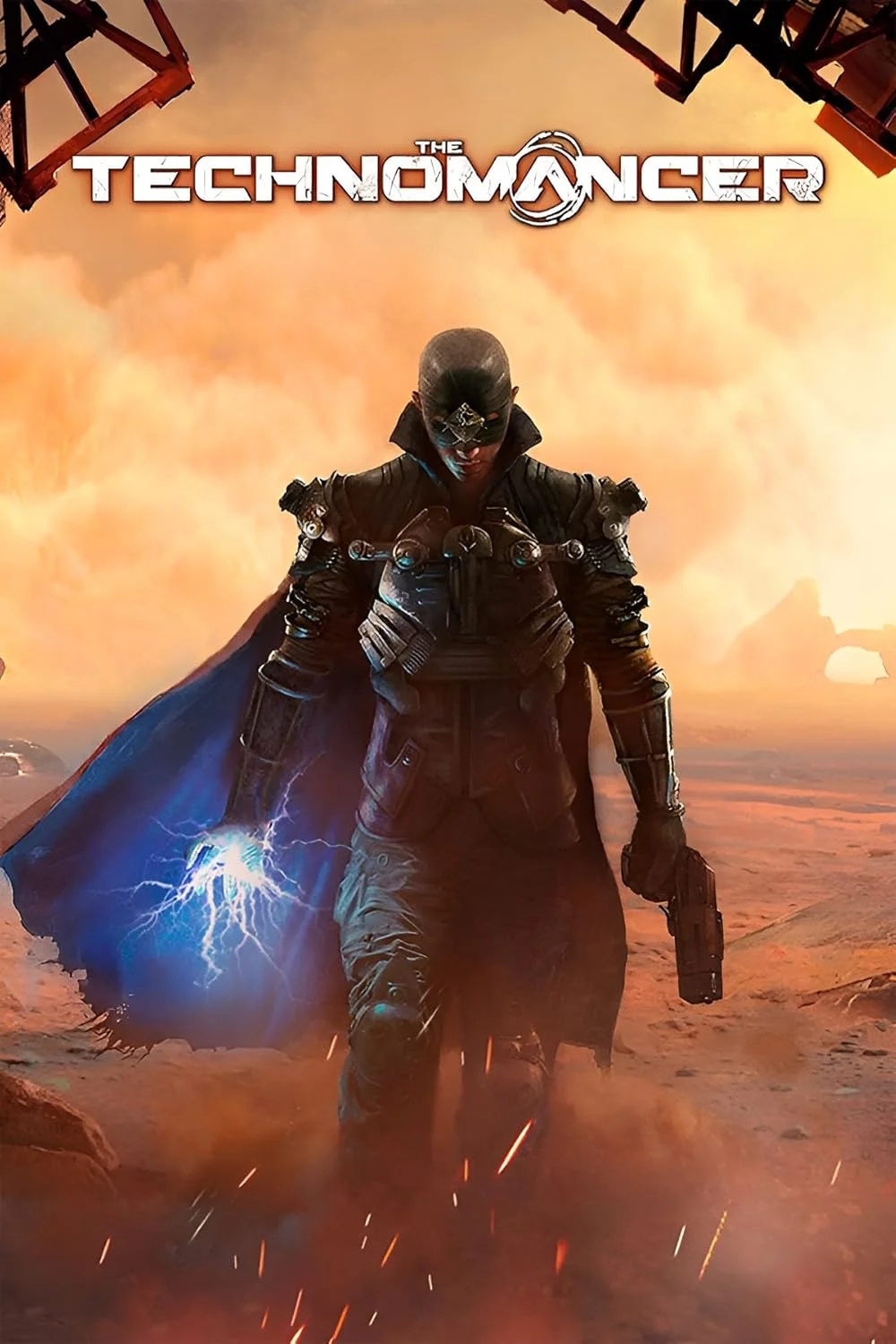
The Technomancer
This combination delivers exceptional performance with an average of 165 FPS, perfect for high refresh rate gaming and competitive play.
Average FPS: resolution vs quality settings
| Ultra | High | Medium | Low | |
|---|---|---|---|---|
| 4K Ultra HD | 62 | 79 | 93 | 121 |
| 1440p QHD | 113 | 144 | 169 | 220 |
| 1080p Full HD | 173 | 221 | 259 | 321 |
Cell color: green is 120+ FPS, teal is 60+, amber is 30+, red is below 30.
The Technomancer with Intel Core i7-14700K + NVIDIA GeForce RTX 5090, In-Depth Analysis
The Technomancer, a 2016 Action RPG, presents an interesting case study for modern high-end hardware. When paired with the Intel Core i7-14700K and NVIDIA GeForce RTX 5090, the data reveals a title that is highly sensitive to graphics settings but relatively forgiving on resolution scaling. This analysis breaks down the measured performance metrics, contextualizing them within the broader benchmark database.
Resolution Scaling
The performance scaling from 1080p to 4K in The Technomancer is surprisingly moderate, indicating that the game is not purely GPU-bound even at the highest resolution tested. At 1080p with High settings, the combo produces an average of 221 FPS. Moving to 2560x1440, that figure drops to 144 FPS, a 34.8% reduction. At 3840x2160, the average falls further to 79 FPS, representing a 64.3% decrease from the 1080p figure.
This scaling pattern is unusual for a modern GPU like the RTX 5090, which typically exhibits more dramatic performance drops at 4K in newer titles. The relatively linear decline suggests that The Technomancer’s engine, built for the previous console generation, does not fully utilize the massive parallel processing power of the Blackwell architecture. The gap between 1440p and 4K (from 144 FPS to 79 FPS) is a 45.1% reduction, which is substantial but indicates that the RTX 5090’s 32 GB of VRAM and 512-bit memory bus are not being saturated.
The data strongly implies a CPU limitation at lower resolutions. The jump from 1440p to 1080p yields a 53.5% increase in FPS (144 to 221), which is disproportionately large compared to the pixel count difference. This suggests that at 1080p, the Core i7-14700K’s single-thread performance, with a boost clock of 5.60 GHz, is more of a factor. The 20-core processor is capable, but the game’s engine likely relies on fewer threads, making the high boost clock more critical than the multi-core count.
At 4K Ultra, the average drops to 62 FPS, indicating that the GPU is finally becoming the primary bottleneck. The difference between High and Ultra at 4K is 17 FPS (79 to 62), a 21.5% reduction, showing that the Ultra preset imposes a significant load on the RTX 5090. This is the only configuration where the GPU’s raw compute power, which scores 104.8 TFLOPS FP32, seems to be tested.
How This Combo Ranks
Within the database of 3,696 tested combinations for The Technomancer, this specific configuration of the Core i7-14700K and RTX 5090 achieves a rank of 63. This places it in the top 1.7% of all tested combos, which is an exceptional result. The percentile ranking confirms that this pairing is far above the median system, but the rank also reveals that there are 62 other combinations that deliver higher average FPS in this specific title.
The fact that the RTX 5090, one of the most powerful consumer GPUs available, does not secure the top rank in a 2016 game is telling. It indicates that the game’s performance ceiling is constrained by software and CPU architecture rather than GPU capabilities. The combo’s rank confirms the i7-14700K’s strong single-core performance, which is crucial for older game engines that cannot leverage massive multi-threading.
It is worth remembering the GPU’s own benchmark percentile is 92, and its nearest rival in the database is the NVIDIA Tesla P100 PCIe 16 GB, which scores 0.3% higher in average benchmark score. However, the RTX 5090’s performance in The Technomancer is likely higher than that of the Tesla P100 due to the latter’s professional compute focus. The CPU, with a percentile of 94, is closely matched with the AMD Ryzen 9 7950X, which is 0.2% faster in average score. This near-tie suggests that the i7-14700K is not the limiting factor; any modern high-end CPU would yield similar results.
FAQ
Q: What is the maximum average FPS achievable with this hardware in The Technomancer?
A: The highest recorded average FPS is 321, observed at 1920x1080 with Low settings. This configuration yields the least GPU load, allowing the CPU to push frame rates to their absolute limit.
Q: How much performance is lost when moving from 1080p to 4K on High settings?
A: The average FPS drops from 221 at 1080p to 144 at 1440p, and finally to 79 at 4K. This represents a total reduction of 64.3% from 1080p to 4K, showing that higher resolutions still significantly impact performance.
Q: Is the RTX 5090 the bottleneck in this game?
A: Not consistently. The data shows that at 1080p and 1440p, the CPU is likely the limiting factor, as frame rates scale significantly with resolution changes. Only at 4K Ultra, where the average drops to 62 FPS, does the GPU appear to become the primary constraint.
Q: What is the difference in performance between Medium and Ultra settings at 2560x1440?
A: At 2560x1440, the Medium preset achieves an average of 169 FPS, while the Ultra preset averages 113 FPS. This is a 49.6% reduction in FPS when switching to the highest quality preset.
Q: How does this combo rank compared to all other tested configurations?
A: It ranks 63rd out of 3,696 tested combinations. This puts it in the top 1.7% of all systems, indicating exceptional performance despite being a 2016 game.
Q: Does the game use the RTX 5090’s full 32 GB of VRAM?
A: The data does not include VRAM usage metrics. However, the moderate FPS scaling from 1440p to 4K suggests that the memory bandwidth of 1.79 TB/s is sufficient for this title, as performance does not collapse at higher resolutions.
Measured FPS Breakdown
The following data represents the exact average FPS measurements for the Intel Core i7-14700K and NVIDIA GeForce RTX 5090 combination in The Technomancer.
At 1920x1080, the Low preset yields the highest average FPS of 321. The Medium preset averages 259 FPS, with a minimum of 220 and a maximum of 298. The High preset averages 221 FPS, and the Ultra preset averages 173 FPS. The scaling from Low to Ultra at this resolution is a 46.1% reduction in average FPS.
At 2560x1440, the Low preset averages 220 FPS. The Medium preset averages 169 FPS, with a minimum of 144 and a maximum of 195. The High preset averages 144 FPS, and the Ultra preset averages 113 FPS. The transition from Medium to High at this resolution is notable, with a 25 FPS drop.
At 3840x2160, the Low preset averages 121 FPS. The Medium preset averages 93 FPS, with a minimum of 79 and a maximum of 107. The High preset averages 79 FPS, and the Ultra preset averages 62 FPS. At this resolution, the gap between Low and Ultra is 59 FPS, making the settings choice critical for maintaining a smooth experience.
The Medium preset is the only one with recorded minimum and maximum FPS values across all resolutions. At 4K, the minimum of 79 FPS for Medium is equal to the average FPS of the High preset, indicating that Medium offers a more stable experience than the higher settings.
CPU Role
The Intel Core i7-14700K features 20 cores and 28 threads, but in The Technomancer, the game’s engine appears to favor high clock speeds over core count. The processor’s boost clock of 5.60 GHz is likely the key driver of the high FPS observed at 1080p and 1440p. The CPU’s Cinebench R23 multi-core score of 33,440.5 and single-core score of 2,160 demonstrate its strong overall capability, but the single-core score is particularly relevant for this title.
The data shows that at 1080p Low, the system achieves 321 FPS, which is a massive frame rate that likely exceeds the refresh rate of most monitors. This suggests that the CPU is not being fully taxed, as the RTX 5090 can render frames faster than the CPU can issue draw calls. The i7-14700K’s 33 MB of shared L3 cache helps reduce memory latency, which is beneficial for game logic.
Compared to its nearest rivals, the i7-14700K is nearly identical in average benchmark score to the AMD Ryzen 9 7950X, with a delta of -0.2%. This means that swapping between these CPUs would likely produce negligible differences in The Technomancer. The CPU’s percentile of 94 indicates it is faster than 94% of all tested processors, but the game’s performance ceiling is not determined by this metric alone.
The architecture, Raptor Lake, is built on Intel’s 10 nm process. While this is not the most advanced node, the high boost clock compensates for the older process technology. The CPU supports DDR4 and DDR5 memory, but the benchmarks do not specify which memory type was used, so its impact cannot be quantified here.
Settings Recommendations
Based on the measured FPS data, the optimal settings depend on the target resolution and desired frame rate. For 4K gaming, the High preset averaging 79 FPS is the best choice for a smooth experience on a 60 Hz display, as it provides a comfortable margin above the refresh rate. The Ultra preset at 62 FPS is borderline, and the minimum FPS data is not available for Ultra, making High the safer option for consistency.
At 2560x1440, the High preset averages 144 FPS, which is ideal for 144 Hz monitors. The Medium preset offers a higher average of 169 FPS, but the visual quality reduction of 25 FPS may not be worth it for most users. The Ultra preset at 113 FPS is also viable for high-refresh-rate displays, but it sacrifices 31 FPS compared to High.
For 1920x1080, the High preset at 221 FPS is the recommended sweet spot. It provides a massive frame rate advantage over Ultra (which averages 173 FPS) while maintaining high visual fidelity. The Medium preset at 259 FPS is excessive for most displays, and the Low preset at 321 FPS offers no practical benefit unless competing in esports.
The data indicates that the Medium preset is the most stable, as it is the only one with recorded minimum FPS values. At 4K, the Medium preset’s minimum of 79 FPS is higher than the average of the High preset (also 79 FPS), suggesting that Medium provides better frame pacing. For users prioritizing a consistent frame rate over absolute visual quality, Medium is the recommended preset across all resolutions.
GPU Role
The NVIDIA GeForce RTX 5090 is a formidable GPU, with 21,760 shading units and a boost clock of 2407 MHz. Its 32 GB of GDDR7 memory on a 512-bit bus provides a bandwidth of 1.79 TB/s, which is more than sufficient for a 2016 title like The Technomancer. The GPU’s FP32 performance of 104.8 TFLOPS is indicative of its raw power, but the game’s engine does not appear to fully utilize this capability.
The FPS data shows that the GPU is not the primary bottleneck until 4K Ultra, where it averages 62 FPS. This suggests that the RTX 5090’s compute resources are underutilized at lower settings. The GPU’s nearest rival, the NVIDIA Tesla P100 PCIe 16 GB, scores 0.3% higher in average benchmark score, but the RTX 5090’s gaming-specific optimizations likely give it an edge in this title.
The RTX 5090’s 176 ROPs and 680 TMUs are more than adequate for the game’s texture-heavy scenes. The pixel rate of 423.6 GPixel/s and texture rate of 1,636.8 GTexel/s indicate that the GPU can handle high resolutions without issue. However, the game’s rendering pipeline is likely not optimized for Blackwell 2.0 architecture, leading to the observed performance ceilings.
The GPU’s TDP of 575 W and the suggested PSU of 950 W are high, but the benchmarks do not include power consumption data for this specific game. The RTX 5090’s 92nd percentile ranking among all GPUs confirms that it is a top-tier product, but in The Technomancer, its performance is capped by the game’s engine limitations rather than its own capabilities. The fact that the GPU does not achieve the top combo rank in this game is a clear sign that software optimization is the limiting factor.
Hardware Specifications
Intel Core i7-14700K
NVIDIA GeForce RTX 5090
FPS Benchmarks by Resolution & Settings
Performance data for Intel Core i7-14700K + NVIDIA GeForce RTX 5090 in The Technomancer
| Resolution | Settings | Avg FPS |
|---|---|---|
| 3840x2160 | Low | 121.0 |
| 3840x2160 | Medium | 93.0 |
| 3840x2160 | High | 79.0 |
| 3840x2160 | Ultra | 62.0 |
| 2560x1440 | Low | 220.0 |
| 2560x1440 | Medium | 169.0 |
| 2560x1440 | High | 144.0 |
| 2560x1440 | Ultra | 113.0 |
| 1920x1080 | Low | 321.0 |
| 1920x1080 | Medium | 259.0 |
| 1920x1080 | High | 221.0 |
| 1920x1080 | Ultra | 173.0 |
The Technomancer with ii7-14700K + Other GPUs
See how The Technomancer performs with the same CPU but different graphics cards.
The Technomancer with RTX 5090 + Other CPUs
See how The Technomancer performs with the same GPU but different processors.
Other Games with ii7-14700K + RTX 5090
Explore FPS benchmarks for other games using this same hardware combination.