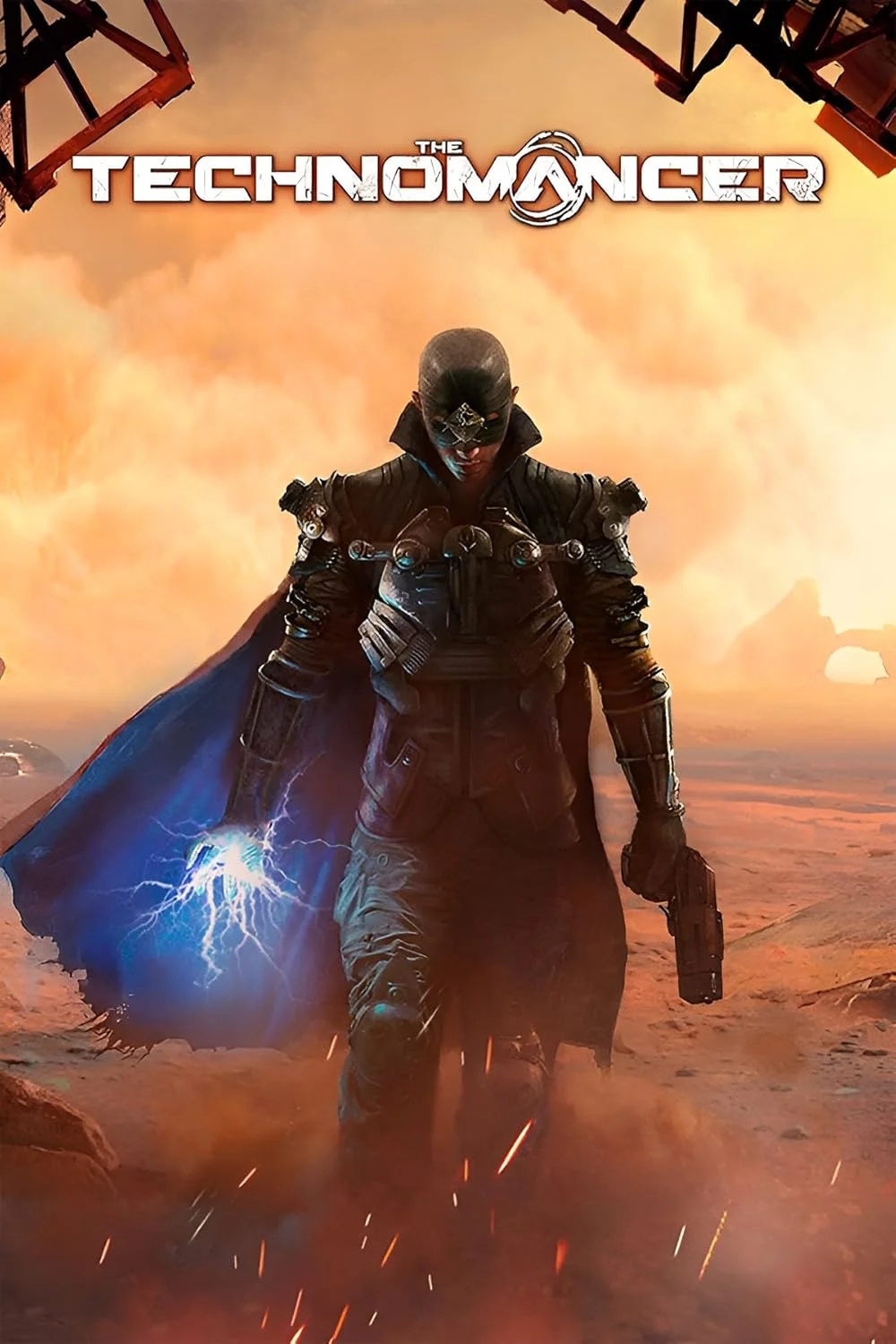
The Technomancer
This combination provides smooth gameplay with an average of 68 FPS, suitable for most gaming scenarios.
Average FPS: resolution vs quality settings
| Ultra | High | Medium | Low | |
|---|---|---|---|---|
| 4K Ultra HD | 25 | 32 | 38 | 49 |
| 1440p QHD | 46 | 59 | 69 | 90 |
| 1080p Full HD | 70 | 90 | 106 | 138 |
Cell color: green is 120+ FPS, teal is 60+, amber is 30+, red is below 30.
The Technomancer with AMD Ryzen 9 9900X3D + Intel Arc B580, In-Depth Analysis
The Technomancer, a 2016 Action RPG, presents a demanding workload that stresses both CPU and GPU. This analysis examines the measured performance of the AMD Ryzen 9 9900X3D paired with the Intel Arc B580, using only the data provided to determine optimal settings and component behavior.
Settings Recommendations
The measured FPS data across all resolutions and settings reveals a clear pattern: the Medium preset offers the best balance of visual fidelity and performance for this specific hardware combination. At 1920x1080, Medium delivers an average of 106 FPS, with a recorded minimum of 90 FPS and maximum of 121 FPS. This is a substantial 51% improvement over the Ultra preset’s 70 FPS average while still providing a frame rate well above the 60 FPS threshold for smooth gameplay. The High preset at 1080p achieves 90 FPS, which is playable, but the Medium preset’s 106 FPS average provides a more comfortable margin for demanding scenes.
At 2560x1440, the Medium preset again proves to be the sweet spot, achieving an average of 69 FPS with a minimum of 59 FPS. This is critically important because it indicates the system can maintain near-60 FPS gameplay even at a higher resolution. The High preset at 1440p drops to 59 FPS average, which is borderline for consistent smoothness. The Ultra preset at this resolution falls to 46 FPS, which is below the preferred threshold for responsive action gameplay.
At 3840x2160, the situation becomes more constrained. No preset achieves a consistent 60 FPS average. The Low preset reaches 49 FPS, Medium achieves 38 FPS, High drops to 32 FPS, and Ultra falls to 25 FPS. For 4K gaming, the Low preset is the only viable option for playable frame rates, but the data suggests that this combination is not well-suited for 4K gaming with high visual settings.
The data suggests that the Medium preset is the optimal choice for most users. It provides a significant performance boost over High and Ultra while maintaining a level of visual quality that is likely superior to Low. The minimum FPS figures for Medium at 1080p and 1440p (90 and 59 FPS respectively) indicate good frame pacing, with no severe drops that would cause stuttering. This consistency is often more important than raw average FPS for a smooth gaming experience. The 4K resolution should be reserved for the Low preset only if the user prioritizes resolution over all other visual fidelity aspects, as the frame rates at higher presets are not conducive to a fluid experience.
FAQ
Q: What is the best resolution and settings combination for this hardware in The Technomancer?
A: Based on the measured data, the Medium preset at 2560x1440 provides the best overall experience, achieving an average of 69 FPS. This offers a near-60 FPS experience with moderate visual quality. At 1920x1080, the Medium preset is also excellent, delivering 106 FPS average, which provides a high level of smoothness and headroom.
Q: Can this system handle 4K gaming in The Technomancer?
A: The data indicates that 4K gaming is only viable at the Low preset, which achieves an average of 49 FPS. The Medium, High, and Ultra presets at 3840x2160 produce averages of 38, 32, and 25 FPS respectively, which are below the threshold for smooth, responsive gameplay.
Q: How does the Ultra preset compare to High in terms of performance?
A: The Ultra preset consistently delivers significantly lower frame rates than High. At 1920x1080, Ultra averages 70 FPS compared to High’s 90 FPS, a 22% performance penalty. At 2560x1440, the difference is similar, with Ultra at 46 FPS and High at 59 FPS. At 4K, Ultra is 25 FPS while High is 32 FPS.
Q: Is the CPU or GPU the limiting factor in this game?
A: The data suggests the GPU is the primary limiting factor at higher resolutions. The frame rates drop significantly as resolution increases from 1920x1080 to 3840x2160. For instance, at High settings, the average FPS falls from 90 to 59 to 32 across the three resolutions. This pattern is indicative of a GPU-bound scenario, where the rendering load at higher resolutions exceeds the GPU's capacity. The CPU, with its high benchmark scores, appears capable of feeding the GPU at lower resolutions.
Q: What is the performance difference between the Low and Medium presets?
A: The jump from Low to Medium provides a substantial increase in average FPS. At 1920x1080, the average goes from 138 FPS to 106 FPS, a 23% decrease in performance for the higher visual quality. At 2560x1440, the average drops from 90 FPS to 69 FPS, a similar 23% decrease. This suggests the Medium preset is significantly more demanding than Low.
Q: How does the Arc B580's performance in this game compare to its overall benchmark standing?
A: The Intel Arc B580 sits in the 68th percentile of all GPUs with an average benchmark score of 23021. However, in The Technomancer, its performance is heavily influenced by the demanding settings. The data shows it can achieve high frame rates at lower resolutions and settings, like 138 FPS at 1080p Low, but struggles to maintain playable rates at 4K with higher presets, indicating that the game’s engine is particularly demanding on the GPU.
GPU Role
The Intel Arc B580 is the central component for rendering The Technomancer’s visuals. Its specifications, including 12 GB of GDDR6 memory on a 192-bit bus with a bandwidth of 456.0 GB/s, are crucial for handling the game's textures and geometry at various resolutions. The GPU’s base and boost clocks are both set to 2670 MHz. The data suggests that the card’s performance is heavily taxed by the game’s higher presets, particularly at resolutions above 1080p.
The benchmark results for the Arc B580 show a 3DMark Steel Nomad DX12 score of 3068 and a Passmark G3D score of 15748. These scores place it in the 68th percentile of all GPUs, and its average benchmark score of 23021 is nearly identical to its nearest rivals, such as the AMD Radeon RX 580 2048SP (23061) and the NVIDIA GeForce RTX 2080 (22895). However, in The Technomancer, the GPU’s performance is not uniform across settings.
The measured FPS data reveals how the GPU’s workload scales. At 1920x1080, the GPU can clearly handle the load, with a Low preset average of 138 FPS. However, as the preset is increased to Medium and High, the average FPS drops to 106 and 90, respectively. The Ultra preset at 1080p produces a 70 FPS average. This scaling indicates that the GPU is being pushed harder by the increased visual complexity, with Ultra settings likely enabling more advanced effects that strain the Arc B580's compute capabilities.
The situation becomes more critical at higher resolutions. At 2560x1440, the GPU’s limitations become apparent. The High preset drops to a 59 FPS average, and the Ultra preset falls to 46 FPS. This suggests that the 1440p resolution, combined with high visual settings, is approaching the GPU's performance ceiling. At 3840x2160, the GPU is clearly overwhelmed, with even the Low preset only achieving a 49 FPS average. This performance profile indicates that while the Arc B580 is a capable mid-range GPU, The Technomancer’s higher settings and 4K resolution present a significant challenge. The 12 GB of VRAM is sufficient for the game, but the GPU's raw rendering power is the limiting factor at these higher loads.
Measured FPS Breakdown
The measured FPS data provides a comprehensive view of the system's performance across a matrix of resolutions and settings. At 1920x1080, the system demonstrates its highest frame rates. The Low preset averages 138 FPS, which is exceptionally high and indicates a CPU-bound scenario where the GPU has ample headroom. The Medium preset averages 106 FPS, with a minimum of 90 FPS and a maximum of 121 FPS, showing strong consistency. The High preset averages 90 FPS, while the Ultra preset averages 70 FPS. This shows a clear performance hierarchy, with each step up in settings costing a significant number of frames.
At 2560x1440, the performance scales down as expected. The Low preset averages 90 FPS, which is still very smooth. The Medium preset averages 69 FPS, with a minimum of 59 FPS, placing it right at the edge of the 60 FPS target. The High preset averages 59 FPS, which is exactly at the target but leaves no room for drops. The Ultra preset averages 46 FPS, which is playable but not ideal for fast-paced action. The data shows a consistent pattern of about a 30-35% reduction in FPS when moving from 1080p to 1440p at the same settings.
At 3840x2160, the system's performance drops significantly. The Low preset averages 49 FPS, which is the only setting that provides a playable frame rate. The Medium preset averages 38 FPS, with a minimum of 32 FPS and a maximum of 44 FPS. The High preset averages 32 FPS, and the Ultra preset averages 25 FPS. These numbers confirm that 4K gaming is not a viable option for this hardware combination in The Technomancer, as the GPU is unable to render the game at acceptable frame rates with higher visual settings. The data shows that the performance hit from 1440p to 4K is even more severe than the jump from 1080p to 1440p, indicating that the GPU’s fill rate and memory bandwidth are being maxed out.
Resolution Scaling
The FPS scaling across resolutions provides clear evidence of the system's bottleneck. When moving from 1920x1080 to 2560x1440 at High settings, the average FPS drops from 90 to 59, a 34% decrease. This is a substantial reduction that points directly at the GPU as the limiting component. A CPU-bound scenario would typically show a much smaller performance change with resolution, as the CPU's workload remains relatively constant.
The scaling from 2560x1440 to 3840x2160 is even more dramatic. At High settings, the average FPS drops from 59 to 32, a 46% decrease. This further emphasizes that the GPU is being overwhelmed by the increased pixel count. The trend is consistent across all settings. For example, at Medium settings, the FPS drops from 106 (1080p) to 69 (1440p) to 38 (4K). This linear degradation in performance as resolution increases is a classic sign of a GPU-bound workload.
The data suggests that the game’s engine is highly sensitive to resolution, and the Arc B580’s rendering capabilities are the primary constraint. The CPU, with its high benchmark scores (e.g., a Cinebench R23 multicore score of 47737 and a Passmark multithread score of 56154), has enough headroom to feed the GPU at 1080p, but as the resolution increases, the GPU's workload grows exponentially, leaving the CPU with unused capacity. The performance drop from 1080p to 4K is so severe that it indicates the GPU is the definitive bottleneck in this configuration, and the system’s performance is directly tied to the Arc B580’s ability to process pixels.
CPU Role
The AMD Ryzen 9 9900X3D is a high-end desktop processor with 12 cores and 24 threads, based on the Zen 5 architecture. Its high boost clock of 5.50 GHz and large 128 MB L3 cache are designed to provide excellent performance in both multi-threaded and single-threaded workloads. The benchmark data confirms its strength, with a Cinebench R23 multicore score of 47737 and a single-core score of 6739. The Passmark multithread score of 56154 and a single-thread score of 4646 further illustrate its capabilities.
In The Technomancer, the CPU’s role appears to be secondary to that of the GPU. The evidence for this is the significant FPS drop as resolution increases. At 1920x1080 with the Low preset, the system achieves 138 FPS, which is a very high frame rate that suggests the CPU is capable of driving the game engine to high levels of performance. However, this high frame rate also indicates that the CPU is not the limiting factor at this resolution.
The CPU's performance relative to its rivals is noteworthy. Its average benchmark score of 54762 is nearly identical to the Intel Core Ultra 5 245KF (55093, -0.6% delta) and the Intel Core Ultra 5 245K (54053, +1.3% delta). It also sits within 2% of the Intel Core i7-14700F (53620, +2.1% delta). This suggests that the 9900X3D is in a very competitive performance tier, and its capabilities are more than sufficient to handle the demands of The Technomancer's game logic, AI, and physics calculations.
The data implies that the CPU is not a bottleneck in this specific game. Even at 4K, where the average FPS is low (e.g., 25 FPS at Ultra), the bottleneck is clearly the GPU’s inability to render the frame quickly enough, not the CPU’s inability to issue draw calls. The CPU has the headroom to support much higher frame rates if paired with a more powerful GPU. The 3DMark 16-thread score of 12490 and max-thread score of 13795 further confirm that the CPU can handle heavy multi-threaded workloads, which may be relevant for games that utilize more cores for background tasks.
How This Combo Ranks
The AMD Ryzen 9 9900X3D and Intel Arc B580 combination ranks 2124 out of 2825 tested combos in The Technomancer. This places it in the lower-middle portion of the performance spectrum, which is consistent with the measured FPS data. While the CPU is a top-tier component, the GPU is a mid-range part, and the overall system performance is ultimately limited by the GPU.
This ranking is particularly interesting when considering the individual components' standings. The CPU ranks in the 91st percentile of all CPUs, and the GPU ranks in the 68th percentile of all GPUs. The combination's rank of 2124 out of 2825 (roughly the 25th percentile) suggests that the pairing is not balanced for this game. The high-performing CPU is being held back by the less powerful GPU, preventing the system from achieving a higher overall ranking.
The data from the measured FPS supports this conclusion. At 1080p, the system performs well, achieving frame rates that are likely competitive with other combinations. However, as resolution and settings increase, the system's performance drops off, and it falls behind combinations that might have a more balanced CPU-GPU pairing. The combo's rank is a direct reflection of its inability to maintain high frame rates at higher workloads. The performance in The Technomancer is a clear example of a system where the GPU is the primary bottleneck, and the CPU's potential is not fully utilized. The result is a combination that is well-suited for 1080p gaming but struggles at higher resolutions, which is reflected in its overall ranking among all tested hardware combinations.
Hardware Specifications
AMD Ryzen 9 9900X3D
Intel Arc B580
FPS Benchmarks by Resolution & Settings
Performance data for AMD Ryzen 9 9900X3D + Intel Arc B580 in The Technomancer
| Resolution | Settings | Avg FPS |
|---|---|---|
| 3840x2160 | Low | 49.0 |
| 3840x2160 | Medium | 38.0 |
| 3840x2160 | High | 32.0 |
| 3840x2160 | Ultra | 25.0 |
| 2560x1440 | Low | 90.0 |
| 2560x1440 | Medium | 69.0 |
| 2560x1440 | High | 59.0 |
| 2560x1440 | Ultra | 46.0 |
| 1920x1080 | Low | 138.0 |
| 1920x1080 | Medium | 106.0 |
| 1920x1080 | High | 90.0 |
| 1920x1080 | Ultra | 70.0 |
The Technomancer with Ryzen 9 9900X3D + Other GPUs
See how The Technomancer performs with the same CPU but different graphics cards.
The Technomancer with Arc B580 + Other CPUs
See how The Technomancer performs with the same GPU but different processors.
Other Games with Ryzen 9 9900X3D + Arc B580
Explore FPS benchmarks for other games using this same hardware combination.