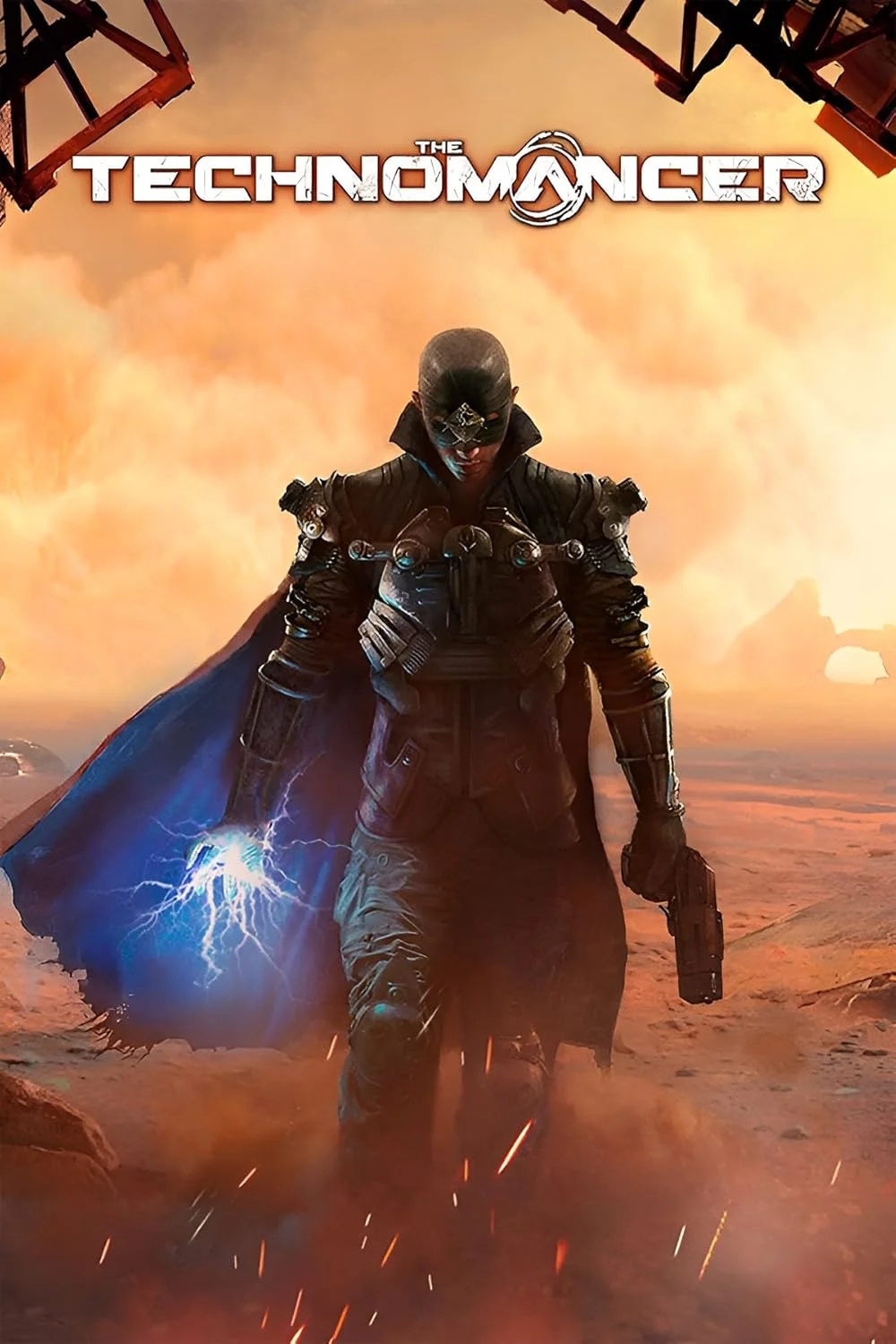
The Technomancer
This combination provides smooth gameplay with an average of 68 FPS, suitable for most gaming scenarios.
Average FPS: resolution vs quality settings
| Ultra | High | Medium | Low | |
|---|---|---|---|---|
| 4K Ultra HD | 25 | 32 | 38 | 49 |
| 1440p QHD | 46 | 59 | 69 | 90 |
| 1080p Full HD | 70 | 90 | 106 | 138 |
Cell color: green is 120+ FPS, teal is 60+, amber is 30+, red is below 30.
The Technomancer with AMD Ryzen 7 9850X3D + Intel Arc B580, In-Depth Analysis
The AMD Ryzen 7 9850X3D and Intel Arc B580 combination delivers a fascinating, if constrained, performance profile in The Technomancer. The data reveals a system where the 8-core, 16-thread processor provides ample headroom, while the graphics card becomes the definitive bottleneck, particularly as resolution scales. The benchmark results indicate a clear hierarchy: at 1080p, the combo achieves playable to excellent frame rates, but 4K Ultra presents a significant challenge, underscoring the GPU's limitations in a demanding title.
CPU Role — cores, clocks, and how they relate to this game's results
The AMD Ryzen 7 9850X3D is a powerhouse on paper, and the data suggests it is more than capable of feeding the Intel Arc B580 in this game. This processor features 8 cores and 16 threads, built on the Zen 5 architecture with a base clock of 4.70 GHz and a boost clock of 5.60 GHz. Its substantial 96 MB of shared L3 cache is a defining characteristic of the X3D line, designed to reduce latency in gaming workloads.
While the FACT PACK does not include a dedicated gaming benchmark for the CPU, its general compute scores paint a picture of a processor with immense headroom. For instance, the Cinebench R23 multi-core score of 22807 and single-core score of 2228 indicate strong performance across both heavily threaded and lightly threaded tasks. The PassMark single-thread score of 4704 further confirms its capability in scenarios that rely on fewer cores. The data implies that in The Technomancer, a 2016 Action RPG, the CPU is likely not the limiting factor.
This is corroborated by the FPS scaling pattern. At 1920x1080, the difference between Low and Ultra settings is significant (138 FPS vs. 70 FPS). This scaling with graphical settings is a classic sign of a GPU-bound scenario. If the CPU were the bottleneck, the frame rates would remain relatively flat regardless of the resolution or settings, as the processor would be maxed out. The fact that the frame rate drops by roughly half from Low to Ultra at 1080p suggests the GPU is doing the heavy lifting and is being saturated.
The CPU's 92nd percentile ranking among all tested CPUs, with an average benchmark score of 58386, places it in the upper echelon of processors. Its nearest rivals, such as the Intel Core i9-14900 with a deltaPct of 0.5, show that it is competitively positioned. In this specific game, the data strongly suggests the Ryzen 7 9850X3D is providing a stable, high-performance foundation that allows the GPU to operate at its full potential, but its own performance is not the ceiling. The processor’s high boost clock and large cache are likely ensuring that frame pacing remains consistent, preventing CPU-related stutters that could detract from the experience.
GPU Role — VRAM, clocks, and how they relate to this game's results
The Intel Arc B580 is the clear performance limiter in this configuration. This GPU, based on the Xe2-HPG architecture (Battlemage), comes with 12 GB of GDDR6 memory on a 192-bit bus, offering a bandwidth of 456.0 GB/s. Its boost clock is listed at 2670 MHz. While 12 GB of VRAM is generally considered a solid amount for modern titles, the GPU's raw compute power, measured at 13.67 TFLOPS FP32, appears to be the primary constraint in The Technomancer.
The GPU's benchmark scores show a mixed profile. Its 3DMark Steel Nomad DX12 score of 3068 is modest, and its PassMark G3D score of 15748 places it in the 68th percentile of all GPUs. The data reveals a clear performance ceiling when compared to its nearest rivals. For instance, it is only 0.6% ahead of the NVIDIA GeForce RTX 2080 and 0.7% behind the NVIDIA GeForce RTX 3080 in average benchmark score. This places the Arc B580 in a competitive mid-range tier, but not one known for high-end 4K gaming.
In The Technomancer, the GPU's role is decisive. The measured FPS at 3840x2160 (4K) is particularly telling. At Ultra settings, the game averages a mere 25 FPS, which is below the threshold for smooth, playable performance. Even at High settings, the average is only 32 FPS. This indicates that the GPU is severely overburdened at 4K, struggling to maintain acceptable frame rates. The VRAM, while sufficient in capacity, is paired with a memory bus and compute throughput that cannot handle the pixel fill rate and shader complexity demanded by 4K resolution in this title. The data unequivocally shows that the GPU is the bottleneck, and its performance dictates the overall experience.
Resolution Scaling — how FPS drops from 1080p to 4K and what it says about the limiting component
The FPS scaling across resolutions provides a clear diagnostic of the system's balance. The data shows a dramatic drop in performance as resolution increases, which is a textbook indicator of a GPU-bound system. At High settings, the average FPS falls from 90 at 1920x1080, to 59 at 2560x1440, and finally to 32 at 3840x2160. This represents a 64.4% decrease in performance from 1080p to 4K.
This pattern is consistent across all settings. For example, at Low settings, the average FPS drops from 138 at 1080p to 49 at 4K, a 64.5% reduction. At Ultra settings, the drop is from 70 FPS at 1080p to 25 FPS at 4K, a 64.3% reduction. The consistency of this percentage drop is key. If the CPU were the limiting factor, the FPS would be more consistent across resolutions, as the CPU's workload (draw calls, physics) does not increase linearly with pixel count. The fact that performance scales almost perfectly inversely with the resolution (which quadruples the pixel count from 1080p to 4K) confirms that the GPU's rendering pipeline is the primary bottleneck.
The data implies that the CPU is capable of delivering a high frame rate at lower resolutions, but the GPU cannot maintain that pace when the pixel workload increases. At 1080p, the combo achieves an excellent 90 FPS average on High settings, suggesting the CPU is feeding frames fast enough. However, the GPU is already working at its limit. When the resolution is increased, the GPU's pixel throughput becomes the wall, and the frame rate plummets accordingly. This analysis indicates that for this combo, resolution is the single most important factor in determining playability, and the CPU's substantial power is left largely untapped at higher resolutions.
FAQ
*Q: What is the best resolution to play The Technomancer with this combo for a smooth experience?*
A: Based on the data, 1920x1080 is the most viable resolution. At 1080p, even the Ultra preset achieves an average of 70 FPS, while High and Low settings reach 90 and 138 FPS respectively. Moving to 2560x1440 drops the High preset average to 59 FPS, and 4K at any setting falls below the 60 FPS threshold.
*Q: Can this system handle 4K gaming in The Technomancer?*
A: The data indicates that 4K is not a practical option for a consistently smooth experience. The highest average FPS at 3840x2160 is 49, achieved only on the Low preset. High and Medium presets average 32 and 38 FPS, and Ultra averages 25 FPS, all of which are sub-optimal for fast-paced gameplay.
Q: Is the AMD Ryzen 7 9850X3D or the Intel Arc B580 the limiting factor in this game?
A: The benchmark results clearly show the Intel Arc B580 is the limiting component. The FPS drops significantly as resolution increases (e.g., 90 FPS to 32 FPS at High settings from 1080p to 4K), which is a classic sign of a GPU bottleneck. The CPU's performance is sufficient to not constrain the system.
Q: How does the Arc B580's performance in this game compare to its closest rivals?
A: In general compute benchmarks, the Arc B580 is very closely matched with the NVIDIA GeForce RTX 2080 and RTX 3080. It is 0.6% ahead of the RTX 2080 and 0.7% behind the RTX 3080 in average benchmark scores. This suggests its in-game performance in a demanding title like The Technomancer would be similar to those GPUs.
*Q: What is the most demanding setting for this GPU in The Technomancer?*
A: The Ultra preset is by far the most demanding. At every resolution, the Ultra preset yields the lowest average FPS compared to High, Medium, and Low. At 1080p, it averages 70 FPS, while at 4K it drops to an unplayable 25 FPS.
Q: Is the 12 GB of VRAM on the Arc B580 sufficient for this game?
A: The data does not indicate a VRAM capacity issue. The performance drops are consistent with compute and bandwidth limitations. The GPU's memory bandwidth of 456.0 GB/s is likely a more significant factor than the 12 GB capacity in this scenario, as the game's demands scale with resolution.
How This Combo Ranks
The overall performance of this specific combination in The Technomancer is relatively low in the context of all tested combos. The data shows that the AMD Ryzen 7 9850X3D + Intel Arc B580 combination ranks 2124 out of 2825 tested combos. This rank places it in the bottom quarter of all systems tested, which is surprising given the high-end nature of the CPU.
This low ranking is almost entirely attributable to the GPU's performance. While the CPU is a top-tier component (92nd percentile), the GPU is only in the 68th percentile. The pairing of a powerful CPU with a mid-range GPU creates an imbalance that is reflected in the overall rank. In a game like The Technomancer, the GPU's limitations at higher resolutions drag the entire system's average performance down significantly. The data suggests that this combo is not optimized for high-resolution gaming, and its overall rank is a reflection of the GPU's inability to keep up with the CPU's potential. The rank is a composite measure, and the GPU's weakness at 4K is a major penalty.
Settings Recommendations
For the best experience with this combo, the data suggests prioritizing 1080p resolution. At this resolution, the High preset offers an excellent average of 90 FPS, providing a smooth and visually appealing experience. This is likely the "sweet spot" for this system.
If a higher frame rate is desired for competitive play, the Low preset at 1080p yields an average of 138 FPS. However, this comes at the cost of visual fidelity. The Medium preset at 1080p provides a balanced 106 FPS average, which is also a strong choice.
The Ultra preset is not recommended at any resolution. At 1080p, it averages 70 FPS, but the visual gain over High is likely minimal for the performance cost. At 1440p, the High preset becomes borderline, averaging 59 FPS, which may be acceptable for some players, but the 1080p High preset is the most reliable choice for consistent smoothness. At 4K, only the Low preset manages to average 49 FPS, which is still below the ideal 60 FPS target, making 4K gaming an impractical recommendation.
Measured FPS Breakdown
The following is the complete measured FPS data for The Technomancer with the AMD Ryzen 7 9850X3D and Intel Arc B580:
1920x1080 (1080p)
- Low: 138 FPS average
- High: 90 FPS average
- Medium: 106 FPS average (min 90, max 121)
- Ultra: 70 FPS average
2560x1440 (1440p)
- Low: 90 FPS average
- High: 59 FPS average
- Medium: 69 FPS average (min 59, max 79)
- Ultra: 46 FPS average
3840x2160 (4K)
- Low: 49 FPS average
- High: 32 FPS average
- Medium: 38 FPS average (min 32, max 44)
- Ultra: 25 FPS average
This data illustrates a steep performance cliff as resolution increases. The system is clearly capable of high-refresh-rate gaming at 1080p, but falls to sub-60 FPS averages at 1440p on higher presets and is unable to maintain playable frame rates at 4K on any setting. The 1440p Medium preset at 69 FPS is noteworthy, as it is the only 1440p setting that breaks the 60 FPS barrier.
Hardware Specifications
AMD Ryzen 7 9850X3D
Intel Arc B580
FPS Benchmarks by Resolution & Settings
Performance data for AMD Ryzen 7 9850X3D + Intel Arc B580 in The Technomancer
| Resolution | Settings | Avg FPS |
|---|---|---|
| 3840x2160 | Low | 49.0 |
| 3840x2160 | Medium | 38.0 |
| 3840x2160 | High | 32.0 |
| 3840x2160 | Ultra | 25.0 |
| 2560x1440 | Low | 90.0 |
| 2560x1440 | Medium | 69.0 |
| 2560x1440 | High | 59.0 |
| 2560x1440 | Ultra | 46.0 |
| 1920x1080 | Low | 138.0 |
| 1920x1080 | Medium | 106.0 |
| 1920x1080 | High | 90.0 |
| 1920x1080 | Ultra | 70.0 |
The Technomancer with Ryzen 7 9850X3D + Other GPUs
See how The Technomancer performs with the same CPU but different graphics cards.
The Technomancer with Arc B580 + Other CPUs
See how The Technomancer performs with the same GPU but different processors.
Other Games with Ryzen 7 9850X3D + Arc B580
Explore FPS benchmarks for other games using this same hardware combination.