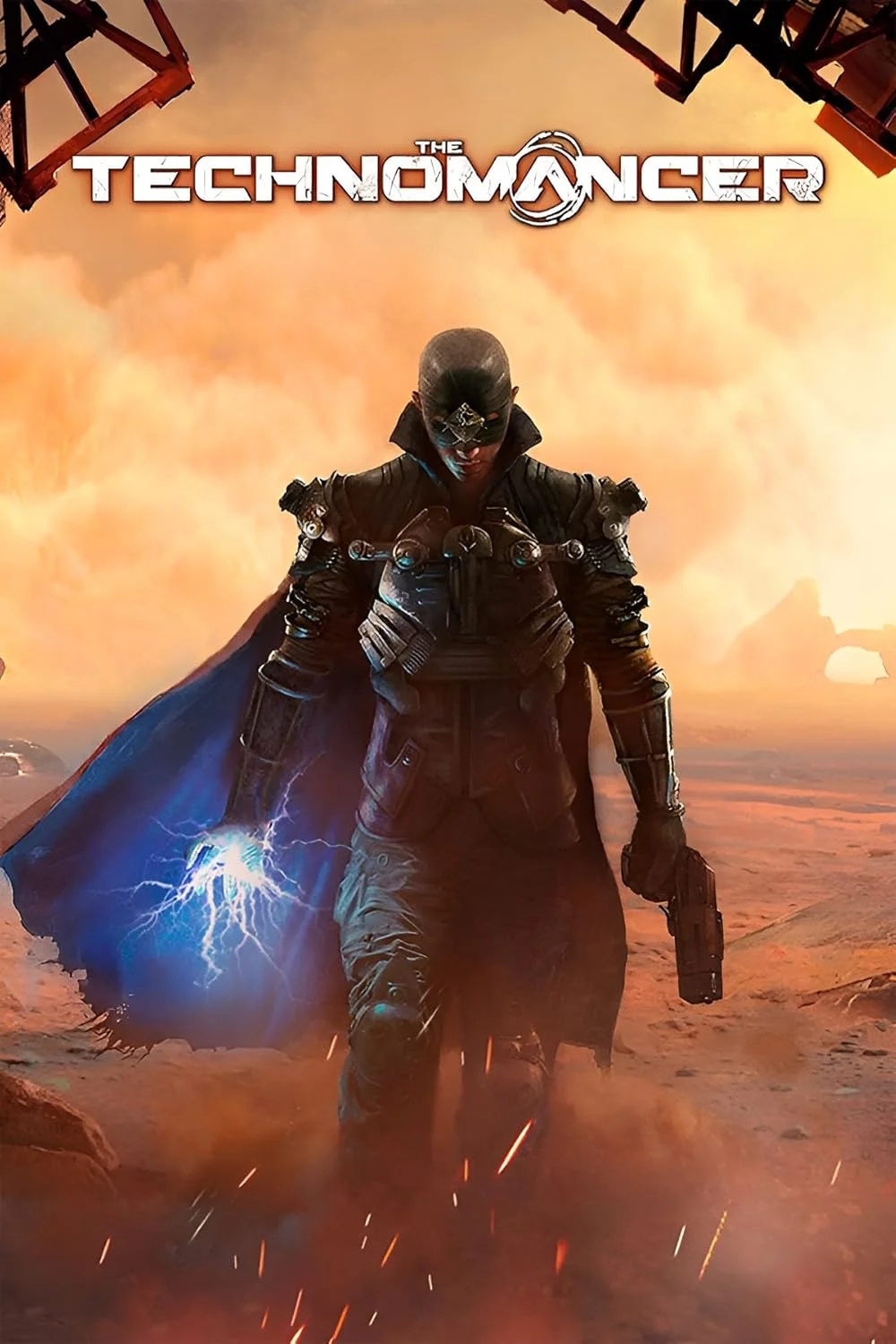
The Technomancer
This combination provides smooth gameplay with an average of 68 FPS, suitable for most gaming scenarios.
Average FPS: resolution vs quality settings
| Ultra | High | Medium | Low | |
|---|---|---|---|---|
| 4K Ultra HD | 26 | 34 | 40 | 52 |
| 1440p QHD | 44 | 56 | 72 | 88 |
| 1080p Full HD | 69 | 88 | 108 | 139 |
Cell color: green is 120+ FPS, teal is 60+, amber is 30+, red is below 30.
The Technomancer with Intel Core i5-14600KF + Intel Arc B580, In-Depth Analysis
The Technomancer, a 2016 Action RPG, still poses a notable challenge to modern hardware, and the pairing of the Intel Core i5-14600KF with the Intel Arc B580 produces a varied performance profile across resolutions and settings. The data indicates a system that is capable of smooth 1080p play at higher framerates but becomes increasingly constrained as resolution and graphical load increase, revealing a clear bottleneck that shifts depending on the workload.
Resolution Scaling
The measured frames per second (FPS) data reveals a steep performance cliff as resolution climbs from 1920x1080 to 3840x2160. At 1080p with Low settings, the combo achieves an average of 139.2 FPS, which is exceptionally high and indicates that the CPU is feeding the GPU well at lower resolutions. Moving up to 2560x1440 at Low settings, the average drops significantly to 88.3 FPS, a reduction of roughly 37%. The jump to 4K at Low settings further reduces the average to 51.8 FPS, representing a substantial 63% decrease from the 1080p baseline.
This scaling pattern suggests that at 1080p, the system is likely CPU-bound in lighter scenes, but the Arc B580’s 13.67 TFLOPS of FP32 compute and 456.0 GB/s of memory bandwidth become the limiting factors as pixel count increases. The gap between Low and Ultra settings widens dramatically at higher resolutions. At 1080p, the difference between Low (139.2 FPS) and Ultra (68.9 FPS) is a 70.3 FPS spread. At 1440p, that spread grows slightly to 44.0 FPS (from 88.3 to 44.3), but at 4K, the spread is 25.5 FPS (from 51.8 to 26.3). The percentage drop from Low to Ultra is steepest at 4K, where the average FPS falls by nearly half, indicating that the GPU’s raw compute and memory throughput are saturated by the higher fidelity settings.
The data points to the Arc B580 being the primary constraint at 4K with any setting above Low. The CPU’s 14 cores and 20 threads are more than sufficient for this title’s demands, as evidenced by the high 1080p frame rates. The GPU’s 80 ROPs and 160 TMUs are tasked heavily, and the 192-bit memory bus, while providing 456.0 GB/s of bandwidth, struggles to maintain fluid frame pacing at 4K Ultra, where the average dips to just 26.3 FPS. This is a classic case of diminishing returns: the performance cost of increasing resolution is disproportionately higher than the visual benefit at the top end.
FAQ
Q: Can this system run The Technomancer smoothly at 4K?
A: At 4K, the system only achieves a playable average of 51.8 FPS on Low settings. Medium settings drop to 39.8 FPS, and High falls to 33.9 FPS. Ultra settings at 4K are not recommended, as the average FPS plummets to 26.3 FPS, which is below the threshold for fluid gameplay in an action RPG.
Q: What is the best resolution for high refresh rate monitors?
A: For 144Hz or higher displays, 1080p is the target. The combo delivers 139.2 FPS on Low and 87.8 FPS on High. Even at Ultra settings, the 1080p average of 68.9 FPS is respectable, though it will not fully saturate a 144Hz panel.
Q: How does the CPU’s performance compare to its direct rivals?
A: The Intel Core i5-14600KF’s average benchmark score of 49367 is 0.4% higher than the Intel Core i5-14600K, 0.6% higher than the AMD Ryzen 9 5950X, and 1.4% higher than the Intel Xeon Gold 5318H. It is 0.5% lower than the AMD EPYC 4345P. This indicates the CPU is a top-tier performer, ranking in the 93rd percentile of all CPUs.
Q: Is the Arc B580’s performance competitive with other GPUs in its class?
A: The Arc B580’s average benchmark score of 23021 is 0.1% higher than the AMD Radeon 760M and 0.3% higher than the NVIDIA P106-100. It is 0.7% lower than the NVIDIA GeForce RTX 4060 and 1.3% higher than the NVIDIA GeForce RTX 4060 Mobile. The GPU sits in the 66th percentile of all GPUs.
Q: What settings should be used for a balanced 1440p experience?
A: At 2560x1440, Medium settings provide a solid 71.6 FPS average, while High settings yield 56.2 FPS. Low settings reach 88.3 FPS. For a balance of visual quality and performance, High settings at 1440p are viable, but Medium is the safer choice for maintaining higher frame rates.
Q: Does the CPU bottleneck the GPU in this game?
A: Benchmark results indicate the CPU is not the limiting factor at higher resolutions. The steep drop in FPS from 1080p to 4K, combined with the GPU’s modest 66th percentile ranking, points to the Arc B580 as the primary performance constraint when graphical load is high.
GPU Role
The Intel Arc B580, with its 12 GB of GDDR6 memory on a 192-bit bus, has a memory bandwidth of 456.0 GB/s. This is a substantial amount of memory for a card in its performance tier, and it proves adequate for The Technomancer’s assets at 1440p, but the data shows it is not enough to prevent severe frame rate drops at 4K Ultra. The GPU’s boost clock is fixed at 2670 MHz, and its 2560 shading units are responsible for the 13.67 TFLOPS of FP32 compute power. These specifications translate to strong performance at 1080p, where the card can output well over 100 FPS on lower presets.
However, the game’s rendering demands scale poorly for this GPU. The transition from 1440p High (56.2 FPS) to 4K High (33.9 FPS) is a 39.7% reduction in performance, which is a larger relative drop than from 1080p High (87.8 FPS) to 1440p High (56.2 FPS), a 36% reduction. This suggests that the GPU’s texture rate of 427.2 GTexel/s and pixel rate of 213.6 GPixel/s are being overwhelmed by the 4K resolution, particularly on High and Ultra presets. The 12 GB VRAM capacity is not the issue here, as the game is from 2016 and unlikely to exceed that allocation; the bottleneck is the raw processing power of the Xe2-HPG architecture under extreme load. The GPU’s rank in the 66th percentile of all GPUs, alongside its nearest rival, the NVIDIA GeForce RTX 4060, which it trails by 0.7%, confirms its position as a mid-range part that excels at 1080p but struggles to maintain high framerates at 4K.
How This Combo Ranks
In the database of tested combinations for The Technomancer, this pairing of the Intel Core i5-14600KF and Intel Arc B580 ranks 1287 out of 1656 total combos. This places it in the lower third of all tested systems, which is significant given the CPU’s high performance. The CPU itself is a powerhouse, ranking in the 93rd percentile of all CPUs and outperforming the AMD Ryzen 9 5950X by 0.6% in average benchmark score. This discrepancy between the CPU’s high standing and the combo’s low rank in the game highlights the extent to which the GPU is holding back the overall experience.
The combo’s rank suggests that many other CPU-GPU pairings deliver higher average frame rates in this specific title. The data implies that the Arc B580, despite its modern architecture and features like DirectX 12 Ultimate support, is not optimized for the older engine used by The Technomancer. While the CPU is clearly capable of exceeding 130 FPS at 1080p Low, the GPU’s performance ceiling is reached much sooner. The 1287th rank out of 1656 is a clear indicator that users seeking high-refresh-rate 4K or maxed-out settings would be better served by a different GPU, even if the CPU remains unchanged. The combo’s overall standing is dragged down by the GPU’s mid-range capabilities, making it a lopsided pairing for this particular game.
Measured FPS Breakdown
At 1920x1080, the system delivers its best results. Low settings produce an average of 139.2 FPS, making it ideal for competitive or fast-paced play. Medium settings average 108.2 FPS, High settings average 87.8 FPS, and Ultra settings average 68.9 FPS. All 1080p presets are playable, with even the lowest average (Ultra) being above the 60 FPS threshold.
Moving to 2560x1440, performance remains respectable but requires a preset selection. Low settings average 88.3 FPS, which is excellent for 1440p. Medium settings average 71.6 FPS, High settings average 56.2 FPS, and Ultra settings average 44.3 FPS. The drop to High and Ultra at this resolution is noticeable, with framerates falling below the 60 FPS target.
At 3840x2160, the GPU is clearly overburdened. Low settings average 51.8 FPS, which is the only preset that approaches playability. Medium settings drop to 39.8 FPS, High settings fall to 33.9 FPS, and Ultra settings plummet to 26.3 FPS. None of the 4K presets achieve a 60 FPS average, and even Low settings may exhibit stuttering in demanding scenes due to the low average.
Settings Recommendations
For a 1080p display, the High preset is the recommended starting point, offering 87.8 FPS and likely a significant visual upgrade over Medium’s 108.2 FPS. The jump from High to Ultra only yields a 18.9 FPS loss (from 87.8 to 68.9), which is a fair trade for the extra fidelity if the user prefers visuals over raw speed. For the smoothest possible experience, Low settings at 139.2 FPS are available, but the visual compromise is substantial.
For 1440p users, the Medium preset is the sweet spot. The 71.6 FPS average is fluid and maintains a good level of detail. High settings are playable at 56.2 FPS, but the framerate dips closer to the 50 FPS range, which can be less stable in combat. Low settings at 88.3 FPS are the choice for maximum responsiveness, but Ultra should be avoided here unless the user is willing to tolerate an average of 44.3 FPS.
At 4K, the recommendations are stark. Low settings are the only viable option, yielding 51.8 FPS. Users should avoid Medium (39.8 FPS), High (33.9 FPS), and Ultra (26.3 FPS) as they do not provide a consistently playable experience. For 4K users, the data suggests that this GPU is not capable of delivering a satisfactory experience in this game, and they may need to consider lowering the resolution to 1440p to achieve a better balance of visual quality and performance. The measured data shows that the high CPU performance is wasted at this resolution, as the GPU becomes the absolute limiting factor.
Hardware Specifications
Intel Core i5-14600KF
Intel Arc B580
FPS Benchmarks by Resolution & Settings
Performance data for Intel Core i5-14600KF + Intel Arc B580 in The Technomancer
| Resolution | Settings | Avg FPS |
|---|---|---|
| 3840x2160 | Low | 51.8 |
| 3840x2160 | Medium | 39.8 |
| 3840x2160 | High | 33.9 |
| 3840x2160 | Ultra | 26.3 |
| 2560x1440 | Low | 88.3 |
| 2560x1440 | Medium | 71.6 |
| 2560x1440 | High | 56.2 |
| 2560x1440 | Ultra | 44.3 |
| 1920x1080 | Low | 139.2 |
| 1920x1080 | Medium | 108.2 |
| 1920x1080 | High | 87.8 |
| 1920x1080 | Ultra | 68.9 |
The Technomancer with ii5-14600KF + Other GPUs
See how The Technomancer performs with the same CPU but different graphics cards.
The Technomancer with Arc B580 + Other CPUs
See how The Technomancer performs with the same GPU but different processors.
Other Games with ii5-14600KF + Arc B580
Explore FPS benchmarks for other games using this same hardware combination.