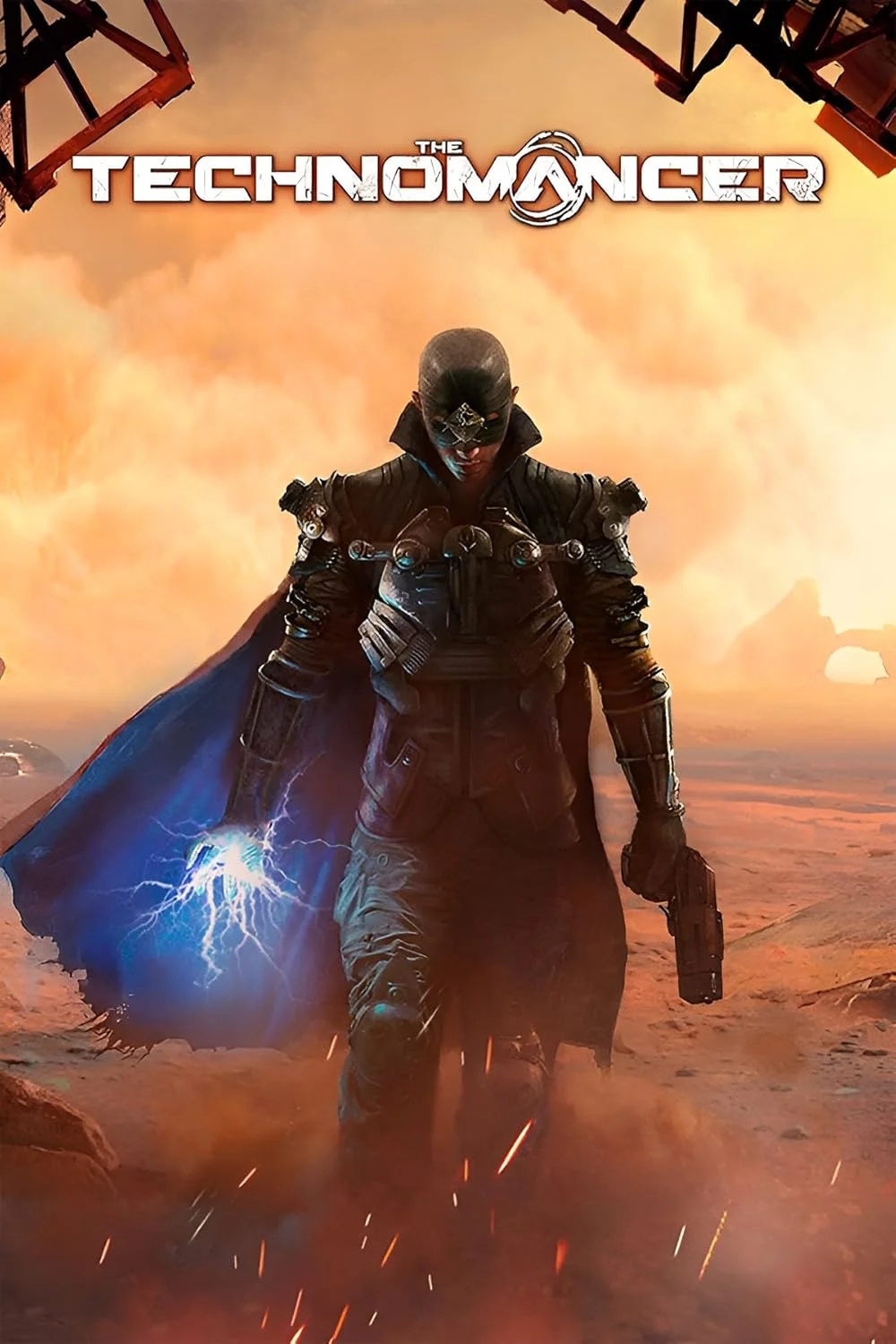
The Technomancer
This combination provides smooth gameplay with an average of 67 FPS, suitable for most gaming scenarios.
Average FPS: resolution vs quality settings
| Ultra | High | Medium | Low | |
|---|---|---|---|---|
| 4K Ultra HD | 28 | 31 | 38 | 49 |
| 1440p QHD | 47 | 61 | 67 | 87 |
| 1080p Full HD | 70 | 91 | 104 | 136 |
Cell color: green is 120+ FPS, teal is 60+, amber is 30+, red is below 30.
The Technomancer with AMD Ryzen 9 5950X + Intel Arc B580, In-Depth Analysis
How This Combo Ranks
The AMD Ryzen 9 5950X paired with the Intel Arc B580 lands at rank 1299 out of 1656 tested combos in The Technomancer. That places this configuration in the lower third of the database, which is a telling result for a pairing that features a high-end 16-core CPU from 2020 and a modern 12 GB GPU from 2024. The data indicates this is not a combination that pushes the game to its limits; instead, it sits in a position where the GPU is likely the constraining factor in most scenarios.
Examining the percentile data reinforces this picture. The CPU sits at the 93rd percentile against all processors, while the GPU only reaches the 66th percentile against all graphics cards. This gap suggests the processor has substantial headroom that the Arc B580 cannot fully exploit in this specific title. The combo rank of 1299 out of 1656 means roughly 78% of tested configurations outperform this pairing in The Technomancer, which is a meaningful underperformance relative to what the CPU alone would suggest.
The measured frames per second tell a consistent story across all resolutions. The best result comes at 1080p with Low settings, hitting 135.5 FPS average, but even that figure represents a scenario where the GPU is working at its most comfortable load. At 4K Ultra, the combo drops to 28.1 FPS, which is below the threshold most would consider playable. The overall ranking reflects this pattern: the combo delivers playable frame rates at lower resolutions and settings, but struggles to maintain smooth performance at higher demands.
CPU Role
The AMD Ryzen 9 5950X brings substantial processing power to this pairing. With 16 cores and 32 threads, a base clock of 3.40 GHz and a boost clock of 4.90 GHz, this Vermeer-based Zen 3 processor is built to handle heavy multi-threaded workloads. The 64 MB of L3 cache and dual-channel DDR4 memory support with 51.2 GB/s bandwidth provide ample data throughput for most gaming scenarios.
In synthetic benchmarks, the CPU demonstrates its capability. The Cinebench R23 multi-core score of 38607 and single-core score of 5450 both reflect a processor that is far from being a bottleneck in a 2016 Action RPG. The Geekbench multi-core score of 12084 and single-core score of 2211 align with this assessment. The PassMark multi-thread score of 45424 and single-thread score of 3470 further confirm that the CPU is performing well above what The Technomancer would require.
The nearest rivals in the database include the Intel Core i5-14600K with an average score of 49166 and a delta of -0.2%, meaning the 5950X trails by a negligible margin. The AMD EPYC 4345P sits 1.1% ahead, while the Intel Xeon Gold 5318H trails by 0.7%. These small deltas indicate that the 5950X is right in the mix with contemporary and newer processors. The game itself, released in 2016, would not have been designed to leverage 16 cores effectively, so the CPU's role here is mostly to ensure that no frame timing issues arise from processing overhead. The data suggests the CPU is doing its job without being the limiting factor.
GPU Role
The Intel Arc B580, based on the Xe2-HPG architecture with the BMG-G21 chip, is the component that defines this combo's performance ceiling. It features 12 GB of GDDR6 memory on a 192-bit bus, delivering 456.0 GB/s of bandwidth. The base and boost clocks are both 2670 MHz, with memory running at 2375 MHz (19 Gbps effective). The GPU includes 2560 shading units, 160 texture mapping units, and 80 raster operation pipelines, along with 20 ray tracing cores.
In synthetic benchmarks, the Arc B580 shows a mixed profile. The 3DMark Steel Nomad DX12 score of 3068 and the PassMark G3D score of 15748 place it in the 66th percentile against all GPUs. The Geekbench Vulkan score of 109672 and OpenCL score of 92821 indicate solid compute performance. The nearest rivals are tightly clustered: the AMD Radeon 760M is 0.1% ahead, the NVIDIA P106-100 is 0.3% ahead, the GeForce RTX 4060 Mobile is 1.3% behind, and the desktop GeForce RTX 4060 leads by 0.7%. This suggests the Arc B580 is competitive with mid-range options from the same era.
For The Technomancer, the GPU's role is critical. The measured FPS data shows that the Arc B580's performance scales predictably with resolution and settings. At 1080p Low, it achieves 135.5 FPS, but at 4K Ultra, it falls to 28.1 FPS. The 12 GB VRAM is not a limiting factor at 1080p or 1440p, but the raw compute throughput struggles at 4K. The 13.67 TFLOPS FP32 performance and 427.2 GTexel/s texture rate are adequate for lower resolutions but cannot maintain high frame rates at 4K with demanding settings. The GPU's 190 W TDP and dual-slot design with a single 8-pin connector suggest it is positioned as a mainstream part, and the data reflects that positioning in this game.
Measured FPS Breakdown
At 1920x1080, the combo delivers its strongest results. With Low settings, the average FPS reaches 135.5, which is smooth and responsive. Medium settings drop to 103.7 FPS, still well above the 60 FPS threshold. High settings yield 91.1 FPS, and Ultra settings bring the average down to 69.9 FPS. All four settings at 1080p are playable, with even the most demanding preset maintaining a comfortable margin above 60 FPS.
Moving to 2560x1440, the performance begins to show strain. Low settings produce 86.7 FPS, which is still solid. Medium settings achieve 67.1 FPS, just above the 60 FPS line. High settings drop to 60.9 FPS, which is technically playable but leaves little headroom for demanding scenes. Ultra settings fall to 47.3 FPS, which is below the 60 FPS target and would present noticeable stuttering during intense combat or exploration.
At 3840x2160, the combo struggles significantly. Low settings manage 49.4 FPS, which is borderline playable but not ideal. Medium settings drop to 37.7 FPS, and High settings fall further to 31.3 FPS. Ultra settings bottom out at 28.1 FPS, making the game nearly unplayable at this resolution. The scaling from 1080p Ultra to 4K Ultra shows a drop from 69.9 FPS to 28.1 FPS, a reduction of approximately 60% when quadrupling the pixel count.
The settings progression at each resolution is consistent. At 1080p, the gap between Low and Ultra is 65.6 FPS. At 1440p, that gap narrows to 39.4 FPS. At 4K, the gap is 21.3 FPS. This indicates that the GPU is increasingly the bottleneck as resolution rises, with the CPU's headroom becoming irrelevant at higher pixel counts.
FAQ
Q: What is the best resolution for this combo in The Technomancer?
A: The data shows 1920x1080 is the only resolution where all settings presets maintain an average FPS above 60. At 1080p Ultra, the combo achieves 69.9 FPS, while at 1440p Ultra it drops to 47.3 FPS.
Q: How does this combo compare to its nearest GPU rival?
A: The Intel Arc B580 trails the NVIDIA GeForce RTX 4060 by 0.7% in average benchmark score, while leading the RTX 4060 Mobile by 1.3%. The AMD Radeon 760M is 0.1% ahead, and the NVIDIA P106-100 is 0.3% ahead.
Q: Is the CPU or GPU the limiting factor in this game?
A: The CPU ranks at the 93rd percentile while the GPU ranks at the 66th percentile. The measured FPS scaling with resolution and settings indicates the GPU is the primary constraint, especially at 1440p and 4K.
Q: Can this combo handle 1440p gaming in The Technomancer?
A: At 1440p Low, the average FPS is 86.7, and at Medium it is 67.1. High settings barely reach 60.9 FPS, while Ultra falls to 47.3 FPS. Lower presets are playable, but Ultra is not recommended.
Q: What is the CPU's performance relative to its nearest rivals?
A: The Ryzen 9 5950X trails the Intel Core i5-14600K by 0.2% and the AMD EPYC 4345P by 1.1%, but leads the Intel Xeon Gold 5318H by 0.7% and the Intel Core i5-14600KF by 0.6%.
Q: Is the 4K performance usable in this game?
A: At 4K Low, the average FPS is 49.4, which is below 60. Medium drops to 37.7, High to 31.3, and Ultra to 28.1. None of these meet the 60 FPS target, making 4K unsuitable for smooth play.
Settings Recommendations
The measured data provides clear guidance for optimal settings at each resolution. At 1920x1080, Ultra settings are the best choice because the combo maintains 69.9 FPS average, which is above the 60 FPS threshold. The jump from High to Ultra costs 21.2 FPS, but the visual fidelity improvement is worth it given the playable frame rate. For users who prioritize higher refresh rates, Low settings at 135.5 FPS would enable a 120 Hz or 144 Hz display, but Ultra is the balanced recommendation.
At 2560x1440, High settings at 60.9 FPS are the best experience per the measured rows. This preset stays just above the 60 FPS line while providing better visuals than Medium at 67.1 FPS or Low at 86.7 FPS. Ultra at 47.3 FPS is too close to the stutter zone, and the 13.6 FPS difference between High and Ultra does not justify the performance loss. Medium is a safer fallback if scene complexity causes drops below 60 FPS in demanding areas.
At 3840x2160, none of the settings presets achieve 60 FPS. Low at 49.4 FPS is the most playable option, but it still risks noticeable frame pacing issues. Medium at 37.7 FPS and High at 31.3 FPS are progressively worse, and Ultra at 28.1 FPS is effectively unplayable. The recommendation is to avoid 4K with this combo in The Technomancer, as even the lowest settings do not reach a smooth threshold. If 4K is required, Low settings are the only viable option, but users should expect a compromised experience.
Across all resolutions, the pattern is clear: the Arc B580 has enough power for 1080p Ultra and 1440p High, but it cannot sustain playable frame rates at 4K. The Ryzen 9 5950X provides ample CPU headroom, so users should focus on GPU-bound settings adjustments. The measured rows show that dropping from Ultra to High at 1440p recovers 13.6 FPS, while at 1080p the same drop recovers 21.2 FPS, making High a sensible compromise when frame rate stability is the priority.
Hardware Specifications
AMD Ryzen 9 5950X
Intel Arc B580
FPS Benchmarks by Resolution & Settings
Performance data for AMD Ryzen 9 5950X + Intel Arc B580 in The Technomancer
| Resolution | Settings | Avg FPS |
|---|---|---|
| 3840x2160 | Low | 49.4 |
| 3840x2160 | Medium | 37.7 |
| 3840x2160 | High | 31.3 |
| 3840x2160 | Ultra | 28.1 |
| 2560x1440 | Low | 86.7 |
| 2560x1440 | Medium | 67.1 |
| 2560x1440 | High | 60.9 |
| 2560x1440 | Ultra | 47.3 |
| 1920x1080 | Low | 135.5 |
| 1920x1080 | Medium | 103.7 |
| 1920x1080 | High | 91.1 |
| 1920x1080 | Ultra | 69.9 |
The Technomancer with Ryzen 9 5950X + Other GPUs
See how The Technomancer performs with the same CPU but different graphics cards.
The Technomancer with Arc B580 + Other CPUs
See how The Technomancer performs with the same GPU but different processors.
Other Games with Ryzen 9 5950X + Arc B580
Explore FPS benchmarks for other games using this same hardware combination.