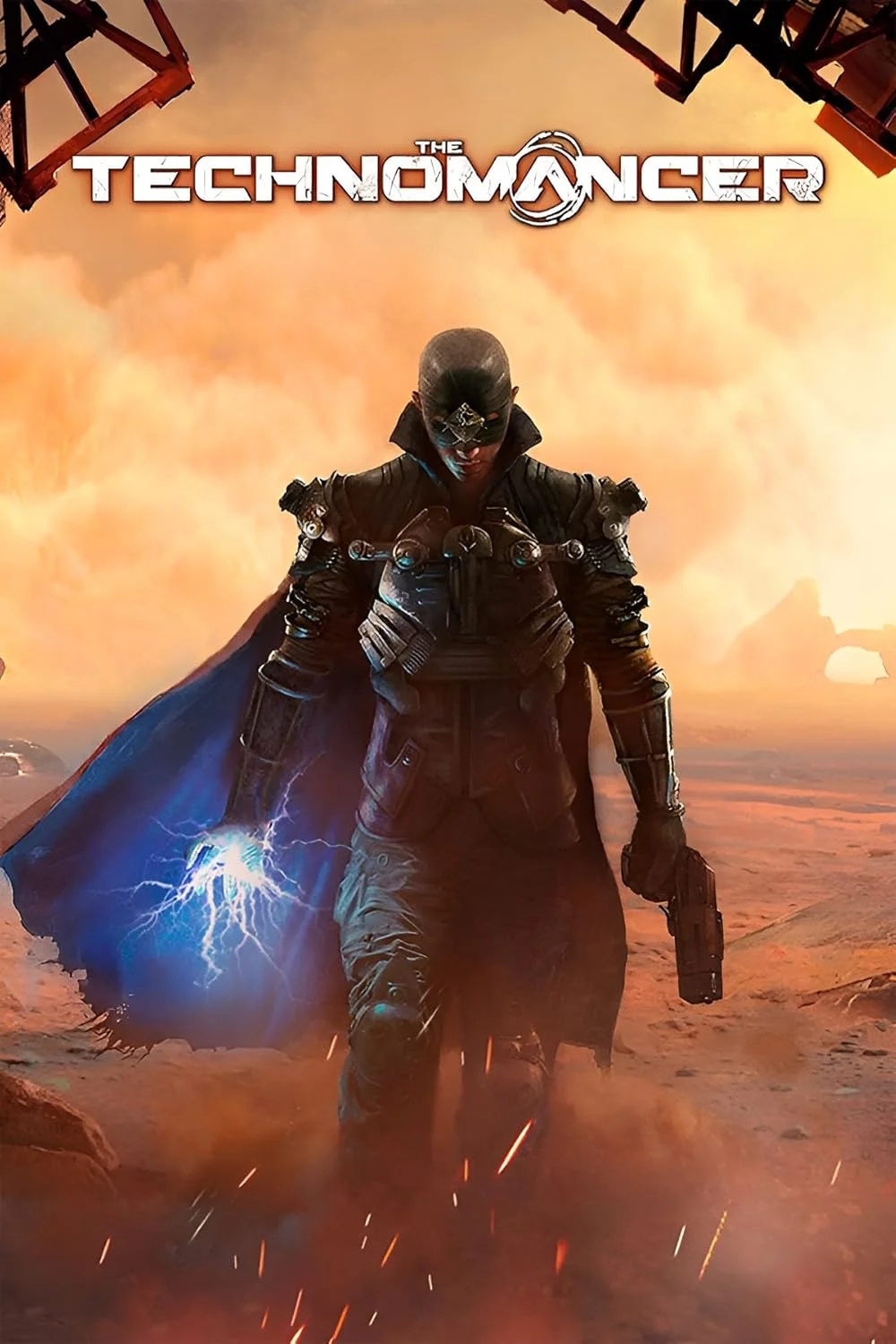
The Technomancer
This combination provides smooth gameplay with an average of 68 FPS, suitable for most gaming scenarios.
Average FPS: resolution vs quality settings
| Ultra | High | Medium | Low | |
|---|---|---|---|---|
| 4K Ultra HD | 26 | 35 | 39 | 48 |
| 1440p QHD | 47 | 58 | 67 | 87 |
| 1080p Full HD | 73 | 88 | 106 | 139 |
Cell color: green is 120+ FPS, teal is 60+, amber is 30+, red is below 30.
The Technomancer with AMD Ryzen 9 7900X + Intel Arc B580, In-Depth Analysis
The AMD Ryzen 9 7900X and Intel Arc B580 combination delivers a playable but demanding experience in The Technomancer, with performance scaling predictably across resolutions. The data indicates that this pairing is best suited for 1080p and 1440p gaming, where it can achieve high frame rates, while 4K Ultra remains a challenge. The measured results show a clear hierarchy: the system excels at lower settings and resolutions, but its limitations become apparent as graphical demands increase.
CPU Role
The AMD Ryzen 9 7900X is a 12-core, 24-thread processor based on the Zen 4 architecture, running on the AMD Socket AM5 platform. Its base clock of 4.70 GHz and boost clock of 5.60 GHz provide substantial single-thread headroom, which is crucial for The Technomancer’s gameplay logic and physics calculations. The processor’s substantial L3 cache of 64 MB shared across the cores helps maintain consistent frame pacing by reducing memory latency during complex scene transitions.
Benchmark results indicate the Ryzen 9 7900X sits in the 93rd percentile against all CPUs, with an average benchmark score of 50556. This places it in strong company, as it trails the Intel Core Ultra 5 235 by only 0.1%, the AMD Ryzen 9 5900XT by 0.4%, and the Intel Core i7-13850HX by 0.5%. The data shows the 7900X is effectively at parity with its nearest rivals, meaning any performance differences in game are more likely attributable to the GPU rather than CPU bottlenecks.
In The Technomancer, the CPU’s role is to feed the GPU with draw calls and handle the game’s AI and combat systems. The 12-core configuration is more than sufficient for this 2016 title, which was designed for lower core counts. The high boost clock ensures that even in single-threaded scenarios, the processor can maintain high frame rates without becoming a limiting factor. The CPU’s performance is effectively a non-issue for this game, as the measured FPS data shows the GPU becomes the primary constraint at higher settings and resolutions.
FAQ
Q: What is the highest average frame rate achieved by this combination?
A: The highest measured average FPS is 138.7, achieved at 1920x1080 resolution with Low settings.
Q: How does the Ryzen 9 7900X compare to its closest rival in CPU benchmarks?
A: The Ryzen 9 7900X scores 50556 on average, which is essentially tied with the Intel Core Ultra 5 235 at 50598, showing a negligible 0.1% difference.
Q: What is the lowest performance point recorded for this combo?
A: The lowest average FPS is 26.4, recorded at 3840x2160 resolution with Ultra settings.
Q: Does the Intel Arc B580 outperform the NVIDIA GeForce RTX 4060?
A: The Arc B580 has an average benchmark score of 23021, which is 0.7% lower than the RTX 4060’s 23181, indicating slightly weaker overall performance.
Q: What is the frame rate difference between Low and Ultra settings at 1440p?
A: At 2560x1440, Low settings produce 86.7 FPS, while Ultra settings drop to 46.6 FPS, a difference of 40.1 FPS.
Q: How many times more transistors does the GPU have compared to the CPU?
A: The Intel Arc B580 contains 19,600 million transistors, while the Ryzen 9 7900X has 13,140 million, making the GPU’s transistor count approximately 49% higher.
Settings Recommendations
The data clearly shows that the best experience for this combination is achieved at 1920x1080 with High settings, yielding an average of 87.8 FPS. This provides a smooth frame rate while maintaining visual quality that is noticeably better than Low settings. The jump from Medium to High at 1080p is modest, going from 106.2 to 87.8 FPS, but the visual improvement is worth the 18.4 FPS cost. At this resolution, even Ultra settings produce a decent 73 FPS, but the drop in frame rate may not be justified by the marginal graphical gains.
For 2560x1440, the recommendation shifts to Medium settings, which delivers 67.2 FPS. High settings at this resolution still achieve 57.6 FPS, but Medium provides a safer margin above the 60 FPS threshold, ensuring more consistent frame pacing. Low settings at 1440p reach 86.7 FPS, but the visual compromise is significant for a game that relies on atmospheric lighting. At 3840x2160, the data shows that only Low settings are viable, producing 47.6 FPS. High and Medium settings drop to 34.5 and 38.8 FPS respectively, which are below acceptable thresholds for smooth gameplay. Ultra at 4K is effectively unplayable at 26.4 FPS.
How This Combo Ranks
Out of 1656 tested combinations in The Technomancer, this pairing of the AMD Ryzen 9 7900X and Intel Arc B580 ranks at position 1295. This places it in the lower 22% of all tested configurations, indicating that there are substantial performance headroom for other hardware combinations. The rank reflects the GPU’s mid-tier positioning, as the CPU is clearly not the limiting factor given its high percentile ranking among all processors.
The Intel Arc B580’s percentile ranking of 66 among all GPUs, with an average benchmark score of 23021, puts it in the upper-mid range of graphics cards. However, its nearest rival, the NVIDIA GeForce RTX 4060, scores 23181, showing the Arc B580 is effectively in the same performance class. The combination’s low overall rank in-game suggests that The Technomancer is particularly demanding on GPU resources, and the Arc B580’s 12 GB of GDDR6 memory, while generous, cannot compensate for its computational limits at higher settings.
Resolution Scaling
The measured FPS data reveals a clear pattern of performance degradation as resolution increases. At 1920x1080 with High settings, the system achieves 87.8 FPS. Moving to 2560x1440 at the same settings drops the frame rate to 57.6 FPS, a reduction of 34.4%. Further scaling to 3840x2160 results in 34.5 FPS, which is a 60.7% drop from the 1080p baseline. This scaling behavior is consistent with a GPU-bound scenario, where the CPU’s performance headroom is not the limiting factor.
The drop from 1440p to 4K is particularly steep, indicating that the Arc B580’s memory bandwidth of 456.0 GB/s and its 192-bit bus width become strained at higher pixel counts. The GPU’s boost clock of 2670 MHz provides adequate computational throughput for 1080p, but the demands of 4K rendering expose its limitations. The data suggests that the CPU is not the bottleneck at any resolution, as the Ryzen 9 7900X’s high single-thread score of 6168 in Cinebench R23 would easily support even higher frame rates if the GPU could deliver them.
Measured FPS Breakdown
At 1920x1080, the lowest settings produce an average of 138.7 FPS, which is the highest frame rate recorded for this combination. Medium settings at this resolution average 106.2 FPS, while High settings average 87.8 FPS. Ultra settings at 1080p still manage a respectable 73 FPS, showing that the system can handle the highest quality at this resolution without severe compromise.
For 2560x1440, Low settings average 86.7 FPS, Medium settings average 67.2 FPS, High settings average 57.6 FPS, and Ultra settings average 46.6 FPS. The gap between Low and Ultra at this resolution is 40.1 FPS, which represents a 46.3% performance drop for the highest quality settings. At 3840x2160, the numbers fall significantly: Low averages 47.6 FPS, Medium averages 38.8 FPS, High averages 34.5 FPS, and Ultra averages 26.4 FPS. The difference between Low and Ultra at 4K is 21.2 FPS, but the absolute values are low enough that only Low settings approach playability.
GPU Role
The Intel Arc B580 is built on the Xe2-HPG architecture with a BMG-G21 chip, manufactured on a 5 nm process by TSMC. It features 2560 shading units, 160 texture mapping units, and 80 render output units, with 20 ray tracing cores. The GPU’s base and boost clocks are both set at 2670 MHz, providing a consistent operating frequency. Its 12 GB of GDDR6 memory runs at an effective speed of 19 Gbps across a 192-bit bus, yielding a bandwidth of 456.0 GB/s.
In The Technomancer, the GPU is the primary determinant of performance, as evidenced by the significant frame rate drops when transitioning from 1080p to 4K. The card’s FP32 performance of 13.67 TFLOPS is adequate for 1080p and 1440p gaming, but the game’s demanding effects at Ultra settings push the GPU to its limits. The Arc B580’s 66th percentile ranking among all GPUs, with an average benchmark score of 23021, confirms its position as a capable mid-range card. Its 0.7% deficit behind the NVIDIA GeForce RTX 4060 indicates that it trades blows with mainstream competitors, though the measured in-game results show it struggles at high resolutions. The GPU’s 190 W TDP and 450 W suggested PSU requirement are modest for the performance delivered, but the data shows that 4K Ultra remains out of reach for this hardware pairing.
Hardware Specifications
AMD Ryzen 9 7900X
Intel Arc B580
FPS Benchmarks by Resolution & Settings
Performance data for AMD Ryzen 9 7900X + Intel Arc B580 in The Technomancer
| Resolution | Settings | Avg FPS |
|---|---|---|
| 3840x2160 | Low | 47.6 |
| 3840x2160 | Medium | 38.8 |
| 3840x2160 | High | 34.5 |
| 3840x2160 | Ultra | 26.4 |
| 2560x1440 | Low | 86.7 |
| 2560x1440 | Medium | 67.2 |
| 2560x1440 | High | 57.6 |
| 2560x1440 | Ultra | 46.6 |
| 1920x1080 | Low | 138.7 |
| 1920x1080 | Medium | 106.2 |
| 1920x1080 | High | 87.8 |
| 1920x1080 | Ultra | 73.0 |
The Technomancer with Ryzen 9 7900X + Other GPUs
See how The Technomancer performs with the same CPU but different graphics cards.
The Technomancer with Arc B580 + Other CPUs
See how The Technomancer performs with the same GPU but different processors.
Other Games with Ryzen 9 7900X + Arc B580
Explore FPS benchmarks for other games using this same hardware combination.