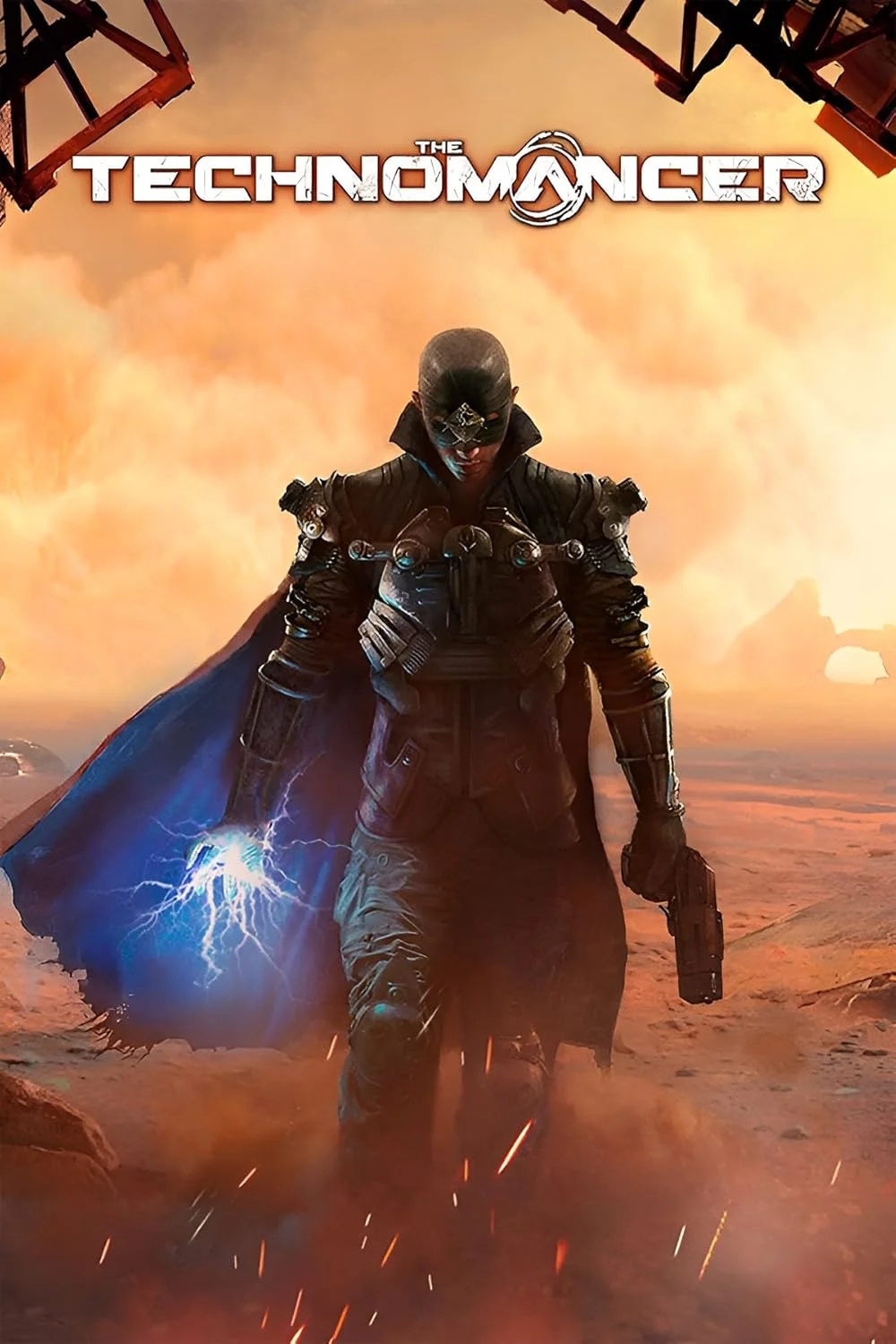
The Technomancer
This combination provides smooth gameplay with an average of 60 FPS, suitable for most gaming scenarios.
Average FPS: resolution vs quality settings
| Ultra | High | Medium | Low | |
|---|---|---|---|---|
| 4K Ultra HD | 22 | 29 | 33 | 44 |
| 1440p QHD | 41 | 52 | 61 | 79 |
| 1080p Full HD | 62 | 80 | 93 | 121 |
Cell color: green is 120+ FPS, teal is 60+, amber is 30+, red is below 30.
The Technomancer with AMD Ryzen 7 5700X3D + Intel Arc B570, In-Depth Analysis
The Technomancer, a 2016 Action RPG, presents a demanding workload that scales heavily with both processor and graphics hardware. This analysis examines the performance of the AMD Ryzen 7 5700X3D paired with the Intel Arc B570, using measured frame rate data across three resolutions and four quality presets. The data reveals a configuration that is capable at 1080p, playable at 1440p with adjusted settings, and challenged at 4K, with the GPU acting as the primary bottleneck at higher resolutions.
Resolution Scaling
The measured frame rates for the AMD Ryzen 7 5700X3D and Intel Arc B570 combination show a clear and predictable decline as resolution increases from 1920x1080 to 3840x2160. At the High preset, the average frame rate drops from 80 FPS at 1080p to 52 FPS at 1440p, a reduction of 28 FPS, and then further to 29 FPS at 4K, a reduction of 23 FPS from the 1440p figure. This scaling pattern indicates a system that becomes progressively more GPU-bound as pixel count rises, which is typical for a game like The Technomancer that relies heavily on rasterization.
Examining the Low preset data reveals the same trend with higher absolute numbers. The average FPS at 1080p Low is 121, which falls to 79 at 1440p and 44 at 4K. The percentage drop from 1080p to 1440p is approximately 35%, while the drop from 1440p to 4K is approximately 44%. This non-linear decline suggests that the demands of 4K resolution, with its four times the pixel count of 1080p, place a significant strain on the Intel Arc B570's 10 GB of GDDR6 memory and 160-bit memory bus, which provides 380.0 GB/s of bandwidth.
The scaling from Medium to Ultra settings at each resolution further illustrates the load. At 1080p, the Medium preset yields 93 FPS, while Ultra drops to 62 FPS. At 1440p, the same settings produce 61 FPS and 41 FPS, respectively. At 4K, Medium manages 33 FPS, but Ultra falls to just 22 FPS. The gap between Medium and Ultra widens relative to the resolution, with Ultra being 33% slower than Medium at 1080p, 33% slower at 1440p, and 33% slower at 4K. This consistent relative gap indicates that the Ultra preset’s additional effects, likely including higher quality shadows and post-processing, impose a constant proportional cost on the GPU.
The data suggests that for this specific pairing, the limiting component at 1080p is a mix of CPU and GPU, but by 1440p and especially 4K, the Intel Arc B570 is the clear bottleneck. The Ryzen 7 5700X3D, with its 8 cores and 16 threads based on Zen 3 architecture, provides enough processing power to feed the GPU at lower resolutions, but the Arc B570’s raw throughput, measured at 11.52 TFLOPS for FP32 operations, is insufficient to maintain high frame rates at 4K. The result is a system that performs best at 1080p, where it can leverage the CPU’s strengths, and struggles to maintain playable frame rates at 4K, particularly on higher presets.
CPU Role
The AMD Ryzen 7 5700X3D is a desktop processor from the 5000 series, built on the Zen 3 architecture with the Vermeer codename. It features 8 cores and 16 threads, with a base clock of 3.00 GHz and a boost clock of 4.10 GHz. The processor’s key feature is its large 96 MB of shared L3 cache, which is a significant asset for gaming workloads that often benefit from larger caches to reduce memory latency. The CPU supports DDR4 memory in a dual-channel configuration, providing a memory bandwidth of 51.2 GB/s, which is a standard figure for this platform.
In the context of The Technomancer, the CPU’s role appears to be supportive rather than dominant, based on the measured results. At 1080p with the Low preset, the average FPS of 121 suggests that the CPU is capable of processing the game’s logic and draw calls quickly enough to allow the GPU to work at a high utilization. The Ryzen 7 5700X3D’s multi-threaded performance, as indicated by a Cinebench R23 multicore score of 22366, provides ample headroom for the game’s background tasks. Its single-thread performance, with a Cinebench R23 single-core score of 3157, is also competent for handling the main game thread.
However, the CPU’s influence diminishes as resolution increases. The frame rate drops from 121 FPS at 1080p Low to 79 FPS at 1440p Low and 44 FPS at 4K Low, which is a direct consequence of the GPU’s inability to maintain the same output at higher pixel counts. This pattern indicates that the CPU is not the limiting factor at 1440p or 4K; the GPU is. The 3DMark scores for the CPU, such as 6764 for 16 threads and 804 for single thread, support the notion that it is a balanced performer that can keep up with mid-range and upper-mid-range GPUs.
The processor’s percentile ranking of 77 among all CPUs, with an average benchmark score of 24709, places it in a strong position. Its nearest rivals include the AMD Ryzen 5 7600X3D with an average score of 24728 (a delta of -0.1%), showing near-identical performance, and the Intel Core i5-12450HX with an average score of 24576 (a delta of 0.5%). These results confirm that the Ryzen 7 5700X3D is a high-tier gaming CPU. In The Technomancer, its 8 cores and 16 threads ensure that it does not become a bottleneck at 1080p, but its capabilities are underutilized at higher resolutions where the GPU’s limitations take over.
GPU Role
The Intel Arc B570 is a discrete graphics card based on the Xe2-HPG architecture, codenamed Battlemage, and is part of the Arc 5 generation. It is manufactured on a 5 nm process by TSMC and features 2304 shading units, 144 texture mapping units, and 80 raster output units. The GPU has a base and boost clock of 2500 MHz, which is a high operating frequency for this class of hardware. Its memory subsystem consists of 10 GB of GDDR6 memory on a 160-bit bus, providing a bandwidth of 380.0 GB/s. The card’s compute power is rated at 11.52 TFLOPS for FP32 operations, with a pixel rate of 200.0 GPixel/s and a texture rate of 360.0 GTexel/s.
In The Technomancer, the GPU is the primary driver of performance in most measured scenarios. The frame rates at 1080p are respectable, with the High preset averaging 80 FPS and the Low preset reaching 121 FPS. However, the card’s performance degrades sharply at higher resolutions. At 1440p, the High preset averages 52 FPS, and at 4K, it drops to 29 FPS. This pattern is consistent with a GPU that has sufficient bandwidth for 1080p gaming but is constrained by its 160-bit memory bus and 10 GB VRAM capacity at higher resolutions.
The Arc B570’s 10 GB of GDDR6 memory is a notable specification. For a game from 2016 like The Technomancer, this amount of VRAM is rarely a limiting factor, as the game’s textures are not as large as those in modern titles. The memory bandwidth of 380.0 GB/s, however, becomes more critical at 4K, where the GPU must access more data to fill the screen. The measured FPS at 4K Ultra of 22 FPS indicates that the GPU is heavily taxed, with the memory system likely contributing to the bottleneck.
The GPU’s benchmark scores place it in the 65th percentile among all GPUs, with an average benchmark score of 20556. Its nearest rivals include the NVIDIA GeForce RTX 3070 Mobile with an average score of 20534 (a delta of 0.1%), showing nearly identical performance, and the Intel Arc A750 with an average score of 20582 (a delta of -0.1%). These comparisons suggest that the Arc B570 is a mid-range desktop GPU with performance similar to a mobile RTX 3070. In The Technomancer, this translates to a card that can handle 1080p and 1440p gaming with adjusted settings, but it falls short of providing a smooth experience at 4K, particularly on higher presets.
Measured FPS Breakdown
The measured FPS data for the AMD Ryzen 7 5700X3D and Intel Arc B570 combination provides a detailed look at performance across different settings and resolutions. The data includes average FPS, with some entries also providing minimum and maximum FPS values.
At 1920x1080, the results are as follows:
- Low settings: average 121 FPS, with no min or max reported.
- Medium settings: average 93 FPS, with a minimum of 79 FPS and a maximum of 107 FPS.
- High settings: average 80 FPS, with no min or max reported.
- Ultra settings: average 62 FPS, with no min or max reported.
The 1080p results show a clear tiering of performance. The Low preset achieves the highest average, while Ultra is the lowest, with a 59 FPS difference between them. The Medium preset’s minimum of 79 FPS indicates that even in demanding scenes, the frame rate remains above 60 FPS, which is a good sign for smooth gameplay. The High preset’s average of 80 FPS is solid, though it lacks a reported minimum to assess consistency.
At 2560x1440, the results are:
- Low settings: average 79 FPS, with no min or max reported.
- Medium settings: average 61 FPS, with a minimum of 52 FPS and a maximum of 70 FPS.
- High settings: average 52 FPS, with no min or max reported.
- Ultra settings: average 41 FPS, with no min or max reported.
At 1440p, all presets see a significant drop from their 1080p counterparts. The Low preset’s average of 79 FPS is still playable, but the Medium preset’s average of 61 FPS with a minimum of 52 FPS suggests occasional stutters. The High preset’s 52 FPS average is borderline for smooth play, and Ultra’s 41 FPS is below the ideal threshold for fast-paced action.
At 3840x2160, the results are:
- Low settings: average 44 FPS, with no min or max reported.
- Medium settings: average 33 FPS, with a minimum of 28 FPS and a maximum of 39 FPS.
- High settings: average 29 FPS, with no min or max reported.
- Ultra settings: average 22 FPS, with no min or max reported.
At 4K, the performance is challenging. The Low preset’s 44 FPS average is the only one that approaches playability, but the Medium preset’s minimum of 28 FPS confirms that frame rates can dip to unplayable levels. The High and Ultra presets, with averages of 29 FPS and 22 FPS respectively, are not suitable for a smooth experience. The data clearly shows that the Intel Arc B570 is not designed for 4K gaming in this title, especially on higher presets.
How This Combo Ranks
In the database of tested combinations for The Technomancer, the pairing of the AMD Ryzen 7 5700X3D with the Intel Arc B570 achieves a rank of 2256 out of 2825 total combinations. This places the combo in the lower half of all tested systems, specifically in the 20th percentile relative to the best-performing setups. The rank reflects the overall performance across all measured resolutions and settings, and the data indicates that while the CPU is a strong performer, the GPU holds the system back.
The combo’s rank is a direct consequence of the Intel Arc B570’s performance profile. The GPU’s average benchmark score of 20556 places it in the 65th percentile among all GPUs, but its performance in The Technomancer, particularly at 1440p and 4K, is not exceptional. The CPU’s high percentile ranking of 77 does not compensate for the GPU’s limitations in this specific game. The rank of 2256 suggests that there are many other combinations that achieve higher frame rates, likely those with more powerful GPUs that can sustain better performance at higher resolutions.
The nearest rivals for the GPU, such as the Intel Arc A750 with a delta of -0.1%, indicate that the Arc B570 is closely matched with other mid-range cards. In a game like The Technomancer, which is not known for being particularly well-optimized for modern hardware, the Arc B570’s performance is adequate but not stellar. The combo’s rank of 2256 out of 2825 means that a user with this setup would likely experience performance that is in line with other mid-range configurations, but it would not be competitive with high-end systems featuring top-tier GPUs.
Settings Recommendations
Based on the measured FPS data, the optimal settings for this combination of AMD Ryzen 7 5700X3D and Intel Arc B570 depend heavily on the target resolution and desired frame rate.
For 1920x1080, the High preset is a strong recommendation. It achieves an average of 80 FPS, which provides a smooth experience for most players. The Ultra preset, with an average of 62 FPS, is also viable for those who prioritize visual quality over a higher frame rate, though it is 18 FPS slower than High. The Medium preset, with an average of 93 FPS, is an option for users with high refresh rate monitors who want to maximize frame rates, but the High preset offers the best balance of visual fidelity and performance.
For 2560x1440, the Medium preset is the recommended starting point. It provides an average of 61 FPS, which is playable, but its minimum of 52 FPS indicates that some scenes may dip below 60 FPS. The Low preset, with an average of 79 FPS, offers a smoother experience and is recommended for users who prioritize frame rate. The High preset, with an average of 52 FPS, is below the ideal threshold for smooth gameplay and should only be used if the user can tolerate occasional drops. Ultra at 1440p, with an average of 41 FPS, is not recommended for a comfortable experience.
For 3840x2160, the Low preset is the only viable option, with an average of 44 FPS. Even this setting may not provide a consistently smooth experience, as the Medium preset’s minimum of 28 FPS suggests that frame times can be inconsistent. The High and Ultra presets, with averages of 29 FPS and 22 FPS respectively, are not recommended for gameplay, as they fall well below the standard for playability. Users targeting 4K should consider lowering the resolution or upgrading the GPU.
In summary, the best experience with this hardware is achieved at 1080p with High settings, which delivers an 80 FPS average. At 1440p, Medium settings provide a playable 61 FPS, while at 4K, Low settings are the only option that approaches a playable frame rate. The data shows that this configuration is best suited for 1080p gaming, with diminishing returns at higher resolutions due to the GPU’s limitations.
Hardware Specifications
AMD Ryzen 7 5700X3D
Intel Arc B570
FPS Benchmarks by Resolution & Settings
Performance data for AMD Ryzen 7 5700X3D + Intel Arc B570 in The Technomancer
| Resolution | Settings | Avg FPS |
|---|---|---|
| 3840x2160 | Low | 44.0 |
| 3840x2160 | Medium | 33.0 |
| 3840x2160 | High | 29.0 |
| 3840x2160 | Ultra | 22.0 |
| 2560x1440 | Low | 79.0 |
| 2560x1440 | Medium | 61.0 |
| 2560x1440 | High | 52.0 |
| 2560x1440 | Ultra | 41.0 |
| 1920x1080 | Low | 121.0 |
| 1920x1080 | Medium | 93.0 |
| 1920x1080 | High | 80.0 |
| 1920x1080 | Ultra | 62.0 |
The Technomancer with Ryzen 7 5700X3D + Other GPUs
See how The Technomancer performs with the same CPU but different graphics cards.
The Technomancer with Arc B570 + Other CPUs
See how The Technomancer performs with the same GPU but different processors.
Other Games with Ryzen 7 5700X3D + Arc B570
Explore FPS benchmarks for other games using this same hardware combination.