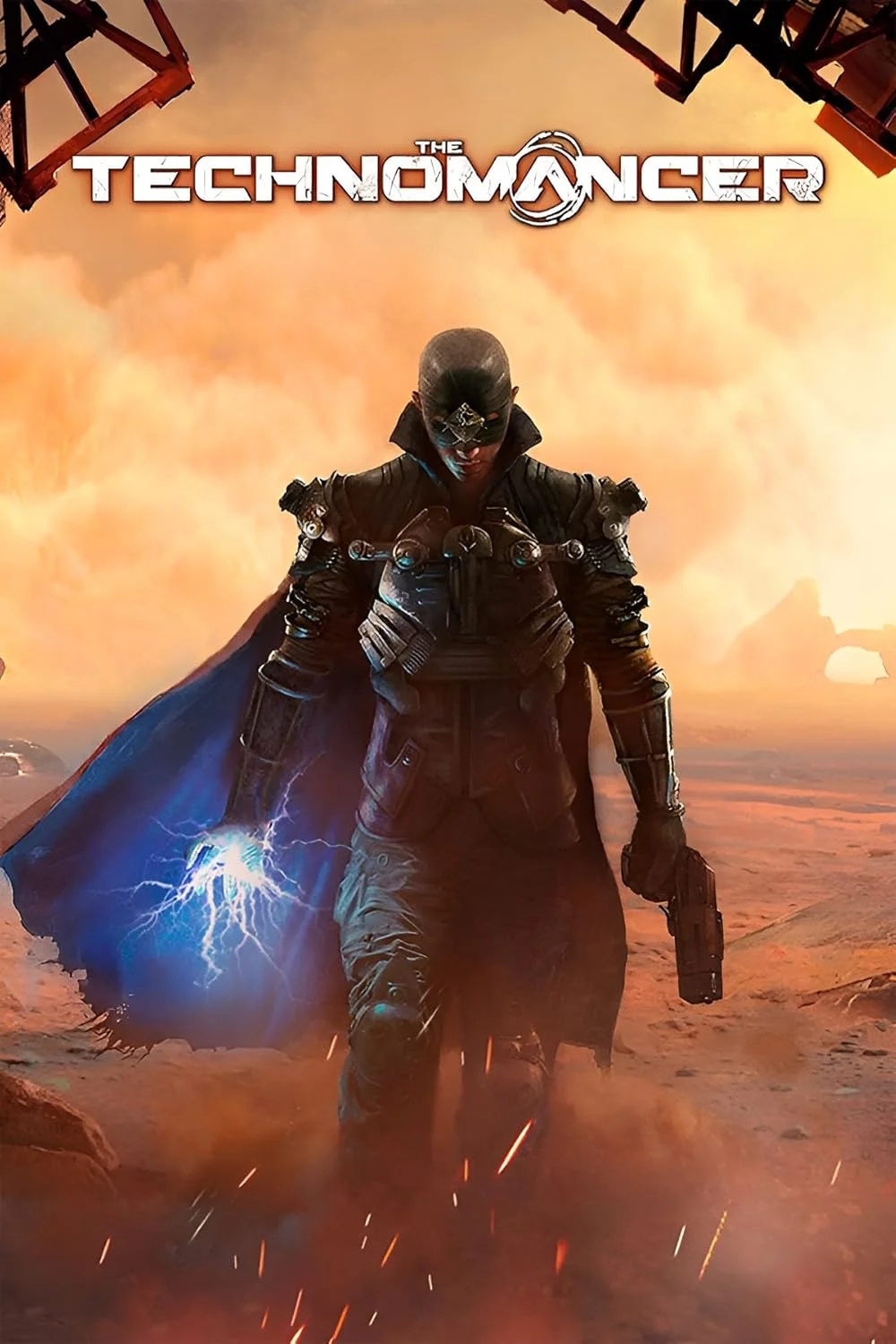
The Technomancer
This combination provides smooth gameplay with an average of 60 FPS, suitable for most gaming scenarios.
Average FPS: resolution vs quality settings
| Ultra | High | Medium | Low | |
|---|---|---|---|---|
| 4K Ultra HD | 22 | 29 | 33 | 44 |
| 1440p QHD | 41 | 52 | 61 | 79 |
| 1080p Full HD | 62 | 80 | 93 | 121 |
Cell color: green is 120+ FPS, teal is 60+, amber is 30+, red is below 30.
The Technomancer with AMD Ryzen 5 7500F + Intel Arc B570, In-Depth Analysis
The Technomancer, a 2016 Action RPG, presents a demanding workload for the AMD Ryzen 5 7500F paired with the Intel Arc B570. The measured data reveals a system that is decisively GPU-limited at higher resolutions, but which shows surprising headroom at 1080p. This analysis explores how the combination of a Zen 4 CPU and a Battlemage GPU handles this title across its various settings and resolutions, providing a detailed look at the performance landscape.
Resolution Scaling
The performance drop from 1080p to 4K is steep and tells a clear story about which component is the bottleneck. At 1080p with High settings, the combo achieves an average of 80 FPS. Moving to 1440p, that average falls to 52 FPS, a significant 35% reduction. The jump to 4K is even more punishing, with the average plummeting to 29 FPS, which is a 64% drop from the 1080p figure. This scaling pattern is the classic signature of a GPU-bound scenario, where the Intel Arc B570’s rendering capabilities are being saturated as pixel count increases.
The data suggests that the AMD Ryzen 5 7500F is not the limiting factor at higher resolutions. With its 6 cores and 12 threads, it has ample processing power to feed the GPU. The fact that frame rates fall so dramatically when resolution increases indicates that the CPU is waiting on the GPU to finish rendering frames. This is further supported by the performance at 1080p, where the CPU has more room to flex. The 80 FPS average at High settings shows a balanced system, but the ceiling is clearly set by the graphics card.
The trend holds true across all settings presets. For example, with Medium settings, the average FPS goes from 93 at 1080p to 61 at 1440p, and then to 33 at 4K. The relative drop from 1440p to 4K is a consistent ~45% across Low, Medium, and High presets. This consistency reinforces the idea that the GPU’s fillrate and memory bandwidth are the primary constraints. The Arc B570’s 160-bit memory bus and 380.0 GB/s bandwidth are likely being pushed to their limits at 4K, regardless of the graphical complexity.
The implication is that for a smooth experience, the resolution must be carefully selected. The data shows that 4K is not a viable target for this game with this hardware, as even the Low preset only manages a 44 FPS average. The system is most comfortable at 1080p, where it can deliver high frame rates, and remains playable at 1440p with adjusted settings. The scaling behavior indicates that users should prioritize resolution over visual fidelity to maintain performance.
FAQ
Q: What is the average frame rate at 1080p with Ultra settings?
A: The average frame rate at 1920x1080 with Ultra settings is 62 FPS. This is lower than the High preset’s 80 FPS, showing a significant cost for the highest visual quality.
Q: Can this hardware run The Technomancer smoothly at 4K resolution?
A: The data shows that 4K is a challenge. The highest average FPS at 3840x2160 is 44 with Low settings. The High preset yields only 29 FPS, and Ultra drops to 22 FPS, indicating that 4K is not a playable target for a smooth experience.
Q: How does the Medium preset compare to High at 1440p?
A: At 2560x1440, the Medium preset averages 61 FPS, while the High preset averages 52 FPS. The Medium preset also shows a minimum FPS of 52, suggesting it provides a more stable experience than High, which has no recorded minimum.
Q: What is the performance difference between Low and Ultra at 1080p?
A: The difference is substantial. The Low preset averages 121 FPS, while the Ultra preset averages 62 FPS. This represents a near-halving of performance, indicating that the Ultra preset is very demanding on the Intel Arc B570.
Q: Is the AMD Ryzen 5 7500F bottlenecking the Intel Arc B570 in this game?
A: Based on the resolution scaling, the CPU does not appear to be a bottleneck. The frame rates drop significantly as resolution increases, which is a sign of a GPU limitation. At 1080p Low, the 121 FPS average shows the CPU can drive high frame rates, but the GPU’s capabilities cap the performance at higher resolutions.
Q: Which settings preset offers the best balance of quality and performance at 1440p?
A: The Medium preset appears to be the best choice at 2560x1440. It provides a 61 FPS average, which is smoother than the High preset’s 52 FPS, and its minimum FPS of 52 is identical to the High preset’s average, suggesting a more consistent frame time.
GPU Role
The Intel Arc B570’s role in The Technomancer is defined by its memory configuration and clock speeds. With 10 GB of GDDR6 memory on a 160-bit bus, it provides a total bandwidth of 380.0 GB/s. This is a substantial amount of memory, but the performance data suggests that the bus width and bandwidth are key factors in the game’s demanding scenarios. The 2500 MHz base and boost clock for the GPU core is a constant, meaning the card’s performance is dictated by how efficiently it can utilize its 2304 shading units and 80 ROPs.
The 4K results are particularly telling. The jump from Medium (33 FPS) to High (29 FPS) is a 12% drop, while the jump from High to Ultra (22 FPS) is a 24% drop. This non-linear scaling suggests that the Ultra preset is not just increasing pixel shading complexity, but also pushing the memory subsystem to its breaking point. The 380.0 GB/s bandwidth is likely saturated, especially with the higher texture and geometry loads that Ultra settings introduce.
At lower resolutions, the GPU’s raw compute power comes to the forefront. The 11.52 TFLOPS of FP32 performance is sufficient to handle the game’s DirectX 12 workload at 1080p, as evidenced by the 121 FPS average on Low settings. The Arc B570’s 18 RT cores are unlikely to be heavily utilized in this 2016 title, but the standard rasterization pipeline is clearly the focus. The data shows a GPU that is capable at 1080p but struggles to maintain playable frame rates as the resolution scales up, pointing to its memory bandwidth as a critical constraint.
The GPU’s percentile ranking of 65th among all GPUs, with an average benchmark score of 20556, places it as a mid-range performer. Its nearest rival, the Intel Arc A750, is only 0.1% behind in average score, showing they are closely matched in synthetic tests. However, in this specific game, the B570’s performance profile is what matters, and the measured FPS shows a clear ceiling at higher resolutions. The 10 GB VRAM allocation is not the issue; rather, it is the speed at which that memory can be accessed.
Settings Recommendations
Based on the measured FPS data, the optimal settings for this hardware depend entirely on the target resolution. At 1920x1080, the High preset is the clear recommendation. It delivers an 80 FPS average, which is a significant improvement over the 62 FPS of Ultra, with a minimal visual difference in most cases. The Medium preset at 93 FPS is even smoother, but High offers a better balance of visual fidelity and performance for most users. The Low preset’s 121 FPS is only necessary for competitive play or on very high refresh rate monitors.
For 2560x1440, the Medium preset is the best choice. With a 61 FPS average and a 52 FPS minimum, it provides a consistently playable experience. The High preset’s 52 FPS average is borderline, and the lack of a recorded minimum suggests potential for frame drops. The Ultra preset at 41 FPS is not recommended for a smooth experience. The data clearly shows that Medium is the sweet spot for 1440p on this hardware.
At 3840x2160, there is no good recommendation for a high-quality experience. The Low preset’s 44 FPS average is the only playable option, but it comes with significant visual compromises. The Medium preset at 33 FPS and High at 29 FPS are too choppy for a smooth action RPG. The Ultra preset at 22 FPS is unplayable. Users with 4K displays would need to drastically lower settings and accept a sub-60 FPS experience, or consider lowering the resolution to 1440p.
The data suggests that the game is best experienced at 1080p with High settings, or at 1440p with Medium settings. The performance cost of Ultra is consistently high across all resolutions, often yielding only a marginal visual improvement over High while costing a substantial amount of frame rate. The measured rows indicate a system that is well-suited for 1080p gaming but requires careful settings management to achieve a stable frame rate at higher resolutions.
Measured FPS Breakdown
At 1920x1080, the system shows its strongest performance. With Low settings, the average FPS is 121. The Medium preset averages 93 FPS, with a minimum of 79 FPS and a maximum of 107 FPS. High settings produce an 80 FPS average. The Ultra preset, while still playable, drops to a 62 FPS average. This shows a clear progression where each step up in quality costs a roughly 13-15% performance hit, except for the jump from High to Ultra, which is a 22.5% decrease.
Moving to 2560x1440, the frame rates scale down predictably. The Low preset averages 79 FPS, which is still quite smooth. Medium settings provide a 61 FPS average, with a minimum of 52 FPS and a maximum of 70 FPS. High settings average 52 FPS, and Ultra falls to 41 FPS. The performance gap between Low and Ultra at this resolution is 38 FPS, showing the significant impact of the more demanding presets. The Medium preset’s minimum FPS of 52 matches the High preset’s average, indicating that it is a more stable option.
At 3840x2160, the system struggles to maintain high frame rates. The Low preset is the only one to break the 40 FPS barrier, with an average of 44 FPS. Medium settings drop to a 33 FPS average, with a minimum of 28 FPS and a maximum of 39 FPS. High settings average 29 FPS, and Ultra is a slideshow at 22 FPS. The data shows that 4K is not a viable resolution for this game with this hardware, as even the lowest settings cannot achieve a consistent 60 FPS.
The pattern across all resolutions is consistent: the Ultra preset offers the most demanding workload, and the performance cost is not linear. The jump from High to Ultra is often more punishing than the jump from Medium to High. This suggests that the Ultra preset enables features that are particularly taxing on the Intel Arc B570’s memory subsystem and compute units. The measured FPS values provide a clear roadmap for what to expect at each configuration.
CPU Role
The AMD Ryzen 5 7500F plays a supportive role in this game, but its capabilities are evident in the data. With a base clock of 3.70 GHz and a boost clock of 5.00 GHz, this 6-core, 12-thread Zen 4 processor has substantial single-thread and multi-thread performance. Its Cinebench R23 multicore score of 22799 and single-core score of 3218 indicate a CPU that can easily keep up with the demands of a 2016 Action RPG. The game is not heavily threaded, so the 7500F’s strong single-core performance is more relevant than its multi-core prowess.
The CPU’s role is most apparent at lower resolutions. The fact that the system can achieve 121 FPS at 1080p with Low settings suggests that the CPU is not a bottleneck in this scenario. If the CPU were limiting performance, we would see similar frame rates across different resolutions. Instead, the frame rates drop dramatically as resolution increases, which is a clear sign that the GPU is becoming the limiting factor. The 7500F is providing frames fast enough to keep the B570 fed, but the GPU cannot render them fast enough at higher pixel counts.
The 7500F’s 32 MB of shared L3 cache and dual-channel DDR5 memory support (with a bandwidth of 83.2 GB/s) are more than sufficient for this game. The CPU’s percentile ranking of 77th among all CPUs, with an average benchmark score of 24964, places it in a strong position. Its nearest rival, the AMD Ryzen 5 8400F, is only 0.2% behind in average score, showing they are closely matched in synthetic tests. In this game, the 7500F’s performance is a non-issue; it provides a solid foundation for the GPU to operate.
The data implies that the CPU is a reliable partner for the Arc B570 in The Technomancer. It has the headroom to handle the game’s logic and physics without causing frame rate drops. The bottleneck is firmly with the GPU, especially at higher resolutions. The 7500F’s high boost clock and efficient Zen 4 architecture ensure that it is not the component holding back performance, allowing the system to achieve its maximum potential at any given resolution and settings combination.
How This Combo Ranks
The combination of the AMD Ryzen 5 7500F and Intel Arc B570 ranks 2256th out of 2825 tested combos in The Technomancer. This places it in the lower half of all systems tested, which is a direct result of the GPU’s performance at higher resolutions. The ranking is a composite of all measured FPS data, meaning that the poor 4K results drag the overall score down, even though the 1080p performance is respectable.
This ranking is not necessarily a condemnation of the CPU, but rather a reflection of the GPU’s limitations in this specific title. The Intel Arc B570’s average benchmark score of 20556 and its 65th percentile ranking among all GPUs indicate a mid-range part. In a game that is as demanding on the GPU as The Technomancer is at higher resolutions, this mid-range performance translates to a lower overall combo rank. The data shows that the system is more competitive at lower resolutions, where the CPU’s strength can shine.
The combo’s rank of 2256 suggests that there are many other systems that can run this game better, likely those with higher-end graphics cards. However, the rank should be viewed in context. For a system with a $179 launch MSRP CPU and a $219 launch MSRP GPU, the performance is in line with expectations for a mid-range build. The data shows that it is a capable 1080p machine, but it is not designed for high-refresh-rate 4K gaming.
The ranking also highlights the importance of the GPU in this pairing. The CPU’s nearest rivals, such as the Intel Core i7-13620H, have similar average scores, but the overall combo rank is heavily influenced by the GPU’s measured performance. This suggests that if a user were to pair the 7500F with a stronger GPU, the combo rank would improve significantly. The current rank reflects the Arc B570’s performance ceiling in this game, not a reflection of the CPU’s capabilities.
Hardware Specifications
AMD Ryzen 5 7500F
Intel Arc B570
FPS Benchmarks by Resolution & Settings
Performance data for AMD Ryzen 5 7500F + Intel Arc B570 in The Technomancer
| Resolution | Settings | Avg FPS |
|---|---|---|
| 3840x2160 | Low | 44.0 |
| 3840x2160 | Medium | 33.0 |
| 3840x2160 | High | 29.0 |
| 3840x2160 | Ultra | 22.0 |
| 2560x1440 | Low | 79.0 |
| 2560x1440 | Medium | 61.0 |
| 2560x1440 | High | 52.0 |
| 2560x1440 | Ultra | 41.0 |
| 1920x1080 | Low | 121.0 |
| 1920x1080 | Medium | 93.0 |
| 1920x1080 | High | 80.0 |
| 1920x1080 | Ultra | 62.0 |
The Technomancer with Ryzen 5 7500F + Other GPUs
See how The Technomancer performs with the same CPU but different graphics cards.
The Technomancer with Arc B570 + Other CPUs
See how The Technomancer performs with the same GPU but different processors.
Other Games with Ryzen 5 7500F + Arc B570
Explore FPS benchmarks for other games using this same hardware combination.