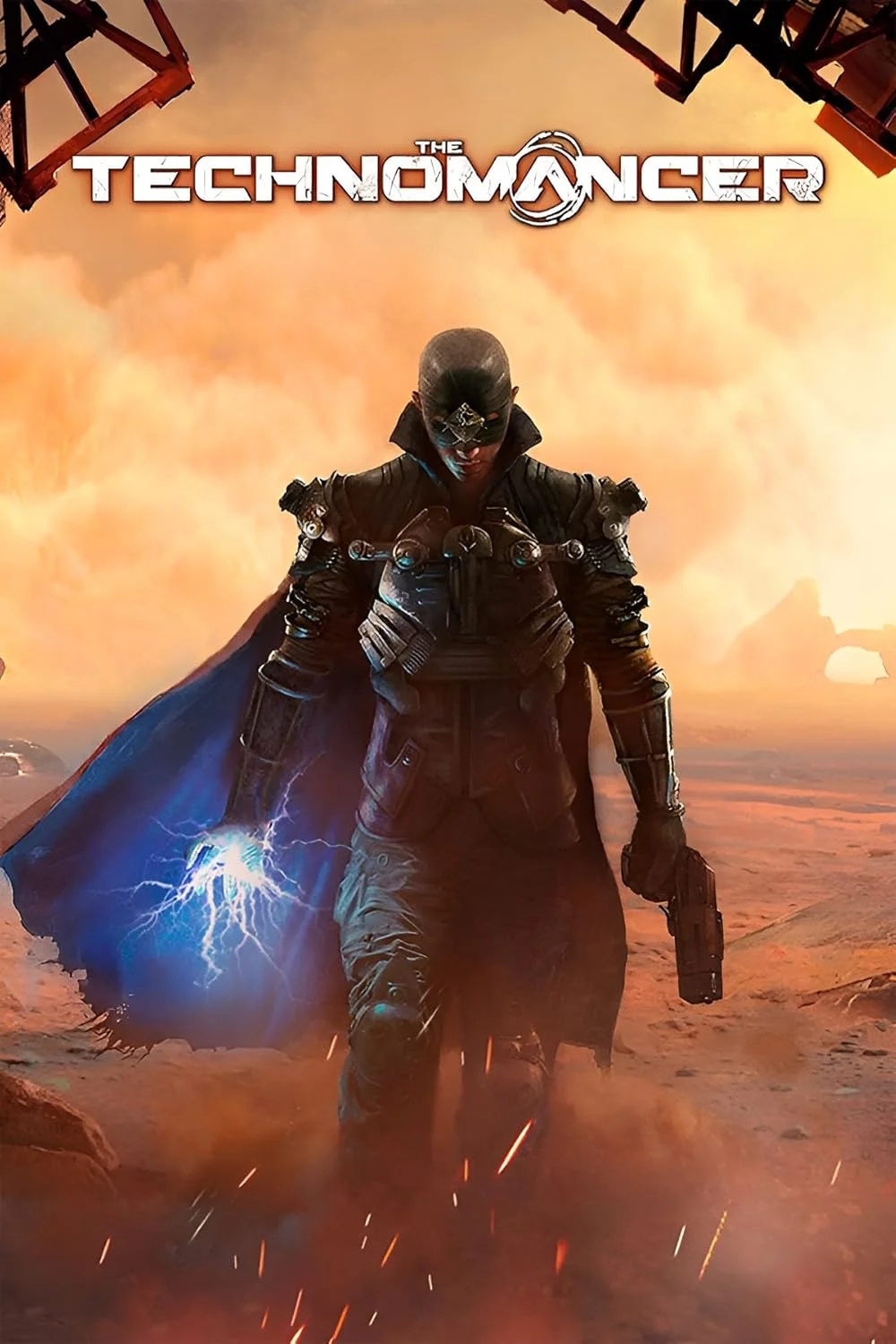
The Technomancer
This combination provides smooth gameplay with an average of 60 FPS, suitable for most gaming scenarios.
Average FPS: resolution vs quality settings
| Ultra | High | Medium | Low | |
|---|---|---|---|---|
| 4K Ultra HD | 22 | 29 | 33 | 44 |
| 1440p QHD | 41 | 52 | 61 | 79 |
| 1080p Full HD | 62 | 80 | 93 | 121 |
Cell color: green is 120+ FPS, teal is 60+, amber is 30+, red is below 30.
The Technomancer with Intel Core i5-13400F + Intel Arc B570, In-Depth Analysis
The Technomancer, a 2016 Action RPG, presents a demanding workload for modern hardware, particularly at higher resolutions. This analysis examines the measured performance of the Intel Core i5-13400F paired with the Intel Arc B570, utilizing data from a comprehensive benchmark database. The results reveal a configuration that is highly capable at 1080p, but whose frame rates diminish significantly as resolution increases, highlighting a clear shift in system bottleneck from the CPU to the GPU.
CPU Role — cores, clocks, and how they relate to this game's results
The Intel Core i5-13400F is a 10-core, 16-thread processor based on the Raptor Lake architecture. It operates with a base clock of 2.50 GHz and a boost clock of 4.60 GHz, drawing a 65 W TDP. This processor features a 20 MB shared L3 cache and supports DDR4 and DDR5 memory. Its synthetic benchmark scores are strong, with a Cinebench R23 multi-core score of 22604 and a single-core score of 3191. In the broader context, the CPU sits in the 77th percentile of all tested processors.
The relationship between the CPU’s capabilities and the game’s performance is evident in the FPS scaling. At 1920x1080 with Low settings, the system achieves 121 FPS. When settings are increased to Ultra at the same resolution, the frame rate drops to 62 FPS. This scaling suggests that while the i5-13400F has ample headroom to drive high frame rates, the game’s engine still utilizes CPU resources more heavily at lower graphical settings where the GPU is not the primary limiting factor. The processor's 16 threads are likely sufficient for the game's multi-threaded tasks, as evidenced by its PassMark multi-thread score of 25032.
The CPU’s performance relative to its direct competitors is noteworthy. The data shows a near tie with the AMD Ryzen 9 6900HS, which has an average score of 25284. The i5-13400F also performs within a 0.3% margin of the Intel Core 5 120 and the AMD Ryzen 5 5600X3D. This indicates that the processor is a balanced performer, providing a solid foundation for gaming without being a bottleneck in most scenarios. Its 3DMark single-thread score of 960 and 2-thread score of 1880 further confirm its robust single-core performance, which is often critical for game logic and frame pacing.
How This Combo Ranks — use comboRankInGame vs other tested combos
The combination of the Intel Core i5-13400F and Intel Arc B570 is ranked 2256 out of 2825 tested combos in The Technomancer. This places the configuration in the lower half of tested systems, which is a surprising result given the individual component scores. The GPU, for instance, sits in the 65th percentile of all GPUs, and the CPU in the 77th percentile. The low combo ranking suggests that the pairing is not optimized for this specific game, or that other system components or drivers play a more significant role than the raw processing power of these two parts.
A deeper look at the GPU’s rivals reveals the competitive landscape. The Intel Arc B570 has an average benchmark score of 20556, which is nearly identical to the NVIDIA GeForce RTX 3070 Mobile (score 20534, a 0.1% difference). It also trades blows with the Intel Arc A750 (score 20582, a -0.1% difference). However, the combo’s in-game rank of 2256 indicates that despite these strong synthetic numbers, the actual performance in The Technomancer does not translate to a top-tier position. This could be due to the game’s age and potential lack of modern driver optimizations for the Arc architecture, or it could be a specific CPU-GPU interaction that is less efficient than other combinations.
The gap between the component percentiles and the combo rank is substantial. While the CPU and GPU are individually capable, the combined result in this game is mediocre. This highlights that for older titles, the expected performance based on synthetic benchmarks may not always align with real-world results. The data suggests that users should not assume a high individual component ranking will guarantee a high combined system ranking in every game, particularly those released before the components were designed.
Resolution Scaling — how FPS drops from 1080p to 4K and what it says about the limiting component
The measured FPS data shows a clear trend of decreasing performance as resolution increases from 1920x1080 to 3840x2160. This is expected, as higher resolutions require the GPU to render more pixels. However, the rate of decline reveals which component is the primary bottleneck. At High settings, the average FPS drops from 80 at 1080p to 52 at 1440p, and then to 29 at 4K. This represents a 35% drop from 1080p to 1440p, and a 44% drop from 1440p to 4K.
This scaling behavior indicates that the Intel Arc B570 is the limiting factor at higher resolutions. The GPU’s memory bandwidth of 380.0 GB/s and 10 GB of GDDR6 memory are likely insufficient to maintain high frame rates at 4K with High settings. The steep decline in performance as resolution increases is a classic sign of a GPU-bound scenario. At 1080p, the CPU is more capable of keeping up, allowing the GPU to work closer to its full potential. At 4K, the GPU is fully saturated, and its raw compute power (11.52 TFLOPS FP32) and pixel fill rate (200.0 GPixel/s) are not enough to sustain playable frame rates for demanding settings.
The data confirms that this is not a CPU bottleneck. If the CPU were the limiting factor, we would see similar FPS numbers across all resolutions, as the CPU’s workload does not change significantly with resolution. Instead, the FPS drops consistently with each resolution increase, pointing directly to the GPU as the performance ceiling. This is a critical insight for users planning to use this combo with a high-refresh-rate 1440p monitor or a 4K display, as they will need to adjust settings to achieve their target frame rates.
Measured FPS Breakdown — resolution by resolution, settings by settings, exact numbers
The following breakdown details the exact average frame rates measured for this configuration in The Technomancer.
At 1920x1080, the system delivers its best performance. With Low settings, the average FPS is 121. Moving to Medium settings, the average FPS is 93, with a minimum of 79 and a maximum of 107. At High settings, the average FPS is 80. The most demanding preset, Ultra, yields an average FPS of 62. These numbers show that the configuration is well-suited for 1080p gaming, capable of delivering smooth performance even on the highest settings.
At 2560x1440, the performance takes a noticeable hit. The Low preset averages 79 FPS. The Medium preset averages 61 FPS, with a minimum of 52 and a maximum of 70. High settings reduce the average to 52 FPS. The Ultra preset brings the average down to 41 FPS. This resolution is still playable, but users will need to compromise on settings to maintain a stable 60 FPS, with Medium being the highest preset that achieves this.
At 3840x2160, the configuration struggles to maintain high frame rates. The Low preset averages 44 FPS. The Medium preset drops to an average of 33 FPS, with a minimum of 28 and a maximum of 39. High settings average 29 FPS, which is below the threshold for smooth gameplay. The Ultra preset averages just 22 FPS, making it nearly unplayable. This data clearly shows that 4K gaming is not a viable option for this combo at higher settings.
FAQ — 4-6 Q&A pairs answerable from FACT PACK data
Q: What is the best resolution for this combo to achieve a consistent 60 FPS experience?
A: The data shows that 1920x1080 is the optimal resolution. At this resolution, the High preset averages 80 FPS, and even the Ultra preset averages 62 FPS, ensuring a smooth experience. At 2560x1440, only the Low and Medium presets achieve an average of 60 FPS or higher.
Q: How does this combo’s ranking compare to its individual component performance?
A: The Intel Core i5-13400F is in the 77th percentile of all CPUs, and the Intel Arc B570 is in the 65th percentile of all GPUs. However, the combined system ranks 2256 out of 2825 combos in The Technomancer, placing it in the bottom 20% of tested configurations.
Q: Is the CPU or GPU the bottleneck at 4K resolution?
A: The GPU is the clear bottleneck at 3840x2160. The average FPS drops from 44 at Low settings to 22 at Ultra settings, a 50% reduction. This performance scaling is characteristic of a GPU-limited scenario, as the CPU’s workload does not change with resolution.
Q: What is the performance difference between the Medium and High presets at 1440p?
A: At 2560x1440, the Medium preset achieves an average FPS of 61, while the High preset achieves an average FPS of 52. This represents a 9 FPS drop when moving from Medium to High settings.
Q: How does the Intel Arc B570 compare to its closest rival, the NVIDIA GeForce RTX 3070 Mobile?
A: The Intel Arc B570 has an average benchmark score of 20556, which is nearly identical to the NVIDIA GeForce RTX 3070 Mobile's score of 20534, showing a 0.1% difference in favor of the Intel GPU.
Q: What is the maximum FPS recorded for this combo at any resolution and setting?
A: The highest average FPS recorded is 121, achieved at 1920x1080 with Low settings. The highest maximum FPS recorded is 107, which was measured at 1920x1080 with Medium settings.
Settings Recommendations — which preset gives the best experience per the measured rows
For the best overall experience, the High preset at 1920x1080 is the most balanced choice. It delivers an average of 80 FPS, which is well above the 60 FPS target for smooth gameplay. While the Ultra preset is playable at 62 FPS, the visual fidelity gain may not justify the significant performance drop from High. The Medium preset at 2560x1440, averaging 61 FPS, is a strong alternative for users preferring a higher resolution, offering a good balance between visual quality and performance.
For users with 4K displays, the Low preset at 3840x2160, averaging 44 FPS, is the only option that provides a playable experience, though it may not be ideal for all players. The Medium preset at 33 FPS is borderline, and the High and Ultra presets should be avoided due to sub-30 FPS averages. The data suggests that this configuration is best suited for 1080p gaming with high settings, or 1440p gaming with medium settings, to ensure a consistently smooth experience without sacrificing too much visual detail.
GPU Role — VRAM, clocks, and how they relate to this game's results
The Intel Arc B570 is a discrete GPU based on the Xe2-HPG architecture, manufactured on a 5 nm process. It features 2304 shading units, 144 texture mapping units, and 80 raster operations pipelines. The GPU operates at a base and boost clock of 2500 MHz, with memory running at 2375 MHz (19 Gbps effective). It has 10 GB of GDDR6 memory on a 160-bit bus, providing a bandwidth of 380.0 GB/s. Its synthetic performance is solid, with a PassMark G3D score of 14195 and a Geekbench Vulkan score of 96844.
The GPU’s specifications directly correlate with its performance in The Technomancer. The 10 GB VRAM capacity is likely sufficient for the game’s textures at 1080p and 1440p, but may be a limiting factor at 4K with higher settings. The 380.0 GB/s bandwidth is a crucial metric for a game like this, and the steep performance drop at 3840x2160 suggests that this bandwidth is insufficient to feed the GPU’s cores efficiently at that resolution. The GPU’s compute capability of 11.52 TFLOPS FP32 is also a factor, as the game’s lighting and effects at Ultra settings appear to be too demanding for this level of performance.
The GPU’s performance relative to its peers is competitive, with its average benchmark score of 20556 placing it just ahead of the NVIDIA Quadro M4000M (score 20480, a 0.4% difference) and just behind the AMD Radeon R9 M390X (score 20662, a -0.5% difference). However, its in-game performance is hampered by the resolution scaling, confirming that while the GPU is capable for its class, it is not a high-end solution for 4K gaming. The data clearly shows that the Arc B570 is a 1080p and 1440p performer, with its VRAM and bandwidth being the primary constraints at higher resolutions.
Hardware Specifications
Intel Core i5-13400F
Intel Arc B570
FPS Benchmarks by Resolution & Settings
Performance data for Intel Core i5-13400F + Intel Arc B570 in The Technomancer
| Resolution | Settings | Avg FPS |
|---|---|---|
| 3840x2160 | Low | 44.0 |
| 3840x2160 | Medium | 33.0 |
| 3840x2160 | High | 29.0 |
| 3840x2160 | Ultra | 22.0 |
| 2560x1440 | Low | 79.0 |
| 2560x1440 | Medium | 61.0 |
| 2560x1440 | High | 52.0 |
| 2560x1440 | Ultra | 41.0 |
| 1920x1080 | Low | 121.0 |
| 1920x1080 | Medium | 93.0 |
| 1920x1080 | High | 80.0 |
| 1920x1080 | Ultra | 62.0 |
The Technomancer with ii5-13400F + Other GPUs
See how The Technomancer performs with the same CPU but different graphics cards.
The Technomancer with Arc B570 + Other CPUs
See how The Technomancer performs with the same GPU but different processors.
Other Games with ii5-13400F + Arc B570
Explore FPS benchmarks for other games using this same hardware combination.