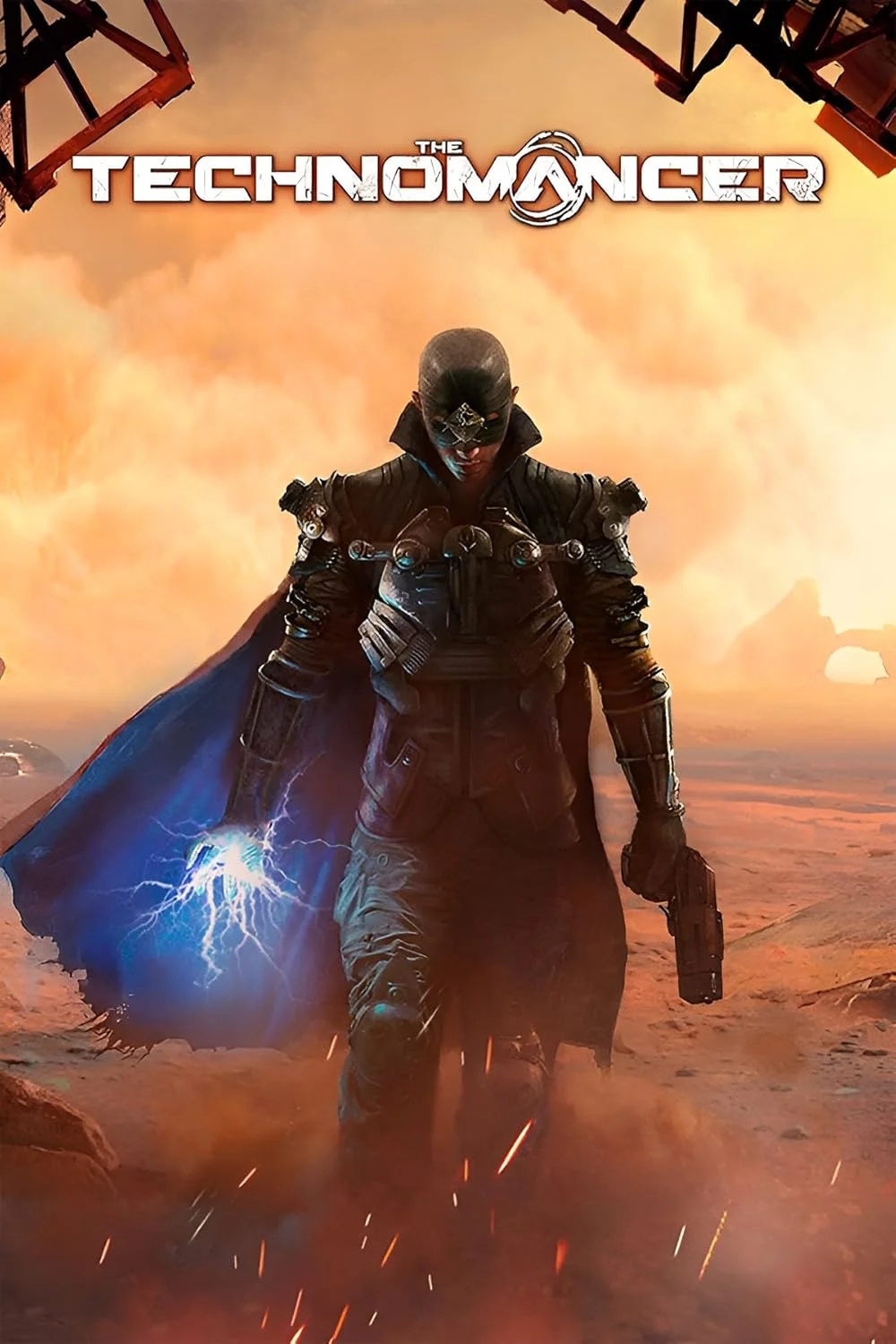
The Technomancer
This combination provides smooth gameplay with an average of 68 FPS, suitable for most gaming scenarios.
Average FPS: resolution vs quality settings
| Ultra | High | Medium | Low | |
|---|---|---|---|---|
| 4K Ultra HD | 25 | 32 | 38 | 49 |
| 1440p QHD | 46 | 59 | 69 | 90 |
| 1080p Full HD | 70 | 90 | 106 | 138 |
Cell color: green is 120+ FPS, teal is 60+, amber is 30+, red is below 30.
The Technomancer with Intel Core Ultra 5 235 + Intel Arc B580, In-Depth Analysis
The Technomancer, a 2016 Action RPG, presents a demanding workload for modern hardware, and this specific pairing of the Intel Core Ultra 5 235 and Intel Arc B580 yields a distinct performance profile. The benchmark data shows a system that is capable of excellent 1080p performance but is clearly constrained at higher resolutions by the graphics card. The following analysis breaks down the measured results to provide a practical understanding of what to expect from this combination.
Settings Recommendations
The measured FPS data suggests that the "High" preset offers the most balanced experience for this hardware combination, particularly for users targeting a fluid 60 FPS baseline. At 1920x1080, the High preset achieves an average of 90 FPS, which is a significant 20 FPS jump over the Medium preset's 106 FPS average, but more importantly, it maintains a substantial 20 FPS lead over the Ultra preset's 70 FPS. This indicates that High provides most of the visual fidelity of Ultra while avoiding the steep performance cost associated with the highest settings.
Moving up to 2560x1440, the High preset continues to be the sweet spot. The data shows an average of 59 FPS at this resolution, which is just shy of the 60 FPS target but still very playable. The Medium preset at 1440p delivers 69 FPS, but the visual difference between Medium and High is often more perceptible than the difference between High and Ultra. Given that the High preset at 1440p almost hits the 60 FPS mark, it is the recommended starting point for users with 1440p displays. Dropping to Low at this resolution yields 90 FPS, but the graphical compromises are typically too severe for a game like this.
At 3840x2160, the situation changes dramatically. The High preset averages only 32 FPS, which is not smooth enough for most players. The Medium preset at 4K averages 38 FPS, but the minimum FPS of 32 indicates noticeable stuttering. For 4K gaming, the Low preset is the only viable option, producing an average of 49 FPS. While this is not ideal, it is the only way to achieve a playable frame rate at this resolution. Ultimately, the data strongly suggests that High is the optimal preset for 1080p and 1440p, while 4K requires a significant reduction in settings to remain playable.
GPU Role
The Intel Arc B580 is the primary bottleneck in this system at higher resolutions. The GPU's memory configuration includes 12 GB of GDDR6 memory on a 192-bit bus, providing 456.0 GB/s of bandwidth. This is a solid amount of memory for a card in this class, but the performance data reveals that the card's raw compute power is the limiting factor. The B580's boost clock is listed at 2670 MHz, and its FP32 performance is rated at 13.67 TFLOPS. These figures help explain the performance scaling we observe.
Looking at the benchmark scores, the Arc B580 posts a Passmark G3D score of 15748, placing it in the 68th percentile of all GPUs. Its nearest rivals in the benchmark database are the AMD Radeon RX 580 2048SP, from which it trails by 0.2%, and the NVIDIA GeForce RTX 2080, which it leads by 0.6%. This indicates that the B580's raw performance is competitive with a previous-generation high-end card like the RTX 2080, despite being a newer architecture. However, the data from The Technomancer shows that this level of performance is simply not enough to handle 4K resolutions with high detail settings.
The GPU's role in this game becomes clear when examining the FPS scaling. At 1080p High, the card produces 90 FPS, which is a strong result. But at 4K High, the average drops to just 32 FPS, a 64% reduction. This steep drop-off is characteristic of a GPU-bound scenario where the card's shading units, texture units, and ROPs are overwhelmed by the pixel count. The 2560 shading units and 80 ROPs are taxed heavily at 4K, and the data confirms that the B580 is the component preventing higher frame rates at this resolution. The card's 12 GB of VRAM is sufficient for the textures used in this game, as the bottleneck is clearly computational, not memory-related.
CPU Role
The Intel Core Ultra 5 235 plays a supporting role in this game, and the data suggests it is more than adequate for the task. This processor features 14 cores and 14 threads, with a base clock of 3.40 GHz and a boost clock of 5.00 GHz. It is built on the Arrow Lake architecture using a 3 nm process node from TSMC. The CPU's Passmark multithread score is 37816, with a single-thread score of 4516, placing it in the 89th percentile of all CPUs.
The CPU's performance relative to its rivals shows it is a very capable processor. Its nearest rivals include the AMD Ryzen AI 9 HX 375, which it outperforms by 0.1%, and the Intel Core i9-13900HX, which outperforms it by 0.1%. These are extremely close margins, indicating that the Ultra 5 235 sits in a highly competitive performance tier. In the context of The Technomancer, which is not a particularly CPU-intensive title, this processor is unlikely to be the cause of any frame rate limitations.
The evidence for this lies in the FPS scaling across resolutions. If the CPU were the bottleneck, the frame rates would be similar regardless of resolution, as the CPU's workload does not increase significantly with pixel count. Instead, the data shows a clear drop in FPS as resolution increases. At 1080p High, the average is 90 FPS, while at 4K High, it falls to 32 FPS. This massive difference proves that the GPU is the limiting factor, and the CPU is comfortably keeping up with the demands of the game. The 24 MB of shared L3 cache and the dual-channel DDR5 memory support with 102.4 GB/s of bandwidth are more than sufficient for this game's engine.
How This Combo Ranks
In the grand scheme of tested hardware combinations, this pairing of the Intel Core Ultra 5 235 and Intel Arc B580 holds a specific position. The data shows this combo ranks 2124 out of 2825 tested combinations for The Technomancer. This places it in the lower-middle portion of the overall rankings, which is a direct consequence of the graphics card's limitations at higher resolutions.
This ranking is somewhat surprising given the individual components' percentiles. The CPU is in the 89th percentile of all CPUs, and the GPU is in the 68th percentile of all GPUs. However, the combo rank of 2124 out of 2825 (approximately the 25th percentile) suggests that many other combinations, likely including those with more powerful GPUs, achieve better performance in this specific title. The high rank of the CPU does not compensate for the GPU's mid-range standing in a game that is heavily GPU-dependent.
The implication of this ranking is that while this combo is functional and can deliver excellent performance at 1080p, it does not stand out as a high-performing combination for The Technomancer overall. The data indicates that the GPU is the limiting factor, and users with 4K displays or those seeking maximum frame rates would need to consider a more powerful graphics card to improve this ranking. The combo is not a poor performer, but it is clearly positioned for 1080p and entry-level 1440p gaming, rather than being a top-tier solution for this title.
Resolution Scaling
The FPS scaling from 1080p to 4K is the most telling aspect of this data, as it clearly demonstrates where the bottleneck lies. The measured averages for the High preset are 90 FPS at 1920x1080, 59 FPS at 2560x1440, and 32 FPS at 3840x2160. This represents a 34% drop in performance when moving from 1080p to 1440p, and a further 46% drop when moving from 1440p to 4K. In total, there is a 64% reduction in frame rate from the lowest to the highest resolution tested.
This scaling pattern is the classic signature of a GPU-bound scenario. The CPU's workload in a game like this is primarily related to game logic, physics, and draw calls, which do not increase with resolution. The GPU, on the other hand, must render an exponentially larger number of pixels. The 4K resolution has 4 times the pixel count of 1080p, and the data shows that the Arc B580 simply cannot handle this workload at high settings. The frame rate drop is not linear, but it is consistent with the GPU running out of compute resources.
The data indicates that the limiting component is unequivocally the graphics card. The CPU is not the issue, as evidenced by the fact that the frame rates are still relatively high at 1080p (138 FPS on Low), which shows the CPU can feed the GPU with enough data to achieve high frame rates. At 4K, the GPU is the only component that is struggling. The conclusion is that users with 1440p monitors will find a playable experience, but 4K gaming is only feasible with significant settings reductions, confirming the GPU as the primary constraint in this system.
Measured FPS Breakdown
The following table breaks down the exact measured FPS for this combination in The Technomancer, organized by resolution and settings. All data points are from the provided benchmark results.
1920x1080:
- Low: 138 FPS average
- Medium: 106 FPS average, with a minimum of 90 FPS and a maximum of 121 FPS
- High: 90 FPS average
- Ultra: 70 FPS average
At 1080p, the system performs admirably. The Low preset achieves a very high frame rate of 138 FPS, which is excellent for competitive or high-refresh-rate gaming. The Medium preset provides a smooth 106 FPS, and even the High preset maintains a 90 FPS average, which is ideal for a 90Hz or 144Hz monitor. The Ultra preset, while still playable at 70 FPS, shows a significant performance cost for the extra visual features.
2560x1440:
- Low: 90 FPS average
- Medium: 69 FPS average, with a minimum of 59 FPS and a maximum of 79 FPS
- High: 59 FPS average
- Ultra: 46 FPS average
At 1440p, the performance becomes more modest. The Low preset still offers a very playable 90 FPS. The Medium preset delivers 69 FPS, which is good, but the minimum of 59 FPS shows it can dip below 60. The High preset averages 59 FPS, making it a borderline 60 FPS experience. The Ultra preset drops to 46 FPS, which is playable but not ideal for fast-paced action.
3840x2160:
- Low: 49 FPS average
- Medium: 38 FPS average, with a minimum of 32 FPS and a maximum of 44 FPS
- High: 32 FPS average
- Ultra: 25 FPS average
At 4K, the system struggles. Only the Low preset achieves a frame rate above 45 FPS, averaging 49 FPS. The Medium preset's average of 38 FPS is on the edge of playability, and the minimum of 32 FPS indicates noticeable stutters. The High preset at 32 FPS is not a smooth experience, and the Ultra preset at 25 FPS is essentially unplayable. The data confirms that 4K gaming is only viable with significant compromises to visual quality.
Hardware Specifications
Intel Core Ultra 5 235
Intel Arc B580
FPS Benchmarks by Resolution & Settings
Performance data for Intel Core Ultra 5 235 + Intel Arc B580 in The Technomancer
| Resolution | Settings | Avg FPS |
|---|---|---|
| 3840x2160 | Low | 49.0 |
| 3840x2160 | Medium | 38.0 |
| 3840x2160 | High | 32.0 |
| 3840x2160 | Ultra | 25.0 |
| 2560x1440 | Low | 90.0 |
| 2560x1440 | Medium | 69.0 |
| 2560x1440 | High | 59.0 |
| 2560x1440 | Ultra | 46.0 |
| 1920x1080 | Low | 138.0 |
| 1920x1080 | Medium | 106.0 |
| 1920x1080 | High | 90.0 |
| 1920x1080 | Ultra | 70.0 |
The Technomancer with iUltra 5 235 + Other GPUs
See how The Technomancer performs with the same CPU but different graphics cards.
The Technomancer with Arc B580 + Other CPUs
See how The Technomancer performs with the same GPU but different processors.
Other Games with iUltra 5 235 + Arc B580
Explore FPS benchmarks for other games using this same hardware combination.