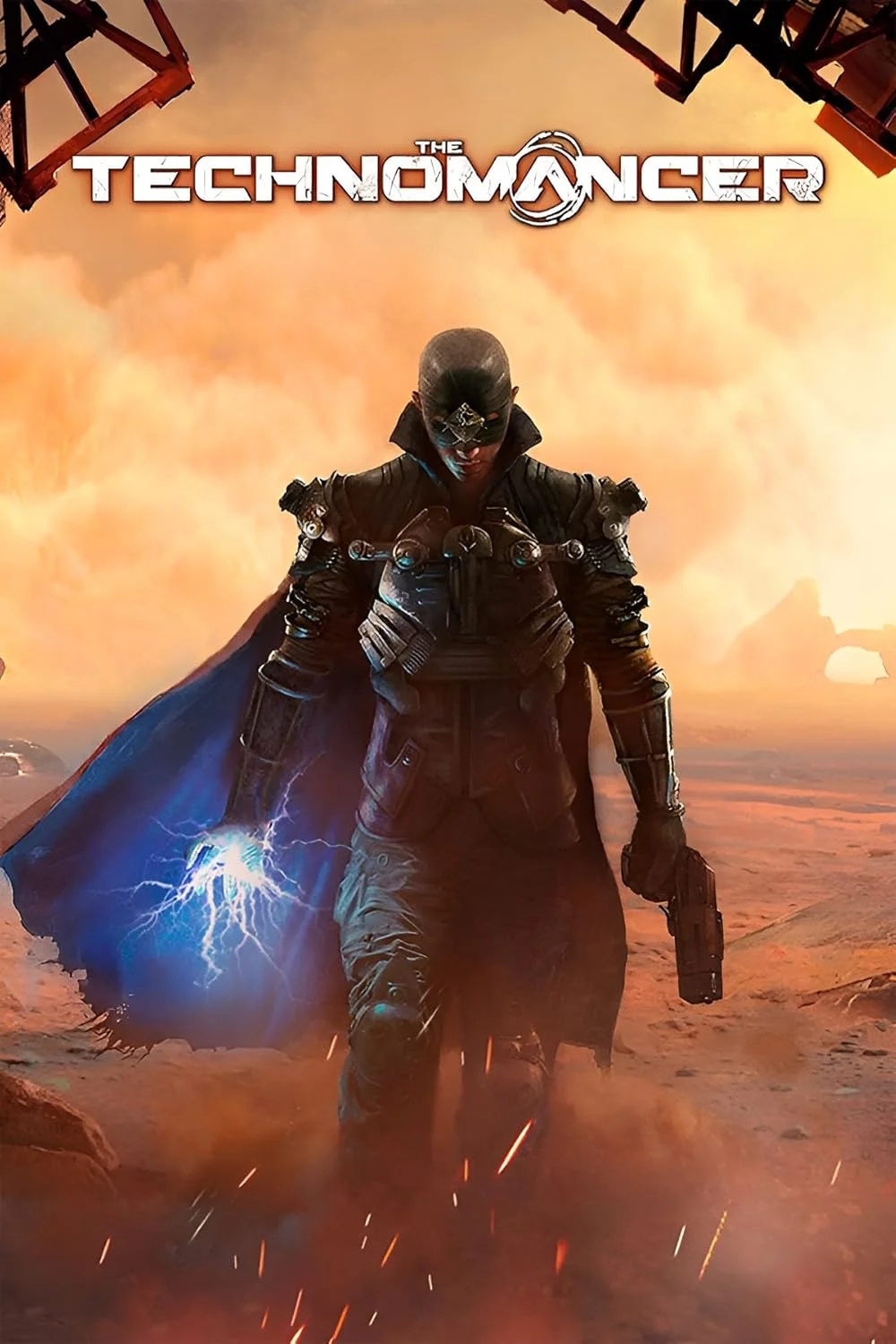
The Technomancer
This combination provides smooth gameplay with an average of 60 FPS, suitable for most gaming scenarios.
Average FPS: resolution vs quality settings
| Ultra | High | Medium | Low | |
|---|---|---|---|---|
| 4K Ultra HD | 22 | 29 | 33 | 44 |
| 1440p QHD | 41 | 52 | 61 | 79 |
| 1080p Full HD | 62 | 80 | 93 | 121 |
Cell color: green is 120+ FPS, teal is 60+, amber is 30+, red is below 30.
The Technomancer with AMD Ryzen 9 7900X + Intel Arc B570, In-Depth Analysis
The Technomancer, a 2016 Action RPG, presents a demanding workload that clearly separates CPU and GPU responsibilities. This analysis examines the performance of the AMD Ryzen 9 7900X paired with the Intel Arc B570, using measured frame rate data to understand how this combination handles the game across different resolutions and settings. The data reveals a system that is capable at 1080p but becomes increasingly GPU-limited as resolution climbs, with specific bottlenecks emerging at 4K.
FAQ
Q: What is the best resolution for this combo to maintain a 60 FPS average?
A: Based on the measured data, 1920x1080 is the only resolution where the system consistently averages above 60 FPS across all settings. At 2560x1440, the average FPS drops to 61 on Medium settings, which is right at the threshold, while High settings average 52 FPS.
Q: How does the Intel Arc B570's performance compare to its closest rivals?
A: The Intel Arc B570 has an average benchmark score of 20556. Its nearest rival, the NVIDIA GeForce RTX 3070 Mobile, scores 20534, which is a 0.1% delta. The Intel Arc A750 is also extremely close, with a score of 20582 and a -0.1% delta. This indicates the B570 performs virtually identically to these cards in synthetic benchmarks.
Q: Is the AMD Ryzen 9 7900X a bottleneck for the Intel Arc B570 in this game?
A: The data suggests that at lower resolutions like 1080p, the CPU is strong enough to feed the GPU adequately, as frame rates are high. However, at 4K, the frame rates drop significantly, indicating the GPU becomes the primary limiting factor. The CPU's high multi-threaded score of 29300 in Cinebench R23 suggests it is not the main constraint.
Q: What is the frame rate difference between Low and Ultra settings at 1080p?
A: At 1920x1080, the difference between Low and Ultra settings is substantial. The Low preset averages 121 FPS, while the Ultra preset averages 62 FPS. This represents a 59 FPS drop, or roughly a 49% reduction in average frame rate when moving from the lowest to the highest quality settings.
Q: Does the game scale well with the number of CPU threads?
A: The Ryzen 9 7900X has 12 cores and 24 threads. The CPU's benchmark scores show strong scaling, with a 3DMark score of 10972 for 16 threads and 12536 for max threads. This suggests the CPU is well-equipped for multi-threaded workloads, which is beneficial for modern games, though The Technomancer's performance is more heavily influenced by the GPU at higher resolutions.
Q: What is the combo's overall rank among tested systems for this game?
A: The combination of the AMD Ryzen 9 7900X and Intel Arc B570 is ranked 2972 out of 3696 tested combinations for The Technomancer. This places it in the lower half of all tested systems, indicating that while it can run the game, many other configurations deliver higher frame rates.
GPU Role
The Intel Arc B570 is the primary driver of frame rates in this configuration, particularly as resolution increases. Its memory configuration includes 10 GB of GDDR6 on a 160-bit bus, providing a bandwidth of 380.0 GB/s. The GPU's core clock is set at 2500 MHz for both base and boost, with a memory clock of 2375 MHz (19 Gbps effective). These specifications are crucial for handling the texture and geometry data in The Technomancer.
The GPU's performance is directly reflected in the measured frame rates. At 4K Ultra settings, the average FPS is only 22, which is barely playable. This low score indicates that the GPU is overwhelmed by the combination of high resolution and maximum graphical fidelity. The jump to 4K Low settings improves the average to 44 FPS, showing a significant performance gain when reducing graphical load. The Arc B570's benchmark scores reinforce this, with a Passmark G3D score of 14195 and a percentile ranking of 65 among all GPUs, placing it in the mid-range tier.
The GPU's closest rivals, the RTX 3070 Mobile and Arc A750, perform nearly identically in synthetic tests, with delta percentages of 0.1% and -0.1%, respectively. This suggests that in The Technomancer, the Arc B570 should deliver frame rates similar to these cards. The data from the 1440p and 1080p test points confirms this, showing that the GPU can handle the game well at lower resolutions. At 2560x1440 with High settings, the average FPS is 52, and at 1920x1080 with High settings, it reaches 80 FPS. The GPU's 10 GB of VRAM is likely sufficient for this game, as the data does not show a distinct performance cliff that would indicate memory capacity issues.
CPU Role
The AMD Ryzen 9 7900X serves as a high-end foundation for this system, with a 12-core, 24-thread configuration based on the Zen 4 architecture. It operates with a base clock of 4.70 GHz and a boost clock of 5.60 GHz, and it has 64 MB of shared L3 cache. The CPU's benchmark results are strong, with a Cinebench R23 multi-core score of 29300 and a single-core score of 2016.5. This places the processor in the 91st percentile of all CPUs, highlighting its overall capability.
In the context of The Technomancer, the CPU's role appears to be secondary to the GPU, but it is still vital for maintaining high frame rates at lower resolutions. At 1920x1080 with Low settings, the system achieves an average of 121 FPS, which suggests the CPU is not a bottleneck at this setting. The CPU's high single-thread performance is also important, as the game likely relies on a few main threads for game logic and physics. The 3DMark scores show a clear scaling trend, from 2137 for 2 threads to 12536 for max threads, indicating the CPU can leverage its many cores effectively.
However, at higher resolutions, the CPU's influence diminishes. The frame rate difference between 1080p and 4K at the same settings is substantial, demonstrating that the GPU is the limiting factor. For instance, at High settings, the frame rate drops from 80 FPS at 1080p to 29 FPS at 4K. This shows that the CPU is capable of feeding the GPU with enough data, but the GPU cannot process it fast enough at 4K. The CPU's nearest rivals in synthetic benchmarks, such as the Intel Core i7-14700F, with a delta of -0.6%, are also high-performance parts, which further confirms that the CPU is not the weak link in this configuration for this specific game.
Measured FPS Breakdown
The measured FPS data provides a clear picture of how this system performs across different resolutions and settings.
At 1920x1080, the system is most capable. The Low preset yields the highest average FPS at 121. The Medium preset averages 93 FPS, with a minimum of 79 and a maximum of 107 FPS. The High preset averages 80 FPS, and the Ultra preset drops to an average of 62 FPS. This shows that even at the highest settings, the system maintains a playable frame rate at 1080p.
Moving to 2560x1440, the performance decreases noticeably. The Low preset averages 79 FPS, which is still smooth. The Medium preset averages 61 FPS, with a minimum of 52 and a maximum of 70 FPS. The High preset averages 52 FPS, which is playable but not ideal for fast-paced action. The Ultra preset averages 41 FPS, which begins to feel less responsive.
At 3840x2160, the GPU becomes the clear bottleneck. The Low preset averages 44 FPS. The Medium preset averages 33 FPS, with a minimum of 28 and a maximum of 39 FPS. The High preset drops to an average of 29 FPS, and the Ultra preset averages only 22 FPS. These frame rates are below the threshold for a smooth experience, indicating that this resolution is not suitable for this game on this hardware.
The data shows a consistent pattern: each step up in resolution or settings results in a significant frame rate reduction. The difference between Low and Ultra settings at 1080p is 59 FPS, while at 4K, the difference is 22 FPS. This suggests that at 4K, the GPU is so heavily loaded that even lowering settings has a less pronounced impact on frame rate than at lower resolutions.
How This Combo Ranks
The combination of the AMD Ryzen 9 7900X and Intel Arc B570 is ranked 2972 out of 3696 tested combinations for The Technomancer. This ranking places it in the lower 20th percentile of all systems tested. This is a surprising result given the individual components' performance, as the CPU is in the 91st percentile and the GPU is in the 65th percentile.
This low ranking indicates that while the individual parts are competent, their combination does not excel in this specific game. The data suggests that the game might be more sensitive to GPU performance than CPU performance, and the Arc B570's mid-range standing limits the overall result. Many other combinations, likely featuring higher-end GPUs, will outperform this setup.
The ranking also shows that the system is not well-suited for high-resolution gaming in The Technomancer. The 4K results are particularly poor, with average FPS figures in the 20s and 30s. For a game from 2016, this is surprisingly demanding, and the hardware struggles to provide a smooth experience at 2160p. The combo's rank is a direct consequence of these measured frame rates, which are below average for the database. This suggests that users with this hardware should target 1080p or 1440p for a better experience.
Settings Recommendations
Based on the measured data, the optimal settings for this combo depend heavily on the target resolution and desired frame rate.
For a smooth 60 FPS+ experience, the 1920x1080 resolution with High settings is the best choice, averaging 80 FPS. This provides a good balance between visual quality and performance. For those who prefer maximum frame rates, the Low preset at 1080p, which averages 121 FPS, is ideal for competitive play or high-refresh-rate monitors. The Medium preset at 1080p also offers a solid experience, averaging 93 FPS.
If the user is targeting 1440p, the Low preset is the only one that consistently exceeds 60 FPS, with an average of 79 FPS. The Medium preset averages 61 FPS, which is on the edge of playability. High settings at 1440p average 52 FPS, which may be acceptable for a slower-paced RPG, but the Ultra preset is not recommended, as it averages only 41 FPS.
At 4K, the data suggests that this hardware is not suitable for a good experience. The highest average FPS is 44 on Low settings, which is still below the 60 FPS target. For users who must play at this resolution, the Low preset is the only viable option, but it will not provide a fluid experience. The Ultra preset, at 22 FPS, is essentially unplayable.
The best overall experience is at 1080p with High settings, which offers a significant visual improvement over Low while maintaining a high frame rate. For users with 1440p monitors, the Medium preset provides a playable experience, but they should be prepared to lower settings further for more demanding scenes.
Resolution Scaling
The frame rate scaling from 1080p to 4K reveals the limiting component in this system. At High settings, the average FPS drops from 80 at 1080p to 52 at 1440p, and then to 29 at 4K. This represents a 35% drop from 1080p to 1440p, and a further 44% drop from 1440p to 4K. This steep decline is a classic sign of GPU-bound performance.
The CPU's capability is evident in the 1080p results. The Ryzen 9 7900X can generate a high number of frames, but as resolution increases, the GPU's workload expands exponentially, and the frame rate drops accordingly. The fact that the 4K frame rates are so low, even at Low settings (44 FPS), confirms that the Intel Arc B570 is the primary bottleneck at this resolution. The GPU does not have enough raw processing power or memory bandwidth to handle the pixel count.
This scaling pattern is typical for a system with a high-end CPU and a mid-range GPU. The CPU is able to keep up at all resolutions, but the GPU's fill rate and shading capabilities are insufficient for 4K. The data implies that to achieve 4K gaming in The Technomancer, a significantly more powerful GPU would be required. Conversely, at 1080p, the CPU is not the limiting factor, and the system performs well. The 49% reduction in FPS from Low to Ultra at 1080p also highlights the GPU's workload, as higher settings increase the demand on the graphics card, further confirming its role as the performance ceiling.
Hardware Specifications
AMD Ryzen 9 7900X
Intel Arc B570
FPS Benchmarks by Resolution & Settings
Performance data for AMD Ryzen 9 7900X + Intel Arc B570 in The Technomancer
| Resolution | Settings | Avg FPS |
|---|---|---|
| 3840x2160 | Low | 44.0 |
| 3840x2160 | Medium | 33.0 |
| 3840x2160 | High | 29.0 |
| 3840x2160 | Ultra | 22.0 |
| 2560x1440 | Low | 79.0 |
| 2560x1440 | Medium | 61.0 |
| 2560x1440 | High | 52.0 |
| 2560x1440 | Ultra | 41.0 |
| 1920x1080 | Low | 121.0 |
| 1920x1080 | Medium | 93.0 |
| 1920x1080 | High | 80.0 |
| 1920x1080 | Ultra | 62.0 |
The Technomancer with Ryzen 9 7900X + Other GPUs
See how The Technomancer performs with the same CPU but different graphics cards.
The Technomancer with Arc B570 + Other CPUs
See how The Technomancer performs with the same GPU but different processors.
Other Games with Ryzen 9 7900X + Arc B570
Explore FPS benchmarks for other games using this same hardware combination.