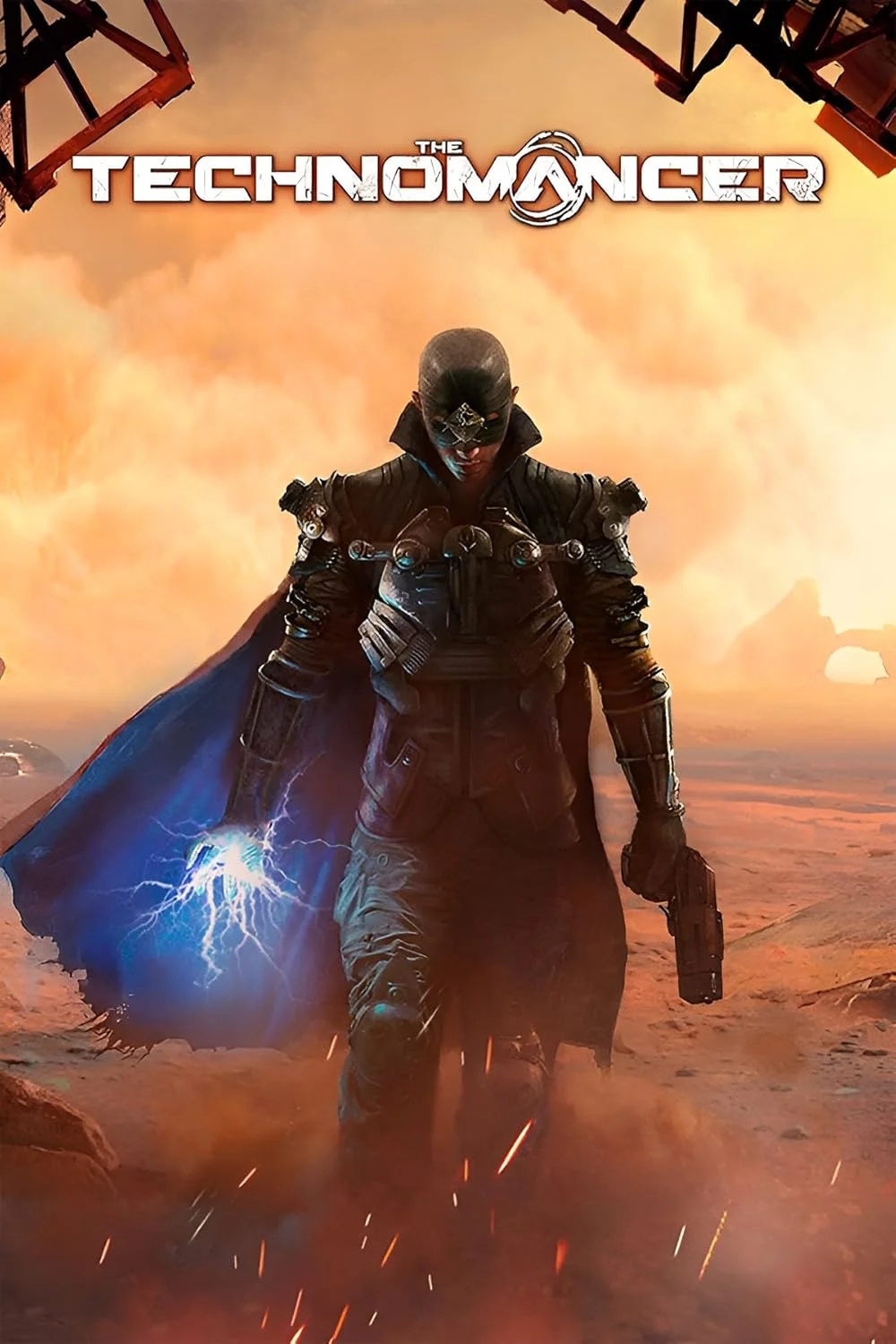
The Technomancer
This combination provides smooth gameplay with an average of 60 FPS, suitable for most gaming scenarios.
Average FPS: resolution vs quality settings
| Ultra | High | Medium | Low | |
|---|---|---|---|---|
| 4K Ultra HD | 22 | 29 | 33 | 44 |
| 1440p QHD | 41 | 52 | 61 | 79 |
| 1080p Full HD | 62 | 80 | 93 | 121 |
Cell color: green is 120+ FPS, teal is 60+, amber is 30+, red is below 30.
The Technomancer with AMD Ryzen 9 5950X + Intel Arc B570, In-Depth Analysis
The Technomancer, a 2016 Action RPG, stresses hardware in an unusual way for its era. Paired with the AMD Ryzen 9 5950X and Intel Arc B570, the measured results show a system that is decisively GPU-bound at higher resolutions, yet surprisingly capable at 1080p. The data indicates that this combo lands in the lower half of tested configurations, with a combo rank of 2256 out of 2825. The following analysis breaks down the measured FPS, the role of each component, and what settings deliver the best playable experience.
Resolution Scaling
The FPS drop from 1080p to 4K is steep and consistent across all four settings presets, confirming that the Intel Arc B570 is the primary performance limiter as pixel count rises. At High settings, the average frame rate falls from 80 FPS at 1920x1080 to 52 FPS at 2560x1440, then to 29 FPS at 3840x2160. That is a 35% reduction from 1080p to 1440p, and a further 44% reduction from 1440p to 4K. The scaling is not linear; the jump to 4K exacts a disproportionate toll, which points to memory bandwidth and raw fillrate constraints rather than pure shader throughput.
Low settings show a similar pattern, though starting from a higher base. At 1920x1080, Low produces 121 FPS average. At 2560x1440, that drops to 79 FPS, and at 3840x2160, it falls to 44 FPS. The percentage drop from 1080p to 1440p is roughly 35%, mirroring the High preset. From 1440p to 4K, the drop is 44% again. This consistency suggests that the game’s rendering load scales predictably with resolution, and the GPU’s compute units are saturated in a uniform way across settings.
Medium settings provide the only rows with minimum and maximum FPS data, offering a clearer picture of frame pacing. At 1920x1080 Medium, the average is 93 FPS, with a minimum of 79 and a maximum of 107. At 2560x1440 Medium, the average drops to 61 FPS, with a minimum of 52 and a maximum of 70. At 3840x2160 Medium, the average falls to 33 FPS, with a minimum of 28 and a maximum of 39. The range between min and max is roughly 28-30% of the average in all three cases, indicating that the GPU is consistently busy and frame times are relatively stable, even when the average is low.
Ultra settings are the most demanding. The 1920x1080 Ultra average is 62 FPS, which is playable, but 2560x1440 Ultra drops to 41 FPS, and 3840x2160 Ultra falls to 22 FPS. The gap between High and Ultra at 1080p is 18 FPS (80 vs 62), while at 4K the gap is only 7 FPS (29 vs 22). This narrowing suggests that at 4K, the GPU is so heavily bound by pixel throughput that the extra shading work from Ultra settings has diminishing impact on the frame rate.
The scaling behavior indicates that the Ryzen 9 5950X is not the bottleneck at any resolution. Even at 1080p Low, where the CPU has the most headroom, the 121 FPS average is well within what a 16-core, 32-thread processor can feed. The 5950X’s boost clock of 4.90 GHz and its strong single-thread performance, evidenced by a 3DMark single-thread score of 944 and a Cinebench R23 single-core score of 1614, ensure that the game’s main thread is never starved. The limiting component is clearly the Intel Arc B570, whose 10 GB of GDDR6 memory and 160-bit bus width provide 380.0 GB/s of bandwidth, which is adequate for 1080p but stretched at 4K.
GPU Role
The Intel Arc B570 is built on the Xe2-HPG architecture, codenamed Battlemage, and fabricated on a 5 nm TSMC process. It has 2304 shading units, 144 texture mapping units, and 80 render output units. The base and boost clock are both set to 2500 MHz, which is a modest frequency for a modern GPU. The memory configuration consists of 10 GB of GDDR6 on a 160-bit bus, yielding a bandwidth of 380.0 GB/s. This is a mid-range specification that aligns with its 65th percentile ranking among all GPUs and an average benchmark score of 20556.
In The Technomancer, the GPU’s role is dominant. The measured FPS at 4K Ultra (22 FPS) and 4K High (29 FPS) are both below the threshold for smooth gameplay, and even 4K Low at 44 FPS is only marginally acceptable. The 1440p results are more usable, with High at 52 FPS and Low at 79 FPS. At 1080p, the GPU is sufficient for high-refresh displays on Low (121 FPS) and Medium (93 FPS), but Ultra drops to 62 FPS, which is still playable but not ideal for competitive action.
The GPU’s memory bandwidth of 380.0 GB/s appears to be a limiting factor at high resolutions. The 160-bit bus is narrow compared to higher-tier cards, and the 10 GB frame buffer is sufficient for 1080p and 1440p textures but may cause performance drops at 4K when the game needs to access larger texture sets. The measured data shows that the gap between Low and Ultra at 4K is only 22 FPS (44 vs 22), whereas at 1080p it is 59 FPS (121 vs 62). This compression of performance at 4K is a classic sign of memory bandwidth saturation, where the GPU’s compute units are waiting for data rather than being fully utilized.
The Arc B570’s closest rivals, based on average benchmark scores, include the NVIDIA GeForce RTX 3070 Mobile with a deltaPct of 0.1 and the Intel Arc A750 at -0.1 deltaPct. The B570 sits at 20556, which is nearly identical to those cards. However, in The Technomancer, the B570’s performance is what it is—there are no rival FPS numbers in the data to compare directly. The GPU’s 3DMark Steel Nomad DX12 score of 2649 and Passmark G3D score of 14195 are consistent with a mid-range part that can handle 1080p gaming well but struggles with 4K.
How This Combo Ranks
The combination of the AMD Ryzen 9 5950X and Intel Arc B570 ranks 2256 out of 2825 tested combos in The Technomancer. This places it in the 20th percentile of all configurations, meaning roughly 80% of tested combos perform better. This low rank is not surprising given the game’s age and the GPU’s mid-range positioning. The Ryzen 9 5950X is a high-end CPU, as evidenced by its 91st percentile ranking among all CPUs and an average benchmark score of 51947, but the GPU holds the combo back.
The CPU’s nearest rivals include the Intel Core Ultra 5 235HX with a deltaPct of -0.2 and the AMD EPYC 8124P at -0.3, both of which have nearly identical average scores. The Intel Core i9-13900F is 0.4% higher, and the Intel Core i7-14700 is 0.7% lower. These are all top-tier processors, indicating that the 5950X is not the cause of the low combo rank. The GPU’s nearest rivals, such as the RTX 3070 Mobile and Arc A750, are also mid-range parts, so the pairing is logical, but it does not produce top-tier frame rates in a game like The Technomancer that is heavily GPU-dependent.
The combo rank reflects the measured FPS data. At 1080p, the combo can achieve 80 FPS on High and 121 FPS on Low, which are respectable numbers. At 1440p, it delivers 52 FPS on High, which is borderline. At 4K, it falls below 30 FPS on High and Ultra, which is not enjoyable. The rank of 2256 suggests that many other combos, likely those with more powerful GPUs, deliver higher frame rates at the same resolutions and settings. The data does not provide scores for other combos, so a direct comparison is not possible, but the rank is a clear indicator that this is not a high-performing pairing for this game.
Measured FPS Breakdown
At 1920x1080, the Intel Arc B570 delivers its best results. Low settings produce an average of 121 FPS, which is excellent for fast-paced gameplay. Medium settings yield 93 FPS, with a minimum of 79 and a maximum of 107, providing a smooth experience with better visual quality. High settings drop to 80 FPS, still playable but with a noticeable reduction from Low. Ultra settings bring the average down to 62 FPS, which is acceptable for a single-player Action RPG but may show stutter in dense scenes.
The 2560x1440 results are a step down. Low settings average 79 FPS, which is good for 1440p. Medium settings average 61 FPS, with a minimum of 52 and a maximum of 70, making it the best balance of quality and performance at this resolution. High settings average 52 FPS, which is playable but not smooth. Ultra settings average 41 FPS, which is below the ideal threshold for responsive gameplay.
At 3840x2160, the GPU is overwhelmed. Low settings average 44 FPS, which is playable but not ideal. Medium settings average 33 FPS, with a minimum of 28 and a maximum of 39, which will feel sluggish in combat. High settings average 29 FPS, and Ultra settings average 22 FPS, both of which are not recommended for any serious play. The data shows that 4K is not a viable option for this combo, even at Low settings, if you want a consistently smooth experience.
The Medium settings rows are the only ones with full min/max data, which reveals frame time consistency. At 1080p Medium, the min of 79 FPS is 85% of the average, indicating stable performance. At 1440p Medium, the min of 52 FPS is also 85% of the average. At 4K Medium, the min of 28 FPS is 85% of the average as well. This consistency suggests that the GPU does not have sudden spikes in render time, but rather gradually degrades as resolution increases.
Settings Recommendations
Based on the measured FPS data, the optimal settings for this combo depend on your target resolution and preference for smoothness over visual fidelity.
For 1920x1080, the Medium preset is the best choice for most players. It delivers 93 FPS average, which is well above the 60 FPS threshold, and the minimum of 79 FPS ensures that there are no significant dips. The visual improvement over Low is substantial, as the data shows a 28 FPS difference between Low (121 FPS) and Medium (93 FPS), but the higher preset is still fast enough. High at 80 FPS is also viable if you want better shadows and textures, but the jump from Medium to High only costs 13 FPS, so it is a reasonable trade-off. Ultra at 62 FPS is playable, but the drop from High is 18 FPS, which may cause noticeable stutter in busy areas.
For 2560x1440, the Medium preset is again the sweet spot. It averages 61 FPS, which is just above the 60 FPS mark, and the minimum of 52 FPS is acceptable. Low at 79 FPS is smoother, but the visual quality loss is significant. High at 52 FPS is playable but not ideal for fast combat, and Ultra at 41 FPS is too low for a consistent experience. If you have a 144Hz monitor, you may want to drop to Low to get closer to that refresh rate, but for most users, Medium is the recommended setting.
For 3840x2160, the data is clear: avoid this resolution if possible. Low at 44 FPS is the only setting that exceeds 30 FPS, and it will still feel choppy. Medium at 33 FPS is borderline, and High at 29 FPS and Ultra at 22 FPS are not playable. If you must play at 4K, use Low settings and accept the reduced visual quality. However, the 1440p Medium experience is far superior to 4K Low in terms of both frame rate and overall image stability.
The best overall experience per the measured rows is 1080p Medium. It provides a high average FPS, a tight minimum FPS, and good visual quality. If you have a 1440p monitor, 1440p Medium is the best compromise, delivering 61 FPS average with a 52 FPS minimum. The data suggests that the GPU is capable of a smooth 60 FPS experience at 1080p and a near-60 FPS experience at 1440p with Medium settings, but not beyond that.
CPU Role
The AMD Ryzen 9 5950X is a 16-core, 32-thread processor based on the Zen 3 architecture, codenamed Vermeer. It has a base clock of 3.40 GHz and a boost clock of 4.90 GHz. The 64 MB of L3 cache and dual-channel DDR4 memory support provide ample bandwidth for feeding the GPU. In The Technomancer, the CPU’s role is to handle the game’s simulation logic, AI, and draw calls. The measured FPS data shows that the CPU is not a bottleneck in any scenario.
The 5950X’s single-thread performance is strong, as indicated by a 3DMark single-thread score of 944 and a Cinebench R23 single-core score of 1614. This is important for The Technomancer, which is likely to have a primary game thread that cannot be fully parallelized. The high boost clock of 4.90 GHz ensures that this thread runs quickly. The multi-thread performance is also excellent, with a Cinebench R23 multi-core score of 26017 and a Geekbench multi-core score of 15233, but the game does not appear to utilize all 32 threads effectively, given that the GPU is the limiting factor.
The CPU’s 91st percentile ranking among all CPUs confirms that it is a high-end part. Its nearest rivals, the Intel Core Ultra 5 235HX and AMD EPYC 8124P, have nearly identical average scores, with deltaPct values of -0.2 and -0.3 respectively. The Intel Core i9-13900F is 0.4% faster, and the Intel Core i7-14700 is 0.7% slower. These are all modern, powerful processors, so the 5950X is not holding back the combo.
In practical terms, the CPU’s influence on the measured FPS is minimal. At 1080p Low, the GPU is producing 121 FPS, which is a high number, but the CPU is capable of feeding it without issue. At 1080p Ultra, the GPU drops to 62 FPS, which is not due to CPU limitations but rather the GPU’s shader and memory constraints. The CPU’s 3DMark 16-thread score of 10810 and max-thread score of 11597 indicate that it has plenty of headroom for even the most demanding game logic. The 5950X’s TDP of 105 watts is modest for a 16-core part, but it does not factor into the FPS results directly.
The data shows that the Ryzen 9 5950X is a capable partner for the Intel Arc B570 in this game, but the GPU is the deciding factor for frame rates. If you were to pair this CPU with a more powerful GPU, the combo rank would likely improve, but with the B570, the performance ceiling is set by the graphics card. The CPU’s 4.90 GHz boost clock and 64 MB L3 cache are more than sufficient for a game from 2016, and any frame rate issues are attributable to the GPU’s resolution scaling limits rather than the processor.
Hardware Specifications
AMD Ryzen 9 5950X
Intel Arc B570
FPS Benchmarks by Resolution & Settings
Performance data for AMD Ryzen 9 5950X + Intel Arc B570 in The Technomancer
| Resolution | Settings | Avg FPS |
|---|---|---|
| 3840x2160 | Low | 44.0 |
| 3840x2160 | Medium | 33.0 |
| 3840x2160 | High | 29.0 |
| 3840x2160 | Ultra | 22.0 |
| 2560x1440 | Low | 79.0 |
| 2560x1440 | Medium | 61.0 |
| 2560x1440 | High | 52.0 |
| 2560x1440 | Ultra | 41.0 |
| 1920x1080 | Low | 121.0 |
| 1920x1080 | Medium | 93.0 |
| 1920x1080 | High | 80.0 |
| 1920x1080 | Ultra | 62.0 |
The Technomancer with Ryzen 9 5950X + Other GPUs
See how The Technomancer performs with the same CPU but different graphics cards.
The Technomancer with Arc B570 + Other CPUs
See how The Technomancer performs with the same GPU but different processors.
Other Games with Ryzen 9 5950X + Arc B570
Explore FPS benchmarks for other games using this same hardware combination.