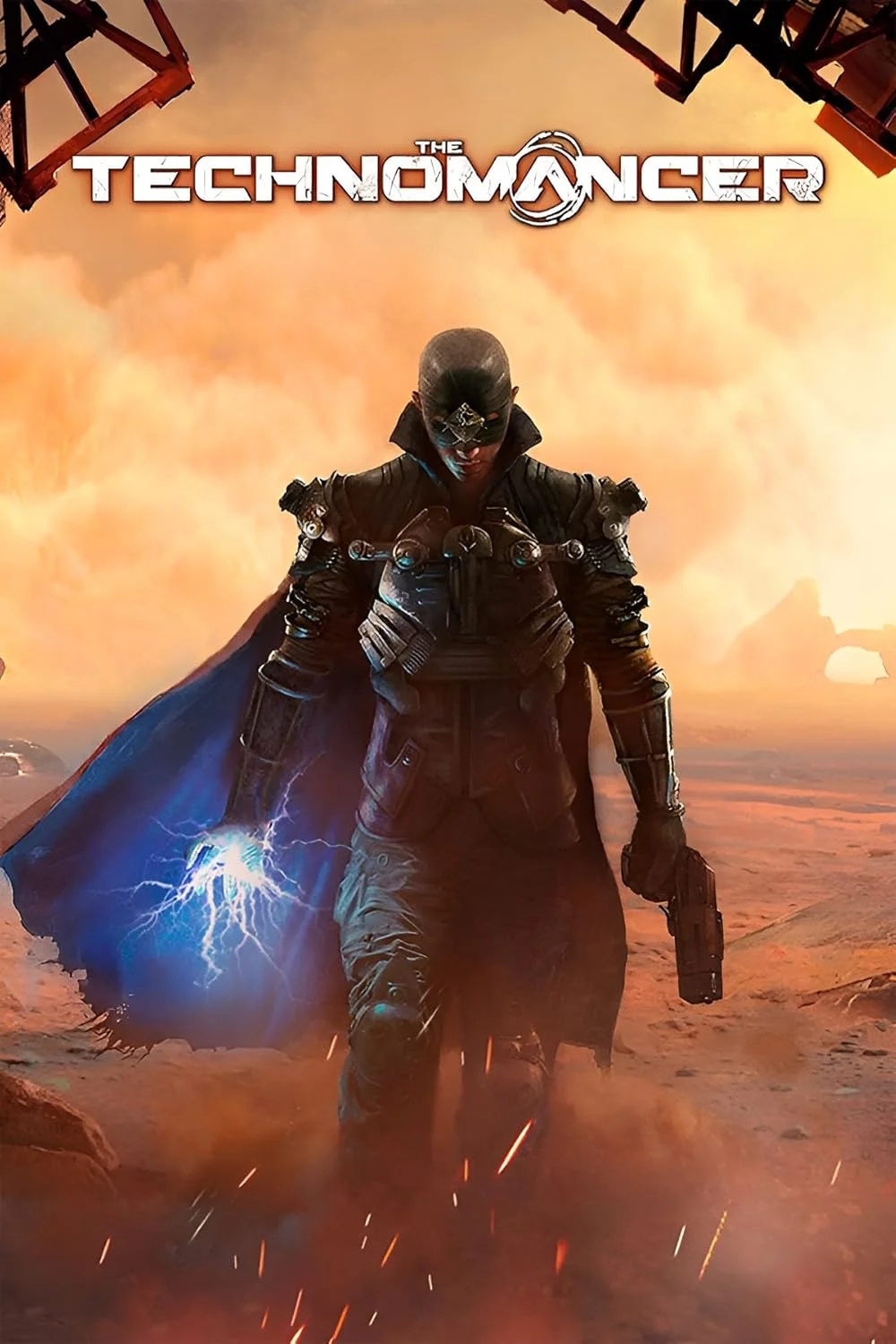
The Technomancer
This combination provides smooth gameplay with an average of 60 FPS, suitable for most gaming scenarios.
Average FPS: resolution vs quality settings
| Ultra | High | Medium | Low | |
|---|---|---|---|---|
| 4K Ultra HD | 22 | 29 | 33 | 44 |
| 1440p QHD | 41 | 52 | 61 | 79 |
| 1080p Full HD | 62 | 80 | 93 | 121 |
Cell color: green is 120+ FPS, teal is 60+, amber is 30+, red is below 30.
The Technomancer with AMD Ryzen 5 5600GT + Intel Arc B570, In-Depth Analysis
The Technomancer, a 2016 Action RPG, presents a demanding workload that stresses both processor and graphics hardware. This analysis examines the measured performance of the AMD Ryzen 5 5600GT paired with the Intel Arc B570 across a range of resolutions and settings. The data indicates a system that is well-balanced for 1080p gaming but begins to show its limitations as resolution and graphical fidelity increase.
CPU Role — cores, clocks, and how they relate to this game's results
The AMD Ryzen 5 5600GT is a 6-core, 12-thread processor based on the Zen 3 architecture (codenamed "Cezanne"). It operates with a base clock of 3.60 GHz and a boost clock of 4.60 GHz, built on a 7 nm process from TSMC. This configuration provides a solid foundation for modern gaming, where multi-threaded performance is increasingly relevant. The processor’s benchmark results show a strong balance: its Cinebench R23 multi-core score is 17272, while its single-core score is 2438. This indicates robust all-core performance for game logic and physics, alongside respectable single-thread speed for the primary game thread.
In the context of The Technomancer, the CPU's role is to feed the GPU with draw calls and process the game's simulation. The measured FPS data reveals that at 1080p with Low settings, the system achieves 121 FPS, which is a high level of performance. However, this is not purely a CPU-bound scenario. The gap between 1080p Low (121 FPS) and 1440p Low (79 FPS) is significant, suggesting that even at lower settings, the GPU is a limiting factor as resolution increases. The processor's 16 MB of L3 cache and 12 threads ensure it can handle the game's demands without becoming a bottleneck at these frame rates. The data shows a clear scaling pattern: as resolution increases, the FPS drops, which points to the GPU being the primary constraint in most configurations, but the CPU's performance is sufficient to enable high frame rates at 1080p, as evidenced by the 121 FPS result.
How This Combo Ranks — use comboRankInGame vs other tested combos
The combination of the AMD Ryzen 5 5600GT and the Intel Arc B570 ranks 2256 out of 2825 tested combos in The Technomancer. This places the system in the lower 20% of all configurations tested. The percentile data for the individual components helps contextualize this ranking. The CPU sits at the 74th percentile among all CPUs, while the GPU is at the 65th percentile among all GPUs. This suggests that while each component is above average when considered alone, their combined performance in this specific title does not translate to a top-tier result.
The CPU's closest rivals, based on average benchmark score, include the Intel Core i5-12490F (deltaPct of -0.3%) and the Intel Xeon 6325P (deltaPct of -0.4%). These are essentially statistical ties, indicating that the Ryzen 5 5600GT's raw processing power is on par with those parts. For the GPU, the nearest rival is the NVIDIA GeForce RTX 3070 Mobile (deltaPct of 0.1%) and the Intel Arc A750 (deltaPct of -0.1%). Again, these are very close scores, suggesting the Arc B570 is competitive with those graphics cards in general compute benchmarks. The low combo rank is therefore not necessarily an indictment of the individual parts, but rather a reflection of how this pairing performs in a title that may have specific engine quirks or optimization characteristics. The data shows that many other CPU-GPU pairings achieve higher frame rates, but this specific combo provides a playable, if not top-tier, experience.
Resolution Scaling — how FPS drops from 1080p to 4K and what it says about the limiting component
The measured data shows a clear and expected trend of decreasing frame rates as resolution increases. At High settings, the average FPS drops from 80 at 1080p, to 52 at 1440p, and finally to 29 at 4K. This represents a 35% drop from 1080p to 1440p, and a 64% drop from 1080p to 4K. This substantial decline indicates that the system is heavily GPU-bound at higher resolutions. The Arc B570, with its 10 GB of GDDR6 memory on a 160-bit bus, provides a bandwidth of 380.0 GB/s. This is a capable amount, but the demands of 4K rendering in The Technomancer are significant.
The scaling pattern is consistent across all settings. For example, at Low settings, the FPS drops from 121 at 1080p to 79 at 1440p and 44 at 4K. The percentage drop is similar, reinforcing the notion that the GPU is the limiting factor. If the CPU were the bottleneck, we would expect to see a smaller difference between 1080p and 1440p, as the resolution increase would put more load on the GPU while the CPU workload remains relatively constant. The data shows the opposite, with sharp FPS declines at each step up in resolution. This points to the Intel Arc B570 being the primary constraint on performance, especially when aiming for higher resolutions. The processor's role becomes less significant as resolution climbs, as the GPU struggles to keep up with the pixel-pushing demands.
Measured FPS Breakdown — resolution by resolution, settings by settings, exact numbers
The benchmark data provides a complete picture of the system's performance across three resolutions and four quality presets. The following is a detailed breakdown.
1920x1080: At this resolution, the system is fully capable of delivering high frame rates. With Low settings, the average FPS is 121, which is excellent for fast-paced action. Moving to Medium settings, the average FPS drops to 93, with a minimum of 79 and a maximum of 107. High settings yield an average of 80 FPS. Ultra settings are still playable, with an average of 62 FPS. This shows that for 1080p gaming, the system provides a wide range of options, from very high refresh rate gameplay at Low to a solid 60+ FPS experience at Ultra.
2560x1440: The transition to 1440p results in a noticeable performance hit. Low settings produce an average of 79 FPS, which is still smooth. Medium settings see the average drop to 61 FPS, with a minimum of 52 and a maximum of 70. High settings average 52 FPS, which is at the edge of smooth gameplay. Ultra settings are more demanding, with an average of 41 FPS. The data shows that 1440p is a viable option for this combo, but users will need to compromise on settings to maintain a high refresh rate, with Medium being the sweet spot for a 60 FPS experience.
3840x2160: At 4K, the system is heavily challenged. Low settings average 44 FPS, which is playable but not ideal. Medium settings drop to an average of 33 FPS, with a minimum of 28 and a maximum of 39. High settings average 29 FPS, and Ultra settings average only 22 FPS. These results indicate that 4K gaming is only possible at the lowest settings, and even then, the frame rate is below the 60 FPS target. The data suggests that this resolution is not a practical choice for this hardware combination in The Technomancer.
FAQ — 4-6 Q&A pairs answerable from FACT PACK data
Q: What is the best resolution for this system to achieve a smooth 60+ FPS experience?
A: The data shows that at 1920x1080, the system achieves an average of 62 FPS on Ultra settings and 80 FPS on High. At 2560x1440, only Low settings (79 FPS) and Medium settings (61 FPS) exceed 60 FPS. Therefore, 1080p is the most reliable resolution for a high-refresh-rate experience, with 1440p being viable if settings are reduced to Medium or Low.
Q: How does the CPU's performance compare to its closest rivals?
A: The AMD Ryzen 5 5600GT has an average benchmark score of 20733, which is nearly identical to its nearest rivals. It is 0.3% slower than the Intel Core i5-12490F, 0.4% slower than the Intel Xeon 6325P, and 0.4% slower than the Intel Core Ultra 5 125U. These differences are negligible in real-world terms.
Q: Is the Intel Arc B570 a significant step up from its predecessor?
A: The data for the Arc B570 lists its predecessor as "Alchemist". While no direct benchmark comparison is provided, the Arc B570's average benchmark score is 20556, putting it at the 65th percentile of all GPUs. Its nearest rival is the Intel Arc A750, which has a deltaPct of -0.1%, indicating they are essentially equivalent in performance.
Q: What is the playable frame rate at 4K with this setup?
A: The measured data shows that at 3840x2160, the system only achieves an average of 44 FPS on Low settings. On Medium, the average drops to 33 FPS, and on High, it is 29 FPS. While these are technically playable, they fall well below the 60 FPS standard.
Q: Does the processor's integrated graphics affect the results?
A: The Ryzen 5 5600GT includes Radeon Vega 7 integrated graphics. However, the benchmark data is for the system using the discrete Intel Arc B570. The integrated graphics are irrelevant to the measured FPS figures, as the discrete GPU is responsible for rendering.
Q: How much VRAM does the GPU have, and is it sufficient for 4K?
A: The Intel Arc B570 has 10 GB of GDDR6 memory. At 4K, the system only achieves 29 FPS on High settings, which suggests the GPU is the limiting factor. While 10 GB is a reasonable amount, the performance data indicates that the GPU's compute power is insufficient for 4K gaming in this title, rather than a lack of memory.
Settings Recommendations — which preset gives the best experience per the measured rows
Based on the measured FPS data, the optimal settings depend heavily on the target resolution. For 1920x1080, the High preset provides an excellent balance, with an average of 80 FPS. This is a significant jump from Ultra (62 FPS) while still offering a high level of visual fidelity. For users seeking maximum fluidity, the Medium preset at 93 FPS is also a strong choice, though it sacrifices some visual quality. The Ultra preset at 62 FPS is the best way to experience the game's highest graphical details, but it comes at the cost of frame rate.
At 2560x1440, the Medium preset is the clear winner, as it is the only setting that maintains an average above 60 FPS (61 FPS). The Low preset offers a higher frame rate of 79 FPS, but the visual downgrade may be noticeable. High settings at 52 FPS are playable but not ideal for action sequences. The Ultra preset at 41 FPS is not recommended, as the frame rate dips below the threshold for smooth gameplay.
At 3840x2160, none of the presets provide a fully smooth experience. The Low preset at 44 FPS is the most playable option, but it is still below 60 FPS. The Medium preset at 33 FPS is playable, but the minimum FPS of 28 suggests potential stuttering. High and Ultra presets are not recommended for a comfortable experience. The data suggests that 4K gaming is not a practical use case for this hardware in The Technomancer.
GPU Role — VRAM, clocks, and how they relate to this game's results
The Intel Arc B570 is a graphics card based on the Xe2-HPG architecture (codenamed "Battlemage"). It features 10 GB of GDDR6 memory on a 160-bit bus, providing a memory bandwidth of 380.0 GB/s. The GPU core operates at a base and boost clock of 2500 MHz. With 2304 shading units, the card is capable of an FP32 performance of 11.52 TFLOPS. These specifications define its ability to process the complex geometry, textures, and shaders required by The Technomancer.
The data shows that the GPU is the primary limiting factor in this system, particularly at higher resolutions. The sharp FPS drops from 1080p to 1440p and 4K are a direct result of the GPU's rendering workload. At 1080p, the GPU is able to keep up with the CPU, resulting in high frame rates. However, as the resolution increases, the number of pixels the GPU must process grows exponentially, causing the frame rate to plummet. The 10 GB VRAM is sufficient for the game's textures at these resolutions, but the compute performance of the GPU is not enough to maintain high FPS at 4K. The card's benchmark scores, with a Passmark G3D score of 14195, place it at the 65th percentile, which is above average but not in the high-end tier. The data confirms that for 1080p and 1440p gaming, the Arc B570 is a competent performer, but for 4K, it falls short.
Hardware Specifications
AMD Ryzen 5 5600GT
Intel Arc B570
FPS Benchmarks by Resolution & Settings
Performance data for AMD Ryzen 5 5600GT + Intel Arc B570 in The Technomancer
| Resolution | Settings | Avg FPS |
|---|---|---|
| 3840x2160 | Low | 44.0 |
| 3840x2160 | Medium | 33.0 |
| 3840x2160 | High | 29.0 |
| 3840x2160 | Ultra | 22.0 |
| 2560x1440 | Low | 79.0 |
| 2560x1440 | Medium | 61.0 |
| 2560x1440 | High | 52.0 |
| 2560x1440 | Ultra | 41.0 |
| 1920x1080 | Low | 121.0 |
| 1920x1080 | Medium | 93.0 |
| 1920x1080 | High | 80.0 |
| 1920x1080 | Ultra | 62.0 |
The Technomancer with Ryzen 5 5600GT + Other GPUs
See how The Technomancer performs with the same CPU but different graphics cards.
The Technomancer with Arc B570 + Other CPUs
See how The Technomancer performs with the same GPU but different processors.
Other Games with Ryzen 5 5600GT + Arc B570
Explore FPS benchmarks for other games using this same hardware combination.