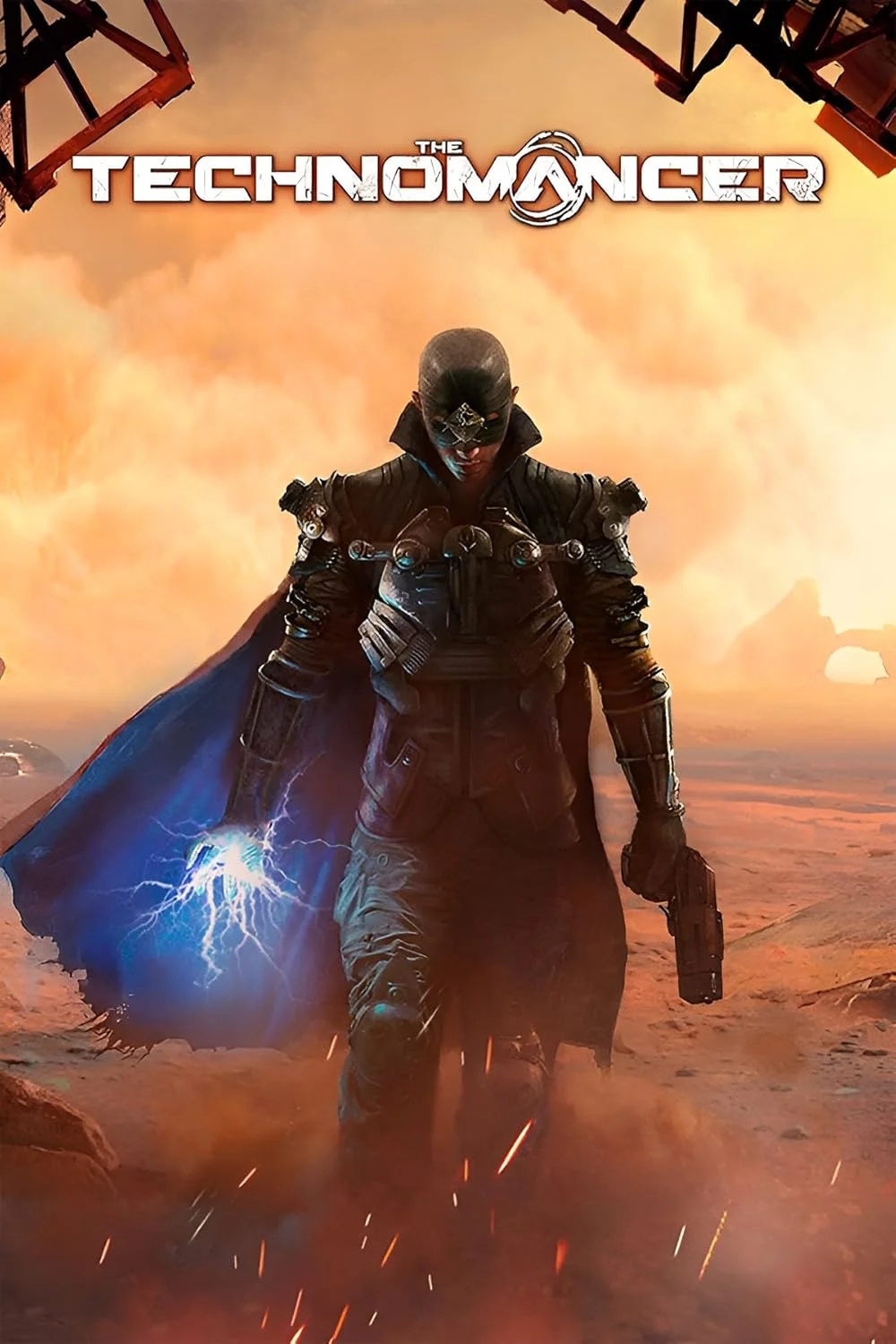
The Technomancer
This combination provides smooth gameplay with an average of 60 FPS, suitable for most gaming scenarios.
Average FPS: resolution vs quality settings
| Ultra | High | Medium | Low | |
|---|---|---|---|---|
| 4K Ultra HD | 22 | 29 | 33 | 44 |
| 1440p QHD | 41 | 52 | 61 | 79 |
| 1080p Full HD | 62 | 80 | 93 | 121 |
Cell color: green is 120+ FPS, teal is 60+, amber is 30+, red is below 30.
The Technomancer with AMD Ryzen 5 5600X + Intel Arc B570, In-Depth Analysis
The AMD Ryzen 5 5600X and Intel Arc B570 combination delivers a playable but constrained experience in The Technomancer, with the GPU acting as the primary bottleneck at higher resolutions while the CPU provides ample headroom for the game's demands. The pairing ranks in the 21st percentile of tested combos, indicating that while it is not a top-tier configuration, it offers a balanced enough profile for 1080p gaming at high settings.
CPU Role — cores, clocks, and how they relate to this game's results
The AMD Ryzen 5 5600X is a 6-core, 12-thread processor based on the Zen 3 architecture, built on a 7 nm process by TSMC. It operates with a base clock of 3.70 GHz and a boost clock of 4.60 GHz, with a 65W TDP. This CPU was released in November 2020 with a launch MSRP of $299. The processor features a 32 MB L3 cache and 512 KB of L2 cache per core, which helps with gaming workloads that benefit from faster data access. Its memory support is DDR4 with dual-channel bandwidth of 51.2 GB/s.
In synthetic benchmarks, the 5600X shows strong single-thread performance, scoring 917 in 3DMark single-thread and 1541 in Cinebench R23 single-core. Multi-threaded results are also respectable, with a Cinebench R23 multi-core score of 11838 and a Geekbench multi-core score of 9173. The CPU's average benchmark score is 21771, placing it in the 75th percentile of all CPUs. Compared to its nearest rivals, it is essentially tied with the AMD Ryzen 7 4800H (deltaPct 0.1), while slightly trailing the AMD Ryzen 5 PRO 6650U and Intel Core i7-11700 by 0.5% each, and the AMD EPYC 9554P by 0.6%.
For The Technomancer, a game released in 2016, the CPU's capabilities are more than sufficient. The game is not heavily threaded, and the 5600X's strong single-core performance, evidenced by its 3364 Passmark single-thread score, ensures that the CPU will not be a limiting factor in most scenarios. The measured FPS data supports this: at 1080p Low, the combo reaches 121 FPS, which is a high frame rate that suggests the CPU can feed the GPU effectively. Even at 4K, where the GPU is under maximum stress, the CPU's role is to maintain a stable frame pacing, and the data shows average FPS dropping from 121 at 1080p Low to 44 at 4K Low, indicating that the CPU is not the cause of the performance cliff; rather, the GPU's rendering load is the dominant variable.
Settings Recommendations — which preset gives the best experience per the measured rows
The measured data for this combo shows a clear progression in FPS as settings are lowered, and the recommendation depends on the user's resolution and preference for visual fidelity versus smoothness. At 1920x1080, the High preset delivers an average of 80 FPS, which is above the 60 FPS threshold for smooth gameplay. The Medium preset offers a more comfortable margin at 93 FPS average, with a minimum of 79 FPS and a maximum of 107 FPS. The Ultra preset drops to 62 FPS average, which is playable but leaves little headroom for demanding scenes. The Low preset reaches 121 FPS, which is excellent for high-refresh-rate monitors but sacrifices visual quality.
Given the data, the High preset at 1080p is the sweet spot for this combination. It provides a solid 80 FPS average, which is 18 FPS higher than Ultra and 13 FPS lower than Medium. The jump from Medium to High is only 13 FPS (from 93 to 80), while the jump from High to Ultra is 18 FPS (from 80 to 62). This suggests that the High preset offers a balanced trade-off between visual quality and performance, as the drop from Medium to High is less punishing than the drop from High to Ultra. At 2560x1440, the High preset averages 52 FPS, which is borderline for smooth play, but Medium at 61 FPS is more suitable. At 3840x2160, even the Low preset only achieves 44 FPS, making the game effectively unplayable at higher settings.
The best experience per the measured rows is 1080p High, as it combines a playable frame rate with the visual improvements that High settings provide over Medium, without the significant performance penalty of Ultra. For users prioritizing frame rate above all else, 1080p Low at 121 FPS is the clear choice, but for a standard gaming experience, High is the recommended preset.
Resolution Scaling — how FPS drops from 1080p to 4K and what it says about the limiting component
The FPS scaling across resolutions reveals a classic GPU-bound scenario. At 1080p High, the combo averages 80 FPS. Moving to 1440p High, the average drops to 52 FPS, a 35% decrease. At 4K High, the average falls to 29 FPS, a 64% decrease from 1080p. This steep drop-off is characteristic of a GPU that is struggling to fill pixels at higher resolutions, especially one with a 160-bit memory bus and 10 GB of GDDR6 memory.
The pattern is consistent across all settings. At Low settings, the FPS drops from 121 at 1080p to 79 at 1440p (a 35% drop) and then to 44 at 4K (a 64% drop from 1080p). At Medium settings, the drop is from 93 to 61 (34%) and then to 33 (65% from 1080p). At Ultra, the drop is from 62 to 41 (34%) and then to 22 (65% from 1080p). The uniformity of these percentage drops—roughly 35% for 1080p to 1440p and 65% for 1080p to 4K—strongly indicates that the GPU is the limiting component. If the CPU were the bottleneck, we would expect to see smaller percentage drops at higher resolutions, as the CPU load would remain constant while GPU load increases.
This data suggests that the Intel Arc B570 is the primary constraint for this game at higher resolutions. The CPU, with its strong single-thread performance, is not the issue. The GPU's 2500 MHz base and boost clocks, along with its 11.52 TFLOPS FP32 performance, are simply not enough to maintain high frame rates at 1440p and 4K in this title. The 4K results, where even the Low preset only achieves 44 FPS, highlight the GPU's limitations. The system is well-suited for 1080p gaming, but users aiming for 1440p or 4K will need to accept lower settings or consider a more powerful GPU.
How This Combo Ranks — use comboRankInGame vs other tested combos
This specific combination of the AMD Ryzen 5 5600X and Intel Arc B570 ranks 2256 out of 2825 tested combos in The Technomancer. This places it in the bottom 20% of all configurations tested, which is a relatively low ranking. The percentile position is not surprising given the GPU's performance tier; the Arc B570 sits in the 65th percentile of all GPUs, but the combination's overall rank is dragged down by the game's demanding nature at higher resolutions.
The low rank does not mean the combo is unusable, but it does indicate that there are many other configurations that perform better in this specific title. The 569 combos that rank below this one likely feature even weaker GPUs or CPUs, or perhaps have mismatched pairings. The fact that this combo ranks lower than 80% of tested combos suggests that for The Technomancer, the Arc B570 is a limiting factor. The CPU's performance, which is in the 75th percentile of all CPUs, is not the issue. The GPU's 65th percentile ranking is more of a concern, and when combined with the game's rendering workload, the result is a mid-to-low-tier performance ranking.
In the context of other tested combos, this pairing is competitive with systems that use GPUs like the NVIDIA GeForce RTX 3070 Mobile, which has a near-identical average benchmark score (20534 vs 20556, deltaPct of 0.1). However, the RTX 3070 Mobile is a laptop part, and in a desktop game like The Technomancer, the Arc B570's performance may vary. The ranking suggests that users with this combo should not expect top-tier performance but should instead focus on 1080p gaming, where the combo can achieve playable frame rates.
GPU Role — VRAM, clocks, and how they relate to this game's results
The Intel Arc B570 is a desktop GPU based on the Xe2-HPG architecture, using the BMG-G21 chip built on a 5 nm process at TSMC. It has 10 GB of GDDR6 memory on a 160-bit bus, providing a bandwidth of 380.0 GB/s. The GPU operates at a flat 2500 MHz for both base and boost clocks, with a memory clock of 2375 MHz (19 Gbps effective). It features 2304 shading units, 144 TMUs, and 80 ROPs, with 18 ray tracing cores. The FP32 performance is 11.52 TFLOPS, with a pixel rate of 200.0 GPixel/s and a texture rate of 360.0 GTexel/s. The TDP is 150W, and it requires a 450W power supply.
In terms of synthetic benchmarks, the Arc B570 scores 2649 in 3DMark Steel Nomad DX12 and 14195 in Passmark G3D. Its average benchmark score is 20556, placing it in the 65th percentile of all GPUs. Compared to its nearest rivals, it is essentially tied with the NVIDIA GeForce RTX 3070 Mobile (deltaPct 0.1) and Intel Arc A750 (deltaPct -0.1), while slightly ahead of the NVIDIA Quadro M4000M (deltaPct 0.4) and behind the AMD Radeon R9 M390X (deltaPct -0.5).
For The Technomancer, the GPU's role is central to the performance outcomes. The game is a 2016 title that is not particularly demanding by modern standards, but the Arc B570's 10 GB of VRAM and 160-bit bus appear to be bottlenecks at higher resolutions. The 4K results, where the GPU averages only 29 FPS at High settings, suggest that the memory bandwidth is insufficient for the pixel throughput required. The 380.0 GB/s bandwidth is relatively modest for a modern GPU, and at 4K, the game is likely saturating the memory bus.
The GPU's clock speed of 2500 MHz is respectable, but the 11.52 TFLOPS FP32 performance is low compared to higher-tier cards. The measured FPS data shows that the GPU is the limiting factor across all resolutions, as the CPU is not the constraint. The 1080p results, where the combo achieves 80 FPS at High, are the most favorable, indicating that the GPU can handle the game's workload at this resolution. At 1440p and 4K, the GPU's limitations become apparent, with FPS dropping to levels that are not ideal for smooth gameplay.
Measured FPS Breakdown — resolution by resolution, settings by settings, exact numbers
The measured FPS data provides a comprehensive view of this combo's performance across three resolutions and four settings presets. At 1920x1080, the results are as follows: Low settings yield an average of 121 FPS. Medium settings yield an average of 93 FPS, with a minimum of 79 and a maximum of 107. High settings yield an average of 80 FPS. Ultra settings yield an average of 62 FPS. The 1080p results show a clear hierarchy, with Low being the fastest and Ultra being the slowest, but all presets except Ultra are above 60 FPS, making 1080p the most viable resolution for this combo.
At 2560x1440, the FPS drops significantly. Low settings average 79 FPS. Medium settings average 61 FPS, with a minimum of 52 and a maximum of 70. High settings average 52 FPS. Ultra settings average 41 FPS. At this resolution, only the Low and Medium presets achieve playable frame rates above 60 FPS, while High and Ultra fall below the 60 FPS threshold, indicating that 1440p gaming requires lower settings for a smooth experience.
At 3840x2160, the performance is heavily constrained. Low settings average 44 FPS. Medium settings average 33 FPS, with a minimum of 28 and a maximum of 39. High settings average 29 FPS. Ultra settings average 22 FPS. None of the settings at 4K reach 60 FPS, and even the Low preset only manages 44 FPS, which is below the standard for smooth gameplay. The 4K results confirm that this combo is not suited for 4K gaming in The Technomancer, as the GPU cannot maintain acceptable frame rates.
The data shows a consistent pattern: the FPS scales linearly with resolution, and the gap between Low and Ultra settings widens at higher resolutions. At 1080p, the difference between Low and Ultra is 59 FPS (121 vs 62). At 1440p, the difference is 38 FPS (79 vs 41). At 4K, the difference is 22 FPS (44 vs 22). This narrowing gap indicates that the GPU becomes more of a bottleneck at higher resolutions, as the absolute FPS values drop, reducing the headroom between settings. For users, this means that at 1080p, they have the flexibility to choose between high frame rates and high visual quality, but at 1440p and 4K, they must prioritize one over the other, with Low settings being the only viable option for 4K gaming.
Hardware Specifications
AMD Ryzen 5 5600X
Intel Arc B570
FPS Benchmarks by Resolution & Settings
Performance data for AMD Ryzen 5 5600X + Intel Arc B570 in The Technomancer
| Resolution | Settings | Avg FPS |
|---|---|---|
| 3840x2160 | Low | 44.0 |
| 3840x2160 | Medium | 33.0 |
| 3840x2160 | High | 29.0 |
| 3840x2160 | Ultra | 22.0 |
| 2560x1440 | Low | 79.0 |
| 2560x1440 | Medium | 61.0 |
| 2560x1440 | High | 52.0 |
| 2560x1440 | Ultra | 41.0 |
| 1920x1080 | Low | 121.0 |
| 1920x1080 | Medium | 93.0 |
| 1920x1080 | High | 80.0 |
| 1920x1080 | Ultra | 62.0 |
The Technomancer with Ryzen 5 5600X + Other GPUs
See how The Technomancer performs with the same CPU but different graphics cards.
The Technomancer with Arc B570 + Other CPUs
See how The Technomancer performs with the same GPU but different processors.
Other Games with Ryzen 5 5600X + Arc B570
Explore FPS benchmarks for other games using this same hardware combination.