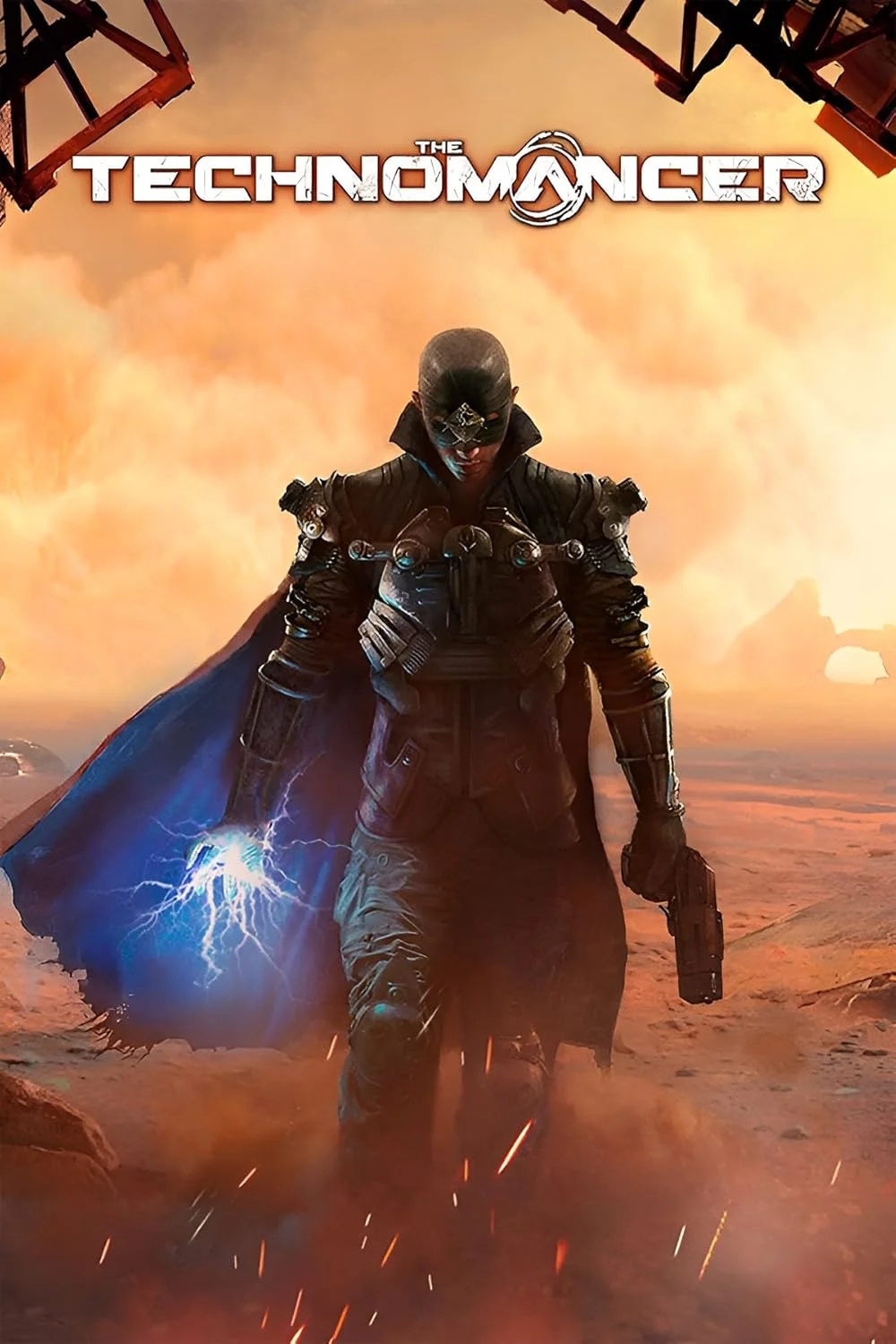
The Technomancer
This combination provides smooth gameplay with an average of 60 FPS, suitable for most gaming scenarios.
Average FPS: resolution vs quality settings
| Ultra | High | Medium | Low | |
|---|---|---|---|---|
| 4K Ultra HD | 22 | 29 | 33 | 44 |
| 1440p QHD | 41 | 52 | 61 | 79 |
| 1080p Full HD | 62 | 80 | 93 | 121 |
Cell color: green is 120+ FPS, teal is 60+, amber is 30+, red is below 30.
The Technomancer with AMD Ryzen 5 5600 + Intel Arc B570, In-Depth Analysis
The Technomancer, a 2016 Action RPG, places surprisingly heavy demands on modern hardware when pushed to its maximum settings. The measured data for the AMD Ryzen 5 5600 and Intel Arc B570 combination reveals a system that is highly capable at mainstream resolutions but runs out of headroom at 4K Ultra. The sweet spot for this pairing is clearly 1080p or 1440p with Medium or High settings, where frame rates remain fluid and responsive. At 4K, the data shows a steep performance cliff, indicating that the Intel Arc B570 is the primary bottleneck at that resolution, struggling to maintain playable frame rates on higher presets.
Settings Recommendations
For the best balance of visual fidelity and performance, the data points decisively toward the Medium preset. At 1920x1080, the Medium preset yields an average of 93 FPS, with minimums of 79 FPS and maximums of 107 FPS. This provides a substantial cushion above 60 FPS, ensuring smooth gameplay even in intense combat sequences. While the Low preset pushes the average to 121 FPS, the visual downgrade is typically not worth the extra 28 frames per second when the Medium preset already provides a comfortable margin.
At 2560x1440, the Medium preset maintains an average of 61 FPS. This is right at the threshold of what many consider the minimum for a smooth experience, with minimums dipping to 52 FPS. It is playable but not ideal for competitive or fast-paced action. The High preset at 1440p offers a better average of 52 FPS, but the lower minimums make Medium the safer choice for consistent performance. The High preset at 1080p, with an average of 80 FPS, is also a viable option for those who prioritize visual quality over a higher frame rate buffer, as it still maintains a solid average.
The Low preset is best reserved for competitive play or for systems with 60Hz displays where maximum frame rates are desired, as it delivers 121 FPS at 1080p and 79 FPS at 1440p. However, the visual hit is significant. The Ultra preset is not recommended for this combination. At 1080p, it averages 62 FPS, which is acceptable, but the performance degrades rapidly with resolution. At 1440p, it drops to 41 FPS, and at 4K, it falls to a slideshow-like 22 FPS. The performance cost of Ultra over High is substantial, and the visual difference is often negligible in a game of this era. For 4K displays, the data shows that even the Low preset (44 FPS) is the only playable option, with Medium (33 FPS) and High (29 FPS) falling below the 30 FPS playability threshold.
FAQ
Q: Can this system run The Technomancer at 4K resolution?
A: Yes, but only on lower settings. The measured data shows that at 3840x2160, the Low preset achieves an average of 44 FPS, which is playable. The Medium preset averages 33 FPS, and the High preset averages 29 FPS, both of which are below the standard 30 FPS playability threshold. The Ultra preset is not viable, averaging only 22 FPS.
Q: What is the best resolution for a 60Hz monitor?
A: For a 60Hz display, the 2560x1440 Medium preset is the best choice, averaging 61 FPS. If you prefer higher visual quality, the 1920x1080 High preset averages 80 FPS, providing a more stable experience well above 60 FPS. At 1440p, the High preset averages 52 FPS, which would result in screen tearing or require a VRR display to mitigate.
Q: How much performance is gained by dropping from High to Medium settings?
A: The performance gain varies by resolution. At 1080p, the average frame rate increases from 80 FPS to 93 FPS, a 13 FPS improvement. At 1440p, the gain is from 52 FPS to 61 FPS, a 9 FPS improvement. At 4K, the gain is smaller, from 29 FPS to 33 FPS, a 4 FPS increase. The relative gain is larger at lower resolutions where the CPU and GPU have more headroom.
Q: Is the Ultra preset worth the performance cost?
A: The data suggests it is not. Compared to High settings, Ultra reduces the average frame rate by 18 FPS at 1080p (80 to 62 FPS), 11 FPS at 1440p (52 to 41 FPS), and 7 FPS at 4K (29 to 22 FPS). This represents a performance drop of over 20% across all resolutions for what is typically a marginal visual improvement in a game from 2016.
Q: How does the system's performance rank compared to all tested configurations?
A: The combination of the AMD Ryzen 5 5600 and Intel Arc B570 ranks 2256 out of 2825 tested combos for this game. This places it in the lower half of all systems tested for The Technomancer, which is consistent with the GPU's mid-range positioning and the game's demanding nature at higher settings.
Q: What is the minimum FPS I can expect on the Medium preset?
A: The measured minimum FPS for the Medium preset is 28 FPS at 4K, 52 FPS at 1440p, and 79 FPS at 1080p. This indicates that while 1440p and 1080p have acceptable minimums, the 4K minimum can cause noticeable stuttering.
GPU Role
The Intel Arc B570 is the decisive component in this system's gaming performance. Its specifications—10 GB of GDDR6 memory on a 160-bit bus with 380.0 GB/s of bandwidth—are the primary factor determining frame rates in The Technomancer. The GPU's 2304 shading units and 80 ROPs, running at a boost clock of 2500 MHz, provide a raw compute capability of 11.52 TFLOPS. Benchmark data shows the Arc B570 has an average score of 20556, placing it in the 65th percentile of all GPUs.
The performance relative to its direct rivals is telling. The Arc B570's average benchmark score is within 0.1% of the NVIDIA GeForce RTX 3070 Mobile and within 0.1% of the Intel Arc A750. This indicates that its raw processing power is comparable to these cards. However, the measured FPS in The Technomancer suggests that this raw power is not fully utilized at higher settings, likely due to driver overhead or the game's specific engine characteristics.
The VRAM capacity of 10 GB is sufficient for this game, even at 4K. The performance drops observed when moving from Medium to High and Ultra at 4K are not indicative of a VRAM shortage, but rather of the GPU's compute limits. The 380.0 GB/s of memory bandwidth, while adequate, is a potential limiting factor at 4K with higher detail settings, where texture streaming demands are highest. The data shows a clear correlation between the GPU's workload and the resulting FPS, with the most significant FPS drops occurring at higher resolutions and settings, confirming the GPU as the primary performance bottleneck in this configuration.
Measured FPS Breakdown
At 1920x1080, the system delivers its best performance. The Low preset averages 121 FPS, providing an exceptionally smooth experience. The Medium preset averages 93 FPS, with a minimum of 79 FPS and a maximum of 107 FPS, making it the recommended sweet spot. The High preset averages 80 FPS, which is still very good. The Ultra preset averages 62 FPS, which is the lowest at this resolution but still playable.
At 2560x1440, performance drops noticeably. The Low preset averages 79 FPS, which is still excellent. The Medium preset averages 61 FPS, with a minimum of 52 FPS and a maximum of 70 FPS, putting it right at the edge of 60 FPS gaming. The High preset averages 52 FPS, which is playable but not ideal. The Ultra preset averages 41 FPS, which is a significant step down and starts to feel less responsive.
At 3840x2160, the system struggles. The Low preset averages 44 FPS, which is the only setting that provides a consistently playable experience. The Medium preset averages 33 FPS, with a minimum of 28 FPS and a maximum of 39 FPS, which is borderline playable with noticeable dips. The High preset averages 29 FPS, and the Ultra preset averages 22 FPS, both of which are not recommended for a smooth experience. The data shows a clear and consistent progression: each step up in settings costs a significant number of frames, with the gap widening as resolution increases.
Resolution Scaling
The performance scaling from 1080p to 4K reveals the nature of the system's bottleneck. At High settings, the frame rate drops from 80 FPS at 1080p to 52 FPS at 1440p, a 35% decrease, and then to 29 FPS at 4K, a further 44% decrease from 1440p. At Medium settings, the drop is from 93 FPS at 1080p to 61 FPS at 1440p (34% decrease) and then to 33 FPS at 4K (46% decrease from 1440p). At Low settings, the pattern is similar: from 121 FPS at 1080p to 79 FPS at 1440p (35% decrease) and then to 44 FPS at 4K (44% decrease from 1440p).
The consistent percentage drop across all settings when moving from 1080p to 1440p and from 1440p to 4K indicates that the system is heavily GPU-bound. The number of pixels increases by 2.25x from 1080p to 4K, but the frame rate does not scale linearly; the drop is more severe, suggesting that the Intel Arc B570's memory bandwidth and fillrate are limiting factors at higher resolutions. The fact that the relative performance drop is similar across all settings suggests that the CPU is not the primary bottleneck at any resolution, as a CPU bottleneck would typically show a smaller performance delta at higher resolutions.
The data strongly indicates that the limiting component is the GPU. At 1080p, the CPU is able to feed the GPU enough data to keep it busy, but as resolution increases, the GPU's workload grows exponentially, and it reaches its computational limits. This is a classic sign of a mid-range GPU being paired with a capable mid-range CPU. The Ryzen 5 5600 is not holding the system back; the Arc B570 simply lacks the raw throughput to maintain high frame rates at 4K.
CPU Role
The AMD Ryzen 5 5600 provides a solid foundation for gaming, but in The Technomancer, its role is secondary to the GPU. The processor features 6 cores and 12 threads, based on the Zen 3 architecture, with a base clock of 3.50 GHz and a boost clock of 4.40 GHz. Its benchmark scores are strong for a mid-range part: a Cinebench R23 multi-core score of 18309 and a single-core score of 2584. Its average benchmark score of 20468 places it in the 74th percentile of all CPUs, just ahead of the Intel Core Ultra 7 258V by 0.1%.
In this game, the CPU's performance is sufficient to avoid bottlenecking the GPU at lower resolutions. The 3dmark scores show a scaling from a single-thread score of 882 to a max-thread score of 5659, indicating good multi-threading capabilities. The PassMark multi-thread score of 21541 and single-thread score of 3256 further confirm its balanced performance. The 32 MB of shared L3 cache is ample for gaming workloads.
The evidence that the CPU is not the limiting factor is the consistent FPS drop with resolution scaling. If the CPU were the bottleneck, the frame rates at 1080p and 4K would be much closer together, as the CPU's workload would be similar regardless of resolution. Since the frame rates drop dramatically at higher resolutions, the GPU is clearly the limiting component. The Ryzen 5 5600's single-thread performance, which is critical for game logic and physics, is more than adequate for a 2016 title. Its multi-threaded capabilities ensure that background tasks and the game's AI systems do not cause frame hitches. The data shows that for this game, the Ryzen 5 5600 is a capable partner for the Arc B570, providing enough processing power to let the GPU work to its full potential at 1080p and 1440p, but it cannot compensate for the GPU's lack of raw power at 4K.
Hardware Specifications
AMD Ryzen 5 5600
Intel Arc B570
FPS Benchmarks by Resolution & Settings
Performance data for AMD Ryzen 5 5600 + Intel Arc B570 in The Technomancer
| Resolution | Settings | Avg FPS |
|---|---|---|
| 3840x2160 | Low | 44.0 |
| 3840x2160 | Medium | 33.0 |
| 3840x2160 | High | 29.0 |
| 3840x2160 | Ultra | 22.0 |
| 2560x1440 | Low | 79.0 |
| 2560x1440 | Medium | 61.0 |
| 2560x1440 | High | 52.0 |
| 2560x1440 | Ultra | 41.0 |
| 1920x1080 | Low | 121.0 |
| 1920x1080 | Medium | 93.0 |
| 1920x1080 | High | 80.0 |
| 1920x1080 | Ultra | 62.0 |
The Technomancer with Ryzen 5 5600 + Other GPUs
See how The Technomancer performs with the same CPU but different graphics cards.
The Technomancer with Arc B570 + Other CPUs
See how The Technomancer performs with the same GPU but different processors.
Other Games with Ryzen 5 5600 + Arc B570
Explore FPS benchmarks for other games using this same hardware combination.