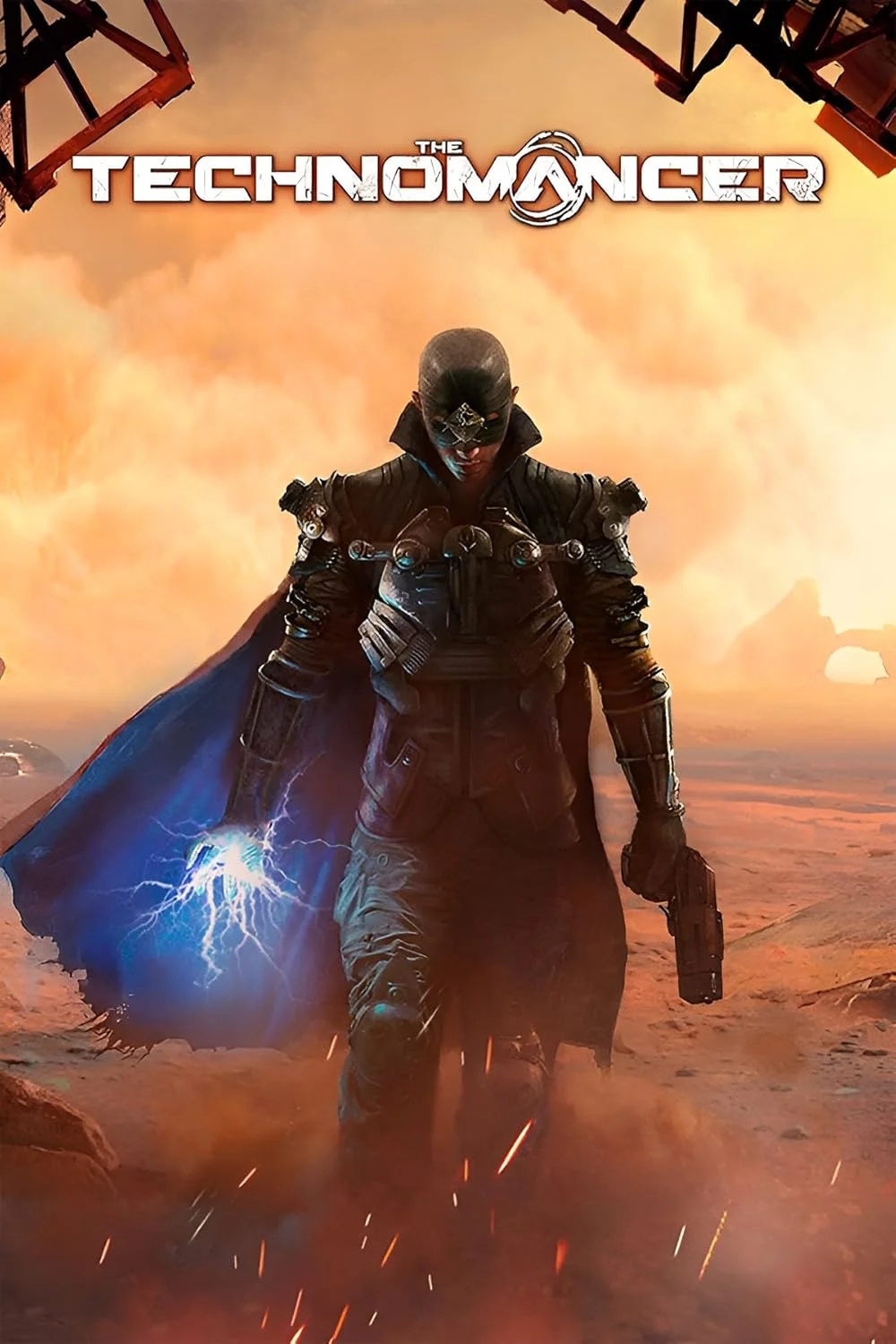
The Technomancer
This combination provides smooth gameplay with an average of 60 FPS, suitable for most gaming scenarios.
Average FPS: resolution vs quality settings
| Ultra | High | Medium | Low | |
|---|---|---|---|---|
| 4K Ultra HD | 22 | 29 | 33 | 44 |
| 1440p QHD | 41 | 52 | 61 | 79 |
| 1080p Full HD | 62 | 80 | 93 | 121 |
Cell color: green is 120+ FPS, teal is 60+, amber is 30+, red is below 30.
The Technomancer with AMD Ryzen 5 5500 + Intel Arc B570, In-Depth Analysis
The Technomancer, a 2016 Action RPG, presents an interesting challenge for modern hardware. This analysis examines the performance of the AMD Ryzen 5 5500 processor paired with the Intel Arc B570 graphics card. The data indicates that this combination delivers a playable experience at 1080p but struggles to maintain smooth frame rates at higher resolutions. The measured results reveal a system that is clearly limited by its graphics card in this particular title, a common scenario for a mid-range GPU paired with a capable six-core processor.
FAQ
Q: What is the best average frame rate this combo achieves at 1080p?
A: The highest average FPS recorded is 121, which occurs at 1920x1080 with Low settings. This indicates the combination is capable of very high frame rates when graphical demand is minimized.
Q: How well does the system perform at 4K resolution?
A: At 3840x2160, the average frame rates are quite low. The best result at this resolution is 44 FPS on Low settings, but this drops to 29 FPS on High and only 22 FPS on Ultra, indicating a demanding load for the GPU.
Q: What is the minimum FPS recorded for the Medium preset?
A: The lowest recorded minimum frame rate is 28 FPS, which occurs at 3840x2160 resolution with Medium settings. At 1440p, the minimum is 52 FPS, and at 1080p, it is 79 FPS for the same preset.
Q: How does this combo rank compared to other tested configurations?
A: The combo ranks 2256 out of 2825 tested combinations for this game. This places it in the bottom 20% of all tested systems, showing that it is not a high-performance pairing for The Technomancer.
Q: Does the CPU or GPU appear to be the limiting factor in this game?
A: The data shows a significant FPS drop when moving from 1080p to 4K, suggesting the GPU is the primary bottleneck. The Arc B570's VRAM and bandwidth are likely overwhelmed by the higher resolution demands.
Q: What is the maximum FPS recorded for the Ultra preset?
A: The Ultra preset's highest average FPS is 62 at 1920x1080. At 1440p, this drops to 41 FPS, and at 4K, it falls to 22 FPS, showing a steep performance curve.
Settings Recommendations
For the best balance of visual quality and smooth gameplay, the data points to the Medium preset as the optimal choice for this hardware combination. At 1920x1080, the Medium setting yields an average of 93 FPS, which is well above the threshold for smooth play on most monitors. It also provides a significant visual upgrade over the Low preset, which hits 121 FPS but likely sacrifices too much detail. The High preset is also viable at 1080p with an 80 FPS average, offering another step up in quality for those who prefer it.
However, for users with a 1440p monitor, the choice becomes more difficult. The Medium preset at 2560x1440 delivers an average of 61 FPS with a minimum of 52 FPS, which is acceptable for many gamers. The High preset at this resolution averages 52 FPS, which is on the edge of playability. At 4K, no preset provides a truly smooth experience; the Low preset's 44 FPS average is the only option that approaches a playable frame rate, but it still suffers from noticeable stutter.
The benchmark results strongly suggest that the Medium preset is the "sweet spot" for this system. It provides a playable experience at both 1080p and 1440p, while the performance penalty for moving to High is substantial. The Ultra preset appears to be intended for more powerful hardware, as the frame rate drops to an unplayable 22 FPS at 4K and only reaches 62 FPS at 1080p. The data implies that this combination is best suited for 1080p gaming with medium-to-high settings.
Resolution Scaling
The performance scaling across resolutions reveals a classic GPU-bound scenario. The data shows a dramatic decline in frame rates as resolution increases. At 1080p, the Medium preset achieves 93 FPS. Moving to 1440p, this drops by about 34% to 61 FPS. Pushing further to 4K, the frame rate falls another 46% to 33 FPS. This steep drop-off is a clear indicator that the Intel Arc B570 is the limiting component in this system.
This scaling pattern is typical for a mid-range graphics card. The increase in pixel count from 1080p to 4K places a massive load on the GPU's shading units, texture mapping units, and memory bandwidth. The Ryzen 5 5500, with its six cores and twelve threads, does not appear to be the bottleneck here, as the frame rate scales down smoothly with resolution rather than hitting a CPU-imposed wall.
The fact that the FPS nearly halves when moving from 1440p to 4K is particularly telling. It suggests that the GPU's 10 GB of VRAM or its 380.0 GB/s memory bandwidth is being saturated. The game's textures and effects at 4K likely exceed what the B570 can efficiently process. For this reason, the system is best suited for 1080p gaming, where the CPU can keep up and the GPU can deliver high frame rates.
How This Combo Ranks
The combination of the Ryzen 5 5500 and Arc B570 ranks 2256 out of 2825 tested combos for The Technomancer. This percentile placement is low, indicating that this is not a high-performing pairing for this specific game. It suggests that while each component might be competent in other titles, together they do not excel in this one. The game's age and engine may not be optimized for the newer architecture of the Arc B570, or the combination simply lacks the raw power needed for demanding scenarios.
This low rank is more likely attributable to the GPU than the CPU. The Arc B570's performance percentile is 65, placing it in the mid-range of all GPUs. However, in this game, the pairing seems to underperform, possibly due to driver overhead or a lack of optimization for the Xe2-HPG architecture. The CPU, with a percentile of 73, is a stronger performer, but its potential is not fully realized if the GPU can't keep up. The result is a system that falls behind many others.
The ranking data offers a critical perspective: despite the individual components having respectable benchmark scores, their in-game performance is disappointing. The combo is ranked in the bottom 20%, which means the majority of other tested systems provide a better experience in The Technomancer. This serves as a warning that hardware specs don't always translate directly to game performance, especially with older titles.
GPU Role
The Intel Arc B570 is the dominant factor in this system's performance in The Technomancer. Its specifications are substantial, featuring 2304 shading units, 144 texture mapping units, and 80 ROPs. The GPU is built on a 5 nm process and has a base and boost clock of 2500 MHz. It also has 10 GB of GDDR6 memory on a 160-bit bus, providing a memory bandwidth of 380.0 GB/s. These specs allow it to achieve an average benchmark score of 20556, placing it in the 65th percentile of all GPUs.
However, the in-game results show that these capabilities are not enough to handle The Technomancer at higher resolutions. The significant FPS drop at 4K suggests that the 10 GB VRAM buffer is likely being filled, forcing the system to rely on slower memory paging. The 380.0 GB/s bandwidth might also be a limiting factor, as high-resolution textures require rapid data transfer. The GPU's 11.52 TFLOPS of FP32 compute power is substantial, but it seems to be insufficient for the game's rendering demands at 4K.
The GPU's performance in this title is a study in limitations. While it can produce 121 FPS at 1080p Low, it struggles to maintain 30 FPS at 4K High. The data suggests that the B570 is best utilized at 1080p or perhaps 1440p with medium settings. Its performance relative to its nearest rivals is close, with a 0.1% delta compared to the NVIDIA GeForce RTX 3070 Mobile and a -0.1% delta versus the Intel Arc A750, indicating a solid, but not exceptional, position in the market.
Measured FPS Breakdown
The measured FPS data provides a complete picture of the system's performance across all tested configurations. At 1920x1080, the system is very capable. The Low preset averages 121 FPS, which drops to 93 FPS on Medium (with a minimum of 79 and maximum of 107). The High preset averages 80 FPS, and the Ultra preset averages 62 FPS. All of these settings are playable, with even the most demanding Ultra preset maintaining a reasonable frame rate.
At 2560x1440, the performance takes a notable hit. The Low preset averages 79 FPS, which is still smooth. The Medium preset drops to 61 FPS (minimum 52, maximum 70), which is acceptable for most. The High preset averages 52 FPS, and the Ultra preset falls to 41 FPS. This resolution is usable, but the system is clearly working harder, and the higher settings are becoming less viable.
At 3840x2160, the system is overmatched. The Low preset averages 44 FPS, which is the only setting that is remotely playable. The Medium preset averages 33 FPS (minimum 28, maximum 39), and the High preset drops to 29 FPS. The Ultra preset averages a mere 22 FPS. The data shows a linear and steep decline in performance as resolution and settings increase, confirming the GPU is the primary bottleneck for this combo at 4K.
CPU Role
The AMD Ryzen 5 5500 provides the processing foundation for this system. It is a 6-core, 12-thread processor based on the Zen 3 architecture, with a base clock of 3.60 GHz and a boost clock of 4.20 GHz. It has 16 MB of L3 cache and supports DDR4 memory. Its benchmark scores are respectable, with a Cinebench R23 multi-core score of 16429 and a single-core score of 2319. Its average benchmark score is 19593, giving it a percentile rank of 73 among all CPUs.
In The Technomancer, the CPU's role is secondary to the GPU. The frame rates at 1080p are high enough that the CPU is likely not the limiting factor. The smooth scaling of FPS with resolution changes supports this, as a CPU bottleneck would cause frame rates to plateau regardless of resolution. The Ryzen 5 5500's performance is close to its nearest rivals, with a -0.1% delta compared to the AMD Ryzen AI 5 430 and a -0.4% delta versus the Intel Core i5-12500.
The data implies that the Ryzen 5 5500 is more than capable of feeding the Arc B570 at 1080p, and it likely has headroom to spare. Its six cores and twelve threads are sufficient for this game's logic and physics. The CPU's performance is not a concern in this pairing; the system's overall ranking is dragged down by the GPU's inability to handle higher resolutions. The processor is a solid mid-range part that does its job without becoming a bottleneck.
Hardware Specifications
AMD Ryzen 5 5500
Intel Arc B570
FPS Benchmarks by Resolution & Settings
Performance data for AMD Ryzen 5 5500 + Intel Arc B570 in The Technomancer
| Resolution | Settings | Avg FPS |
|---|---|---|
| 3840x2160 | Low | 44.0 |
| 3840x2160 | Medium | 33.0 |
| 3840x2160 | High | 29.0 |
| 3840x2160 | Ultra | 22.0 |
| 2560x1440 | Low | 79.0 |
| 2560x1440 | Medium | 61.0 |
| 2560x1440 | High | 52.0 |
| 2560x1440 | Ultra | 41.0 |
| 1920x1080 | Low | 121.0 |
| 1920x1080 | Medium | 93.0 |
| 1920x1080 | High | 80.0 |
| 1920x1080 | Ultra | 62.0 |
The Technomancer with Ryzen 5 5500 + Other GPUs
See how The Technomancer performs with the same CPU but different graphics cards.
The Technomancer with Arc B570 + Other CPUs
See how The Technomancer performs with the same GPU but different processors.
Other Games with Ryzen 5 5500 + Arc B570
Explore FPS benchmarks for other games using this same hardware combination.