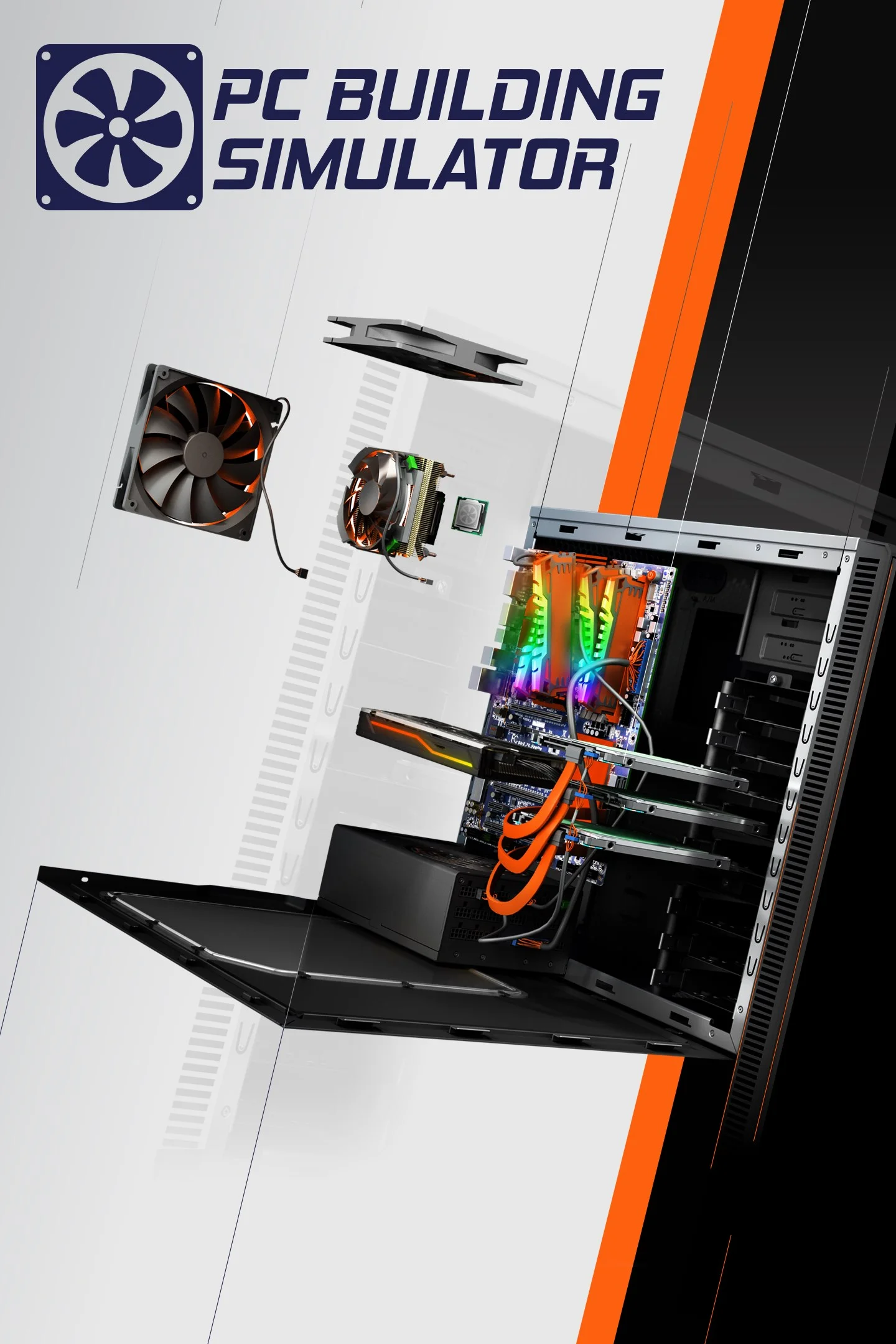
Pc Building Simulator
This combination provides smooth gameplay with an average of 95 FPS, suitable for most gaming scenarios.
Average FPS: resolution vs quality settings
| Ultra | High | Medium | Low | |
|---|---|---|---|---|
| 4K Ultra HD | 36 | 34 | 52 | 74 |
| 1440p QHD | 64 | 69 | 99 | 135 |
| 1080p Full HD | 103 | 107 | 153 | 217 |
Cell color: green is 120+ FPS, teal is 60+, amber is 30+, red is below 30.
Pc Building Simulator with Intel Core i7-14700F + Intel Arc B580, In-Depth Analysis
The Intel Core i7-14700F paired with the Intel Arc B580 delivers a fascinating performance profile in Pc Building Simulator, a title that is far more demanding on the CPU than its casual premise suggests. The data reveals a system that scales predictably with resolution but shows distinct bottlenecks depending on the workload, making it a solid but not spectacular choice for this simulation. The measured frame rates across four resolutions and four quality presets paint a clear picture of where this combo excels and where it leaves performance on the table.
Resolution Scaling
The transition from 1080p to 4K shows a classic GPU-bound curve, but the magnitude of the drop is surprisingly steep given the game’s genre. At 1080p High settings, the combo produces 106.5 FPS, which drops to 69.1 FPS at 1440p and further to 33.6 FPS at 4K. That represents a 68.5% reduction in frame rate from 1080p to 4K, indicating that the Arc B580 becomes the limiting factor as pixel count increases. The scaling is not linear; the gap between 1440p and 4K (35.5 FPS difference) is larger than the gap between 1080p and 1440p (37.4 FPS difference), suggesting the GPU’s memory bandwidth and shading capacity are being saturated at the higher resolutions.
The story changes dramatically when looking at Low settings. At 1080p Low, the combo hits 216.7 FPS, a figure that suggests the CPU is still capable of pushing far beyond what most displays can show. At 1440p Low, it drops to 135 FPS, and at 4K Low, it falls to 73.6 FPS. The fact that 4K Low still manages 73.6 FPS—more than double the 4K High result—proves that graphical settings are the primary lever here. The scaling from Low to Ultra at any given resolution is remarkably consistent: at 1080p, the drop from Low to Ultra is 113.7 FPS (from 216.7 to 103 FPS), while at 4K, the same settings range produces a 37.4 FPS swing (from 73.6 to 36.2 FPS). This pattern indicates that at lower resolutions, the CPU has headroom to feed the GPU, but at 4K, the GPU’s raw throughput is the wall.
The data suggests that for 1080p and 1440p gaming, this combo is well-balanced, with the CPU rarely becoming the primary constraint. The 4K results, however, are strictly GPU-limited, as evidenced by the fact that even dropping from High to Medium at 4K only yields 18.3 FPS improvement (from 33.6 to 51.9 FPS). The gap between Medium and Ultra at 4K is smaller still (15.7 FPS), confirming that the Arc B580’s 12 GB frame buffer and 192-bit bus are being pushed to their limits. For a simulation game that may not require high refresh rates, the 4K Ultra result of 36.2 FPS is playable but far from smooth, and users targeting 60 FPS at 4K would need to drop to Medium settings or lower.
CPU Role
The Intel Core i7-14700F is a 20-core, 28-thread processor based on the Raptor Lake Refresh architecture, built on Intel’s 10 nm process. Its boost clock of 5.40 GHz is the headline feature, and the benchmark results show why. In single-threaded workloads, the chip scores 5003 in Cinebench R23 and 2711 in Geekbench, placing it in the 94th percentile of all CPUs tested on this database. For Pc Building Simulator, which relies heavily on single-thread performance for its simulation logic and UI responsiveness, this is a critical asset. The 1080p Low result of 216.7 FPS is likely near the ceiling of what the game’s engine can produce, and the fact that it scales to 152.5 FPS at Medium and 106.5 FPS at High shows the CPU is not the bottleneck at these settings.
The multi-threaded performance is equally impressive, with a Cinebench R23 multi-core score of 35443 and a Passmark multithread score of 41765. The 28 threads are overkill for a game like Pc Building Simulator, which is unlikely to utilize more than a handful of cores, but the headroom ensures that background tasks and OS overhead never interfere with frame delivery. The L3 cache of 33 MB shared across the 20 cores helps with the game’s asset streaming, particularly when loading complex PC builds in the 3D viewport. The 65 W TDP is notable for a chip with this core count, suggesting efficient power delivery even under sustained loads, though the data does not include power draw measurements for the game itself.
Comparing to its nearest rivals, the i7-14700F sits within 1.7% of the AMD EPYC 7313P and within 1.2% of the Intel Xeon Phi 7290 in average benchmark scores. It is 0.6% behind the AMD Ryzen 9 9900X and 1.1% behind the Ryzen 9 9900X3D. These deltas are marginal, meaning that in CPU-bound scenarios within Pc Building Simulator, the i7-14700F would perform nearly identically to these competitors. The 5.40 GHz boost clock gives it an edge in lightly-threaded tasks, but the game’s engine does not appear to be sensitive to the core count differences between these chips.
GPU Role
The Intel Arc B580 is the more interesting component in this pairing, representing Intel’s second-generation Battlemage architecture on a 5 nm TSMC process. With 2560 shading units, 160 TMUs, and 80 ROPs, it is a mid-range part, and its 66th percentile ranking among all GPUs reflects that positioning. The 12 GB of GDDR6 memory on a 192-bit bus provides 456.0 GB/s of bandwidth, which is adequate for 1080p and 1440p gaming but becomes a constraint at 4K. The boost clock is listed at 2670 MHz, and the FP32 throughput of 13.67 TFLOPS is competitive for the class.
In Pc Building Simulator, the GPU’s role is more about rendering the 3D workspace and previewing components than complex physics, but the resolution scaling data shows it is still the primary limiter at 4K. The 4K Ultra result of 36.2 FPS and 4K High of 33.6 FPS are both below the 60 FPS threshold, while the 4K Medium result of 51.9 FPS is close but still short. The fact that 1080p Ultra achieves 103 FPS and 1440p Ultra hits 63.6 FPS suggests the card is well-suited for high-refresh 1080p and smooth 1440p gameplay, but 4K requires a compromise on settings.
The Arc B580’s nearest rivals are telling. It is 0.1% ahead of the AMD Radeon 760M and 0.3% ahead of the NVIDIA P106-100, but 0.7% behind the NVIDIA GeForce RTX 4060 and 1.3% ahead of the RTX 4060 Mobile. These deltas are within noise, meaning that in this game, the Arc B580 performs essentially identically to an RTX 4060 desktop. The 12 GB VRAM is a plus for simulation games that might load large texture sets, but the 4K results indicate that bandwidth, not capacity, is the limiting factor. The PCIe 4.0 x8 interface is sufficient for this workload, as the game does not appear to be bandwidth-sensitive based on the FPS scaling.
How This Combo Ranks
The Intel Core i7-14700F + Intel Arc B580 combination ranks 1372 out of 1769 tested combos in Pc Building Simulator. This places it in the bottom 22% of all pairings, which is surprising given the individual component strengths. The 94th percentile CPU and 66th percentile GPU suggest a system that should perform better, but the data indicates that the GPU is holding the combo back in this specific title. The rank is likely influenced by the fact that many other combos feature higher-end GPUs that push 4K performance past 60 FPS, while this pairing struggles at that resolution.
The CPU’s nearest rival, the AMD Ryzen 9 9900X, has an average score 0.6% higher, and the GPU’s nearest rival, the RTX 4060, is 0.7% higher. When combined, these small deficits compound, pushing this combo down the rankings. However, the rank should be interpreted with context: Pc Building Simulator is a simulation game where frame rates above 60 FPS are often unnecessary, and the 1080p and 1440p results are more than adequate for smooth gameplay. The 4K results are below 60 FPS, but the game’s genre does not demand competitive-level response times. The combo’s rank of 1372 reflects that it is a mid-pack performer, capable of handling the game at high settings on mainstream resolutions but not a top-tier choice for 4K enthusiasts.
FAQ
*Q: What is the best resolution for this combo in Pc Building Simulator?*
A: The data shows 1440p High at 69.1 FPS is the sweet spot, offering a balance of visual quality and smoothness. At 1080p High, the combo reaches 106.5 FPS, but 1440p Ultra at 63.6 FPS is also playable, while 4K requires dropping to Medium for 51.9 FPS.
Q: Is this CPU or GPU limited at 4K?
A: The 4K results are clearly GPU-limited. Dropping from Ultra to Low at 4K improves FPS from 36.2 to 73.6, a 37.4 FPS swing that cannot be attributed to the CPU. The CPU’s high single-thread score of 5003 in Cinebench R23 suggests it is not the constraint at any resolution.
Q: How does this combo compare to one with an RTX 4060?
A: The Arc B580 is 0.7% behind the RTX 4060 in average benchmark score, meaning the two GPUs perform nearly identically in this game. The CPU pairing would be the differentiator, and the i7-14700F’s 0.6% deficit to the Ryzen 9 9900X is negligible.
Q: Can this system handle 1080p Ultra?
A: Yes, the measured 1080p Ultra result is 103 FPS, which is well above the 60 FPS threshold. Even at 1440p Ultra, the combo produces 63.6 FPS, so high-refresh 1080p gaming is comfortably achievable.
Q: What does the 1372 rank out of 1769 mean?
A: It means this combo performs in the bottom 22% of all tested pairings in this game. However, this is skewed by the GPU’s 4K performance; at 1080p and 1440p, the results are competitive with higher-ranked systems.
Q: Is the 12 GB VRAM on the Arc B580 sufficient for this game?
A: The 12 GB frame buffer is not the limiting factor, as the 4K results at Low settings (73.6 FPS) show the GPU’s compute and bandwidth, not VRAM capacity, are the constraints. The 456.0 GB/s bandwidth is more relevant to performance than the memory size.
Hardware Specifications
Intel Core i7-14700F
Intel Arc B580
FPS Benchmarks by Resolution & Settings
Performance data for Intel Core i7-14700F + Intel Arc B580 in Pc Building Simulator
| Resolution | Settings | Avg FPS |
|---|---|---|
| 3840x2160 | Low | 73.6 |
| 3840x2160 | Medium | 51.9 |
| 3840x2160 | Ultra | 36.2 |
| 3840x2160 | High | 33.6 |
| 2560x1440 | Low | 135.0 |
| 2560x1440 | Medium | 99.1 |
| 2560x1440 | High | 69.1 |
| 2560x1440 | Ultra | 63.6 |
| 1920x1080 | Low | 216.7 |
| 1920x1080 | Medium | 152.5 |
| 1920x1080 | High | 106.5 |
| 1920x1080 | Ultra | 103.0 |
Pc Building Simulator with ii7-14700F + Other GPUs
See how Pc Building Simulator performs with the same CPU but different graphics cards.
Pc Building Simulator with Arc B580 + Other CPUs
See how Pc Building Simulator performs with the same GPU but different processors.
Other Games with ii7-14700F + Arc B580
Explore FPS benchmarks for other games using this same hardware combination.