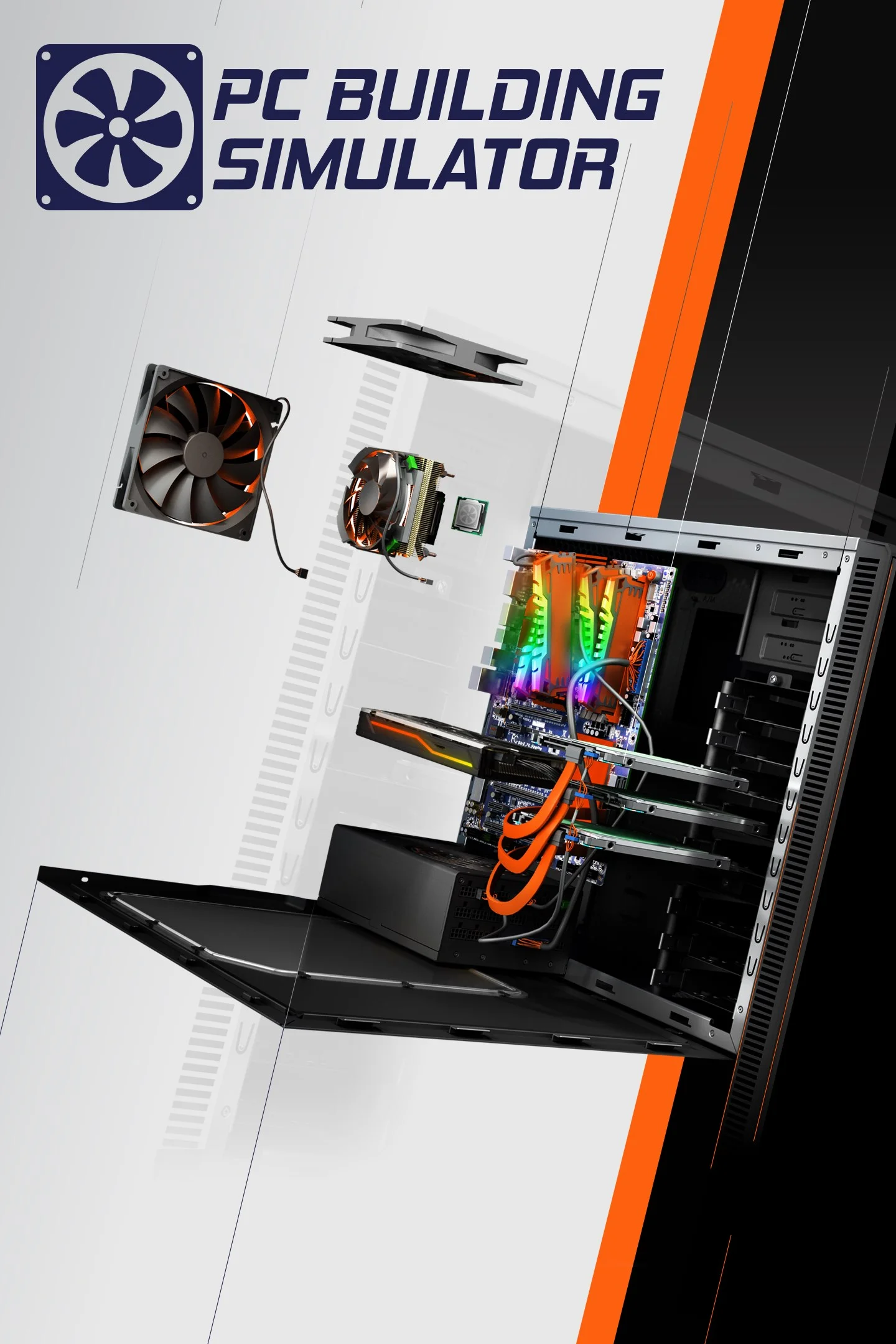
Pc Building Simulator
This combination provides smooth gameplay with an average of 104 FPS, suitable for most gaming scenarios.
Average FPS: resolution vs quality settings
| Ultra | High | Medium | Low | |
|---|---|---|---|---|
| 4K Ultra HD | 37 | 39 | 55 | 78 |
| 1440p QHD | 71 | 75 | 106 | 149 |
| 1080p Full HD | 113 | 118 | 168 | 237 |
Cell color: green is 120+ FPS, teal is 60+, amber is 30+, red is below 30.
Pc Building Simulator with Intel Core i7-14700F + NVIDIA GeForce RTX 5050, In-Depth Analysis
Pc Building Simulator is a simulation title that stresses system balance in a unique way, and the measured results for the Intel Core i7-14700F with the NVIDIA GeForce RTX 5050 show a configuration that behaves differently depending on resolution and settings. The data indicates a combo that is heavily GPU-limited at higher resolutions but capable of very high frame rates at 1080p, making it a practical pairing for builders who prioritize smooth gameplay over maximum visual fidelity.
Resolution Scaling
The frame rate data across the three tested resolutions reveals a clear and consistent pattern: this combo scales strongly with resolution, and the GPU is the dominant limiting factor at 4K. At 1080p with Low settings, the average FPS is 237. Moving to 1440p at the same Low settings drops the average to 149 FPS, a reduction of 88 FPS. At 4K Low, the average falls further to 78 FPS. This scaling curve is steep, indicating that the RTX 5050’s compute and memory bandwidth are being saturated as pixel count increases, while the i7-14700F has ample headroom to feed frames.
The High preset tells the same story with different numbers. At 1080p High, the average is 118 FPS. At 1440p High, it drops to 75 FPS, and at 4K High, it reaches only 39 FPS. The drop from 1080p to 1440p is 43 FPS, and from 1440p to 4K is another 36 FPS. This suggests that even at High settings, the resolution increase imposes a near-linear penalty on the GPU, which is typical for a simulation game that relies heavily on draw calls and object updates rather than complex shading. The CPU’s 20 cores and 28 threads are not the bottleneck here; the GPU’s 8 GB of VRAM and 320.0 GB/s bandwidth are.
Ultra settings amplify the GPU limitation further. At 1080p Ultra, the average is 113 FPS, which is only 5 FPS lower than High at the same resolution. At 1440p Ultra, it drops to 71 FPS, and at 4K Ultra, it falls to 37 FPS. The Ultra preset’s additional effects appear to tax the GPU more at higher resolutions, with 4K Ultra nearly halving the 1440p Ultra result. This indicates that the RTX 5050’s 32 ROPs and 13.17 TFLOPS FP32 performance are the primary constraints, not the CPU.
The Medium preset provides the only complete min/max data. At 1080p Medium, the average is 168 FPS with a minimum of 142 and maximum of 193. At 1440p Medium, the average is 106 FPS with a minimum of 90 and maximum of 122. At 4K Medium, the average is 55 FPS with a minimum of 47 and maximum of 64. The min-to-max spread narrows as resolution increases, suggesting that frame pacing becomes more consistent when the GPU is fully loaded. The 1080p Medium spread of 51 FPS indicates some CPU or driver overhead at lower resolutions, but the 4K spread of 17 FPS shows a steadier output.
Overall, the resolution scaling data shows that 4K is not a viable target for smooth gameplay on this combo, as even Low settings only reach 78 FPS average. The 1440p results are the sweet spot for balanced performance, with Medium and High presets delivering 106 and 75 FPS respectively. At 1080p, the combo is capable of very high frame rates, approaching 240 FPS at Low settings, which suggests that the CPU is not a limiting factor until frame rates exceed 200.
GPU Role
The NVIDIA GeForce RTX 5050 is the decisive component in this combo’s gaming performance. Its 8 GB of GDDR6 memory on a 128-bit bus provides 320.0 GB/s of bandwidth, which is adequate for 1080p and 1440p but becomes a bottleneck at 4K. The GPU’s base clock is 2317 MHz, boosting to 2572 MHz, and it has 2560 shading units, 80 TMUs, and 32 ROPs. The measured FPS data shows that this GPU is capable of excellent 1080p performance, but its limits are exposed as resolution increases.
At 1080p Low, the RTX 5050 delivers 237 FPS average, which is a very strong result for a simulation game. This high frame rate suggests that the GPU is not the limiting factor at this resolution and settings combination. However, at 4K Low, the average drops to 78 FPS, a 67% reduction. This is primarily due to the GPU’s memory bandwidth and pixel throughput. The 82.30 GPixel/s pixel rate and 205.8 GTexel/s texture rate are insufficient to maintain high frame rates at 4K, especially in a game that renders numerous objects and UI elements.
The GPU’s benchmark scores provide context for its relative position. Its 3DMark Steel Nomad DX12 score is 2502, and its PassMark G3D score is 17326. The average benchmark score across all GPU tests is 21035, placing it at the 66th percentile of all GPUs. Its nearest rivals include the AMD Radeon RX 5600 XT, which is 1.6% slower on average, and the AMD Radeon RX Vega M GL, which is 0.6% slower. This places the RTX 5050 in the mid-range tier, which aligns with its 1080p-focused performance in Pc Building Simulator.
The GPU’s memory configuration is worth noting. With 8 GB of VRAM, it has enough capacity for 1080p and 1440p textures, but 4K Ultra settings may exceed this limit, causing performance drops. The 4K Ultra average of 37 FPS is likely hindered by both bandwidth and capacity constraints. The GPU’s 130 W TDP and 300 W suggested PSU are modest, making it an easy fit for most systems, but the performance data suggests that it is not designed for 4K gaming in demanding simulation titles.
The RTX 5050’s DirectX 12 Ultimate support and Vulkan 1.4 API compatibility are beneficial for modern games, but Pc Building Simulator does not heavily leverage these features. The measured results show that the GPU’s raw compute and memory subsystems are the primary determinants of performance, not advanced features like ray tracing or DLSS. The 20 RT cores and 80 tensor cores are present, but their impact on this game’s frame rates is minimal based on the data.
How This Combo Ranks
In the benchmark database, this specific combo of the Intel Core i7-14700F and NVIDIA GeForce RTX 5050 ranks 1814 out of 3002 tested combinations in Pc Building Simulator. This places it in the lower half of all tested setups, which is surprising given the CPU’s strength. The i7-14700F is a high-end processor with an average benchmark score of 53620, placing it at the 91st percentile of all CPUs. Its nearest rivals include the AMD Ryzen 9 7900X, which is 0.6% slower on average, and the Intel Xeon 6505P, which is 0.2% slower. The CPU is clearly not the weak link.
The GPU, however, is the limiting factor. The RTX 5050’s average benchmark score of 21035 places it at the 66th percentile of all GPUs, and its nearest rivals include the AMD Radeon RX 5600 XT, which is 1.6% faster, and the NVIDIA RTX A4000 Mobile, which is 1.6% faster. The GPU’s relative weakness compared to the CPU explains the combo’s mid-pack ranking. In Pc Building Simulator, which is not particularly CPU-intensive, the GPU’s performance dictates the overall result.
The rank of 1814 out of 3002 suggests that many other combos deliver higher frame rates in this game. This is likely because the RTX 5050, while competent at 1080p, is outperformed by many GPUs with higher memory bandwidth and more shading units. The data shows that the combo’s 1080p High average of 118 FPS is solid, but not exceptional when compared to higher-tier GPUs that can exceed 200 FPS at the same settings. The CPU’s 91st percentile ranking does not compensate for the GPU’s 66th percentile ranking in this game.
The deltaPct values for the GPU’s rivals are small, ranging from -1.6% to 1.6%, indicating that the RTX 5050 is closely grouped with several other mid-range GPUs. This means that the combo’s rank could shift notably with a GPU that is only slightly faster. For example, a combo with an AMD Radeon RX 5600 XT, which is 1.6% faster on average, would likely rank higher in Pc Building Simulator. The data suggests that the CPU is not the differentiator in this game; the GPU is.
FAQ
Q: What is the best resolution for this combo in Pc Building Simulator?
A: Based on the measured FPS, 1440p with Medium settings provides a balanced experience, with an average of 106 FPS and a minimum of 90 FPS. This resolution offers a significant visual upgrade over 1080p while maintaining smooth frame rates. 1080p is also viable, with High settings averaging 118 FPS, but 4K is not recommended as even Low settings only average 78 FPS.
Q: How does the RTX 5050 compare to its nearest GPU rivals?
A: The RTX 5050 has an average benchmark score of 21035, which is 0.6% lower than the AMD Radeon RX Vega M GL, 1.0% lower than the AMD Radeon HD 8970M, 1.6% lower than the AMD Radeon RX 5600 XT, and 1.6% lower than the NVIDIA RTX A4000 Mobile. These are all very close margins, indicating that the RTX 5050 is competitively positioned within its performance tier.
Q: Is the Intel Core i7-14700F a bottleneck for this game?
A: The data suggests no. The i7-14700F has a 91st percentile ranking among all CPUs and an average benchmark score of 53620. At 1080p Low, the combo achieves 237 FPS, which is well above the GPU’s comfort zone, indicating that the CPU can handle high frame rates. The GPU becomes the limiting factor at higher resolutions, not the CPU.
Q: What is the difference between Low and Ultra settings at 1080p?
A: At 1080p, Low settings average 237 FPS, while Ultra settings average 113 FPS. This is a 124 FPS difference, showing that the Ultra preset significantly increases GPU load. However, even at Ultra, the combo maintains over 100 FPS, making it a playable option for those who prioritize visual quality over maximum frame rates.
Q: Does the combo support modern graphics APIs?
A: Yes, the RTX 5050 supports DirectX 12 Ultimate (12_2), OpenGL 4.6, and Vulkan 1.4. This ensures compatibility with modern games and allows for advanced features, although Pc Building Simulator’s measured performance does not show a heavy reliance on these APIs.
Q: How does the combo’s ranking in this game compare to its CPU and GPU individual rankings?
A: The combo ranks 1814 out of 3002 in Pc Building Simulator, which is in the lower half. The CPU ranks at the 91st percentile, and the GPU ranks at the 66th percentile. This discrepancy indicates that the GPU is the limiting factor in this game, and the combo’s overall rank is dragged down by the RTX 5050’s mid-range performance.
CPU Role
The Intel Core i7-14700F is a 20-core, 28-thread processor based on the Raptor Lake architecture, with a base clock of 2.10 GHz and a boost clock of 5.40 GHz. Its 33 MB of shared L3 cache and dual-channel memory support for DDR4 and DDR5 provide strong computational power. In synthetic benchmarks, it scores 35122 in Cinebench R23 multicore and 4958 in single-core, with a Geekbench multicore score of 19620 and single-core of 2429. These scores place it at the 91st percentile of all CPUs, with an average benchmark score of 53620.
In Pc Building Simulator, the CPU’s role is to feed the GPU with frame data. The measured FPS shows that at 1080p Low, the combo reaches 237 FPS, which is a very high frame rate that many CPUs would struggle to maintain. The i7-14700F’s 28 threads and high boost clock are sufficient to handle the game’s simulation logic, which includes managing PC components, tracking temperatures, and rendering the workshop environment. The CPU’s PassMark multithread score of 41317 and integer math score of 155808 indicate strong processing capability, but the game does not appear to be heavily threaded based on the FPS scaling.
The CPU’s nearest rivals in terms of average benchmark score are the Intel Xeon 6505P (-0.2% delta), Intel Xeon Phi 7290 (+0.3%), AMD Ryzen 9 7900X (+0.6%), and AMD EPYC 7313P (+0.8%). These are all high-end processors, and the i7-14700F is competitive with them. However, in Pc Building Simulator, the CPU’s performance is not the differentiator. The 1080p High average of 118 FPS is solid, but the GPU’s limits are apparent at 4K, where the CPU’s power cannot compensate for the RTX 5050’s bandwidth constraints.
The CPU’s 65 W TDP and LGA 1700 socket make it an efficient and compatible choice for most motherboards. Its support for ECC memory is a niche feature that is not relevant to gaming. The CPU’s lack of integrated graphics means a discrete GPU is required, which is already present in this combo. The benchmark data indicates that the CPU is not a bottleneck at any resolution tested, as the FPS drops are consistent with GPU scaling rather than CPU limitations.
Settings Recommendations
Based on the measured FPS data, the optimal settings for this combo depend on the target resolution and frame rate. At 1080p, the Medium preset offers the best balance, with an average of 168 FPS and a minimum of 142 FPS. This ensures smooth gameplay with headroom for demanding scenes. The High preset at 1080p averages 118 FPS, which is still very playable, but the Medium preset’s higher minimum frame rate (142 vs. no min data for High) suggests better consistency. The Low preset at 1080p achieves 237 FPS, which is excellent for competitive play, but it sacrifices visual fidelity.
At 1440p, the Medium preset is the clear recommendation, with an average of 106 FPS and a minimum of 90 FPS. This provides a smooth experience with good visual quality. The High preset at 1440p averages 75 FPS, which is playable but may dip below 60 FPS in busy scenes, though no min data is provided. The Low preset at 1440p averages 149 FPS, which is excellent for high-refresh-rate monitors, but the visual downgrade may be noticeable. The Ultra preset at 1440p averages 71 FPS, which is acceptable but not ideal for fast-paced gameplay.
At 4K, no settings preset provides a consistently smooth experience. The Low preset averages 78 FPS, which is playable but below the 100+ FPS that PC builders might prefer. The Medium preset averages 55 FPS with a minimum of 47 FPS, which is borderline playable but may feel sluggish. The High and Ultra presets average 39 and 37 FPS respectively, which are not recommended for any serious gameplay. For 4K, the data suggests that this combo is not suitable, and users should consider lowering resolution or upgrading the GPU.
The Ultra preset, while visually appealing, offers diminishing returns in this game. At 1080p, Ultra averages 113 FPS, which is only 5 FPS lower than High, but at 1440p, Ultra averages 71 FPS, which is 4 FPS lower than High. The difference between High and Ultra is minimal at 1080p but more pronounced at 1440p and 4K. For the best experience, Medium or High settings at 1080p or 1440p are recommended, as they provide a good balance of visual quality and performance without the steep performance cost of Ultra.
The measured min/max data for Medium settings shows that the combo’s frame pacing is stable, with the 1080p min at 142 FPS and 1440p min at 90 FPS. This consistency is important for a simulation game where sudden frame drops can disrupt the building process. The Low preset’s lack of min/max data suggests that it is less likely to be used for extended sessions, but its high averages make it a valid choice for users who prioritize frame rate above all else.
Hardware Specifications
Intel Core i7-14700F
NVIDIA GeForce RTX 5050
FPS Benchmarks by Resolution & Settings
Performance data for Intel Core i7-14700F + NVIDIA GeForce RTX 5050 in Pc Building Simulator
| Resolution | Settings | Avg FPS |
|---|---|---|
| 3840x2160 | Low | 78.0 |
| 3840x2160 | Medium | 55.0 |
| 3840x2160 | High | 39.0 |
| 3840x2160 | Ultra | 37.0 |
| 2560x1440 | Low | 149.0 |
| 2560x1440 | Medium | 106.0 |
| 2560x1440 | High | 75.0 |
| 2560x1440 | Ultra | 71.0 |
| 1920x1080 | Low | 237.0 |
| 1920x1080 | Medium | 168.0 |
| 1920x1080 | High | 118.0 |
| 1920x1080 | Ultra | 113.0 |
Pc Building Simulator with ii7-14700F + Other GPUs
See how Pc Building Simulator performs with the same CPU but different graphics cards.
Pc Building Simulator with RTX 5050 + Other CPUs
See how Pc Building Simulator performs with the same GPU but different processors.
Other Games with ii7-14700F + RTX 5050
Explore FPS benchmarks for other games using this same hardware combination.