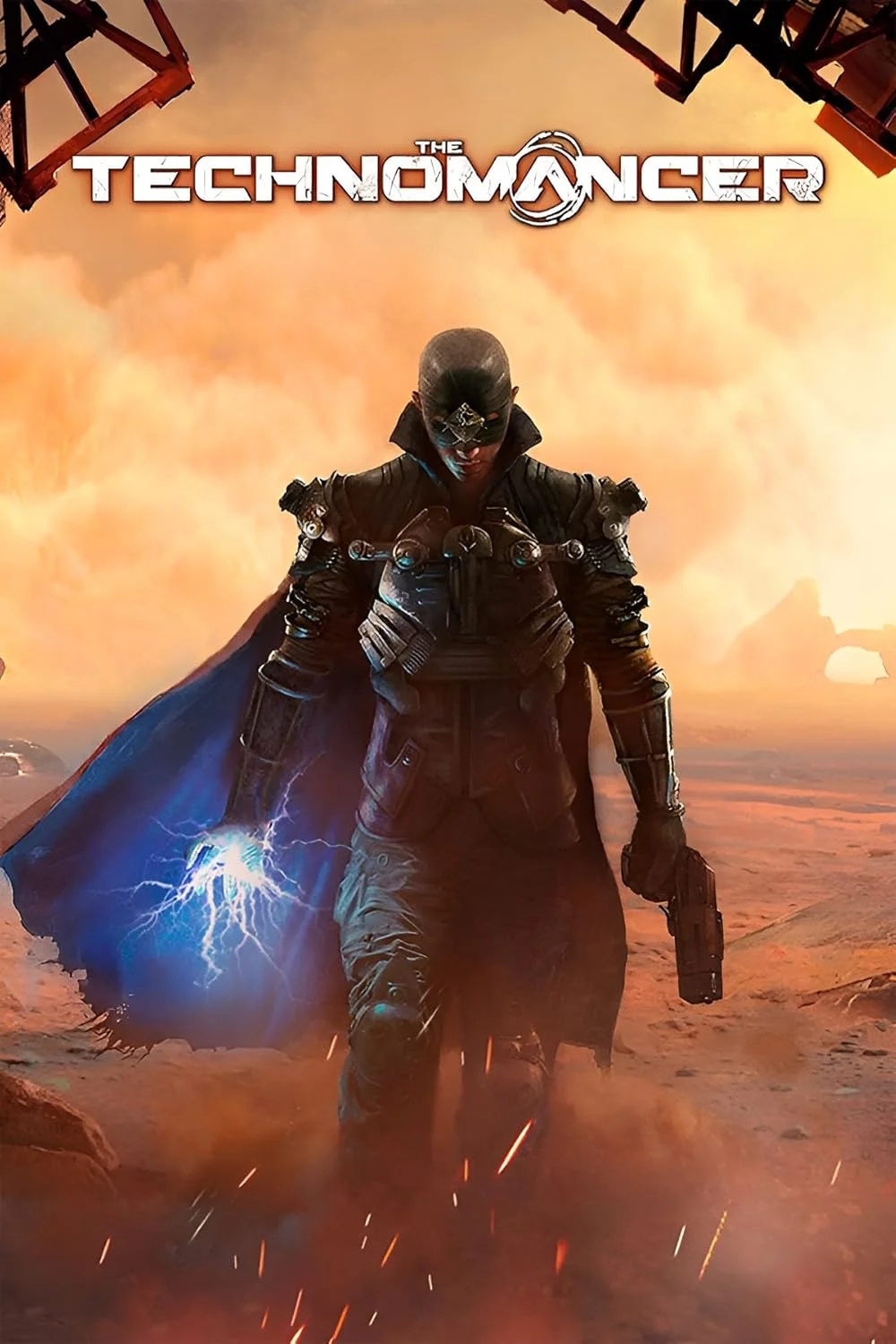
The Technomancer
This combination provides smooth gameplay with an average of 68 FPS, suitable for most gaming scenarios.
Average FPS: resolution vs quality settings
| Ultra | High | Medium | Low | |
|---|---|---|---|---|
| 4K Ultra HD | 25 | 32 | 38 | 49 |
| 1440p QHD | 46 | 59 | 69 | 90 |
| 1080p Full HD | 70 | 90 | 106 | 138 |
Cell color: green is 120+ FPS, teal is 60+, amber is 30+, red is below 30.
The Technomancer with Intel Core Ultra 7 265 + Intel Arc B580, In-Depth Analysis
The Technomancer, a 2016 Action RPG, presents an interesting challenge for modern hardware. This analysis examines the performance of the Intel Core Ultra 7 265 processor paired with the Intel Arc B580 graphics card, using measured data to understand how this combination handles the game across different resolutions and settings. The data reveals a configuration that is capable at 1080p and 1440p but struggles to maintain playable frame rates at 4K, with performance scaling that clearly points to the GPU as the primary bottleneck in this title.
FAQ
Q: What is the average frame rate at 1080p with High settings?
A: The Intel Core Ultra 7 265 and Intel Arc B580 combination achieves an average of 90 FPS at 1920x1080 with High settings, indicating a smooth experience for most players.
Q: How does the performance at 1440p compare to 1080p?
A: At 2560x1440, the average frame rate drops to 59 FPS on High settings, a significant 34% decrease from the 90 FPS seen at 1080p. This suggests the game becomes more demanding as resolution increases.
Q: Is the game playable at 4K resolution with this hardware?
A: At 3840x2160, the average frame rate falls to 32 FPS on High settings and only 25 FPS on Ultra. These results indicate that 4K gaming is not a viable option for this combo, as even the Medium preset only manages 38 FPS.
Q: What is the best settings preset for a 60 FPS target at 1440p?
A: The data shows that the Medium preset at 2560x1440 achieves an average of 69 FPS, making it the highest quality setting that comfortably exceeds the 60 FPS threshold. The High preset drops to 59 FPS, just below the target.
Q: How does the Intel Core Ultra 7 265 rank compared to other CPUs?
A: The processor holds a strong position, scoring in the 93rd percentile of all CPUs. Its nearest rival, the AMD EPYC 4464P, has a virtually identical average benchmark score, with the Intel chip being just 0.3% faster.
Q: What is the GPU's overall performance percentile?
A: The Intel Arc B580 is in the 68th percentile of all GPUs. Its benchmark scores place it in a competitive bracket, with the AMD Radeon RX 580 2048SP being nearly identical in performance, just 0.2% slower.
GPU Role
The Intel Arc B580 is the defining component in this system's gaming performance. Built on the Xe2-HPG architecture, this GPU features 12 GB of GDDR6 memory on a 192-bit bus, providing a memory bandwidth of 456.0 GB/s. The GPU's base and boost clocks are both set to 2670 MHz, with the memory running at an effective speed of 19 Gbps. These specifications, while robust for modern titles, are put to the test by The Technomancer's engine at higher resolutions.
The benchmark data shows a clear pattern: the GPU is the limiting factor when resolution increases. At 1080p, the GPU has ample headroom, delivering 90 FPS on High settings. However, as pixel count rises, the GPU's workload expands dramatically. The transition to 1440p sees a drop to 59 FPS, and at 4K, the GPU is overwhelmed, with the High preset yielding only 32 FPS. This indicates that while the B580 has enough raw power for 1080p and decent 1440p gameplay, its 13.67 TFLOPS of FP32 compute and 213.6 GPixel/s pixel rate are insufficient for the demands of 4K in this specific title.
The GPU's performance relative to its peers reinforces this observation. Its average benchmark score of 23021 places it in the 68th percentile, directly alongside the NVIDIA GeForce RTX 2080, which is only 0.6% faster. Despite being a newer architecture, the B580's performance profile in this game mirrors that of older, high-end cards, suggesting that The Technomancer's engine does not fully leverage the B580's newer feature set, such as its DX12 Ultimate support. The GPU is capable, but its limits are clearly exposed at higher resolutions.
CPU Role
The Intel Core Ultra 7 265 serves as a high-end foundation for this system. With 20 cores and 20 threads, this Arrow Lake-S processor offers substantial multi-threaded capability, which is reflected in its 93rd percentile ranking among all CPUs. Its base clock of 2.40 GHz and boost clock of 5.30 GHz provide strong single-thread performance, as evidenced by its Cinebench R23 single-core score of 5960. The 30 MB of shared L3 cache helps keep frequently accessed data close to the cores, further enhancing responsiveness.
In the context of The Technomancer, the CPU's role appears secondary to the GPU. The frame rates at 1080p, which typically place more stress on the processor, are quite high, with the Low preset hitting 138 FPS. This suggests that the CPU is not a bottleneck at this resolution. However, the data implies that the game's engine may not fully utilize the 20 cores available. The performance scaling from 1080p to 4K is almost entirely dependent on the GPU, with frame rates halving and then some, while the CPU's workload remains relatively constant.
The processor's benchmark scores, such as the Passmark multithread score of 49682 and the Cinebench R23 multicore score of 42216, indicate immense processing power. Yet, the measured FPS data shows that this power is not the limiting factor in The Technomancer. Instead, the CPU provides enough headroom to ensure that the GPU is always the component determining the final frame rate. This is a classic sign of a well-balanced system for gaming, where the CPU is powerful enough to avoid holding back the graphics card, even at lower resolutions where CPU load is typically higher.
How This Combo Ranks
The combined performance of the Intel Core Ultra 7 265 and Intel Arc B580 in The Technomancer is positioned at rank 2124 out of 2825 tested combos. This places the configuration in the lower 25th percentile of all potential pairings, which is a surprising result given the individual strength of the components. The CPU is in the top 7% of all processors, and the GPU is in the upper third of graphics cards, yet their combination fails to break into the top half of tested systems in this specific game.
This ranking suggests that the pairing is not optimal for The Technomancer. The low rank is likely due to the GPU's inability to handle the game's demands at higher resolutions, which drags down the overall performance potential of the combo. While the CPU is more than capable, the GPU becomes a severe bottleneck, especially at 4K, where the average frame rate falls below 32 FPS. The data indicates that while this combo can handle 1080p and 1440p gaming admirably, its overall standing is hurt by the poor 4K performance, which is a significant factor in the overall ranking.
The ranking also highlights a potential mismatch. The Core Ultra 7 265 is a top-tier processor, but it is paired with a mid-range GPU. In a game like The Technomancer, which appears to be GPU-bound based on the scaling data, the CPU's power is largely untapped. This results in a combo that underperforms relative to what the individual parts might suggest. For users prioritizing high-resolution gaming, this pairing would not be recommended, as the data shows the GPU cannot keep pace with the CPU's capabilities in this title.
Resolution Scaling
The measured FPS data reveals a stark and consistent pattern of performance degradation as resolution increases, clearly identifying the GPU as the limiting component. Starting with the High settings preset, the average frame rate at 1920x1080 is 90 FPS. Moving to 2560x1440, this drops by 34% to 59 FPS. The jump to 3840x2160 is even more punishing, with the frame rate halving to 32 FPS. This scaling shows that for every doubling of pixel count, the performance is cut roughly in half, a classic sign of a GPU-bound scenario.
This pattern is consistent across all settings presets. At Low settings, the frame rate drops from 138 FPS at 1080p to 90 FPS at 1440p, and then to 49 FPS at 4K. The Medium preset shows the same trend, going from 106 FPS to 69 FPS to 38 FPS. Even at the highest quality, the Ultra preset scales from 70 FPS at 1080p down to 46 FPS at 1440p and finally to a mere 25 FPS at 4K. The consistency of this ~35% drop from 1080p to 1440p and a further ~45% drop from 1440p to 4K across all settings strongly suggests that the game's rendering engine is heavily reliant on the GPU's pixel throughput.
The implications of this scaling are clear. For this hardware combo, 1080p is the sweet spot, offering high frame rates even on the Ultra preset. 1440p is playable, but only with settings adjustments to maintain a 60 FPS average. 4K is simply not a viable option, as even the lowest settings fail to reach 50 FPS. The data points to the Intel Arc B580's 456.0 GB/s memory bandwidth and 213.6 GPixel/s pixel rate as the primary constraints, unable to feed the shader units fast enough at higher resolutions. The CPU, with its high clock speeds and core count, is never the bottleneck, as the performance drop is almost entirely attributable to the increased pixel workload.
Measured FPS Breakdown
The detailed FPS measurements provide a comprehensive picture of the combo's performance envelope. At 1920x1080, the system performs admirably across all presets. The Low preset produces an average of 138 FPS, while Medium achieves 106 FPS with a minimum of 90 FPS and a maximum of 121 FPS. High settings deliver 90 FPS, and even the demanding Ultra preset maintains a respectable 70 FPS average. This resolution offers a wide range of playable options, from high-refresh-rate competitive settings to visually rich experiences.
At 2560x1440, the performance becomes more constrained. The Low preset is still very smooth at 90 FPS. The Medium preset averages 69 FPS, with a recorded minimum of 59 FPS and a maximum of 79 FPS, which is just at the edge of a 60 FPS target. The High preset drops to an average of 59 FPS, making it the boundary for a standard 60 Hz monitor. The Ultra preset falls to 46 FPS, which may be acceptable for some but is not ideal for fast-paced action. This resolution requires a trade-off between visual quality and frame rate.
At 3840x2160, the hardware is clearly out of its depth. The Low preset is the only option that comes close to playability, with an average of 49 FPS. The Medium preset averages 38 FPS, with a minimum of 32 FPS and a maximum of 44 FPS, indicating noticeable stuttering. The High preset drops to 32 FPS, and the Ultra preset is unplayable at 25 FPS. The data shows that the Arc B580 does not have the computational reserves to handle the 4K pixel count in this game, resulting in a poor experience regardless of settings.
Settings Recommendations
Based on the measured data, the optimal experience for this hardware combo in The Technomancer depends heavily on the target resolution. For users with a 1080p monitor, the High settings preset offers the best balance of visual fidelity and performance, delivering an average of 90 FPS. This provides a smooth, responsive experience without sacrificing significant graphical quality. The Ultra preset is also viable at 70 FPS for those who prioritize visuals over a higher frame rate.
For 1440p displays, the Medium settings preset is the recommended choice. It is the only preset that consistently maintains an average above 60 FPS, with a score of 69 FPS. The High preset, at 59 FPS, is a close alternative for users who can tolerate a slightly lower frame rate for improved graphics. The Ultra preset should be avoided, as the 46 FPS average is likely to feel sluggish in an action RPG.
For 4K resolution, the data suggests that this hardware combination is not suitable for a satisfactory gaming experience. Even the Low preset, which averages 49 FPS, will have noticeable frame pacing issues given the low minimums. Users seeking to play at 4K would need to significantly lower resolution scaling or accept an unplayable frame rate, as no preset achieves a consistent 60 FPS. The recommendation is to stick to 1440p or below for this game with the Intel Core Ultra 7 265 and Intel Arc B580.
Hardware Specifications
Intel Core Ultra 7 265
Intel Arc B580
FPS Benchmarks by Resolution & Settings
Performance data for Intel Core Ultra 7 265 + Intel Arc B580 in The Technomancer
| Resolution | Settings | Avg FPS |
|---|---|---|
| 3840x2160 | Low | 49.0 |
| 3840x2160 | Medium | 38.0 |
| 3840x2160 | High | 32.0 |
| 3840x2160 | Ultra | 25.0 |
| 2560x1440 | Low | 90.0 |
| 2560x1440 | Medium | 69.0 |
| 2560x1440 | High | 59.0 |
| 2560x1440 | Ultra | 46.0 |
| 1920x1080 | Low | 138.0 |
| 1920x1080 | Medium | 106.0 |
| 1920x1080 | High | 90.0 |
| 1920x1080 | Ultra | 70.0 |
The Technomancer with iUltra 7 265 + Other GPUs
See how The Technomancer performs with the same CPU but different graphics cards.
The Technomancer with Arc B580 + Other CPUs
See how The Technomancer performs with the same GPU but different processors.
Other Games with iUltra 7 265 + Arc B580
Explore FPS benchmarks for other games using this same hardware combination.