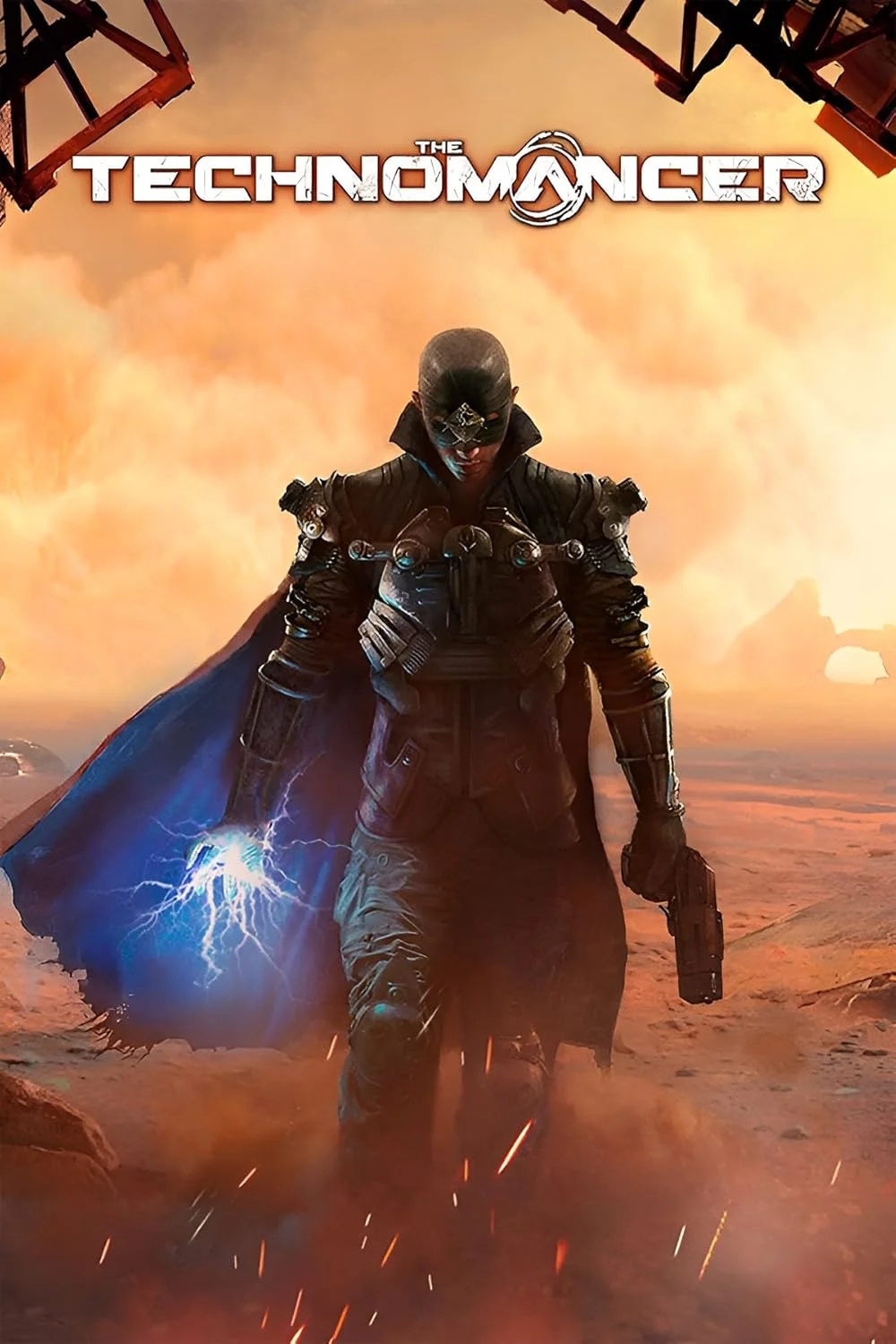
The Technomancer
This combination provides smooth gameplay with an average of 67 FPS, suitable for most gaming scenarios.
Average FPS: resolution vs quality settings
| Ultra | High | Medium | Low | |
|---|---|---|---|---|
| 4K Ultra HD | 23 | 32 | 38 | 47 |
| 1440p QHD | 44 | 61 | 70 | 89 |
| 1080p Full HD | 69 | 88 | 107 | 139 |
Cell color: green is 120+ FPS, teal is 60+, amber is 30+, red is below 30.
The Technomancer with Intel Core i7-14700KF + Intel Arc B580, In-Depth Analysis
# The Technomancer with Intel Core i7-14700KF + Intel Arc B580
This combination pairs Intel's 20-core Core i7-14700KF with the Intel Arc B580, a Battlemage-generation GPU built on TSMC's 5 nm process. The measured data covers 12 distinct configurations across three resolutions and four quality presets, offering a complete picture of how this system handles a 2016 Action RPG. The CPU sits in the 96th percentile among all tested processors, while the GPU ranks in the 66th percentile, creating an interesting asymmetry where the processor has clear headroom over the graphics card in most scenarios.
FAQ
Q: What is the highest average frame rate this combo achieves in The Technomancer?
A: The best result comes at 1920x1080 with Low settings, where the system reaches 138.7 FPS average. The same resolution at High settings still delivers a strong 87.5 FPS, while Ultra drops to 69.2 FPS.
Q: How does the Arc B580 compare to its nearest GPU rival in synthetic benchmarks?
A: The Arc B580 posts an average benchmark score of 23021, placing it 0.7% behind the NVIDIA GeForce RTX 4060 (23181) but 0.1% ahead of the AMD Radeon 760M (22999) and 1.3% ahead of the RTX 4060 Mobile (22729).
Q: Is 4K Ultra playable with this hardware?
A: No. At 3840x2160 with Ultra settings, the system averages just 23.4 FPS, which falls below standard playability thresholds. Even High settings at 4K only reach 31.5 FPS, suggesting this resolution is not suitable for smooth gameplay.
Q: What is the CPU's position among all tested processors?
A: The Core i7-14700KF ranks in the 96th percentile of all CPUs in the database. Its average benchmark score of 70104 places it 0.3% behind the AMD EPYC 9115 (69887) and essentially tied with the Core i7-14700K (70074).
Q: How many cores and threads does the i7-14700KF have?
A: The processor features 20 cores and 28 threads, with a base clock of 3.40 GHz and a boost clock of 5.60 GHz. It uses the Raptor Lake architecture on a 10 nm process node from Intel.
Q: What memory configuration does the GPU use?
A: The Arc B580 comes with 12 GB of GDDR6 memory on a 192-bit bus, delivering 456.0 GB/s of bandwidth. The memory clock runs at 2375 MHz, which translates to 19 Gbps effective.
GPU Role
The Intel Arc B580's specifications directly shape its performance in The Technomancer. With 2560 shading units, 160 TMUs, and 80 ROPs, the GPU delivers a pixel rate of 213.6 GPixel/s and a texture rate of 427.2 GTexel/s. The 12 GB GDDR6 frame buffer provides ample capacity for this game's assets, while the 456.0 GB/s bandwidth ensures data flows efficiently at lower resolutions. The GPU's 13.67 TFLOPS of FP32 compute power and 27.34 TFLOPS of FP16 performance indicate a mid-range part that must be paired with appropriate settings.
The measured frame rates reveal that the GPU becomes the limiting factor as resolution climbs. At 1080p Low, the system produces 138.7 FPS, but at 4K Low, that figure falls to 46.7 FPS — a reduction of roughly two-thirds. The gap between Low and Ultra settings also widens dramatically at higher resolutions. At 1080p, Ultra delivers 69.2 FPS versus 138.7 FPS at Low, a difference of 69.5 FPS. At 4K, Ultra drops to 23.4 FPS while Low stays at 46.7 FPS, a difference of 23.3 FPS. This pattern suggests that the GPU's rendering pipeline becomes saturated at 4K, making settings adjustments less impactful than at lower resolutions.
The GPU's 66th percentile ranking among all tested GPUs places it in the mid-range tier. Its closest rivals in synthetic testing — the RTX 4060 and Radeon 760M — occupy similar performance territory, though the Arc B580's 12 GB VRAM offers more capacity than some competitors might provide. For a 2016 title like The Technomancer, the GPU has sufficient resources for 1080p and 1440p gaming, but 4K requires significant compromises.
Settings Recommendations
The measured data points to 1440p High as the sweet spot for this combination. At 2560x1440 with High settings, the system averages 60.9 FPS, which matches standard 60 Hz display refresh rates while maintaining visual quality. The 1440p Medium preset achieves 70.4 FPS, offering a 9.5 FPS improvement over High with presumably modest visual reductions. Both options provide smooth gameplay, but High delivers the better visual experience at a still-playable frame rate.
For players prioritizing frame rate above all, 1080p Medium at 106.7 FPS provides a substantial margin over display refresh rates, while 1080p High at 87.5 FPS remains well above 60 FPS. The 1080p Ultra preset drops to 69.2 FPS, still playable but with diminishing returns compared to High. At 1440p, Ultra falls to 44.4 FPS, which may be acceptable for slower-paced gameplay but risks noticeable stutter in action sequences.
4K is not recommended with this hardware. The best 4K result — Low settings at 46.7 FPS — approaches playability but sacrifices significant visual fidelity. The 4K Medium setting at 37.6 FPS and High at 31.5 FPS both fall below comfortable thresholds, while Ultra at 23.4 FPS is effectively unplayable. The data suggests that 1440p High offers the optimal balance of visual quality and performance for this combination.
How This Combo Ranks
The Core i7-14700KF and Arc B580 combination ranks 1303 out of 1656 tested combos in The Technomancer, placing it in the lower-middle portion of the database. This ranking reflects the GPU's mid-range positioning rather than the CPU's strength. The processor alone sits in the 96th percentile of all CPUs, while the GPU's 66th percentile ranking drags the combined score down.
The CPU's synthetic benchmarks illustrate its capability. In Cinebench R23, it scores 44557 multi-core and 6290 single-core. Geekbench results show 19287 multi-core and 2972 single-core. These numbers place the i7-14700KF in elite company — its nearest rivals include the Core i7-14700K (70074 average score, 0% delta) and the AMD Ryzen 9 9950X (70420, -0.4% delta). The CPU is clearly not the bottleneck in this pairing.
The GPU's Passmark G3D score of 15748 and 3DMark Steel Nomad score of 3068 reflect its mid-range status. The Geekbench Vulkan result of 109672 shows solid API performance, while OpenCL at 92821 indicates reasonable compute capability. This combination's ranking suggests that while the CPU has headroom for more powerful GPUs, the current pairing delivers acceptable performance for 1080p and 1440p gaming in this title.
Resolution Scaling
The frame rate progression from 1080p to 4K reveals how the GPU becomes increasingly stressed at higher resolutions. At Low settings, the system produces 138.7 FPS at 1080p, 89.3 FPS at 1440p, and 46.7 FPS at 4K. This represents a 35.6% drop from 1080p to 1440p, followed by a 47.7% drop from 1440p to 4K. The scaling is not linear — the jump to 4K imposes a disproportionately heavy load.
At High settings, the progression runs 87.5 FPS (1080p) to 60.9 FPS (1440p) to 31.5 FPS (4K). The percentage drops are 30.4% and 48.3% respectively. Ultra settings show 69.2 FPS at 1080p, 44.4 FPS at 1440p, and 23.4 FPS at 4K, with drops of 35.8% and 47.3%. This consistent pattern across presets indicates that the GPU's fill rate and memory bandwidth become limiting factors at 4K, regardless of quality settings.
The resolution scaling curves suggest that the GPU is the primary bottleneck at higher resolutions. If the CPU were limiting performance, we would expect frame rates to remain more constant as resolution increases, since the CPU workload stays similar. Instead, the sharp declines at 4K point to the Arc B580's 456.0 GB/s bandwidth and 213.6 GPixel/s pixel rate being insufficient for the demands of 3840x2160 rendering.
Measured FPS Breakdown
At 1920x1080, the system delivers a wide range of performance depending on settings. Low settings produce 138.7 FPS, Medium reaches 106.7 FPS, High hits 87.5 FPS, and Ultra drops to 69.2 FPS. The spread from Low to Ultra is 69.5 FPS, showing that settings have a major impact at this resolution.
Moving to 2560x1440, the results show 89.3 FPS at Low, 70.4 FPS at Medium, 60.9 FPS at High, and 44.4 FPS at Ultra. The spread narrows to 44.9 FPS, indicating that the GPU's limitations begin to compress the range. The 1440p results remain playable across most presets, with only Ultra falling below 60 FPS.
At 3840x2160, performance drops significantly. Low settings average 46.7 FPS, Medium achieves 37.6 FPS, High reaches 31.5 FPS, and Ultra falls to 23.4 FPS. The spread is just 23.3 FPS, meaning that settings adjustments have limited impact at this resolution. None of the 4K presets reach 60 FPS, and only Low approaches a playable frame rate.
CPU Role
The Core i7-14700KF provides substantial processing power that goes underutilized in The Technomancer. With 20 cores, 28 threads, and boost clocks up to 5.60 GHz, the CPU handles the game's logic, physics, and AI without breaking a sweat. The processor's 33 MB of shared L3 cache and 2 MB per-core L2 cache provide ample data storage for game assets, while its DDR4/DDR5 memory support offers flexibility in system configuration.
The CPU's benchmark results demonstrate its capability. The Passmark multithread score of 52425, combined with a single-thread score of 4480, shows balanced performance across both heavily threaded and lightly threaded workloads. The Cinebench R20 results of 18713 multi-core and 2641 single-core reinforce this picture. The processor's 96th percentile ranking among all CPUs means it outperforms the vast majority of installed processors.
In this game, the CPU's role is primarily to feed the GPU with data and maintain consistent frame delivery. The measured frame rates, particularly at 1080p where the GPU can produce over 100 FPS, suggest that the CPU does not introduce noticeable bottlenecks. The combination's 1303rd ranking out of 1656 test configurations stems from the GPU's mid-range performance rather than any CPU limitation. Players pairing this processor with a more powerful GPU would likely see better results, but the current configuration handles The Technomancer competently at mainstream resolutions.
Hardware Specifications
Intel Core i7-14700KF
Intel Arc B580
FPS Benchmarks by Resolution & Settings
Performance data for Intel Core i7-14700KF + Intel Arc B580 in The Technomancer
| Resolution | Settings | Avg FPS |
|---|---|---|
| 3840x2160 | Low | 46.7 |
| 3840x2160 | Medium | 37.6 |
| 3840x2160 | High | 31.5 |
| 3840x2160 | Ultra | 23.4 |
| 2560x1440 | Low | 89.3 |
| 2560x1440 | Medium | 70.4 |
| 2560x1440 | High | 60.9 |
| 2560x1440 | Ultra | 44.4 |
| 1920x1080 | Low | 138.7 |
| 1920x1080 | Medium | 106.7 |
| 1920x1080 | High | 87.5 |
| 1920x1080 | Ultra | 69.2 |
The Technomancer with ii7-14700KF + Other GPUs
See how The Technomancer performs with the same CPU but different graphics cards.
The Technomancer with Arc B580 + Other CPUs
See how The Technomancer performs with the same GPU but different processors.
Other Games with ii7-14700KF + Arc B580
Explore FPS benchmarks for other games using this same hardware combination.