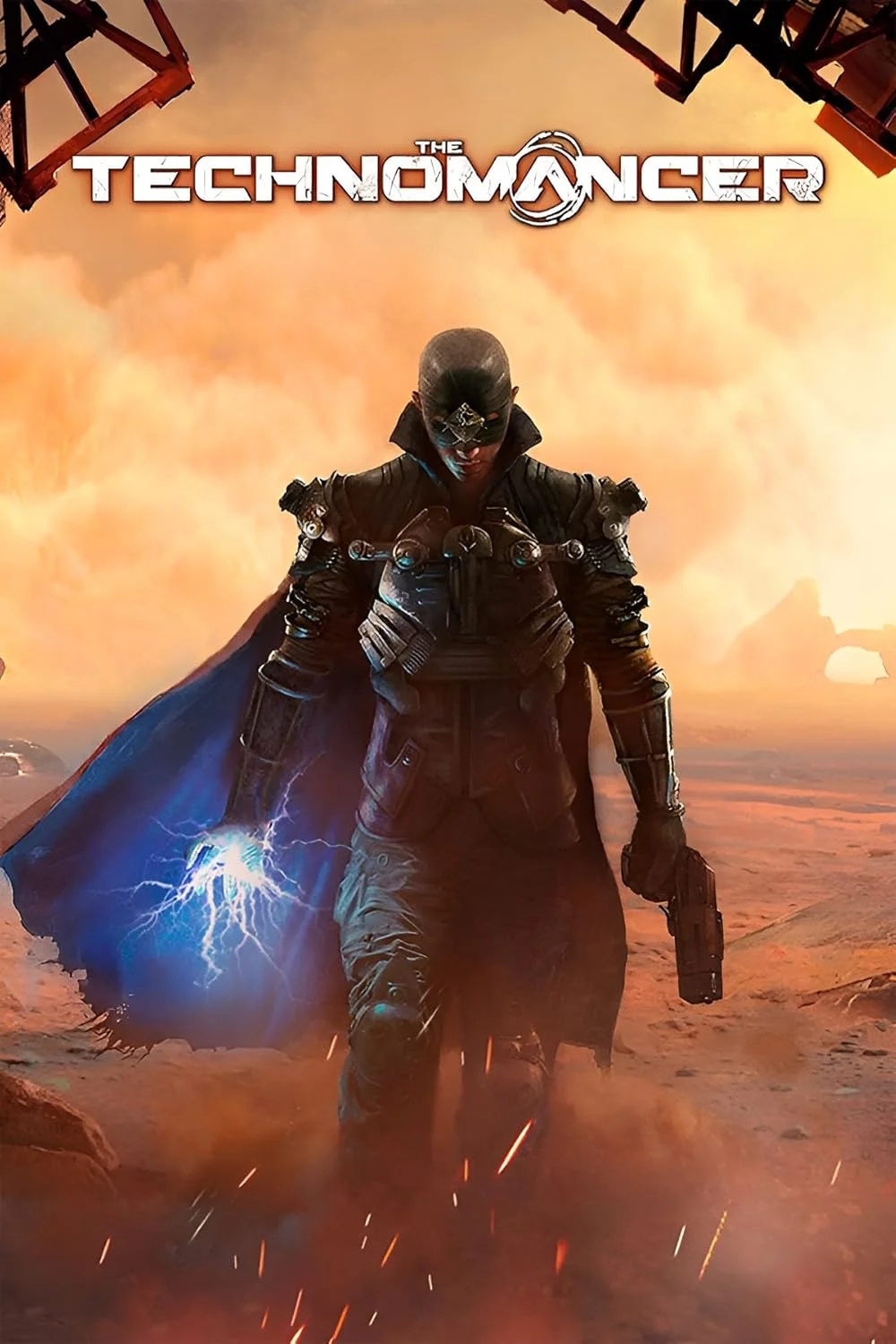
The Technomancer
This combination provides smooth gameplay with an average of 68 FPS, suitable for most gaming scenarios.
Average FPS: resolution vs quality settings
| Ultra | High | Medium | Low | |
|---|---|---|---|---|
| 4K Ultra HD | 25 | 32 | 38 | 49 |
| 1440p QHD | 46 | 59 | 69 | 90 |
| 1080p Full HD | 70 | 90 | 106 | 138 |
Cell color: green is 120+ FPS, teal is 60+, amber is 30+, red is below 30.
The Technomancer with AMD Ryzen 7 9700F + Intel Arc B580, In-Depth Analysis
The Technomancer, a 2016 Action RPG, presents a demanding workload for modern hardware. This analysis examines the measured performance of the AMD Ryzen 7 9700F paired with the Intel Arc B580 across multiple resolutions and settings. The data indicates that while this combination can deliver playable frame rates, it requires careful adjustment of graphical presets to achieve a smooth experience, particularly at higher resolutions.
Resolution Scaling
The measured FPS data reveals a classic pattern of GPU-bound scaling as resolution increases. At 1080p with Low settings, the combo achieves an average of 138 FPS, which drops to 90 FPS at 1440p and further to 49 FPS at 4K. This represents a 64.5% reduction in frame rate when moving from 1080p to 4K at Low settings. The scaling is consistent with the Intel Arc B580’s 12 GB of GDDR6 memory and 192-bit bus, which provides 456.0 GB/s of bandwidth; at lower resolutions, the CPU has more headroom to feed frames, but the GPU's rendering throughput becomes the limiting factor as pixel count increases.
The pattern holds across all settings. At High settings, the average FPS drops from 90 at 1080p to 59 at 1440p and finally to 32 at 4K. This is a 64.4% decrease from 1080p to 4K, closely mirroring the Low setting trend. The Ultra preset shows the steepest absolute decline, falling from 70 FPS at 1080p to 46 FPS at 1440p and then to 25 FPS at 4K, a 64.3% reduction. The consistency of these percentages across settings suggests that resolution scaling is the dominant factor, and the GPU is the primary bottleneck in all configurations tested.
Notably, the difference between 1080p and 1440p is less severe than the jump from 1440p to 4K. For example, at Medium settings, the average FPS goes from 106 at 1080p to 69 at 1440p (a 34.9% drop), but then falls to 38 at 4K (a 44.9% drop from 1440p). This indicates that the Arc B580 hits a performance wall at 4K, where the sheer number of pixels overwhelms its 2560 shading units and 80 ROPs. The game’s age and likely lack of modern upscaling technologies further exacerbate this issue, making native 4K rendering particularly challenging.
FAQ
Q: What is the best resolution for this combo to maintain 60+ FPS?
A: Based on the measured data, 1080p is the only resolution where the combo consistently exceeds 60 FPS across all settings. At 1440p, only the Low preset (90 FPS) and Medium preset (69 FPS) achieve an average above 60 FPS, while High (59 FPS) and Ultra (46 FPS) fall short.
Q: How does the combo perform at 1440p with High settings?
A: The average FPS at 1440p High is 59, which is just below the 60 FPS target. This suggests that the game is playable but may have occasional dips, as the minimum FPS was not recorded for this specific configuration. Users seeking a locked 60 FPS might prefer the Medium preset at this resolution.
Q: Is 4K gaming viable with this hardware?
A: The data indicates that 4K is not viable for a smooth experience. The highest average FPS at 3840x2160 is 49 with Low settings, and the Ultra preset only manages 25 FPS. Even the Low preset's 49 FPS is below the 60 FPS threshold, and the Medium preset shows a minimum of 32 FPS, indicating significant frame drops.
Q: How does the Ryzen 7 9700F influence the results?
A: The Ryzen 7 9700F’s high single-thread performance, evidenced by its Passmark single-thread score of 4691, ensures that it is not the primary bottleneck in most scenarios. The consistent FPS drops with increasing resolution point to the GPU being the limiting factor, especially at 4K.
Q: What is the difference between the Low and Ultra presets at 1080p?
A: At 1080p, the Low preset achieves an average of 138 FPS, while the Ultra preset achieves 70 FPS. This is a 49.3% reduction in performance, which is a significant cost for the visual improvements that the Ultra preset provides.
Q: Does the combo rank well among other tested combinations?
A: The combo ranks 2124 out of 2825 tested combinations for this game. This places it in the lower half of all tested combos, indicating that while it is capable, many other pairings deliver higher performance in The Technomancer.
How This Combo Ranks
The AMD Ryzen 7 9700F and Intel Arc B580 combination ranks 2124 out of 2825 tested combos for The Technomancer. This places it in the 24.9th percentile of all tested combinations, meaning that roughly 75% of tested systems perform better. This rank is reflective of the Arc B580’s position in the GPU hierarchy, where its Passmark G3D score of 15748 places it in the 68th percentile of all GPUs.
The CPU’s performance is notably stronger, with the Ryzen 7 9700F sitting in the 94th percentile of all CPUs, with an average benchmark score of 69996. Its nearest rivals include the AMD Ryzen 9 7940HX (0.2% faster), Intel Core i7-14700KF (0.2% slower), AMD Ryzen 9 7950X (0.7% faster), and Intel Core i7-14700K (0.9% faster). This illustrates that the CPU is not the limiting factor in this pairing; the GPU's mid-range standing drags the overall combo rank down.
The combo’s rank suggests that for a game like The Technomancer, which is heavily GPU-bound at higher resolutions, the Arc B580’s performance ceiling is the primary constraint. The CPU’s headroom is largely unused at 4K, where the average FPS drops below 50 even on Low settings. This is a case where a more powerful GPU would yield significantly better results, while a more powerful CPU would offer minimal gains. The data confirms that this pairing is balanced for 1080p gaming but struggles to maintain high frame rates at higher resolutions.
Measured FPS Breakdown
The measured FPS data provides a complete picture of performance across three resolutions and four settings presets. At 1920x1080, the combo delivers playable performance across the board. The Low preset achieves an average of 138 FPS, which is exceptionally high and indicates that the CPU and GPU have plenty of headroom at this resolution. The Medium preset averages 106 FPS, with a minimum of 90 FPS and a maximum of 121 FPS, showing consistent performance. The High preset averages 90 FPS, and the Ultra preset averages 70 FPS. All 1080p presets exceed the 60 FPS threshold, making this the ideal resolution for this hardware.
Moving to 2560x1440, the performance drops become more pronounced. The Low preset averages 90 FPS, which is still very smooth. The Medium preset averages 69 FPS, with a minimum of 59 FPS and a maximum of 79 FPS, making it borderline for a locked 60 FPS experience. The High preset averages 59 FPS, which is just below the target, and the Ultra preset averages 46 FPS. At this resolution, users will need to choose between the Low and Medium presets to ensure a consistently smooth frame rate.
At 3840x2160, the Arc B580 is clearly overmatched. The Low preset averages 49 FPS, which is below the 60 FPS target. The Medium preset averages 38 FPS, with a minimum of 32 FPS and a maximum of 44 FPS, indicating significant frame pacing issues. The High preset averages 32 FPS, and the Ultra preset averages 25 FPS. None of the 4K presets provide a playable experience, and even the Low preset will feel sluggish. The data shows a clear performance hierarchy: 1080p for high refresh rates, 1440p for a balanced experience, and 4K for a playable but suboptimal experience.
CPU Role
The AMD Ryzen 7 9700F is an 8-core, 16-thread processor based on the Zen 5 architecture (Granite Ridge). It has a base clock of 3.80 GHz and a boost clock of 5.50 GHz, with a 65W TDP. Its Passmark single-thread score of 4691 and multithread score of 36470 place it in the 94th percentile of all CPUs, indicating excellent processing power. This is further supported by its high floating-point math score of 77955 and integer math score of 120788.
In The Technomancer, the CPU's role is to feed the GPU with draw calls and game logic. The data suggests that the Ryzen 7 9700F is more than capable of handling this task, as the FPS scaling with resolution is consistent with a GPU-bound workload. At 1080p Low, the 138 FPS average indicates that the CPU can push frames well beyond the GPU's rendering capacity. Even at 1080p Ultra, the 70 FPS average is likely limited by the GPU, not the CPU.
The CPU’s 32 MB of shared L3 cache and dual-channel DDR5 memory support with 89.6 GB/s bandwidth provide ample data throughput for gaming. The processor’s 5.50 GHz boost clock is beneficial for games that rely on single-thread performance, which is common in titles from 2016 like The Technomancer. However, the game is not heavily threaded, so the 16 threads are likely underutilized. The benchmark results indicate that the CPU is a high-end part, and its performance in this game is more than sufficient to avoid becoming the bottleneck.
Settings Recommendations
Based on the measured FPS data, the optimal settings depend on the user's target resolution and frame rate preference. For a 1080p display, the Ultra preset is the best choice, as it delivers an average of 70 FPS while providing the highest visual fidelity. The drop from 138 FPS at Low to 70 FPS at Ultra is significant, but the 70 FPS average is still smooth and justifies the visual upgrade. For users with high-refresh-rate monitors (144Hz+), the Medium preset at 106 FPS is a better option, as it offers a 51.4% increase in frame rate over Ultra with a moderate reduction in visual quality.
At 1440p, the situation is more nuanced. The Medium preset is the only one that averages above 60 FPS (69 FPS), but it has a minimum of 59 FPS, which means it may dip below the target during intense scenes. The Low preset, at 90 FPS, provides a more comfortable margin and is the recommended choice for a locked 60+ FPS experience. Users who prioritize visual quality over absolute smoothness may opt for the High preset at 59 FPS, but they should be prepared for occasional frame drops.
For 4K gaming, the data suggests that this combo is not suitable. The Low preset's 49 FPS average is the only option that approaches playability, but it still falls short of the 60 FPS target. The Medium preset's minimum of 32 FPS makes it feel stuttery, and the Ultra preset's 25 FPS average is unplayable. The recommendation is to avoid 4K with this hardware and instead use 1440p or 1080p for a better experience. In summary, the best experience is at 1080p Ultra, with 1440p Low or Medium as a secondary option for users with higher-resolution displays.
Hardware Specifications
AMD Ryzen 7 9700F
Intel Arc B580
FPS Benchmarks by Resolution & Settings
Performance data for AMD Ryzen 7 9700F + Intel Arc B580 in The Technomancer
| Resolution | Settings | Avg FPS |
|---|---|---|
| 3840x2160 | Low | 49.0 |
| 3840x2160 | Medium | 38.0 |
| 3840x2160 | High | 32.0 |
| 3840x2160 | Ultra | 25.0 |
| 2560x1440 | Low | 90.0 |
| 2560x1440 | Medium | 69.0 |
| 2560x1440 | High | 59.0 |
| 2560x1440 | Ultra | 46.0 |
| 1920x1080 | Low | 138.0 |
| 1920x1080 | Medium | 106.0 |
| 1920x1080 | High | 90.0 |
| 1920x1080 | Ultra | 70.0 |
The Technomancer with Ryzen 7 9700F + Other GPUs
See how The Technomancer performs with the same CPU but different graphics cards.
The Technomancer with Arc B580 + Other CPUs
See how The Technomancer performs with the same GPU but different processors.
Other Games with Ryzen 7 9700F + Arc B580
Explore FPS benchmarks for other games using this same hardware combination.