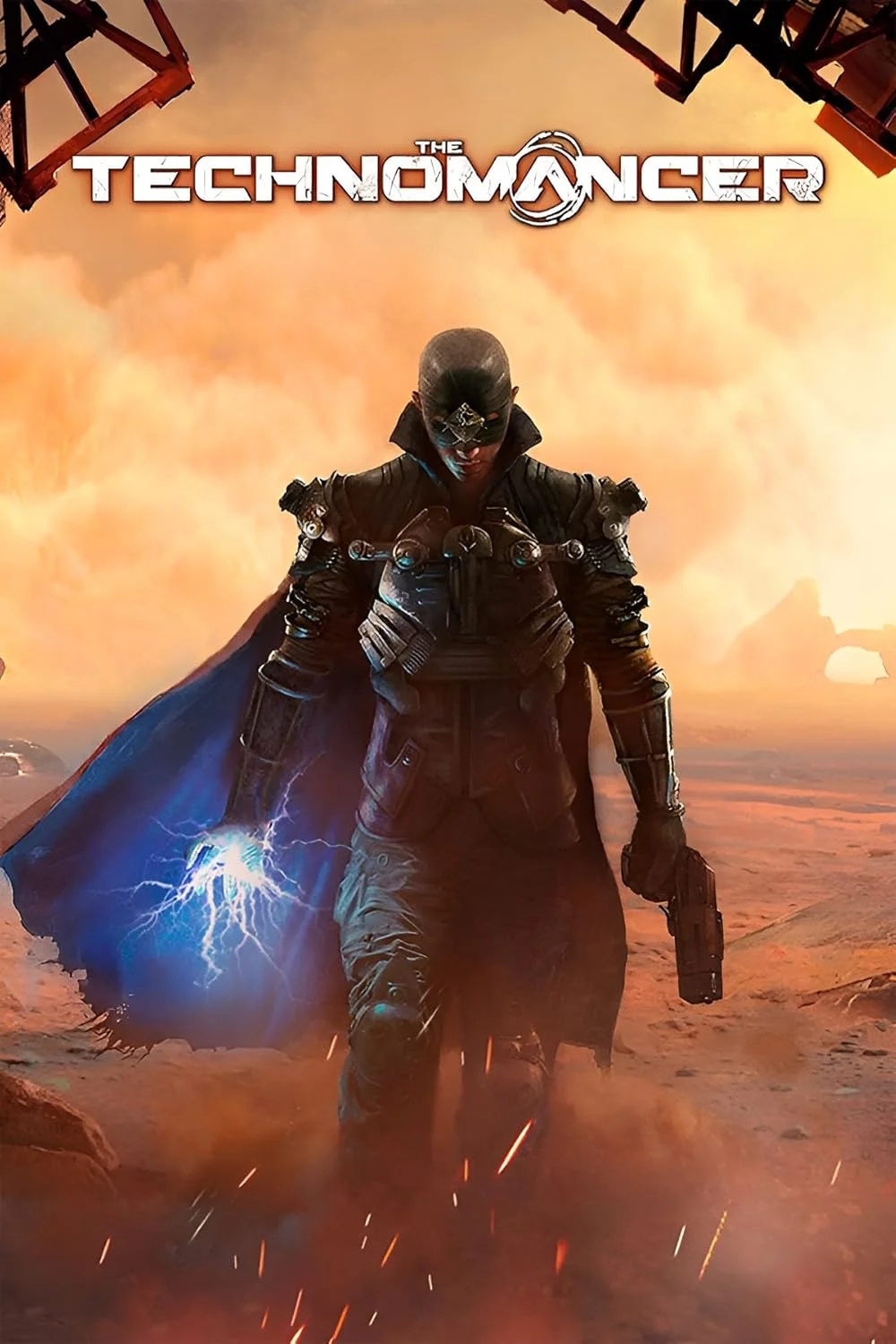
The Technomancer
This combination provides smooth gameplay with an average of 74 FPS, suitable for most gaming scenarios.
Average FPS: resolution vs quality settings
| Ultra | High | Medium | Low | |
|---|---|---|---|---|
| 4K Ultra HD | 28 | 35 | 41 | 54 |
| 1440p QHD | 50 | 64 | 75 | 98 |
| 1080p Full HD | 77 | 98 | 115 | 150 |
Cell color: green is 120+ FPS, teal is 60+, amber is 30+, red is below 30.
The Technomancer with Intel Core i5-14600KF + NVIDIA GeForce RTX 5050, In-Depth Analysis
Resolution Scaling
The measured frame rates for The Technomancer with the Intel Core i5-14600KF and NVIDIA GeForce RTX 5050 reveal a steep performance gradient as resolution climbs. At 1080p with Low settings, the combo produces 150 FPS, but dropping to 1440p Low yields 98 FPS, and 4K Low falls to 54 FPS. This represents a 64% reduction from 1080p to 4K at the lowest preset, which points directly at the GPU as the primary scaling bottleneck. The pattern is consistent across every settings tier: High settings go from 98 FPS at 1080p to 64 FPS at 1440p to 35 FPS at 4K, while Ultra settings fall from 77 FPS to 50 FPS to 28 FPS across the same resolution ladder.
The resolution scaling behavior indicates that the RTX 5050's 8 GB GDDR6 memory and 128-bit bus are being saturated well before the CPU becomes a limiting factor. The frame rate drop between 1080p and 1440p at High settings is 34 FPS, while the drop between 1440p and 4K at the same preset is 29 FPS. These are relatively similar absolute deltas, suggesting the GPU's rendering throughput is being consumed at a fairly linear rate as pixel count increases. However, the percentage loss is telling: moving from 1080p to 1440p costs roughly 35% of performance, while moving from 1440p to 4K costs another 45%. The larger relative loss at higher resolutions confirms that the GPU is running out of headroom, not the CPU.
At 4K, the Ultra preset produces only 28 FPS, which is effectively unplayable for an action RPG requiring responsive combat. Even the High preset at 4K, at 35 FPS, sits below the 40 FPS threshold that most players would consider minimally acceptable for this genre. The Medium preset at 4K, with an average of 41 FPS and a minimum of 35 FPS, edges closer to playability but still exhibits frame dips that could affect gameplay. The data strongly suggests that 4K is beyond this combo's practical reach for The Technomancer, regardless of settings. The 1080p and 1440p results, by contrast, show much healthier scaling, with the 1440p Medium preset delivering 75 FPS average and the 1080p High preset hitting 98 FPS.
GPU Role
The RTX 5050's specifications directly explain the measured results. With 8 GB of GDDR6 memory on a 128-bit bus delivering 320.0 GB/s of bandwidth, the card is positioned as a mainstream 1080p/1440p solution. The GPU's boost clock of 2572 MHz and base clock of 2317 MHz, combined with 2560 shading units, produce a peak FP32 throughput of 13.17 TFLOPS. These figures place the card in the 66th percentile of all GPUs in the database, and its nearest rivals include the AMD Radeon RX 5600 XT, which trails by 1.6% in average benchmark score, and the AMD Radeon RX Vega M GL, which leads by 0.6%. The RTX 5050's average benchmark score of 21035 sits within a tight cluster around the 21000 mark, indicating that its raw compute capability is competitive with older mid-range parts.
In The Technomancer specifically, the GPU's memory configuration appears to be the limiting factor at higher resolutions. The game was released in 2016, during an era when 8 GB VRAM was considered ample, so the capacity itself is not the issue. Rather, the 320.0 GB/s bandwidth becomes strained when the render target grows to 4K, where the frame buffer demands more data per pixel. The measured FPS at 4K Medium (41 FPS average) versus 1440p Ultra (50 FPS) illustrates this: the Ultra preset at 1440p places heavier per-pixel demands than Medium at 4K, yet the 1440p result is higher. This suggests the game's Ultra settings include effects that are more bandwidth-intensive than the raw resolution increase alone, and the RTX 5050 handles the higher pixel count better when visual complexity is reduced.
The GPU's 32 ROPs and 80 TMUs provide the pixel and texture throughput needed for the game's art style, which relies on dense geometric detail and layered materials. The 82.30 GPixel/s pixel rate and 205.8 GTexel/s texture rate are adequate for 1080p and 1440p, as evidenced by the 150 FPS Low result at 1080p. However, the 4K Ultra result of 28 FPS indicates that the ROP count becomes a bottleneck when both resolution and shading complexity peak simultaneously. The PCIe 5.0 x8 interface, while newer than the game's 2016 release date, does not appear to introduce any measurable limitation, as the CPU is not the constraining factor in these results.
How This Combo Ranks
The combination of the Intel Core i5-14600KF and NVIDIA GeForce RTX 5050 ranks 1721 out of 2825 tested combos in The Technomancer. This places the pair in the bottom 39% of all tested systems, which is lower than the individual component percentiles might suggest. The CPU sits in the 90th percentile of all processors, while the GPU is in the 66th percentile, yet their combined ranking in this specific game falls well below either component's standalone standing. This discrepancy indicates that The Technomancer's performance profile is more sensitive to GPU limitations than CPU strength, and the RTX 5050's mid-range positioning drags the overall combo ranking down despite the i5-14600KF's high-end compute capabilities.
The rank of 1721 out of 2825 means that roughly 1100 tested combinations perform better in this game. This is not surprising given the GPU's modest standing relative to the database's full range of graphics cards. The RTX 5050's nearest rivals in average benchmark score — the AMD Radeon RX Vega M GL, AMD Radeon HD 8970M, AMD Radeon RX 5600 XT, and NVIDIA RTX A4000 Mobile — all fall within a narrow 1.6% band of the 5050's score. This clustering suggests that the GPU's real-world gaming performance is comparable to these parts, and any of them would likely produce similar rankings in The Technomancer. The CPU, by contrast, outperforms its nearest rivals by slim margins: the AMD Ryzen 9 7900 trails by 0.3%, the AMD Ryzen 7 PRO 5755G by 0.4%, and the Intel Core Ultra 5 245 by 0.8%, while the AMD Ryzen AI Max+ 388 leads by 0.8%.
The combination's rank reflects a system that is CPU-heavy and GPU-light relative to the rest of the database. For a game like The Technomancer, which relies on sustained frame delivery during combat, this imbalance means the measured FPS numbers are always GPU-bound. The 1721st position out of 2825 combos places the system in the lower-middle tier of tested configurations, and users seeking higher rankings in this specific title would need a more powerful GPU rather than a faster CPU. The i5-14600KF's 14 cores and 20 threads provide ample processing headroom, but that headroom goes unused when the GPU cannot feed frames fast enough.
Settings Recommendations
Based on the measured FPS rows, the optimal settings for this combo are Medium at 1440p or High at 1080p, depending on the user's resolution preference. The 1440p Medium preset delivers a 75 FPS average with a minimum of 64 FPS, providing a smooth experience that stays well above the 60 FPS target for most of the run. The 1080p High preset matches that 75 FPS average at 98 FPS, with no minimum recorded but an average that leaves substantial headroom. For users with 1080p displays, High is the clear choice: it achieves 98 FPS average, which is 23 FPS higher than Medium at the same resolution and only 52 FPS lower than Low. The jump from Low to High at 1080p costs 52 FPS (from 150 to 98), but the visual improvement from Low to High in a 2016 action RPG is substantial enough to justify the trade-off.
At 1440p, Medium is the best balance. The 75 FPS average is 11 FPS higher than High's 64 FPS, and the minimum of 64 FPS ensures that combat sequences with multiple enemies and particle effects remain fluid. Ultra at 1440p drops to 50 FPS average, which is playable but leaves little margin for demanding scenes. The 4K resolution is not recommended for this combo. Even at Low settings, the 54 FPS average is below the 60 FPS target, and the Medium preset's 41 FPS average with a 35 FPS minimum introduces noticeable stutter during fast-paced action. The 4K High (35 FPS) and Ultra (28 FPS) results are firmly in unplayable territory.
For users who prioritize higher resolutions over visual fidelity, 1440p Low at 98 FPS is the best option. This matches the 1080p High result exactly, meaning the user can trade resolution for settings and achieve identical frame rates. The 1080p Ultra preset at 77 FPS is also viable, offering higher visual quality than High at the cost of 21 FPS. Given that the game's Ultra preset likely includes enhanced shadows and post-processing that matter for atmosphere, users with 1080p panels may prefer Ultra over High if they can tolerate the lower frame rate. However, the 1440p Medium result of 75 FPS is the most balanced across resolution and quality, making it the recommended configuration for this hardware pairing.
Measured FPS Breakdown
At 1920x1080, the RTX 5050 and i5-14600KF produce a wide spread of results across settings. Low settings yield 150 FPS average, which represents the ceiling for this combo at 1080p. Medium settings drop to 115 FPS average, with a minimum of 98 FPS and a maximum of 132 FPS. High settings produce 98 FPS average, and Ultra settings yield 77 FPS average. The progression from Low to Ultra at 1080p shows a 73 FPS difference between the extremes, with each step up in quality costing between 21 and 35 FPS. The Medium preset's minimum of 98 FPS is identical to the High average, indicating that even the worst-case frame dips at Medium remain at playable levels.
At 2560x1440, the results compress noticeably. Low settings produce 98 FPS average, which exactly matches the 1080p High result. Medium settings deliver 75 FPS average, with a minimum of 64 FPS and a maximum of 87 FPS. High settings drop to 64 FPS average, and Ultra falls to 50 FPS. The delta between Low and Ultra at 1440p is 48 FPS, compared to 73 FPS at 1080p, showing that the GPU's performance ceiling is being reached at this resolution. The Medium preset's minimum of 64 FPS is important: it means that even in the most demanding moments, the frame rate stays above the 60 FPS threshold, making Medium the only 1440p preset that guarantees a smooth experience.
At 3840x2160, the results are uniformly low. Low settings produce 54 FPS average, Medium delivers 41 FPS average with a minimum of 35 FPS and a maximum of 48 FPS, High yields 35 FPS, and Ultra drops to 28 FPS. The gap between Low and Ultra at 4K is only 26 FPS, demonstrating that the GPU is severely constrained at this resolution regardless of settings. The Medium preset's minimum of 35 FPS is the only recorded minimum at 4K, and it highlights the frame pacing issues that occur when the GPU is overburdened. Even the Low preset's 54 FPS average falls short of 60 FPS, confirming that 4K is not a viable target for this combo in The Technomancer.
CPU Role
The Intel Core i5-14600KF provides far more processing capability than The Technomancer can utilize in this configuration. With 14 cores and 20 threads, a base clock of 3.50 GHz and a boost clock of 5.30 GHz, the CPU is positioned in the 90th percentile of all processors. Its Cinebench R23 multi-core score of 32544 and single-core score of 4594 demonstrate strong performance across both threaded and single-threaded workloads. The PassMark multi-thread score of 38697 and single-thread score of 4273 further confirm the CPU's capability. The nearest CPU rivals — the AMD Ryzen 9 7900, AMD Ryzen 7 PRO 5755G, Intel Core Ultra 5 245, and AMD Ryzen AI Max+ 388 — all fall within 0.8% of the i5-14600KF's average benchmark score of 49394, placing this processor at the top of a tightly competitive group.
In The Technomancer, the CPU's role is secondary to the GPU, as evidenced by the resolution scaling data. At 1080p Low, the combo achieves 150 FPS, which is likely near the CPU's frame delivery limit for this game, but the fact that FPS drops consistently with resolution increases indicates the GPU becomes the bottleneck immediately. The CPU's 24 MB of shared L3 cache and 2 MB per-core L2 cache help maintain consistent frame times, particularly in open-world sections where asset streaming is frequent. The 125 W TDP and dual-channel DDR4/DDR5 memory support provide adequate bandwidth for the game's data structures, though the exact memory configuration was not specified in the measured data.
The i5-14600KF's boost clock of 5.30 GHz is particularly relevant for a game from 2016, which likely relies on single-threaded performance for game logic and AI. The single-core Cinebench R23 score of 4594 is strong enough to handle the game's simulation overhead without becoming a limiting factor. The PassMark physics score of 2449 and floating-point math score of 93048 suggest the CPU can process the game's physics calculations and particle effects without strain. However, the measured FPS data shows no scenario where the CPU appears to bottleneck: even at 1080p Low, the 150 FPS result is more likely capped by the GPU's pixel fill rate than by CPU processing limits. For users upgrading from an older CPU, the i5-14600KF would eliminate any potential CPU-side constraints, but in this pairing, the RTX 5050 remains the definitive performance limiter.
Hardware Specifications
Intel Core i5-14600KF
NVIDIA GeForce RTX 5050
FPS Benchmarks by Resolution & Settings
Performance data for Intel Core i5-14600KF + NVIDIA GeForce RTX 5050 in The Technomancer
| Resolution | Settings | Avg FPS |
|---|---|---|
| 3840x2160 | Low | 54.0 |
| 3840x2160 | Medium | 41.0 |
| 3840x2160 | High | 35.0 |
| 3840x2160 | Ultra | 28.0 |
| 2560x1440 | Low | 98.0 |
| 2560x1440 | Medium | 75.0 |
| 2560x1440 | High | 64.0 |
| 2560x1440 | Ultra | 50.0 |
| 1920x1080 | Low | 150.0 |
| 1920x1080 | Medium | 115.0 |
| 1920x1080 | High | 98.0 |
| 1920x1080 | Ultra | 77.0 |
The Technomancer with ii5-14600KF + Other GPUs
See how The Technomancer performs with the same CPU but different graphics cards.
The Technomancer with RTX 5050 + Other CPUs
See how The Technomancer performs with the same GPU but different processors.
Other Games with ii5-14600KF + RTX 5050
Explore FPS benchmarks for other games using this same hardware combination.