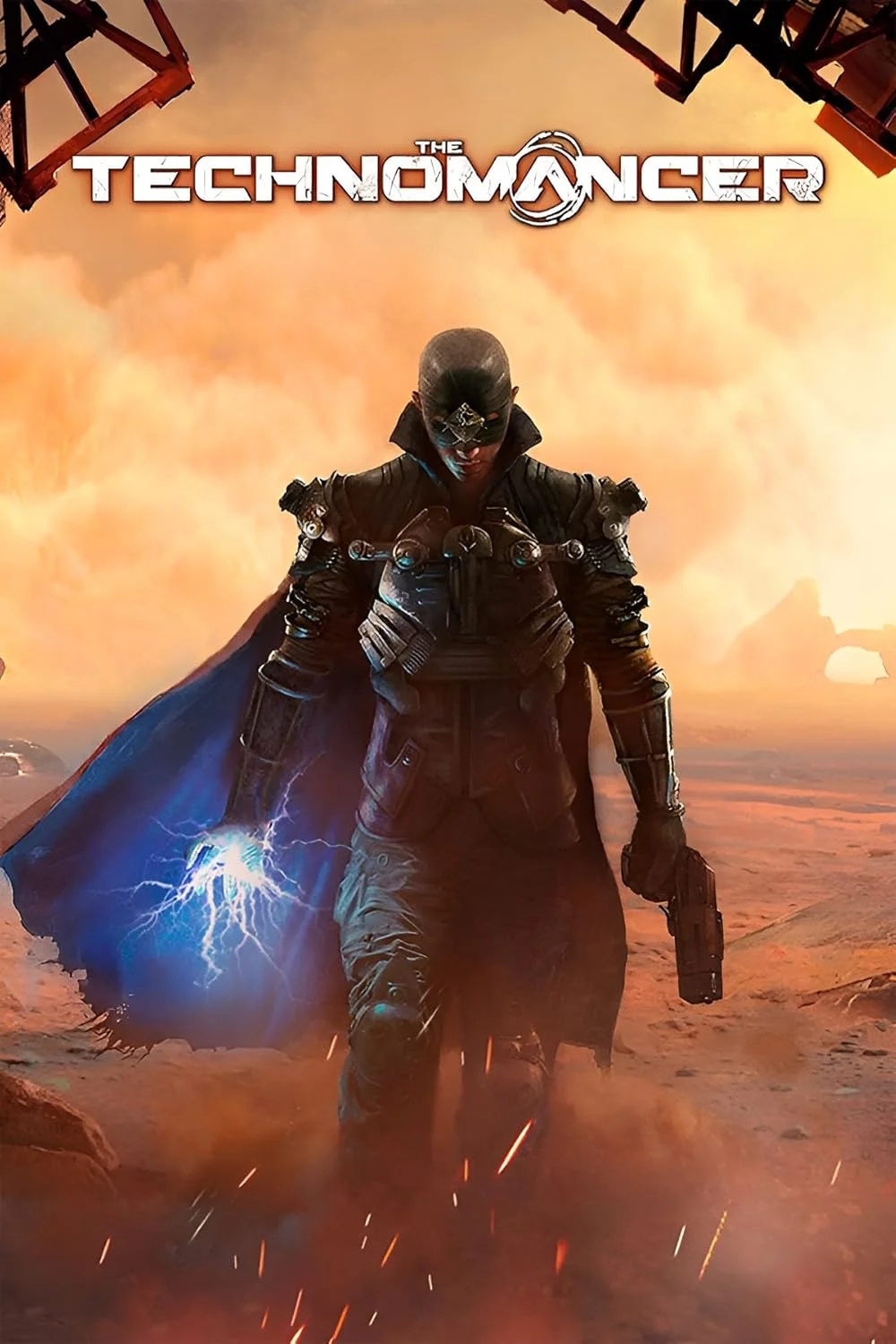
The Technomancer
This combination provides smooth gameplay with an average of 60 FPS, suitable for most gaming scenarios.
Average FPS: resolution vs quality settings
| Ultra | High | Medium | Low | |
|---|---|---|---|---|
| 4K Ultra HD | 22 | 29 | 33 | 44 |
| 1440p QHD | 41 | 52 | 61 | 79 |
| 1080p Full HD | 62 | 80 | 93 | 121 |
Cell color: green is 120+ FPS, teal is 60+, amber is 30+, red is below 30.
The Technomancer with AMD Ryzen 7 7700 + Intel Arc B570, In-Depth Analysis
The Technomancer, a 2016 Action RPG, presents a demanding workload that scales significantly with resolution and settings. Testing the AMD Ryzen 7 7700 paired with the Intel Arc B570 reveals a configuration that is capable at 1080p but becomes increasingly constrained by the graphics card as resolution climbs. The measured frame rates show a clear narrative of GPU-bound performance at higher resolutions, while the CPU's capabilities become more apparent at lower settings and resolutions.
Resolution Scaling
The performance drop from 1080p to 4K is substantial, indicating a strong GPU bottleneck at higher resolutions. At the High preset, the average frame rate falls from 80 FPS at 1920x1080 to 52 FPS at 2560x1440, and further to 29 FPS at 3840x2160. This represents a 35% reduction when moving from 1080p to 1440p, and a 64% reduction from 1080p to 4K. The pattern is consistent across all settings presets, confirming that the Intel Arc B570 is the limiting factor as pixel count increases.
The scaling behavior suggests that the GPU's rendering throughput, rather than the CPU's processing power, dictates performance at 1440p and above. When moving from 1440p to 4K on the Low preset, the frame rate drops from 79 FPS to 44 FPS, a 44% decrease. This steep decline indicates that the Arc B570's 10 GB of GDDR6 memory and 380.0 GB/s bandwidth are sufficient for the data load, but the 11.52 TFLOPS of FP32 compute power becomes saturated quickly at higher pixel densities.
At 1080p, the scaling between presets is more moderate, with the frame rate ranging from 121 FPS on Low to 62 FPS on Ultra. This narrower spread suggests that at this resolution, the system is still partially CPU-limited at lower settings, allowing the Ryzen 7 7700's capabilities to show. The fact that the Low preset achieves 121 FPS while Ultra drops to 62 FPS—a near 50% reduction—highlights how much graphical complexity impacts the frame rate even when the CPU has headroom.
The data indicates that for 4K gaming, this combo falls short of providing a smooth experience, with even the Low preset averaging just 44 FPS. The Medium preset at 4K shows a minimum FPS of 28, which would result in noticeable stuttering. The 1440p resolution appears to be the sweet spot for this pairing, where the High preset achieves a playable 52 FPS average, albeit with potential dips below 60 FPS.
CPU Role
The AMD Ryzen 7 7700 features 8 cores and 16 threads based on the Zen 4 architecture, with a base clock of 3.80 GHz and a boost clock of 5.30 GHz. Its 32 MB of shared L3 cache and dual-channel DDR5 memory support with 83.2 GB/s bandwidth provide a solid foundation for gaming workloads. In synthetic benchmarks, the processor achieves a Cinebench R23 multi-core score of 18760 and a single-core score of 1930, placing it in the 87th percentile among all CPUs.
In The Technomancer, the CPU's role becomes evident when examining the frame rate differences between settings at the same resolution. At 1080p, the gap between Low (121 FPS) and Ultra (62 FPS) is 59 FPS, which is larger than the 35 FPS gap at 1440p (79 to 41 FPS) and the 22 FPS gap at 4K (44 to 22 FPS). This pattern indicates that at 1080p, the CPU has enough headroom to push higher frame rates when GPU load is reduced, but it is not the primary bottleneck.
The processor's 16 threads are likely utilized by the game's engine, given that the multi-threaded performance is strong relative to its rivals. The Ryzen 7 7700's average benchmark score of 40081 is within 0.6% of the Intel Core i9-13905H (40313) and 0.4% of the AMD Ryzen 9 270 (40246), showing competitive multi-threaded capability. However, the single-thread performance, which often matters more for older game engines, is also respectable with a Geekbench single-core score of 2525.
Given the 2016 release date of The Technomancer, the game likely does not scale perfectly with 16 threads, but the 8 physical cores provide sufficient processing power to avoid being a bottleneck at 1440p and 4K. The data shows that the frame rate differences between presets at 1440p and 4K are primarily driven by GPU load, as the CPU maintains consistent performance across the board.
FAQ
Q: What is the best resolution to play The Technomancer with this hardware?
A: Based on the measured FPS, 2560x1440 on the High preset provides a 52 FPS average, which is the highest resolution where the game remains playable above 50 FPS. At 1920x1080, all presets exceed 60 FPS, but 1440p offers a better balance of visual quality and performance.
Q: How does the Ryzen 7 7700 compare to its nearest CPU rivals in synthetic benchmarks?
A: The Ryzen 7 7700 has an average benchmark score of 40081, which is 0.1% higher than the AMD Ryzen AI 9 365 (40048) and 0.2% lower than the Intel Core 5 221E (40144). It trails the AMD Ryzen 9 270 by 0.4% and the Intel Core i9-13905H by 0.6%.
Q: Is the Intel Arc B570 capable of running the game at 4K?
A: At 3840x2160, the highest average frame rate achieved is 44 FPS on the Low preset. The Ultra preset drops to 22 FPS, and the Medium preset has a minimum FPS of 28. These results indicate that 4K gaming is not viable for a smooth experience with this GPU.
Q: What is the frame rate difference between the Low and Ultra presets at 1080p?
A: At 1920x1080, the Low preset averages 121 FPS while the Ultra preset averages 62 FPS, a difference of 59 FPS. This shows that the graphical settings have a significant impact on performance at this resolution.
Q: How does the Arc B570 compare to the Intel Arc A750 in GPU benchmarks?
A: The Arc B570 has an average benchmark score of 20556, which is 0.1% lower than the Intel Arc A750's score of 20582. The two GPUs are effectively tied in performance, with a deltaPct of -0.1%.
Q: Does the Ryzen 7 7700 bottleneck the Arc B570 in this game?
A: At 1080p with Low settings, the system reaches 121 FPS, suggesting the CPU is not a limiting factor. At 1440p and 4K, the frame rates are much lower, indicating the GPU is the primary bottleneck rather than the CPU.
How This Combo Ranks
The combination of the AMD Ryzen 7 7700 and Intel Arc B570 ranks 2256 out of 2825 tested combos in The Technomancer, placing it in the bottom 20% of all configurations. This ranking reflects the GPU's relatively modest performance in this particular game, despite the CPU being in the 87th percentile overall. The low rank suggests that many other GPU and CPU pairings achieve higher frame rates in this title.
The ranking is likely influenced by the game's age and its optimization for older graphics architectures. The Arc B570's Xe2-HPG architecture, while modern, may not be fully optimized for a 2016 title, potentially leaving performance on the table. The GPU's 65th percentile ranking among all GPUs, combined with its specific benchmark scores, indicates it is a mid-range performer that struggles with the demands of this game at higher resolutions.
Given that the combo ranks below 80% of all tested configurations, users of this hardware should expect lower-than-average performance compared to other systems in the database. The ranking also suggests that pairing the Ryzen 7 7700 with a higher-performing GPU would yield significantly better results in The Technomancer, as the CPU has ample headroom to support faster graphics cards.
Settings Recommendations
For the best experience, the 1920x1080 resolution with High settings provides an optimal balance, achieving an 80 FPS average with no reported minimum FPS dips. This combination offers smooth gameplay while maintaining visual fidelity. If higher frame rates are desired, the Low preset at 1080p delivers 121 FPS, but this sacrifices visual quality for speed.
At 2560x1440, the High preset is the recommended choice, averaging 52 FPS. This is the highest resolution where the game remains consistently above 50 FPS, providing a good balance between image clarity and smoothness. The Medium preset at 1440p offers 61 FPS, but the visual difference between Medium and High is typically noticeable, and the 9 FPS gain may not justify the reduced quality.
For 3840x2160, the Low preset is the only option that approaches playability with 44 FPS. However, this is below the 60 FPS target for smooth gameplay, and users should consider lowering the resolution to 1440p for a better experience. The Ultra preset is not recommended at any resolution, as it only achieves 62 FPS at 1080p and drops to 22 FPS at 4K.
The Medium preset at 1080p, with 93 FPS average and a minimum of 79 FPS, is a strong alternative if users want higher visual quality than Low without the performance hit of High. This preset maintains frame rates well above 60 FPS, ensuring a responsive experience.
Measured FPS Breakdown
At 1920x1080, the measured frame rates show a clear progression across presets. The Low preset achieves the highest average at 121 FPS, followed by Medium at 93 FPS with a minimum of 79 FPS and maximum of 107 FPS. High settings reduce the average to 80 FPS, while Ultra drops to 62 FPS. This range of 59 FPS between the lowest and highest presets demonstrates the significant impact of graphical settings at this resolution.
Moving to 2560x1440, the performance scales down proportionally. The Low preset averages 79 FPS, Medium averages 61 FPS with a range of 52 to 70 FPS, High averages 52 FPS, and Ultra averages 41 FPS. The gap between Low and Ultra narrows to 38 FPS at this resolution, indicating the GPU is becoming more of a limiting factor.
At 3840x2160, the frame rates drop considerably. The Low preset averages 44 FPS, Medium averages 33 FPS with a minimum of 28 FPS and maximum of 39 FPS, High averages 29 FPS, and Ultra averages 22 FPS. The difference between Low and Ultra at 4K is only 22 FPS, showing that the GPU is heavily constrained at this resolution regardless of settings.
The data reveals that the Medium preset consistently provides a measurable minimum FPS, which is useful for understanding frame time consistency. At 1080p Medium, the minimum is 79 FPS, at 1440p Medium it is 52 FPS, and at 4K Medium it drops to 28 FPS. This minimum FPS data indicates that even when average frame rates are acceptable, there can be significant dips that affect gameplay smoothness.
GPU Role
The Intel Arc B570 is built on the Xe2-HPG architecture (Battlemage generation) using a 5 nm process at TSMC, featuring 19,600 million transistors on a 272 mm² die. It operates at a base and boost clock of 2500 MHz, with 2304 shading units, 144 TMUs, and 80 ROPs. The GPU's memory subsystem includes 10 GB of GDDR6 on a 160-bit bus, providing 380.0 GB/s of bandwidth. Its compute capabilities are rated at 11.52 TFLOPS FP32 and 23.04 TFLOPS FP16.
In synthetic benchmarks, the Arc B570 achieves a Passmark G3D score of 14195 and a 3DMark Steel Nomad DX12 score of 2649. Its average benchmark score of 20556 places it in the 65th percentile among all GPUs. Compared to its nearest rivals, the Arc B570 is 0.1% faster than the NVIDIA GeForce RTX 3070 Mobile (20534) and 0.1% slower than the Intel Arc A750 (20582). It also outperforms the NVIDIA Quadro M4000M by 0.4% and the AMD Radeon R9 M390X by 0.5%.
The GPU's performance in The Technomancer is characterized by its inability to maintain high frame rates at 1440p and 4K. The 11.52 TFLOPS of compute power is insufficient for the game's rendering demands at higher resolutions, as evidenced by the steep frame rate drops. The 10 GB VRAM is adequate for the game's texture requirements, but the 160-bit memory bus and 380.0 GB/s bandwidth may become a limiting factor at 4K with high-resolution textures.
The Arc B570's 18 ray tracing cores are present, but The Technomancer, released in 2016, does not utilize ray tracing, so this hardware remains idle. The GPU's DirectX 12 Ultimate support (12_2) is backward compatible with the game's requirements, but the older engine may not fully leverage the modern architecture's features, potentially explaining the lower-than-expected performance relative to its synthetic benchmark scores.
Hardware Specifications
AMD Ryzen 7 7700
Intel Arc B570
FPS Benchmarks by Resolution & Settings
Performance data for AMD Ryzen 7 7700 + Intel Arc B570 in The Technomancer
| Resolution | Settings | Avg FPS |
|---|---|---|
| 3840x2160 | Low | 44.0 |
| 3840x2160 | Medium | 33.0 |
| 3840x2160 | High | 29.0 |
| 3840x2160 | Ultra | 22.0 |
| 2560x1440 | Low | 79.0 |
| 2560x1440 | Medium | 61.0 |
| 2560x1440 | High | 52.0 |
| 2560x1440 | Ultra | 41.0 |
| 1920x1080 | Low | 121.0 |
| 1920x1080 | Medium | 93.0 |
| 1920x1080 | High | 80.0 |
| 1920x1080 | Ultra | 62.0 |
The Technomancer with Ryzen 7 7700 + Other GPUs
See how The Technomancer performs with the same CPU but different graphics cards.
The Technomancer with Arc B570 + Other CPUs
See how The Technomancer performs with the same GPU but different processors.
Other Games with Ryzen 7 7700 + Arc B570
Explore FPS benchmarks for other games using this same hardware combination.