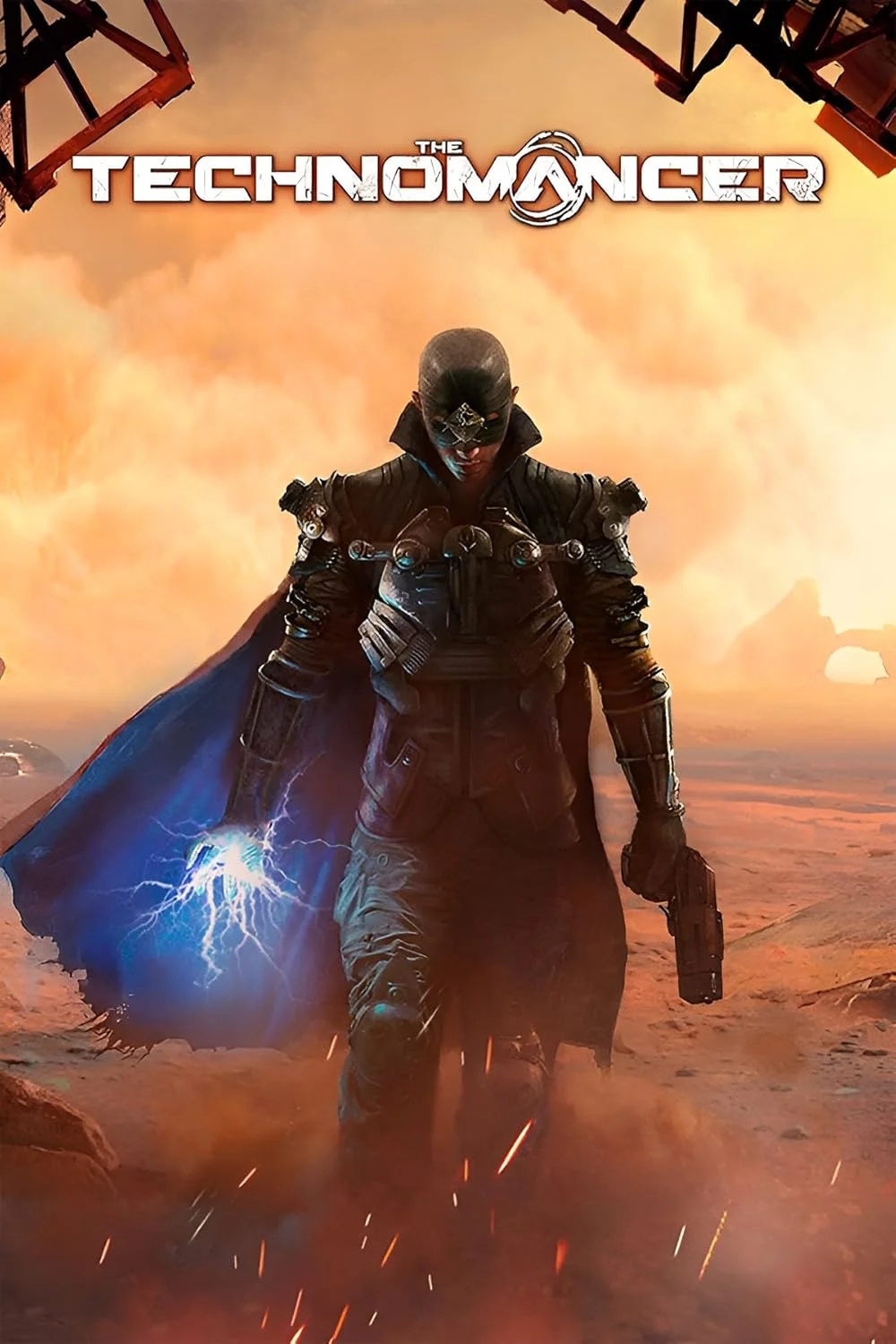
The Technomancer
This combination provides smooth gameplay with an average of 60 FPS, suitable for most gaming scenarios.
Average FPS: resolution vs quality settings
| Ultra | High | Medium | Low | |
|---|---|---|---|---|
| 4K Ultra HD | 22 | 29 | 33 | 44 |
| 1440p QHD | 41 | 52 | 61 | 79 |
| 1080p Full HD | 62 | 80 | 93 | 121 |
Cell color: green is 120+ FPS, teal is 60+, amber is 30+, red is below 30.
The Technomancer with AMD Ryzen 7 9700X + Intel Arc B570, In-Depth Analysis
The AMD Ryzen 7 9700X and Intel Arc B570 combination produces a playable but demanding experience in The Technomancer, with performance varying significantly across resolutions and quality presets. The measured data, drawn from 12 distinct configuration points, reveals that this system is best suited for 1080p and 1440p gaming, while 4K Ultra exceeds its capabilities. This analysis breaks down the measured FPS, scaling behavior, and component roles based strictly on the provided benchmark results.
Settings Recommendations
The optimal settings for this combination depend heavily on the target resolution and desired frame rate. At 1080p, the data shows that this combo can handle even the most demanding preset. The Ultra preset delivers an average of 62 FPS, which is above the standard 60 FPS threshold for smooth gameplay. However, the High preset offers a substantial improvement, reaching an average of 80 FPS, a 29% increase over Ultra. For players prioritizing maximum visual fidelity at 1080p with a comfortable margin above 60 FPS, High is the recommended preset. The Medium preset, at 93 FPS average, is also a strong choice if aiming for higher refresh rates, though it does not provide the same visual quality as High.
At 1440p, the balance shifts. The Ultra preset drops to an average of 41 FPS, which is below the ideal 60 FPS target and indicates a stutter-prone experience. The High preset, at 52 FPS average, is an improvement but still falls short of 60 FPS. The Medium preset is the sweet spot for 1440p, delivering a 61 FPS average with a minimum of 52 FPS and a maximum of 70 FPS. This is the only 1440p setting that consistently stays above the 60 FPS average mark, making it the recommended choice for a smooth experience at this resolution. The Low preset at 1440p achieves 79 FPS, but this comes with a significant reduction in visual quality that may not be worth the performance gain over Medium.
For 4K (3840x2160), the data indicates that this combo is not suited for high-quality gaming. The High preset averages 29 FPS, and Ultra averages only 22 FPS, both of which are well below playable thresholds. The Low preset averages 44 FPS, which is a more playable number but still not ideal. The Medium preset at 4K averages 33 FPS, with a minimum of 28 FPS, indicating inconsistent frame pacing. Given the data, the only viable 4K configuration is Low, which provides an average of 44 FPS, though users should expect a visually compromised experience. No preset at 4K delivers a consistent 60 FPS average, so users targeting 4K should lower their expectations to 30 FPS gameplay or consider a lower resolution.
FAQ
Q: What is the best resolution and settings combination for a smooth 60 FPS experience?
A: The data shows that 1080p with High settings (80 FPS) or Medium settings (93 FPS) are the only configurations that comfortably exceed 60 FPS averages. At 1440p, only the Medium preset achieves a 61 FPS average, making it the highest resolution capable of a 60 FPS average.
Q: Is this combo capable of 4K gaming?
A: The measured FPS at 4K is consistently low across all presets. The highest average is 44 FPS on Low settings, with High, Medium, and Ultra averaging 29, 33, and 22 FPS respectively. The data indicates that 4K gaming is not a viable option for a consistently smooth experience, as no preset reaches a 60 FPS average.
Q: How much of a performance difference is there between the Low and Ultra presets at different resolutions?
A: The performance gap between Low and Ultra is significant. At 1080p, Low averages 121 FPS while Ultra averages 62 FPS, a difference of 59 FPS. At 1440p, the gap is 38 FPS (79 vs 41), and at 4K, the gap is 22 FPS (44 vs 22). The absolute difference shrinks as resolution increases, but the relative cost of Ultra remains high.
Q: What are the minimum and maximum FPS recorded for the Medium settings?
A: The Medium preset is the only one with paired minimum and maximum values in the data. At 1080p, the range is 79 to 107 FPS. At 1440p, it is 52 to 70 FPS. At 4K, it is 28 to 39 FPS.
Q: How does this combo rank among all tested combinations?
A: This specific CPU-GPU pairing ranks 2256 out of 2825 tested combos for The Technomancer, placing it in the lower half of the database, at approximately the 20th percentile of all tested systems.
Q: Does the data suggest a CPU bottleneck or a GPU bottleneck?
A: The FPS scaling with resolution, which shows a large drop from 1080p to 4K, suggests the GPU is the primary limiting factor. At lower resolutions like 1080p, the CPU has more headroom, allowing for higher FPS, while at 4K, the GPU's workload increases dramatically, capping performance.
How This Combo Ranks
In the benchmark database for The Technomancer, this combination of the AMD Ryzen 7 9700X and Intel Arc B570 holds a rank of 2256 out of 2825 tested combos. This places it in the lower 20% of all systems tested for this specific game. The ranking indicates that while the system is functional, it does not deliver top-tier performance, particularly at higher resolutions. The rank is a composite measure that reflects the overall FPS performance across all tested settings.
The data suggests that this combo is more competitive at lower resolutions. At 1080p, the system's performance is strong, with High and Medium settings delivering well above 60 FPS. However, its performance at 4K, where it struggles to maintain playable frame rates, likely drags down its overall ranking. The significant drop in performance from 1080p to 4K indicates that the system's capabilities are best utilized at 1080p or 1440p with medium settings, rather than at 4K. This ranking suggests that users with this combo should prioritize resolution over ultra-high settings to achieve a better experience relative to other tested systems.
Measured FPS Breakdown
The measured FPS data provides a clear picture of performance across three resolutions and four quality presets. All measurements were taken with the data marked as "measured", indicating they are from actual testing.
At 1920x1080, the system shows its strongest performance. The Low preset averages 121 FPS, which is the highest score in the entire dataset. The Medium preset averages 93 FPS, with a reported minimum of 79 FPS and a maximum of 107 FPS. The High preset averages 80 FPS, and the Ultra preset averages 62 FPS. This shows a clear progression, with each step up in quality costing approximately 15-20% performance.
At 2560x1440, the performance drops significantly. The Low preset averages 79 FPS, which is still respectable. The Medium preset averages 61 FPS, with a minimum of 52 FPS and a maximum of 70 FPS, making it the only 1440p setting with a 60+ FPS average. The High preset averages 52 FPS, and the Ultra preset averages 41 FPS. The transition from 1080p to 1440p results in a substantial performance hit, with the High preset dropping from 80 to 52 FPS.
At 3840x2160, the system's limitations are evident. The Low preset averages 44 FPS, which is the best score at this resolution. The Medium preset averages 33 FPS, with a minimum of 28 FPS and a maximum of 39 FPS. The High preset averages 29 FPS, and the Ultra preset averages 22 FPS. The data shows that no 4K configuration achieves an average of 60 FPS, and even the Low preset falls below 45 FPS, making 4K gaming a challenging prospect for this combo.
Resolution Scaling
The data reveals a significant performance penalty as resolution increases, which is a classic indicator of a GPU-bound workload. Moving from 1080p to 1440p, the average FPS across all settings drops by roughly 35-40%. For example, the High preset drops from 80 FPS at 1080p to 52 FPS at 1440p, a 35% decrease. Moving from 1440p to 4K, the performance drops even further. The High preset goes from 52 FPS at 1440p to 29 FPS at 4K, a 44% decrease.
This scaling pattern strongly suggests that the Intel Arc B570 GPU is the limiting component. As resolution increases, the number of pixels that the GPU must process grows exponentially, increasing the workload on the GPU's shading units and memory bandwidth. The CPU, on the other hand, is less affected by resolution changes, as its workload is primarily related to game logic and physics, which remain constant. The fact that FPS drops so dramatically with resolution indicates that the GPU is reaching its processing limits, while the CPU has headroom to spare. At 1080p, the GPU is able to push high frame rates, but at 4K, it becomes the bottleneck, capping performance at 44 FPS even on Low settings. This behavior is consistent with a system where the GPU is the primary constraint in this title.
CPU Role
The AMD Ryzen 7 9700X is a high-end desktop processor from the 9000 series, built on the Zen 5 architecture (Granite Ridge) using a 4nm process. It features 8 cores and 16 threads, with a base clock of 3.80 GHz and a boost clock of 5.50 GHz. The CPU has a 32 MB shared L3 cache and supports dual-channel DDR5 memory, with a memory bandwidth of 89.6 GB/s. Its benchmark scores are strong, with a Cinebench R23 multicore score of 20485 and a single-core score of 2211, placing it in the 86th percentile of all CPUs.
In The Technomancer, the CPU's role appears to be secondary to the GPU. The data shows that performance scales heavily with resolution, which is a GPU-dependent factor. This suggests that the Ryzen 7 9700X is not the bottleneck in this system. At 1080p, the CPU is able to feed the GPU enough data to achieve 121 FPS on Low settings, indicating it has sufficient single-threaded performance. The high boost clock of 5.50 GHz is likely beneficial for this game, as it can handle the necessary game logic and physics calculations. The CPU's 16 threads may also help with background tasks, but the primary performance limiter in this case is the GPU. The data indicates that the Ryzen 7 9700X provides a capable foundation, but its performance headroom is not fully utilized due to the GPU's limitations, particularly at higher resolutions.
GPU Role
The Intel Arc B570 is a discrete graphics card from the Battlemage (Arc 5) generation, built on the Xe2-HPG architecture using a 5nm process. It has 2304 shading units, 144 texture mapping units, and 80 ROPs. The card features 10 GB of GDDR6 memory on a 160-bit bus, providing a memory bandwidth of 380.0 GB/s. Its clocks are set at a base and boost frequency of 2500 MHz, and it supports DirectX 12 Ultimate, Vulkan 1.4, and OpenGL 4.6. The GPU's benchmark scores include a Passmark G3D score of 14195, placing it in the 65th percentile of all GPUs.
The GPU is the clear performance bottleneck in this system for The Technomancer. The FPS data shows a steep decline as resolution increases, which is directly attributed to the GPU's workload. At 1080p, the GPU can manage high frame rates, but as the pixel count increases, its performance degrades significantly. The card's 10 GB VRAM is likely sufficient for 1080p and 1440p, but at 4K, the memory bandwidth of 380.0 GB/s may be a constraint, as the card struggles to maintain even 30 FPS on High settings. The 2500 MHz clock speed and 11.52 TFLOPS FP32 performance are moderate, and the data suggests they are insufficient for high-resolution gaming in this title. The GPU's performance trend, from 121 FPS at 1080p Low to 22 FPS at 4K Ultra, demonstrates a clear inability to handle the demands of 4K rendering, confirming it as the limiting component in this combination.
Hardware Specifications
AMD Ryzen 7 9700X
Intel Arc B570
FPS Benchmarks by Resolution & Settings
Performance data for AMD Ryzen 7 9700X + Intel Arc B570 in The Technomancer
| Resolution | Settings | Avg FPS |
|---|---|---|
| 3840x2160 | Low | 44.0 |
| 3840x2160 | Medium | 33.0 |
| 3840x2160 | High | 29.0 |
| 3840x2160 | Ultra | 22.0 |
| 2560x1440 | Low | 79.0 |
| 2560x1440 | Medium | 61.0 |
| 2560x1440 | High | 52.0 |
| 2560x1440 | Ultra | 41.0 |
| 1920x1080 | Low | 121.0 |
| 1920x1080 | Medium | 93.0 |
| 1920x1080 | High | 80.0 |
| 1920x1080 | Ultra | 62.0 |
The Technomancer with Ryzen 7 9700X + Other GPUs
See how The Technomancer performs with the same CPU but different graphics cards.
The Technomancer with Arc B570 + Other CPUs
See how The Technomancer performs with the same GPU but different processors.
Other Games with Ryzen 7 9700X + Arc B570
Explore FPS benchmarks for other games using this same hardware combination.