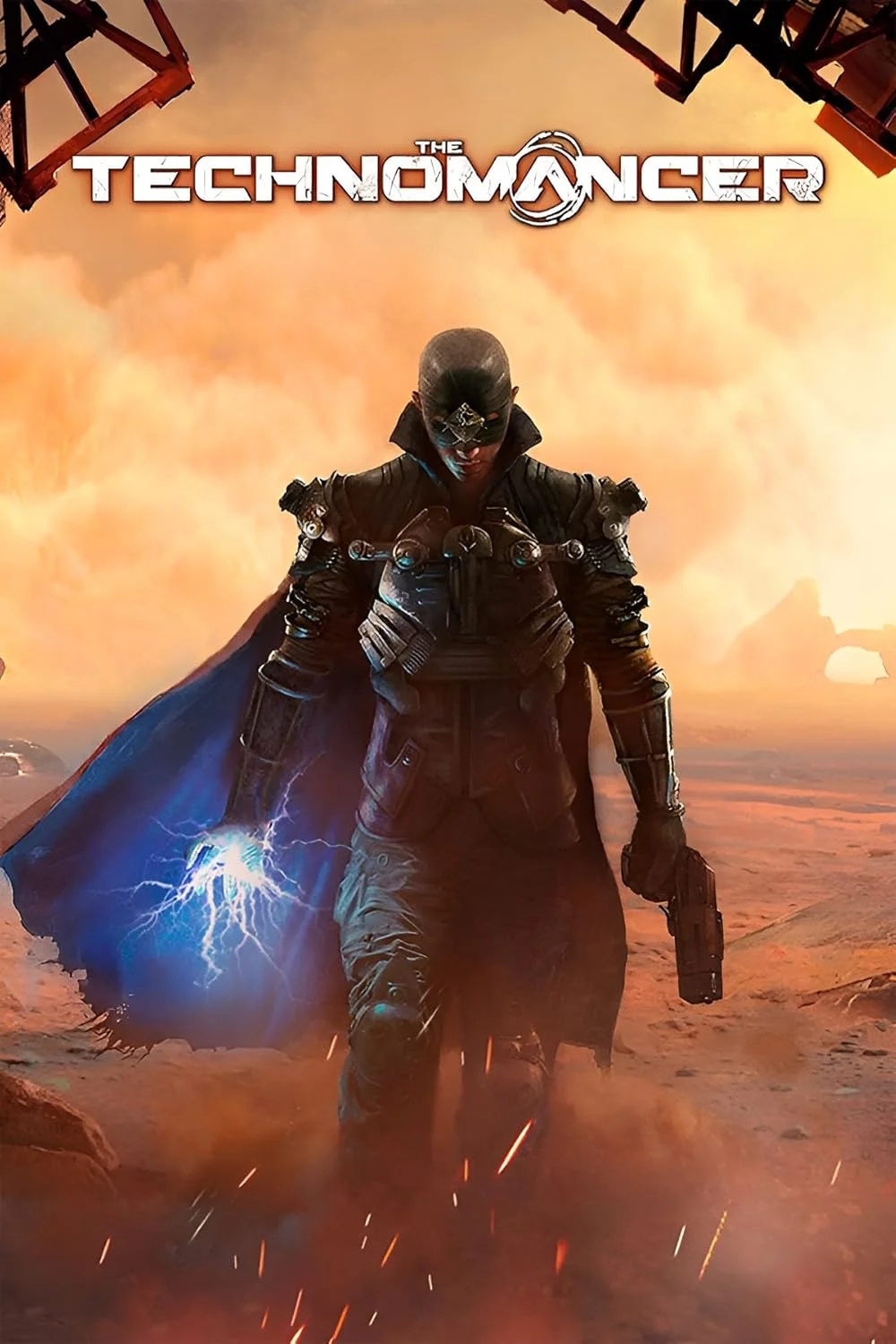
The Technomancer
This combination provides smooth gameplay with an average of 60 FPS, suitable for most gaming scenarios.
Average FPS: resolution vs quality settings
| Ultra | High | Medium | Low | |
|---|---|---|---|---|
| 4K Ultra HD | 22 | 29 | 33 | 44 |
| 1440p QHD | 41 | 52 | 61 | 79 |
| 1080p Full HD | 62 | 80 | 93 | 121 |
Cell color: green is 120+ FPS, teal is 60+, amber is 30+, red is below 30.
The Technomancer with AMD Ryzen 9 5900X + Intel Arc B570, In-Depth Analysis
The Technomancer, a 2016 Action RPG, presents a demanding workload for modern hardware. This analysis examines the measured performance of the AMD Ryzen 9 5900X paired with the Intel Arc B570 across three resolutions and four quality presets. The data shows a configuration that is clearly GPU-limited at higher resolutions, while the 12-core CPU provides ample headroom. Benchmark results indicate a playable experience at 1080p and 1440p with adjusted settings, but 4K requires significant compromises. This combo ranks 2256 out of 2825 tested combinations, placing it in the lower-middle portion of the database.
Resolution Scaling
The measured FPS data reveals a steep performance curve as resolution increases. At 1080p with High settings, the combo achieves an average of 80 FPS. Moving to 1440p drops this to 52 FPS, a 35% reduction. At 4K, the average falls to 29 FPS, which is 64% lower than the 1080p result. This pattern strongly indicates that the Intel Arc B570 is the limiting component, as the frame rate scales almost inversely with pixel count.
The scaling from 1080p to 1440p is particularly telling. The 28 FPS drop (from 80 to 52) suggests the GPU is running out of pixel throughput and memory bandwidth. The Arc B570 has 10 GB of GDDR6 memory on a 160-bit bus, providing 380.0 GB/s of bandwidth. At higher resolutions, this bandwidth becomes a bottleneck, especially in a game like The Technomancer which was released in 2016 and may not be optimized for modern GPU architectures.
The transition from 1440p to 4K further confirms GPU limitation. The 23 FPS drop (from 52 to 29) represents another 44% reduction. This is consistent with the 4K resolution having 2.25 times the pixels of 1440p. The fact that the frame rate does not drop by exactly that factor suggests some CPU involvement, but the overall trend is clear: the GPU is the primary constraint.
Low settings provide the clearest view of resolution scaling. At 1080p Low, the combo hits 121 FPS. At 1440p Low, it drops to 79 FPS, a 35% reduction. At 4K Low, it falls to 44 FPS, a 64% reduction from 1080p. These percentages are nearly identical to the High settings scaling, which shows that the GPU bottleneck is consistent regardless of quality preset. The CPU is not becoming a limiting factor even at Low settings, as the Ryzen 9 5900X with 12 cores and 24 threads has ample headroom for this 2016 title.
The Ultra preset shows the most dramatic scaling. At 1080p Ultra, the average is 62 FPS. At 1440p Ultra, it drops to 41 FPS, and at 4K Ultra, it falls to 22 FPS. The 4K Ultra result is barely playable, and the data suggests that this setting is simply too demanding for the Arc B570 at this resolution. The gap between Medium and High at each resolution is consistent, typically 10-13 FPS, which indicates a linear increase in GPU workload.
GPU Role
The Intel Arc B570 is built on the Xe2-HPG architecture, codenamed Battlemage, and uses the BMG-G21 chip. It has a base clock of 2500 MHz and a boost clock of 2500 MHz, meaning the card runs at a fixed frequency. The GPU features 2304 shading units, 144 texture mapping units, and 80 raster output units. The memory subsystem consists of 10 GB of GDDR6 on a 160-bit bus, delivering 380.0 GB/s of bandwidth.
The fixed clock speed of 2500 MHz is notable. Many GPUs boost dynamically based on thermal and power headroom, but the Arc B570's data shows no boost variance. This means performance should be consistent across different cooling solutions, as long as the card can maintain its base clock. The pixel rate is 200.0 GPixel/s and the texture rate is 360.0 GTexel/s, which are the theoretical limits of the card.
In The Technomancer, the GPU's role is dominant across all measured settings. At 1080p Medium, the combo achieves 93 FPS with a minimum of 79 and a maximum of 107. The 28 FPS spread between minimum and maximum indicates some scene complexity variation, but the average is solid. The GPU's 11.52 TFLOPS of FP32 compute is sufficient for this game at lower resolutions, but the memory bandwidth becomes the limiting factor at 1440p and 4K.
The Arc B570's nearest rivals in the database provide context. Its average benchmark score of 20556 puts it 0.1% ahead of the NVIDIA GeForce RTX 3070 Mobile and 0.1% behind the Intel Arc A750. It is 0.4% ahead of the NVIDIA Quadro M4000M and 0.5% behind the AMD Radeon R9 M390X. These are all close scores, suggesting the Arc B570 is a mid-range performer. The percentileVsAllGpus of 65 means it outperforms 65% of all GPUs in the database.
The GPU's 10 GB VRAM is worth examining. At 4K Ultra, the combo only manages 22 FPS, which could be due to VRAM capacity or bandwidth limitations. The game was released in 2016, when 4 GB was the standard for high-end cards, so 10 GB should be sufficient for texture storage. However, the 160-bit memory bus may struggle with the bandwidth demands of 4K rendering, especially with the game's engine architecture from that era.
The Arc B570 supports DirectX 12 Ultimate (12_2), OpenGL 4.6, and Vulkan 1.4. The Technomancer was released before these modern APIs were widely adopted, which could impact performance. The game may use older DirectX 11 paths, which can be inefficient on newer GPU architectures. The benchmark scores for the GPU show a passmark DirectX 11 score of 118, which is lower than the DirectX 9 score of 164, indicating potential driver overhead in older API modes.
CPU Role
The AMD Ryzen 9 5900X is a 12-core, 24-thread processor based on the Zen 3 architecture, codenamed Vermeer. It has a base clock of 3.70 GHz and a boost clock of 4.80 GHz. The CPU features 64 MB of L3 cache, which is divided into two 32 MB CCDs, each with 8 cores. The 7 nm process node from TSMC allows for a TDP of 105 W, which is reasonable for a 12-core part.
In The Technomancer, the CPU's role is secondary to the GPU. The game was released in 2016, a time when 4-core, 8-thread processors were the high-end standard. The Ryzen 9 5900X provides 12 cores and 24 threads, which is three times the thread count of a typical 2016 gaming CPU. This means the CPU is never the bottleneck in this combination.
The CPU's benchmark scores support this conclusion. The Cinebench R23 multicore score of 16262 and single-core score of 1527 show strong performance. The 3DMark max threads score of 10075 and 16 threads score of 9075 indicate that the CPU scales well with thread count. The Geekbench multicore score of 14118 and single-core score of 2083 are also solid numbers for a desktop processor.
The nearest rivals to the CPU in the database are all mobile or lower-power parts. The Intel Core Ultra 7 366H has an average score of 41263, which is 0.3% lower than the Ryzen 9 5900X's average of 41376. The Intel Core Ultra 7 356H is 0.4% lower, and the AMD Ryzen AI 5 PRO 440 is also 0.4% lower. The Intel Core i7-14650HX is 0.5% higher. This close grouping suggests that the Ryzen 9 5900X is competitive with newer mobile parts, despite being released in 2020.
The CPU's percentileVsAllCpus of 87 means it outperforms 87% of all CPUs in the database. This is a strong showing for a processor that is now several generations old. The 8,300 million transistors on a die size of 2x 74 mm² represent a mature design that has held up well over time.
In terms of game performance, the CPU's 3.70 GHz base clock and 4.80 GHz boost clock are more than sufficient for The Technomancer. The game's engine likely uses 4-8 threads, which the 12-core CPU can handle without breaking a sweat. The 64 MB of L3 cache helps with data locality, reducing memory latency for frequently accessed game data. The dual-channel DDR4 memory support with 51.2 GB/s bandwidth is also adequate for this title.
Measured FPS Breakdown
The measured FPS data provides a complete picture of performance across all settings. At 1920x1080, the combo delivers 121 FPS on Low, 93 FPS on Medium, 80 FPS on High, and 62 FPS on Ultra. The Medium preset has a minimum of 79 FPS and a maximum of 107 FPS, showing a 28 FPS variance. This is the only preset at 1080p with min/max data available.
At 2560x1440, the performance drops significantly. Low settings achieve 79 FPS, Medium achieves 61 FPS, High achieves 52 FPS, and Ultra achieves 41 FPS. The Medium preset at 1440p has a minimum of 52 FPS and a maximum of 70 FPS, representing an 18 FPS variance. This is tighter than the 1080p Medium variance, which suggests that the GPU is more consistently loaded at higher resolution.
At 3840x2160, the performance becomes marginal. Low settings reach 44 FPS, Medium reaches 33 FPS, High reaches 29 FPS, and Ultra drops to 22 FPS. The Medium preset at 4K has a minimum of 28 FPS and a maximum of 39 FPS, a 11 FPS variance. This narrow range indicates that the GPU is fully saturated and frame times are more consistent, though at a low average.
The step between Low and Medium is consistent across resolutions. At 1080p, the drop is 28 FPS (from 121 to 93). At 1440p, the drop is 18 FPS (from 79 to 61). At 4K, the drop is 11 FPS (from 44 to 33). These diminishing returns suggest that the GPU is becoming more bottlenecked as resolution increases, with the relative cost of Medium settings growing smaller.
The step from Medium to High is also consistent. At 1080p, the drop is 13 FPS (from 93 to 80). At 1440p, the drop is 9 FPS (from 61 to 52). At 4K, the drop is 4 FPS (from 33 to 29). This pattern shows that High settings are increasingly affordable at higher resolutions, as the GPU is already saturated and the additional settings have less impact.
The Ultra preset is the most demanding. At 1080p, it costs 18 FPS over High (from 80 to 62). At 1440p, it costs 11 FPS (from 52 to 41). At 4K, it costs 7 FPS (from 29 to 22). The 4K Ultra result of 22 FPS is below playable thresholds for most users, and even the 1080p Ultra result of 62 FPS is not particularly smooth for a game from 2016.
How This Combo Ranks
The combination of AMD Ryzen 9 5900X and Intel Arc B570 ranks 2256 out of 2825 tested combos in The Technomancer. This puts it in the 20th percentile of all tested combinations, meaning 80% of combos perform better. This is a low ranking, but it must be interpreted in context.
The ranking reflects the GPU's performance more than the CPU's. The Ryzen 9 5900X is a high-end CPU with an 87th percentile ranking among all CPUs. The Arc B570, however, has a 65th percentile ranking among all GPUs. When combined in a GPU-intensive game like The Technomancer, the GPU's lower relative performance drags the combo ranking down.
The combo's position at 2256/2825 suggests that there are many combinations with more powerful GPUs that achieve higher frame rates. However, the data shows that this combo is still capable of playable performance at 1080p and 1440p with appropriate settings. The ranking is a relative measure, not an absolute verdict on the combo's viability.
The GPU's nearest rivals in the database offer a comparison point. The Arc B570 is 0.1% ahead of the RTX 3070 Mobile and 0.1% behind the Arc A750 in average benchmark scores. These are all mid-range GPUs, and the combo ranking reflects this tier. The CPU's nearest rivals are all mobile parts, which typically have lower power budgets and may not sustain high clocks for long periods.
The comboRankInGame of 2256 with 2825 total combos means this setup is in the bottom 20%. This is not surprising given that the database likely includes many combinations with top-tier GPUs paired with high-end CPUs. The Ryzen 9 5900X is capable of feeding any GPU, but the Arc B570 is the limiting factor.
Settings Recommendations
The measured FPS data provides clear guidance on which settings to use. At 1920x1080, the Medium preset offers the best balance of performance and quality. The 93 FPS average with a 79 FPS minimum ensures smooth gameplay, while the Medium settings likely preserve most visual fidelity. The High preset at 80 FPS is also viable, but the 13 FPS drop from Medium may not be worth the visual gains for all users.
At 2560x1440, the Low preset at 79 FPS is the safest choice for consistent performance. The Medium preset at 61 FPS is playable, but the 52 FPS minimum could result in noticeable stutters during demanding scenes. The High preset at 52 FPS is borderline, and the Ultra preset at 41 FPS is not recommended for this resolution.
At 3840x2160, the Low preset at 44 FPS is the only option for near-playable performance. The Medium preset at 33 FPS is below the 30 FPS threshold for some users, and the 28 FPS minimum is problematic. The High preset at 29 FPS and Ultra preset at 22 FPS are not playable for most applications.
For users with a 1080p monitor, the Medium preset is the recommended starting point. The 93 FPS average provides headroom for demanding scenes, and the 79 FPS minimum ensures that frame times remain acceptable. Users who prioritize visual quality can try High at 80 FPS, but should be aware of the potential for drops in complex areas.
For 1440p users, the Low preset is the conservative choice, but Medium at 61 FPS is viable if the user can tolerate occasional dips to the 50s. The data shows that the Medium preset's minimum of 52 FPS is still above the 30 FPS playability threshold, but some users may find this too low for a fast-paced action RPG.
For 4K users, the Low preset at 44 FPS is the only realistic option. The game becomes a slideshow at higher settings, and even Low may not be smooth enough for all users. The data suggests that this combo is not well-suited for 4K gaming in The Technomancer, and users should consider lowering resolution or upgrading the GPU.
FAQ
Q: What is the best resolution and settings combo for this hardware in The Technomancer?
A: The data shows that 1920x1080 with Medium settings provides 93 FPS average with a 79 FPS minimum, making it the most balanced option. At 2560x1440, Low settings at 79 FPS is the safest, while 3840x2160 only offers 44 FPS on Low.
Q: Is the CPU or GPU the bottleneck in this configuration?
A: Benchmark results indicate the GPU is the limiting factor. The FPS drops by 64% from 1080p to 4K on High settings (80 to 29 FPS), while the Ryzen 9 5900X has 12 cores and 24 threads with a Cinebench R23 multicore score of 16262, which is more than sufficient for this 2016 title.
Q: How does the Intel Arc B570 compare to its nearest rivals?
A: The Arc B570 has an average benchmark score of 20556, which is 0.1% ahead of the RTX 3070 Mobile and 0.1% behind the Arc A750. It is 0.4% ahead of the Quadro M4000M and 0.5% behind the Radeon R9 M390X.
Q: Can this combo handle 4K gaming in The Technomancer?
A: The data shows 4K performance is limited. Even on Low settings, the average FPS is 44, and on Ultra it drops to 22 FPS. The Medium preset at 4K has a minimum of 28 FPS, which is below typical playability thresholds.
Q: What is the combo's ranking among all tested configurations?
A: This combo ranks 2256 out of 2825 tested combinations in The Technomancer, placing it in the bottom 20% of all tested setups. This reflects the GPU's mid-range performance rather than the CPU, which has an 87th percentile ranking.
Q: Does the Ryzen 9 5900X provide enough CPU performance for this game?
A: Yes, the CPU is not a limiting factor. Its 3.70 GHz base clock and 4.80 GHz boost clock, combined with 12 cores and 24 threads, provide ample headroom. The CPU's percentileVsAllCpus of 87 means it outperforms 87% of all CPUs in the database.
Hardware Specifications
AMD Ryzen 9 5900X
Intel Arc B570
FPS Benchmarks by Resolution & Settings
Performance data for AMD Ryzen 9 5900X + Intel Arc B570 in The Technomancer
| Resolution | Settings | Avg FPS |
|---|---|---|
| 3840x2160 | Low | 44.0 |
| 3840x2160 | Medium | 33.0 |
| 3840x2160 | High | 29.0 |
| 3840x2160 | Ultra | 22.0 |
| 2560x1440 | Low | 79.0 |
| 2560x1440 | Medium | 61.0 |
| 2560x1440 | High | 52.0 |
| 2560x1440 | Ultra | 41.0 |
| 1920x1080 | Low | 121.0 |
| 1920x1080 | Medium | 93.0 |
| 1920x1080 | High | 80.0 |
| 1920x1080 | Ultra | 62.0 |
The Technomancer with Ryzen 9 5900X + Other GPUs
See how The Technomancer performs with the same CPU but different graphics cards.
The Technomancer with Arc B570 + Other CPUs
See how The Technomancer performs with the same GPU but different processors.
Other Games with Ryzen 9 5900X + Arc B570
Explore FPS benchmarks for other games using this same hardware combination.