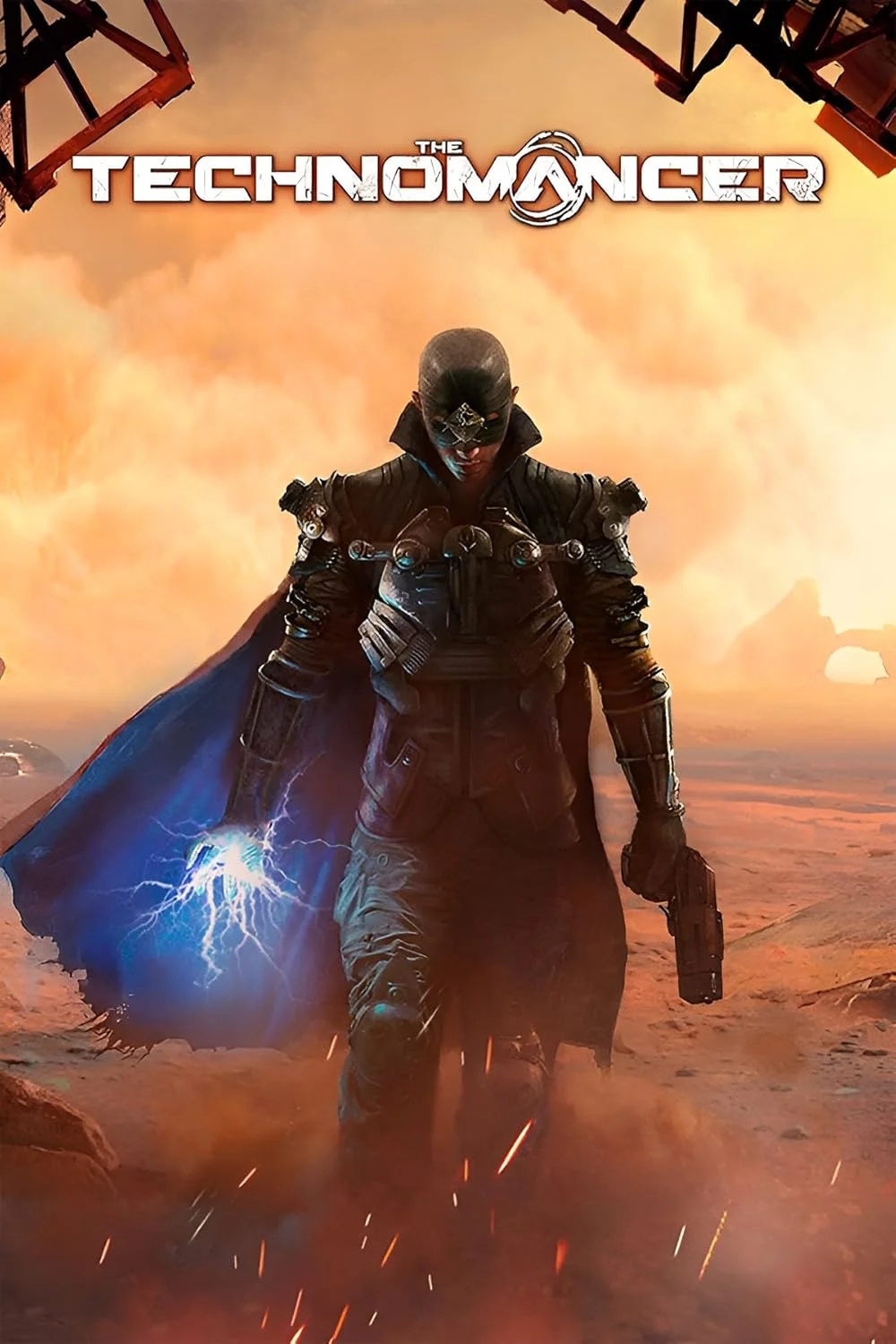
The Technomancer
This combination provides smooth gameplay with an average of 68 FPS, suitable for most gaming scenarios.
Average FPS: resolution vs quality settings
| Ultra | High | Medium | Low | |
|---|---|---|---|---|
| 4K Ultra HD | 25 | 32 | 38 | 49 |
| 1440p QHD | 46 | 59 | 69 | 90 |
| 1080p Full HD | 70 | 90 | 106 | 138 |
Cell color: green is 120+ FPS, teal is 60+, amber is 30+, red is below 30.
The Technomancer with AMD Ryzen 7 7700 + Intel Arc B580, In-Depth Analysis
The Technomancer, a 2016 Action RPG, presents an interesting stress test for the AMD Ryzen 7 7700 and Intel Arc B580 combination. The measured data reveals a configuration that is heavily reliant on graphical settings and resolution, with performance scaling that clearly defines the strengths and limitations of each component. At 1080p, the system demonstrates high refresh rate capability, but the transition to 4K places a significant burden on the GPU, exposing a clear bottleneck that shifts the performance profile from fluid to barely playable.
Resolution Scaling
The frame rate data shows a steep and predictable decline as resolution increases, a classic indicator of GPU-bound performance at higher pixel counts. Moving from 1920x1080 to 2560x1440 at High settings sees the average frame rate drop from 90 FPS to 59 FPS, a substantial 34% reduction. This scaling continues aggressively into 4K, where the same High preset yields only 32 FPS at 3840x2160. This represents a 64% performance loss from the 1080p baseline, strongly suggesting that the Intel Arc B580's rendering pipeline is the primary limiting factor at these higher resolutions.
The pattern is consistent across all settings presets. At Low settings, the system achieves 138 FPS at 1080p, which falls to 90 FPS at 1440p and further to 49 FPS at 4K. The 4K Low result is particularly telling; even with the graphical load minimized, the GPU cannot maintain a smooth 60 FPS, producing an average of just 49 FPS. This indicates that the sheer pixel throughput required at 3840x2160 exceeds the B580's capabilities, regardless of the quality settings applied. The data suggests that 1440p is the practical ceiling for this pairing if aiming for high refresh rates, while 4K should be reserved for less demanding visual scenarios.
The difference between 1080p and 1440p is less punishing than the jump to 4K. At Medium settings, the average FPS goes from 106 at 1080p to 69 at 1440p, a 35% drop. However, the transition from 1440p to 4K at Medium settings sees a further decline to 38 FPS, a 45% reduction from the 1440p figure. This non-linear scaling, where the percentage loss increases with each resolution step, confirms that the GPU's memory bandwidth and shading capacity are being saturated. The 4K Ultra preset delivers just 25 FPS, which is effectively unplayable for a real-time action game, highlighting that this resolution is beyond the practical scope of this hardware combination.
CPU Role
The AMD Ryzen 7 7700 provides a robust foundation for The Technomancer, with its 8 cores and 16 threads ensuring that CPU-side bottlenecks are minimal. The processor's Zen 4 architecture, running on a 5 nm process, delivers strong single-thread performance, as evidenced by its 3DMark single-thread score of 1049 and Geekbench single-core score of 2525. These scores are critical for a game that, while not entirely CPU-light, does rely on consistent frame pacing from the main game logic thread. The 7700's boost clock of 5.30 GHz provides ample headroom for such tasks.
The CPU's multi-threaded capabilities are equally robust, with Cinebench R23 multi-core score of 18760 and a Passmark multithread score of 34470. However, the benchmark results indicate that The Technomancer does not fully utilize this parallel processing power at lower resolutions. At 1080p with Low settings, the system hits 138 FPS, which is likely near the game's engine limit or the point where the GPU's geometry processing becomes the limiting factor. The fact that the frame rate does not scale linearly with the CPU's core count suggests that the game's workload is not heavily multi-threaded for this particular configuration.
The Ryzen 7 7700's performance percentile of 87 (vs. all CPUs) places it in the upper echelon of processors, with an average benchmark score of 40081. Its nearest rivals, such as the AMD Ryzen AI 9 365 (deltaPct 0.1%) and Intel Core 5 221E (deltaPct -0.2%), show that it is competitively positioned. For The Technomancer, the processor's role is to feed the GPU efficiently without becoming a constraint. The data shows that at 4K, the CPU's influence is negligible, as all performance metrics are dictated by the GPU's inability to render frames fast enough. At 1080p, the CPU's high single-thread score ensures that it can keep up with the B580's output, allowing the GPU to operate at its maximum potential.
GPU Role
The Intel Arc B580 is the defining component in this system's performance profile, and its characteristics directly explain the observed frame rates. The GPU features 12 GB of GDDR6 memory on a 192-bit bus, providing 456.0 GB/s of bandwidth. This memory configuration is sufficient for 1080p and 1440p gaming, but at 4K, the demands on both capacity and bandwidth increase substantially. The B580's 2560 shading units and 80 ROPs, running at a boost clock of 2670 MHz, offer a raw compute capability of 13.67 TFLOPS (FP32), which is moderate by modern standards but clearly stressed by 4K resolutions.
The GPU's performance percentile of 68 (vs. all GPUs) places it in the mid-range tier, with an average benchmark score of 23021. Its nearest rivals include the NVIDIA GeForce RTX 2080 (deltaPct 0.6%) and the RTX 3080 (deltaPct -0.7%), indicating that it performs in a similar ballpark to older high-end cards. In The Technomancer, the B580's 4K results are poor, with the High preset averaging 32 FPS. This aligns with the GPU being the primary bottleneck, as the frame rate is constrained by the shading and memory throughput required to fill 8.3 million pixels per frame.
The GPU's VRAM allocation of 12 GB is not the limiting factor here, as The Technomancer is a 2016 title with modest texture requirements. Instead, the raw fill rate and shader compute are the constraints. The pixel rate of 213.6 GPixel/s and texture rate of 427.2 GTexel/s are insufficient for high-resolution rendering at demanding settings. The data shows a clear trend: as the resolution increases, the GPU's workload scales non-linearly, leading to the dramatic FPS drops observed. The B580 is well-suited for 1080p and even 1440p gaming, but it is not a 4K-capable card for this title, as evidenced by the 25 FPS average at Ultra 4K.
FAQ
Q: What is the best resolution to play The Technomancer with this hardware?
A: The data indicates that 2560x1440 is the optimal resolution for balancing visual quality and performance. At High settings, the system achieves 59 FPS, which is close to a smooth 60 FPS experience. 1920x1080 offers higher frame rates (90 FPS at High), but 4K is not viable, with even Low settings only reaching 49 FPS.
Q: How does the Intel Arc B580 compare to other GPUs in terms of average benchmark score?
A: The B580 has an average benchmark score of 23021. Its nearest rival, the AMD Radeon RX 580 2048SP, scores 23061, which is 0.2% higher. The NVIDIA GeForce RTX 2080 scores 22895, which is 0.6% lower than the B580. This places the B580 in a competitive mid-range position.
Q: Does the Ryzen 7 7700 bottleneck the Arc B580 at 1080p?
A: No, the data suggests the CPU is not a bottleneck. The Ryzen 7 7700's single-thread score of 1049 in 3DMark and boost clock of 5.30 GHz are sufficient to keep the GPU fed. The system achieves 138 FPS at 1080p Low, indicating the CPU can handle the frame pacing required for high refresh rates.
Q: What is the frame rate difference between Medium and Ultra settings at 1440p?
A: At 2560x1440, the Medium preset averages 69 FPS with a minimum of 59 FPS and maximum of 79 FPS. The Ultra preset averages 46 FPS. This represents a 33% performance drop when moving from Medium to Ultra, which is a significant trade-off for the visual improvements.
Q: Is the Arc B580's 12 GB VRAM sufficient for The Technomancer?
A: Yes, the 12 GB VRAM is more than adequate for this game. The Technomancer is a 2016 title, and its texture and geometry demands are well within the B580's memory capacity. The performance limitations observed are due to compute and bandwidth constraints, not VRAM capacity.
Q: How does the system's performance rank among all tested combinations?
A: The combination of the AMD Ryzen 7 7700 and Intel Arc B580 ranks 2787 out of 3696 tested combos in The Technomancer. This places it in the lower 25th percentile of all tested systems, reflecting the GPU's mid-range standing and the game's demanding nature at higher resolutions.
Measured FPS Breakdown
The measured FPS data provides a comprehensive view of the system's performance across all resolution and settings combinations.
At 1920x1080, the system performs admirably. The Low preset delivers an average of 138 FPS, which is exceptionally smooth and ideal for competitive play or high refresh rate monitors. The Medium preset averages 106 FPS, with a minimum of 90 FPS and a maximum of 121 FPS, ensuring a consistent experience. High settings bring the average down to 90 FPS, which is still very playable. The Ultra preset, while visually demanding, still manages an average of 70 FPS, making it a viable option for those prioritizing image quality over maximum frame rates.
Moving to 2560x1440, the performance becomes more moderate. Low settings maintain a high average of 90 FPS, which is excellent for this resolution. Medium settings drop to an average of 69 FPS, with a minimum of 59 FPS, keeping the experience smooth but not without occasional dips. The High preset averages 59 FPS, which is borderline for a 60 Hz display but acceptable for many users. Ultra settings see a significant drop to 46 FPS, which may introduce noticeable stutter in fast-paced action sequences.
The 3840x2160 results are disappointing and confirm the GPU's limitations. Low settings average 49 FPS, which is below the 60 FPS threshold for smooth gameplay. Medium settings drop to 38 FPS, with a minimum of 32 FPS and maximum of 44 FPS. High settings average 32 FPS, which is barely playable. Ultra settings produce just 25 FPS, making the game effectively unplayable at this quality level. These numbers clearly show that 4K gaming is not feasible with this configuration, as even the lowest settings cannot maintain a consistent 60 FPS.
Settings Recommendations
Based on the measured data, the optimal experience for this hardware combination is achieved at 1920x1080 with Ultra settings. The system averages 70 FPS, which is above the 60 FPS target and offers the best visual fidelity available. This preset provides a significant improvement over High settings (90 FPS) in terms of visual effects, while still maintaining a playable frame rate. For users with high refresh rate monitors, the High preset at 1080p, yielding 90 FPS, presents a better balance for smoother motion.
For those gaming at 2560x1440, the Medium preset is the recommended choice. It averages 69 FPS with a minimum of 59 FPS, which is close to the 60 FPS standard and offers a good compromise between visual quality and performance. The High preset, at 59 FPS, is also acceptable, but the Medium setting's higher minimum frame rate of 59 FPS provides more consistent performance. The Ultra preset at 1440p, averaging 46 FPS, should be avoided as it may introduce noticeable frame pacing issues.
At 4K, no settings preset provides a satisfactory experience. The Low preset averages 49 FPS, which is below the 60 FPS target but could be considered for less action-oriented exploration. However, the Medium preset's 38 FPS average and High's 32 FPS are not recommended. The data suggests that users should either lower their resolution to 1440p or accept the visual compromises of Low settings at 4K. The Ultra preset at 4K, with its 25 FPS average, is not viable for gameplay. For the best overall experience, the data strongly points to 1080p Ultra as the sweet spot, offering high visual quality without sacrificing playability.
Hardware Specifications
AMD Ryzen 7 7700
Intel Arc B580
FPS Benchmarks by Resolution & Settings
Performance data for AMD Ryzen 7 7700 + Intel Arc B580 in The Technomancer
| Resolution | Settings | Avg FPS |
|---|---|---|
| 3840x2160 | Low | 49.0 |
| 3840x2160 | Medium | 38.0 |
| 3840x2160 | High | 32.0 |
| 3840x2160 | Ultra | 25.0 |
| 2560x1440 | Low | 90.0 |
| 2560x1440 | Medium | 69.0 |
| 2560x1440 | High | 59.0 |
| 2560x1440 | Ultra | 46.0 |
| 1920x1080 | Low | 138.0 |
| 1920x1080 | Medium | 106.0 |
| 1920x1080 | High | 90.0 |
| 1920x1080 | Ultra | 70.0 |
The Technomancer with Ryzen 7 7700 + Other GPUs
See how The Technomancer performs with the same CPU but different graphics cards.
The Technomancer with Arc B580 + Other CPUs
See how The Technomancer performs with the same GPU but different processors.
Other Games with Ryzen 7 7700 + Arc B580
Explore FPS benchmarks for other games using this same hardware combination.