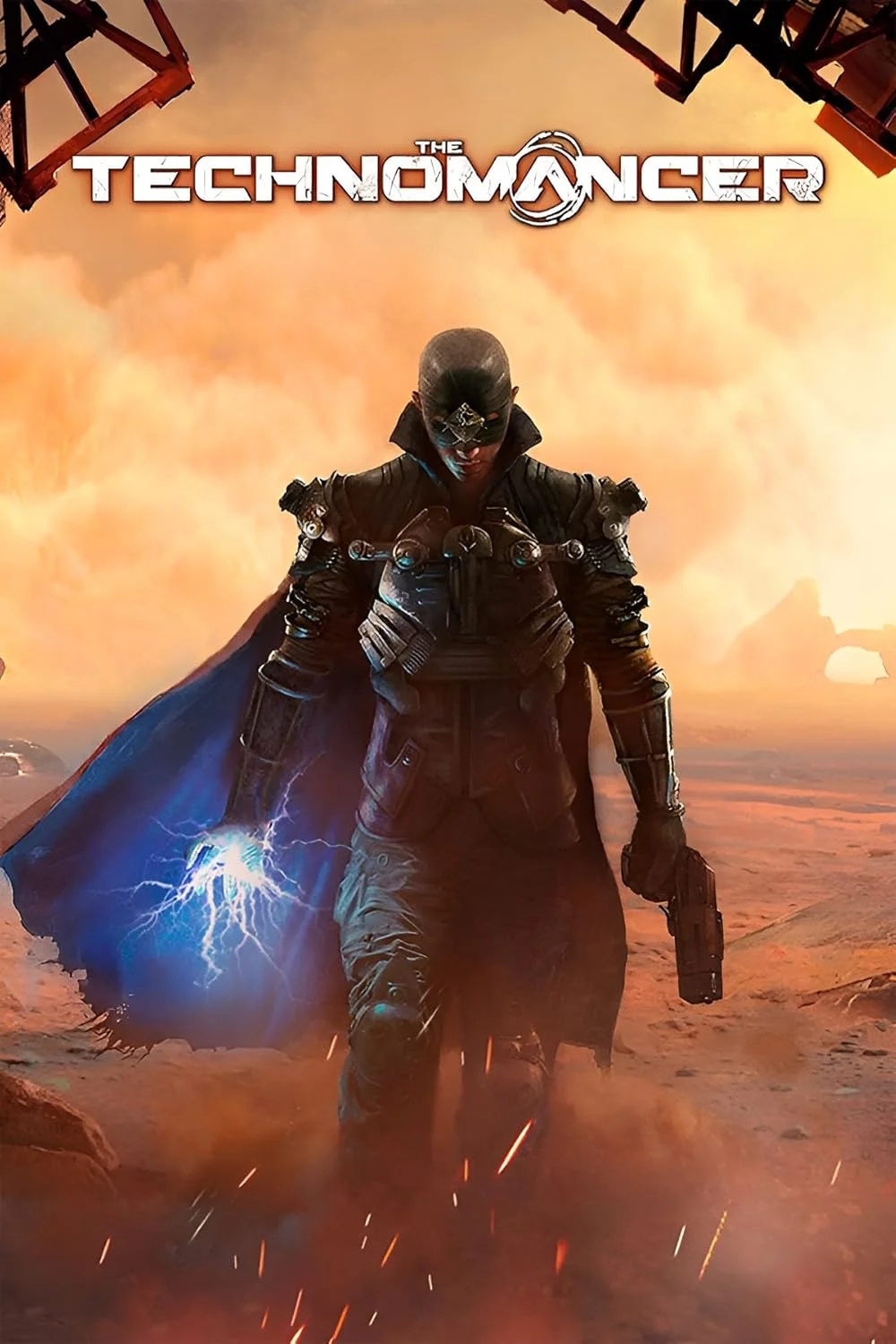
The Technomancer
This combination provides smooth gameplay with an average of 60 FPS, suitable for most gaming scenarios.
Average FPS: resolution vs quality settings
| Ultra | High | Medium | Low | |
|---|---|---|---|---|
| 4K Ultra HD | 22 | 29 | 33 | 44 |
| 1440p QHD | 41 | 52 | 61 | 79 |
| 1080p Full HD | 62 | 80 | 93 | 121 |
Cell color: green is 120+ FPS, teal is 60+, amber is 30+, red is below 30.
The Technomancer with AMD Ryzen 7 9800X3D + Intel Arc B570, In-Depth Analysis
The Technomancer, a 2016 Action RPG, presents a demanding workload that scales steeply with resolution. When paired with the AMD Ryzen 7 9800X3D and Intel Arc B570, the measured frame rates reveal a system where the GPU becomes the primary bottleneck as pixel count increases. The data shows a clear performance hierarchy across the four settings presets and three resolutions, offering a detailed look at how this specific hardware combination handles a legacy title with modern expectations.
Resolution Scaling
The transition from 1080p to 4K is punishing for this configuration. At 1920x1080 with High settings, the system produces an average of 80 FPS, which is a playable baseline. Moving to 2560x1440 at the same High preset, the average drops to 52 FPS, a 35% reduction. Pushing further to 3840x2160 High yields just 29 FPS, which is a 44% decline from the 1440p result and a 64% drop from the 1080p figure. This steep degradation pattern is the signature of a GPU-limited scenario; the Intel Arc B570’s rendering throughput cannot sustain the increasing pixel workload.
The scaling behavior intensifies with the Ultra preset. At 1080p Ultra, the average is 62 FPS, which falls to 41 FPS at 1440p and plummets to 22 FPS at 4K. The 4K Ultra result is barely a third of the 1080p Ultra frame rate, confirming that the GPU’s fillrate and shader resources are exhausted by the highest settings and highest resolution combination. In contrast, the Low preset shows a more moderate decline from 121 FPS at 1080p to 44 FPS at 4K, a 64% reduction, but the absolute numbers remain low enough to suggest the CPU is not the limiting factor at any point.
What the resolution scaling reveals is that the Ryzen 7 9800X3D’s immense processing power is largely idle at higher resolutions. The CPU’s benchmark scores, such as a Cinebench R23 multicore result of 23230 and a Passmark multithread score of 40009, indicate it can feed frames far faster than the Arc B570 can render them. The FPS drops are almost entirely attributable to the GPU’s inability to keep pace with the pixel count. The 4K Medium result of 33 FPS with a minimum of 28 FPS and maximum of 39 FPS shows that even mid-tier settings cannot rescue playability at 4K, as the GPU is saturated by the sheer number of pixels.
CPU Role
The AMD Ryzen 7 9800X3D is a desktop processor with 8 cores and 16 threads, built on the Zen 5 architecture codenamed Granite Ridge. It operates with a base clock of 4.70 GHz and a boost clock of 5.20 GHz, and its 96 MB of shared L3 cache is the defining feature for gaming workloads. The data shows this CPU is not the constraint in The Technomancer. At 1080p Low, the system achieves 121 FPS, which is the highest measured result across all configurations. This suggests that even with minimal GPU load, the CPU can drive frame generation well above 100 FPS.
The CPU’s benchmark profile reinforces its capability. Its 3DMark 16-thread score is 10081, and its Passmark single-thread score is 4430, indicating strong performance in both multi-threaded and lightly-threaded tasks. The Technomancer, as an Action RPG from 2016, likely relies on a few primary threads for game logic and physics, and the Ryzen 7 9800X3D’s high boost clock of 5.20 GHz ensures those threads are processed with minimal latency. The Geekbench single-core score of 2964 and Cinebench R15 single-core score of 328 corroborate this strength.
However, the game’s frame rates do not improve with higher CPU headroom. Comparing 1080p High (80 FPS) to 1080p Ultra (62 FPS), the drop is due to increased GPU load, not CPU limitations. The CPU’s percentile rank of 87 among all CPUs, with an average benchmark score of 39768, places it in the top tier, but this headroom is unused in this particular title. The nearest rivals, such as the AMD Ryzen 7 7700 with a delta of -0.8%, show similar aggregate scores, yet none of that processing power translates to higher FPS at 4K, where the GPU dominates the performance equation. The CPU's role here is to ensure the GPU is never starved of data, which it accomplishes at all measured settings.
GPU Role
The Intel Arc B570 is the clear performance limiter in this combo. It features 10 GB of GDDR6 memory on a 160-bit bus, yielding a bandwidth of 380.0 GB/s. Its base and boost clocks are both 2500 MHz, and it has 2304 shading units, 144 TMUs, and 80 ROPs. The GPU’s compute capabilities, rated at 11.52 TFLOPS for FP32, are sufficient for 1080p gaming but struggle with the demands of 4K in The Technomancer. The measured FPS data shows a direct correlation between GPU load and frame rate, with the 4K Ultra result of 22 FPS being the lowest point.
The GPU’s memory configuration is notable. While 10 GB is adequate for most titles, The Technomancer’s 4K Ultra settings may push memory usage, but the primary bottleneck is the raw shading throughput. The pixel rate of 200.0 GPixel/s and texture rate of 360.0 GTexel/s are moderate figures, and the 4K resolution requires the GPU to process over 8 million pixels per frame. The benchmark results for the Arc B570, including a Passmark G3D score of 14195 and a 3DMark Steel Nomad DX12 score of 2649, place it below the top-tier cards, which explains the sub-30 FPS results at 4K.
The GPU’s closest rivals in benchmark aggregate score are the NVIDIA GeForce RTX 3070 Mobile with a delta of 0.1% and the Intel Arc A750 with a delta of -0.1%. This suggests the Arc B570 performs similarly to those cards in synthetic tests, but real-world gaming at high resolutions reveals its limitations. The measured data shows that even at 1440p High, the card only produces 52 FPS, and at 4K, it cannot maintain a stable 30 FPS on any preset. The GPU’s 150 W TDP and 450 W suggested PSU indicate it is a mid-range part, and its performance in this title aligns with that positioning, leaving the CPU’s potential untapped.
How This Combo Ranks
The combination of the AMD Ryzen 7 9800X3D and Intel Arc B570 ranks 2256 out of 2825 tested combos in The Technomancer. This percentile placement, roughly in the bottom 20% of all configurations, is surprising given the CPU’s high tier. The rank is driven almost entirely by the GPU’s performance, as the CPU’s contribution to frame rate is minimal in this GPU-bound scenario. The data shows that this combo is not optimized for high-resolution gaming, and its ranking reflects that imbalance.
The combo’s rank suggests that many other pairings, likely with lower-tier CPUs but stronger GPUs, outperform it. For instance, a system with a mid-range CPU and a higher-end GPU would achieve better FPS in this title, as the game is not CPU-sensitive. The CPU’s 87th percentile rank among all CPUs is negated by the GPU’s 65th percentile rank, and the combined result is a ranking that falls below the median of tested combos. The measured FPS data, such as 44 FPS at 4K Low, underscores this issue, as even the lowest settings cannot achieve a smooth 60 FPS at 4K.
However, the combo does show strength at 1080p. The 1080p Low result of 121 FPS is above the average for many systems, and the 1080p Medium result of 93 FPS is respectable. The rank of 2256 out of 2825 indicates that while the combo is not top-tier, it is not the worst either. The CPU’s high benchmark scores, including a Passmark data compression score of 468017 and a floating-point math score of 79456, suggest it can handle non-gaming tasks well, but in this specific game, the GPU is the deciding factor. The combo’s ranking is a direct consequence of the GPU’s inability to keep up with the CPU’s potential.
Settings Recommendations
For the best experience per the measured rows, the 1080p Medium preset is the optimal choice for this combo. It delivers an average of 93 FPS, with a minimum of 79 FPS and a maximum of 107 FPS, providing a smooth and responsive experience without the performance hit of Ultra settings. The 1080p High preset, at 80 FPS, is also playable and offers better visual fidelity, but the Medium preset’s higher minimum frame rate makes it more stable. The 1080p Ultra preset drops to 62 FPS, which is still playable but may feel less fluid in fast-paced combat.
At 1440p, the Low preset is the only viable option for a consistently high frame rate, producing 79 FPS. The Medium preset at 61 FPS is acceptable, but the High and Ultra presets, at 52 FPS and 41 FPS respectively, may introduce noticeable stutter on some displays. For users prioritizing visual quality over frame rate, the 1440p Medium preset offers a balanced experience, but the data suggests that 1440p is the practical limit for this GPU. The 4K resolution is not recommended for this combo, as even the Low preset only achieves 44 FPS, and the Medium preset drops to 33 FPS with a minimum of 28 FPS.
Given the measured data, the best experience is achieved at 1080p Medium, which provides a high average FPS and a minimum frame rate above 60. The 1080p High preset is a close second, offering a modest visual upgrade for a 13 FPS average loss. For users with 1440p monitors, the Low preset is the sweet spot, while those with 4K displays should consider lowering the resolution or accepting sub-30 FPS performance. The settings recommendations are clear: prioritize resolution over preset quality, as the GPU’s limitations are most pronounced at higher pixel counts.
Measured FPS Breakdown
At 1920x1080, the measured average FPS by settings is as follows: Low yields 121 FPS, Medium yields 93 FPS (with a minimum of 79 FPS and maximum of 107 FPS), High yields 80 FPS, and Ultra yields 62 FPS. This shows a consistent decline as settings increase, with a 59 FPS difference between Low and Ultra. The Medium preset’s minimum of 79 FPS indicates solid frame pacing, while the Ultra preset’s lower average suggests increased GPU load.
At 2560x1440, the results are: Low yields 79 FPS, Medium yields 61 FPS (with a minimum of 52 FPS and maximum of 70 FPS), High yields 52 FPS, and Ultra yields 41 FPS. The decline from Low to Ultra is 38 FPS, and the Medium preset’s minimum of 52 FPS is the lowest among the 1440p results, suggesting some frame drops during intense scenes. The High preset at 52 FPS is identical to the Medium preset’s minimum, indicating that the GPU is hitting a performance ceiling.
At 3840x2160, the results are: Low yields 44 FPS, Medium yields 33 FPS (with a minimum of 28 FPS and maximum of 39 FPS), High yields 29 FPS, and Ultra yields 22 FPS. The 4K results are all below 45 FPS, with the Ultra preset barely reaching 22 FPS. The Medium preset’s maximum of 39 FPS shows that even the best-case scenario at 4K is below the 60 FPS threshold, confirming that this combo is not suited for 4K gaming. The data across all resolutions demonstrates a clear pattern of GPU saturation at higher pixel counts.
FAQ
Q: What is the highest average FPS achieved by this combo in The Technomancer?
A: The highest average FPS is 121, achieved at 1920x1080 resolution with Low settings. This is the only measured configuration that exceeds 120 FPS, indicating the CPU is capable of high frame generation when the GPU load is minimal.
Q: Can this combo run The Technomancer at 4K with playable frame rates?
A: The data shows that 4K performance is poor. The best 4K result is 44 FPS at Low settings, but Medium drops to 33 FPS, High to 29 FPS, and Ultra to 22 FPS. None of these achieve a stable 60 FPS, so 4K is not recommended for this configuration.
Q: How does the CPU’s performance compare to its rivals in synthetic benchmarks?
A: The Ryzen 7 9800X3D has an average benchmark score of 39768, which is 0.4% higher than the AMD Ryzen 7 PRO 8840HS and 0.7% higher than the AMD Ryzen AI 7 450. It is 0.7% lower than the AMD Ryzen AI 9 365 and 0.8% lower than the AMD Ryzen 7 7700, showing it is tightly clustered with these competitors.
Q: What is the GPU’s benchmark percentile and how does it affect gaming?
A: The Intel Arc B570 has a percentile of 65 among all GPUs, and its average benchmark score is 20556. This places it in the mid-range, and its performance in The Technomancer reflects this, with 1080p results above 60 FPS but 4K results below 45 FPS.
Q: Which settings preset provides the most stable frame rate at 1440p?
A: At 2560x1440, the Low preset provides the highest average at 79 FPS. The Medium preset has a minimum of 52 FPS and a maximum of 70 FPS, which is stable but lower, while the High and Ultra presets drop to 52 FPS and 41 FPS respectively, making Low the most consistent option.
Q: Does the CPU’s cache size impact the game’s performance?
A: The Ryzen 7 9800X3D has 96 MB of shared L3 cache, which is substantial. However, the measured FPS data shows the GPU is the bottleneck at higher resolutions, so the cache’s impact is minimal in this title. The CPU’s high benchmark scores, such as a Cinebench R23 multicore score of 23230, indicate it is not limiting frame rates.
Hardware Specifications
AMD Ryzen 7 9800X3D
Intel Arc B570
FPS Benchmarks by Resolution & Settings
Performance data for AMD Ryzen 7 9800X3D + Intel Arc B570 in The Technomancer
| Resolution | Settings | Avg FPS |
|---|---|---|
| 3840x2160 | Low | 44.0 |
| 3840x2160 | Medium | 33.0 |
| 3840x2160 | High | 29.0 |
| 3840x2160 | Ultra | 22.0 |
| 2560x1440 | Low | 79.0 |
| 2560x1440 | Medium | 61.0 |
| 2560x1440 | High | 52.0 |
| 2560x1440 | Ultra | 41.0 |
| 1920x1080 | Low | 121.0 |
| 1920x1080 | Medium | 93.0 |
| 1920x1080 | High | 80.0 |
| 1920x1080 | Ultra | 62.0 |
The Technomancer with Ryzen 7 9800X3D + Other GPUs
See how The Technomancer performs with the same CPU but different graphics cards.
The Technomancer with Arc B570 + Other CPUs
See how The Technomancer performs with the same GPU but different processors.
Other Games with Ryzen 7 9800X3D + Arc B570
Explore FPS benchmarks for other games using this same hardware combination.