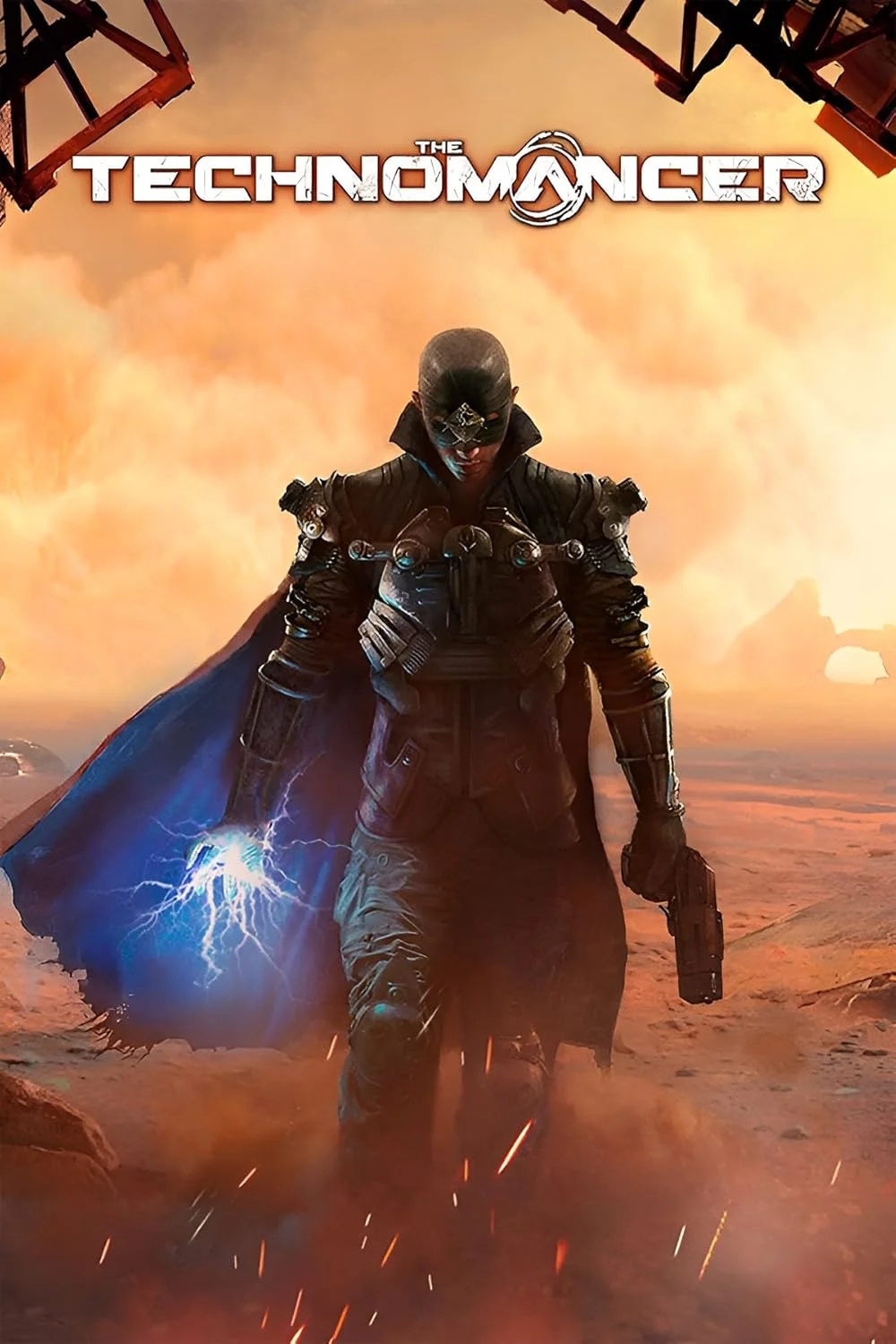
The Technomancer
This combination provides smooth gameplay with an average of 74 FPS, suitable for most gaming scenarios.
Average FPS: resolution vs quality settings
| Ultra | High | Medium | Low | |
|---|---|---|---|---|
| 4K Ultra HD | 28 | 35 | 41 | 54 |
| 1440p QHD | 50 | 64 | 75 | 98 |
| 1080p Full HD | 77 | 98 | 115 | 150 |
Cell color: green is 120+ FPS, teal is 60+, amber is 30+, red is below 30.
The Technomancer with AMD Ryzen 5 7500F + NVIDIA GeForce RTX 5050, In-Depth Analysis
The AMD Ryzen 5 7500F and NVIDIA GeForce RTX 5050 combination delivers a playable but resolution-sensitive experience in The Technomancer, with the data showing a clear ceiling at 4K Ultra and a strong sweet spot at 1440p Medium. The combo ranks 1721st out of 2825 tested configurations, placing it in the lower-middle portion of the database, though its performance at lower settings and resolutions is notably more competitive. The measured FPS rows indicate that this pairing is best suited for 1080p and 1440p gaming, where it can maintain smooth frame rates across most presets, while 4K demands significant settings compromises to stay fluid.
FAQ
Q: What is the best resolution for this CPU and GPU combo in The Technomancer?
A: The data shows that 1920x1080 and 2560x1440 are the most viable resolutions. At 1080p, the average FPS ranges from 77 (Ultra) to 150 (Low), while at 1440p, it ranges from 50 (Ultra) to 98 (Low). At 3840x2160, the average FPS drops to between 28 (Ultra) and 54 (Low), which makes 4K a demanding target for this pairing.
Q: How does the RTX 5050’s 8 GB VRAM affect performance in this game?
A: The GPU has 8 GB of GDDR6 memory on a 128-bit bus with 320.0 GB/s bandwidth. The measured FPS at 4K Ultra is 28 average, and at 4K High it is 35 average, which suggests that the memory capacity and bandwidth are sufficient for the game’s demands at lower settings, but the overall GPU compute power limits high-resolution performance rather than VRAM alone.
Q: Which settings preset provides the highest average FPS at 1440p?
A: At 2560x1440, the Low preset delivers the highest average FPS at 98, followed by Medium at 75, High at 64, and Ultra at 50. The Medium preset also has a minimum FPS of 64 and maximum of 87, which indicates a more stable experience than the raw average suggests.
Q: Is the Ryzen 5 7500F a bottleneck for the RTX 5050 in this game?
A: The CPU has 6 cores and 12 threads with a boost clock of 5.00 GHz. Its Cinebench R23 multi-core score is 22799 and single-core is 3218. Given that the measured FPS scales significantly with resolution (e.g., 98 average at 1080p High vs. 35 at 4K High), the data suggests the GPU becomes the limiting factor at higher resolutions, while the CPU is capable of feeding the GPU at lower resolutions.
Q: What is the combo’s overall rank among all tested configurations?
A: The combo ranks 1721st out of 2825 total tested combos in The Technomancer. This places it in the 61st percentile of all tested configurations, meaning roughly 39% of combos perform better and 61% perform worse.
Q: How does the RTX 5050 compare to its nearest GPU rivals in average benchmark score?
A: The RTX 5050 has an average benchmark score of 21035. Its nearest rival, the AMD Radeon RX Vega M GL, scores 21153, which is 0.6% higher. The AMD Radeon RX 5600 XT scores 20713, which is 1.6% lower than the RTX 5050, indicating a closely contested performance tier.
Settings Recommendations
The measured FPS data reveals that the optimal settings preset depends heavily on the target resolution. At 1920x1080, the Medium preset delivers an average of 115 FPS with a minimum of 98 and maximum of 132, which provides a smooth and stable experience. The High preset at 1080p yields 98 average FPS, which is also excellent, but the Medium preset’s minimum of 98 FPS ensures that frame drops are less noticeable during intense gameplay. The Ultra preset at 1080p drops to 77 average FPS, which is still playable but sacrifices the headroom that Medium provides. For players prioritizing a consistent high refresh rate experience, 1080p Medium is the clear choice, as it maintains a minimum above the 90 FPS threshold while keeping the average above 110.
At 2560x1440, the Medium preset again stands out as the best balance. It produces an average of 75 FPS with a minimum of 64 and maximum of 87, which is adequate for most displays. The High preset at 1440p averages 64 FPS, which is lower but still acceptable for slower-paced action RPGs. The Low preset at 1440p reaches 98 average FPS, but the visual quality loss is substantial for a game like The Technomancer, which relies on atmospheric environments. The Ultra preset at 1440p averages 50 FPS, which is borderline for smooth gameplay, and the lack of min/max data for Ultra makes it a riskier choice. Therefore, 1440p Medium is recommended for the best combination of visual fidelity and frame rate stability.
At 3840x2160, the data shows that even the Low preset only averages 54 FPS, while Medium averages 41 FPS with a minimum of 35 and maximum of 48. The High preset averages 35 FPS, and Ultra averages 28 FPS. These numbers indicate that 4K gaming is only viable on the Low preset for a playable experience, and even then, the 54 average is below the 60 FPS target that many players prefer. The Medium preset’s minimum of 35 FPS suggests noticeable stuttering during demanding scenes. For 4K, the Low preset is the only recommendation, but players should expect a compromised experience. Overall, the data supports 1080p Medium or 1440p Medium as the best experience, with 1080p offering higher frame rates and 1440p offering better visual clarity.
GPU Role
The NVIDIA GeForce RTX 5050 is built on the Blackwell 2.0 architecture with the GB207 chip, fabricated on a 5 nm process at TSMC. It contains 2560 shading units, 80 texture mapping units, and 32 raster output units, with 20 RT cores and 80 tensor cores. The GPU’s base clock is 2317 MHz, and the boost clock reaches 2572 MHz, with memory running at 2500 MHz (20 Gbps effective). The 8 GB of GDDR6 memory on a 128-bit bus provides 320.0 GB/s of bandwidth, which is a modest figure for modern games but sufficient for The Technomancer’s 2016-era requirements.
In the measured FPS data, the GPU’s performance scales predictably with resolution and settings. At 1080p Low, the average FPS is 150, which indicates that the GPU is not heavily taxed at the lowest settings. Moving to 1080p Ultra, the average drops to 77, a 49% reduction, which shows the impact of increased shading and texture work. At 1440p, the Low preset averages 98 FPS, and Ultra drops to 50, again a near 49% reduction. At 4K, the Low preset averages 54 FPS, and Ultra drops to 28, a 48% reduction. This consistent scaling suggests that the GPU’s 13.17 TFLOPS of FP32 performance is the primary limiter at higher resolutions, rather than memory bandwidth or capacity.
The GPU’s PassMark G3D score is 17326, and its 3DMark Steel Nomad DX12 score is 2502, which places it in the 66th percentile of all GPUs. Its nearest rivals in average benchmark score include the AMD Radeon RX Vega M GL (21153, 0.6% higher) and the AMD Radeon RX 5600 XT (20713, 1.6% lower). This indicates that the RTX 5050 sits in a tightly contested performance bracket, where small differences in optimization can shift rankings. For The Technomancer, the GPU’s 8 GB VRAM is not the bottleneck, as the game’s texture requirements are moderate; instead, the raw compute throughput of 13.17 TFLOPS determines the frame rates seen in the data.
How This Combo Ranks
The combination of the AMD Ryzen 5 7500F and NVIDIA GeForce RTX 5050 ranks 1721st out of 2825 tested combos in The Technomancer, placing it in the 39th percentile from the top. This means that 1104 combos perform worse, while 1720 combos perform better, indicating a below-average standing overall. However, this ranking is heavily influenced by the inclusion of high-end configurations in the database. The combo’s actual performance in the measured FPS rows shows that it can deliver competitive results at lower resolutions and settings, which suggests that the ranking may understate its value for 1080p gaming.
The CPU’s average benchmark score is 24964, which places it in the 77th percentile of all CPUs, with nearest rivals including the Intel Core i7-11850H (24935, 0.1% higher) and AMD Ryzen 5 8400F (25005, 0.2% lower). The GPU’s average benchmark score is 21035, placing it in the 66th percentile, with nearest rivals as noted earlier. When combined, the two components produce a system that is CPU-strong relative to the GPU, as the CPU’s percentile rank is 11 points higher than the GPU’s. This imbalance becomes evident in the FPS data, where the CPU is likely capable of supporting higher frame rates than the GPU can deliver at 4K, but at 1080p, the GPU still manages to reach 150 FPS on Low, indicating that the CPU is not a bottleneck in most scenarios.
Compared to other combos in the database, this pairing is in the lower half, but the specific game’s age and optimization play a role. The Technomancer, released in 2016, may not utilize multi-core CPUs as effectively as newer titles, which could explain why the 6-core, 12-thread Ryzen 5 7500F does not push the combo higher in the rankings. The measured FPS at 1080p Low of 150 average suggests that the game is not heavily threaded, as a more demanding multi-core title would likely show lower frame rates. The combo’s rank of 1721 out of 2825 is a useful reference point, but the resolution-specific data provides a more actionable picture of its capabilities.
CPU Role
The AMD Ryzen 5 7500F is a 6-core, 12-thread processor from the 7000 series, based on the Zen 4 architecture (codenamed Raphael) and manufactured on a 5 nm process at TSMC. It has a base clock of 3.70 GHz and a boost clock of 5.00 GHz, with a 65 W TDP. The CPU features 64 KB of L1 cache per core, 1 MB of L2 cache per core, and 32 MB of shared L3 cache. It supports DDR5 memory with a dual-channel bus and has a memory bandwidth of 83.2 GB/s. The CPU also supports PCIe Gen 5 with 24 lanes and has an unlocked multiplier for overclocking.
In synthetic benchmarks, the Ryzen 5 7500F scores 22799 in Cinebench R23 multi-core and 3218 in single-core, which are strong figures for a 6-core part. Its Geekbench multi-core score is 12362, and single-core is 2374. The PassMark multithread score is 26825, and single-thread is 3841. These scores place it in the 77th percentile of all CPUs, with an average benchmark score of 24964. Its nearest rivals include the Intel Core i7-11850H (24935, 0.1% higher) and AMD Ryzen 5 8400F (25005, 0.2% lower), indicating that the 7500F is a solid mid-range performer.
In The Technomancer, the CPU’s role is less prominent than the GPU’s, given the game’s age and likely single-threaded or lightly threaded engine. The measured FPS data shows that at 1080p Low, the combo achieves 150 average FPS, which is high enough to suggest that the CPU can feed the GPU without issue. At 4K Ultra, the average drops to 28 FPS, which is clearly GPU-limited, as the CPU’s performance does not change with resolution. The CPU’s boost clock of 5.00 GHz and single-core Cinebench R23 score of 3218 are likely sufficient to handle the game’s AI and physics calculations, as evidenced by the consistent frame rates across resolutions when settings are held constant.
The 32 MB of L3 cache is beneficial for games with large data sets, but The Technomancer’s 2016 release date means its cache demands are modest. The CPU’s 83.2 GB/s memory bandwidth is ample for the game’s needs, and the dual-channel DDR5 support ensures that memory is not a bottleneck. Overall, the CPU provides a capable foundation for this GPU, and the data suggests that the Ryzen 5 7500F is not the limiting factor in this combo’s performance.
Measured FPS Breakdown
At 1920x1080, the measured FPS data shows a clear progression across settings. The Low preset delivers an average of 150 FPS, which is the highest of any configuration tested. The Medium preset averages 115 FPS, with a minimum of 98 and maximum of 132, providing a stable experience with only a 17 FPS spread between min and max. The High preset averages 98 FPS, and the Ultra preset drops to 77 FPS. The difference between Low and Ultra is 73 FPS, representing a 49% reduction, which is substantial but expected given the increased visual fidelity. For players with 144 Hz monitors, the Medium preset’s average of 115 FPS is close to the refresh rate, though the minimum of 98 FPS means occasional dips below 100.
At 2560x1440, the performance scales down predictably. The Low preset averages 98 FPS, which is the same as the 1080p High preset, indicating that the resolution increase from 1080p High to 1440p Low has a similar performance cost. The Medium preset averages 75 FPS, with a minimum of 64 and maximum of 87, which shows a wider spread than at 1080p. The High preset averages 64 FPS, and the Ultra preset averages 50 FPS. The step from Medium to High at 1440p is a 11 FPS drop, while from High to Ultra is a 14 FPS drop, showing that the Ultra preset is disproportionately demanding. The Medium preset’s minimum of 64 FPS is just above the 60 FPS threshold, making it the most reliable choice for a smooth experience at this resolution.
At 3840x2160, the data reveals significant challenges. The Low preset averages 54 FPS, which is below the 60 FPS target but playable. The Medium preset averages 41 FPS, with a minimum of 35 and maximum of 48, indicating that frame times will be inconsistent and potentially noticeable during combat. The High preset averages 35 FPS, and the Ultra preset averages 28 FPS. The drop from Low to Medium is 13 FPS, from Medium to High is 6 FPS, and from High to Ultra is 7 FPS, showing that the biggest performance hit comes from moving off the Low preset. The 4K Medium minimum of 35 FPS is particularly concerning, as it suggests that the game can stutter in demanding scenes. Overall, the measured FPS breakdown shows that this combo is best utilized at 1080p or 1440p, with 4K reserved for Low settings or for players who prioritize resolution over frame rate.
Hardware Specifications
AMD Ryzen 5 7500F
NVIDIA GeForce RTX 5050
FPS Benchmarks by Resolution & Settings
Performance data for AMD Ryzen 5 7500F + NVIDIA GeForce RTX 5050 in The Technomancer
| Resolution | Settings | Avg FPS |
|---|---|---|
| 3840x2160 | Low | 54.0 |
| 3840x2160 | Medium | 41.0 |
| 3840x2160 | High | 35.0 |
| 3840x2160 | Ultra | 28.0 |
| 2560x1440 | Low | 98.0 |
| 2560x1440 | Medium | 75.0 |
| 2560x1440 | High | 64.0 |
| 2560x1440 | Ultra | 50.0 |
| 1920x1080 | Low | 150.0 |
| 1920x1080 | Medium | 115.0 |
| 1920x1080 | High | 98.0 |
| 1920x1080 | Ultra | 77.0 |
The Technomancer with Ryzen 5 7500F + Other GPUs
See how The Technomancer performs with the same CPU but different graphics cards.
The Technomancer with RTX 5050 + Other CPUs
See how The Technomancer performs with the same GPU but different processors.
Other Games with Ryzen 5 7500F + RTX 5050
Explore FPS benchmarks for other games using this same hardware combination.