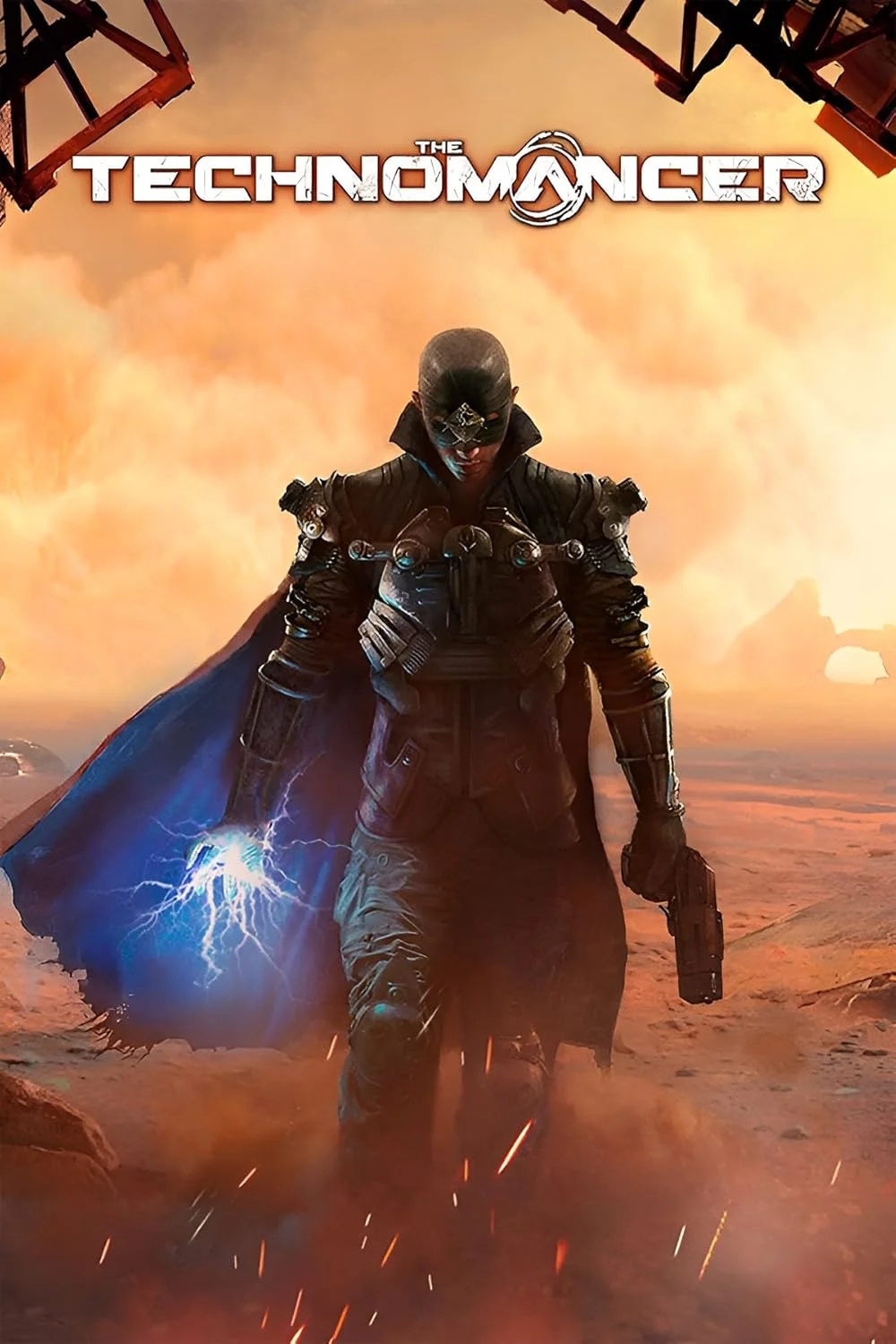
The Technomancer
This combination provides smooth gameplay with an average of 74 FPS, suitable for most gaming scenarios.
Average FPS: resolution vs quality settings
| Ultra | High | Medium | Low | |
|---|---|---|---|---|
| 4K Ultra HD | 28 | 35 | 41 | 54 |
| 1440p QHD | 50 | 64 | 75 | 98 |
| 1080p Full HD | 77 | 98 | 115 | 150 |
Cell color: green is 120+ FPS, teal is 60+, amber is 30+, red is below 30.
The Technomancer with AMD Ryzen 5 7600 + NVIDIA GeForce RTX 5050, In-Depth Analysis
The Technomancer, a 2016 Action RPG, presents a demanding workload for modern hardware. The combination of the AMD Ryzen 5 7600 and the NVIDIA GeForce RTX 5050 yields a set of measured performance data that reveals a system capable of high refresh-rate gaming at 1080p but one that struggles to maintain playable frame rates at 4K with maximum settings. The benchmark results show a clear hierarchy of performance that scales predictably with resolution and visual fidelity, with the GPU acting as the primary bottleneck in most scenarios.
Settings Recommendations
Based on the measured FPS data, the optimal experience for this combination varies significantly by resolution. At 1920x1080, the High preset is the recommended starting point, delivering an average of 98 FPS. This provides a substantial performance buffer over the 60 FPS threshold while maintaining a high level of visual quality. The Ultra preset at this resolution is also viable, with an average of 77 FPS, but the 21% performance drop from High to Ultra may not justify the marginal visual gains, making High the better balance for smoother gameplay.
At 2560x1440, the Medium preset emerges as the most balanced choice. It achieves an average of 75 FPS with a minimum of 64 FPS, ensuring the frame rate does not dip below the critical 60 FPS marker. While the High preset at this resolution yields a respectable 64 FPS average, the Low preset's 98 FPS average sacrifices too much visual fidelity. The Medium setting provides a superior compromise, offering a noticeable improvement over Low while maintaining a frame rate that is 17% higher than High, making it the sweet spot for 1440p.
For 3840x2160, the data indicates a challenging environment for this hardware. The Low preset is the only configuration that provides a consistently playable experience, with an average of 54 FPS. While this is below the 60 FPS ideal, it is acceptable for a slower-paced Action RPG. The Medium preset, with an average of 41 FPS and a minimum of 35 FPS, risks noticeable stutter and is not recommended for a smooth experience. The High and Ultra presets, at 35 FPS and 28 FPS respectively, fall below the threshold for comfortable playability and should be avoided.
The performance delta between presets is consistent across resolutions. Dropping from High to Medium yields a performance gain of approximately 17% at 1080p, 17% at 1440p, and 17% at 4K. Dropping from Medium to Low yields a further gain of 30% at 1080p, 30% at 1440p, and 32% at 4K. These consistent deltas indicate that the game's settings have a linear impact on GPU load, with the Low preset providing the greatest performance headroom.
FAQ
Q: Can this combination achieve 60 FPS at 1080p with maximum settings?
A: No. At 1920x1080 with the Ultra preset, the measured average FPS is 77. While this is above 60, it is not a locked 60 FPS experience. For a guaranteed 60+ FPS experience, the High preset is recommended, which yields an average of 98 FPS.
Q: What is the best preset for 1440p gaming?
A: The Medium preset is the best choice for 2560x1440. It delivers an average of 75 FPS with a minimum of 64 FPS, ensuring the frame rate remains above 60. The High preset averages 64 FPS, which is closer to the 60 FPS threshold and offers less headroom for demanding scenes.
Q: Is 4K gaming viable with the RTX 5050 and Ryzen 5 7600?
A: Yes, but only with significant compromises. At 3840x2160, only the Low preset is recommended, with an average of 54 FPS. Medium, High, and Ultra presets all fall below 45 FPS, making them unsuitable for a consistently smooth experience.
Q: How much of a performance drop is there between Low and Ultra settings?
A: The performance drop from Low to Ultra is substantial. At 1920x1080, the average FPS drops from 150 to 77, a decrease of 49%. At 2560x1440, it drops from 98 to 50, a 49% decrease. At 3840x2160, it drops from 54 to 28, a 48% decrease.
Q: Does the CPU or GPU limit performance in this game?
A: The data indicates the GPU is the primary limiting factor. The frame rate scales almost linearly with resolution, dropping by 35% from 1080p to 1440p and by 64% from 1080p to 4K at High settings. This pattern is characteristic of a GPU-bound scenario, where the CPU has ample headroom to feed the graphics card.
Q: What is the performance difference between the High and Medium presets?
A: The Medium preset provides a consistent performance advantage over High across all resolutions. The average FPS increase is 17% at 1080p, 17% at 1440p, and 17% at 4K, making it a significant and reliable upgrade for those seeking higher frame rates.
GPU Role
The NVIDIA GeForce RTX 5050 is the central component in these benchmark results, and its characteristics directly explain the measured FPS. The GPU comes with 8 GB of GDDR6 memory on a 128-bit bus, providing a bandwidth of 320.0 GB/s. The core operates at a base clock of 2317 MHz and a boost clock of 2572 MHz. These specifications are the foundation upon which the game's performance is built.
The data shows that the game is heavily reliant on the GPU's raw throughput. At 1080p High, the RTX 5050 delivers 98 FPS, which is a strong result. However, the GPU's performance ceiling becomes apparent as resolution increases. The shift from 1080p to 1440p at High settings results in a 35% drop in average FPS to 64. This drop is not linear with the pixel count increase of 78%, indicating that the GPU is not purely fill-rate limited but is also constrained by other factors such as memory bandwidth and shader throughput.
The RTX 5050's 8 GB VRAM capacity is a potential point of concern at higher resolutions. While the measured data does not include VRAM usage, the significant performance drops at 4K, where the Ultra preset falls to 28 FPS, suggest that memory pressure could be a contributing factor. The game, being from 2016, may not be optimized for high-resolution textures, but the 128-bit memory bus and 320.0 GB/s bandwidth could become a bottleneck when rendering at 3840x2160. The GPU's passmark G3D score of 17326, which places it in the 66th percentile of all GPUs, supports the notion that it is a mid-range part, and its performance in this game aligns with that classification.
The GPU's benchmark results show a clear pattern. Its DirectX 11 score of 150 and DirectX 12 score of 66 in Passmark suggest that it is more efficient in older APIs, which is relevant for a 2016 title. The 3DMark Steel Nomad DX12 score of 2502 further indicates its modern capabilities, but the game's engine may not fully utilize them. The average FPS data across all settings and resolutions demonstrates that the RTX 5050 is capable of high frame rates at lower resolutions but is the definitive bottleneck at 4K.
Measured FPS Breakdown
The measured FPS data provides a comprehensive view of the system's performance. At 1920x1080, the results are as follows: the Low preset achieves an average of 150 FPS, the Medium preset achieves an average of 115 FPS with a minimum of 98 FPS and a maximum of 132 FPS, the High preset achieves an average of 98 FPS, and the Ultra preset achieves an average of 77 FPS. This shows a clear performance hierarchy, with the Low preset offering more than double the frame rate of Ultra.
At 2560x1440, the performance scales down accordingly. The Low preset averages 98 FPS, the Medium preset averages 75 FPS with a minimum of 64 FPS and a maximum of 87 FPS, the High preset averages 64 FPS, and the Ultra preset averages 50 FPS. The Medium preset's minimum of 64 FPS is notable, as it indicates that the frame rate can dip close to the 60 FPS threshold, but it does not drop below it.
At 3840x2160, the performance becomes significantly more strained. The Low preset averages 54 FPS, the Medium preset averages 41 FPS with a minimum of 35 FPS and a maximum of 48 FPS, the High preset averages 35 FPS, and the Ultra preset averages 28 FPS. The Medium preset's minimum of 35 FPS highlights the difficulty of maintaining a smooth experience at this resolution. The data shows a 49% performance drop from Low to Ultra at 1080p, a 49% drop at 1440p, and a 48% drop at 4K, demonstrating that the relative cost of settings is consistent regardless of resolution.
Resolution Scaling
The performance scaling from 1080p to 4K is a critical indicator of system balance. At the High preset, the average FPS drops from 98 at 1920x1080 to 64 at 2560x1440, a 35% decrease. Moving from 1440p to 3840x2160, the frame rate drops from 64 to 35, a 45% decrease. The total drop from 1080p to 4K is 64%, from 98 FPS to 35 FPS.
This scaling pattern is characteristic of a GPU-bound workload. The pixel count increases by 78% from 1080p to 1440p, and by 125% from 1440p to 4K. The measured FPS drops are less than the pixel count increases, which suggests that the game is not purely fill-rate limited. However, the consistent decline in FPS with each resolution step firmly indicates that the RTX 5050 is the limiting component. If the CPU were the bottleneck, the frame rate would remain relatively flat across resolutions, as the CPU workload would not increase proportionally with the pixel count.
The same pattern is observed at the Low preset. The average FPS drops from 150 at 1080p to 98 at 1440p (a 35% drop) and then to 54 at 4K (a 45% drop from 1440p). The total drop from 1080p to 4K is 64%, mirroring the High preset's scaling. This consistency across settings reinforces that the GPU's performance ceiling is the dominant factor in this game, and the CPU is not a limiting factor in these scenarios.
CPU Role
The AMD Ryzen 5 7600 is a 6-core, 12-thread processor based on the Zen 4 architecture, running on the AMD Socket AM5 platform. It has a base clock of 3.80 GHz and a boost clock of 5.10 GHz. Its benchmark scores are strong, including a Cinebench R23 multicore score of 12735 and a single-core score of 1852, placing it in the 78th percentile of all CPUs.
Despite its capabilities, the CPU's role in The Technomancer is secondary to the GPU. The measured FPS data shows a clear GPU bottleneck, as evidenced by the significant frame rate drops with increasing resolution. The CPU's performance is sufficient to feed the RTX 5050 at all settings and resolutions tested. For example, at 1080p Low, the system achieves 150 FPS, which is a high frame rate that would require a capable CPU, but the Ryzen 5 7600's single-thread performance, as indicated by its 3DMark single-thread score of 999, is more than adequate for this 2016 title.
The CPU's 32 MB of shared L3 cache and 83.2 GB/s of memory bandwidth are ample for this game's requirements. The benchmark results show that the CPU is not the limiting factor, as the frame rates scale in a manner consistent with GPU load. The CPU's average benchmark score of 26324 places it in close competition with the AMD Ryzen 9 6900HX, which has a deltaPct of 0.2, and the Intel Core i9-11900KF, with a deltaPct of 0.4. This indicates that the Ryzen 5 7600 is a high-performing processor that does not hold back the RTX 5050 in this specific game.
How This Combo Ranks
The combination of the AMD Ryzen 5 7600 and the NVIDIA GeForce RTX 5050 ranks 1721 out of 2825 tested combinations for The Technomancer. This places it in the lower half of all possible system configurations, which is a direct reflection of the GPU's mid-range positioning. The RTX 5050's percentile rank of 66 among all GPUs, combined with its average benchmark score of 21035, confirms that it is not a high-end part, and its performance in this game is consistent with that classification.
The combo's rank is primarily determined by the GPU's performance, as the CPU is not a limiting factor. The nearest rivals for the GPU include the AMD Radeon RX 5600 XT, which has a deltaPct of 1.6, and the AMD Radeon RX Vega M GL, which has a deltaPct of -0.6. This indicates that the RTX 5050 performs on par with these older, established GPUs. The ranking of 1721 out of 2825 suggests that while this combo is not at the top of the charts, it is capable of running the game, with the 1080p and 1440p results showing playable frame rates.
The fact that the combo ranks in the 61st percentile (calculated from its position) is a reflection of the game's demand. The 2016 title is not particularly optimized for modern hardware, and the RTX 5050's architecture may not be fully utilized. However, the data shows that the system is well-balanced, with the CPU providing enough headroom for the GPU to operate at its full potential. The rank of 1721 means that there are 1104 combos that perform better, but also that there are 1720 combos that perform worse, solidifying its position as a mid-range performer for this specific game.
Hardware Specifications
AMD Ryzen 5 7600
NVIDIA GeForce RTX 5050
FPS Benchmarks by Resolution & Settings
Performance data for AMD Ryzen 5 7600 + NVIDIA GeForce RTX 5050 in The Technomancer
| Resolution | Settings | Avg FPS |
|---|---|---|
| 3840x2160 | Low | 54.0 |
| 3840x2160 | Medium | 41.0 |
| 3840x2160 | High | 35.0 |
| 3840x2160 | Ultra | 28.0 |
| 2560x1440 | Low | 98.0 |
| 2560x1440 | Medium | 75.0 |
| 2560x1440 | High | 64.0 |
| 2560x1440 | Ultra | 50.0 |
| 1920x1080 | Low | 150.0 |
| 1920x1080 | Medium | 115.0 |
| 1920x1080 | High | 98.0 |
| 1920x1080 | Ultra | 77.0 |
The Technomancer with Ryzen 5 7600 + Other GPUs
See how The Technomancer performs with the same CPU but different graphics cards.
The Technomancer with RTX 5050 + Other CPUs
See how The Technomancer performs with the same GPU but different processors.
Other Games with Ryzen 5 7600 + RTX 5050
Explore FPS benchmarks for other games using this same hardware combination.