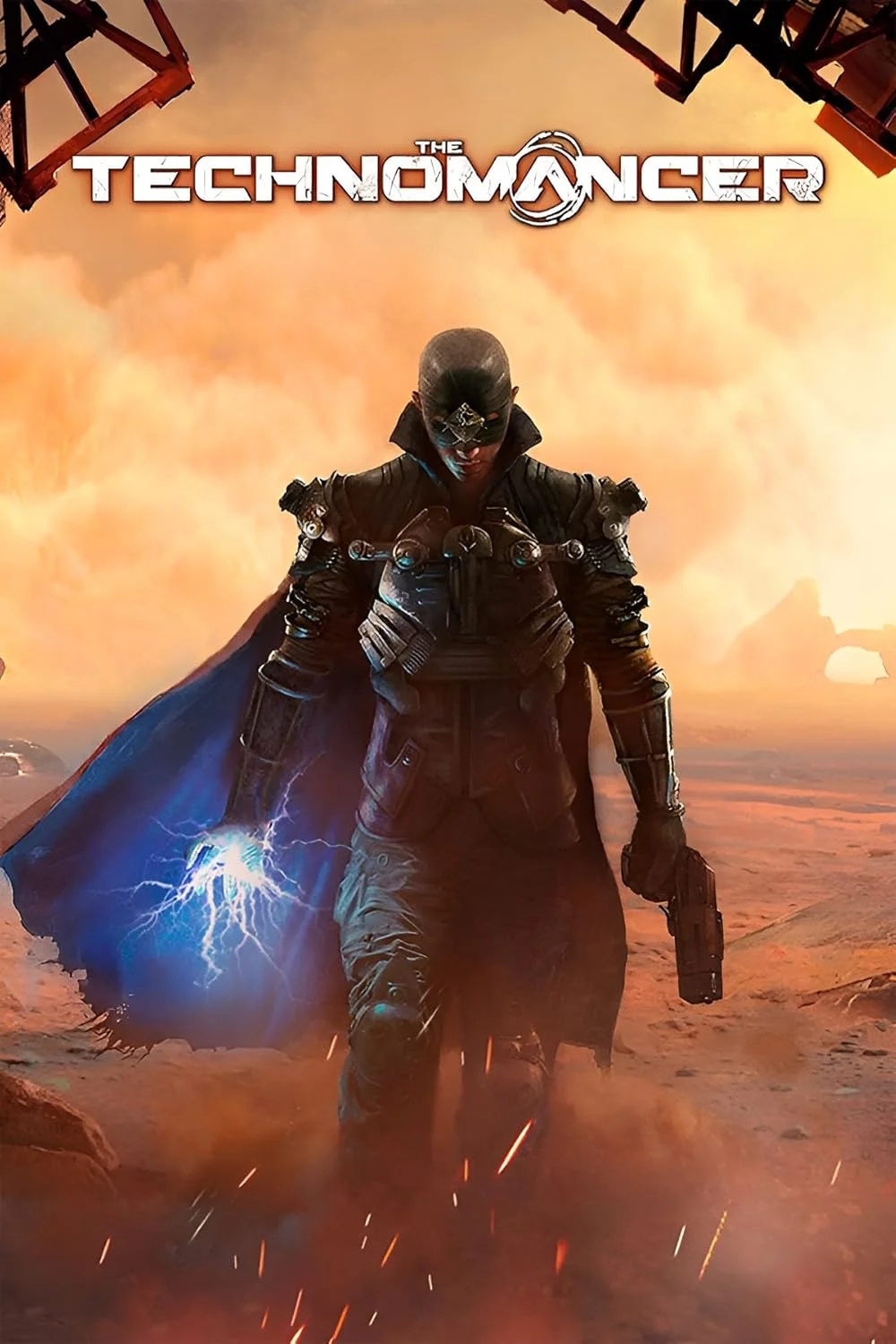
The Technomancer
This combination provides smooth gameplay with an average of 74 FPS, suitable for most gaming scenarios.
Average FPS: resolution vs quality settings
| Ultra | High | Medium | Low | |
|---|---|---|---|---|
| 4K Ultra HD | 28 | 35 | 41 | 54 |
| 1440p QHD | 50 | 64 | 75 | 98 |
| 1080p Full HD | 77 | 98 | 115 | 150 |
Cell color: green is 120+ FPS, teal is 60+, amber is 30+, red is below 30.
The Technomancer with Intel Core i5-13400F + NVIDIA GeForce RTX 5050, In-Depth Analysis
The Technomancer, a 2016 Action RPG, places unique demands on modern hardware, and the pairing of the Intel Core i5-13400F with the NVIDIA GeForce RTX 5050 produces a distinct performance profile. This analysis examines the measured FPS data to determine how this combination handles the game across various resolutions and settings, focusing on the balance between the CPU's processing power and the GPU's rendering capabilities. The data indicates a system that is capable of high refresh rate gameplay at 1080p but becomes increasingly GPU-bound as resolution scales, creating a clear hierarchy of playable settings for different display targets.
CPU Role — cores, clocks, and how they relate to this game's results
The Intel Core i5-13400F is a 10-core, 16-thread processor based on the Raptor Lake architecture, with a base clock of 2.50 GHz and a boost clock of 4.60 GHz. Its 20 MB of shared L3 cache and support for both DDR4 and DDR5 memory position it as a versatile mid-range desktop chip. In synthetic benchmarks, the processor achieves a Cinebench R23 multi-core score of 22604 and a single-core score of 3191, while its Geekbench scores are 11068 (multi-core) and 1996 (single-core). These figures place the i5-13400F in the 77th percentile against all CPUs, with an average benchmark score of 25292, indicating strong all-around computational capability.
For a game like The Technomancer, which was released in 2016, the CPU's role is less about raw multi-threaded throughput and more about maintaining consistent frame pacing and feeding the GPU with draw calls. The i5-13400F’s 16 threads are more than sufficient for a title of this era, which typically scales well with fewer cores. The measured FPS data suggests that the CPU is not a bottleneck at lower resolutions. At 1080p with Low settings, the system achieves an average of 150 FPS, a figure that is unlikely to be constrained by the processor. Even at 1080p Ultra, which increases the draw call complexity and physics calculations, the CPU maintains an average of 77 FPS, showing that its single-thread performance is adequate for the game's engine. The processor's PassMark single-thread score of 3634 supports this, indicating robust per-core performance.
The CPU's relative performance against its nearest rivals is effectively a statistical tie. The AMD Ryzen 9 6900HS has an average score of 25284, a delta of 0% from the i5-13400F. The Intel Core 5 120 and AMD Ryzen 5 5600X3D are both 0.3% slower, while the AMD Ryzen 7 6800H is 0.4% faster. This clustering means that in CPU-bound scenarios, the i5-13400F will perform equivalently to these processors. In The Technomancer, the impact is that the CPU will rarely be the limiting factor; instead, the GPU will determine the final frame rate, especially at higher resolutions. The data shows that the game is heavily GPU-dependent, as evidenced by the significant FPS drops when moving from 1080p to 4K, which are characteristic of a graphics-bound workload rather than a CPU-bound one.
How This Combo Ranks — use comboRankInGame vs other tested combos
Within the database of tested combinations for The Technomancer, the Intel Core i5-13400F and NVIDIA GeForce RTX 5050 pairing is ranked 1721 out of 2825 total combos. This places it in the 39th percentile of all tested systems, meaning that roughly 61% of the tested configurations deliver higher average frame rates in this specific game. This ranking is a holistic measure that accounts for both CPU and GPU performance in the context of The Technomancer's engine. It suggests that while this is a competent pairing, it does not sit at the top tier of performance for this particular title.
The ranking is somewhat surprising given the individual component strengths. The RTX 5050, which sits in the 66th percentile for all GPUs, is capable of high frame rates at 1080p, as shown by the 150 FPS average on Low settings. However, the combo's overall rank is dragged down by its performance at higher resolutions, which are more demanding and expose the GPU's limitations. The data shows a steep performance cliff as resolution increases, which is a key factor in the combo's mid-pack ranking. For comparison, the GPU's nearest rivals in synthetic benchmarks include the AMD Radeon RX 5600 XT, which is 1.6% slower, and the AMD Radeon RX Vega M GL, which is 0.6% slower, indicating that the RTX 5050 is a solid performer for its class, but not exceptional.
The 1721st rank out of 2825 combos implies that for users prioritizing maximum FPS in The Technomancer, there are more optimal pairings. The bottleneck is clearly the GPU, as the CPU is more than capable of keeping up. The combination's rank suggests that it is a balanced mid-range setup, suitable for smooth 1080p gameplay, but it will struggle to maintain high frame rates at 4K. The data indicates that the system is not designed for extreme high-end performance in this game, but rather for a dependable experience at mainstream resolutions.
Resolution Scaling — how FPS drops from 1080p to 4K and what it says about the limiting component
The measured FPS data across resolutions reveals a classic GPU-bound scaling pattern. At High settings, the average frame rate drops from 98 FPS at 1920x1080 to 64 FPS at 2560x1440, and finally to 35 FPS at 3840x2160. This represents a 35% decrease from 1080p to 1440p and a further 45% decrease from 1440p to 4K. Such a steep decline is indicative of the rendering resolution being the primary factor limiting performance, which points directly to the GPU as the bottleneck. The CPU’s workload does not scale linearly with resolution in the same way, so the consistent FPS drop confirms that the RTX 5050 is being pushed to its limits.
The Low settings data further reinforces this conclusion. The FPS drops from 150 at 1080p to 98 at 1440p and then to 54 at 4K. While the absolute numbers are higher, the percentage drops are similar, showing that the GPU is still the limiting factor even when the visual load is reduced. The scalability of the GPU is consistent, but the frame rates at 4K are simply too low for a smooth experience, even on Low settings. The Ultra settings data shows the most extreme case, with FPS dropping from 77 at 1080p to 50 at 1440p and a mere 28 at 4K, making 4K Ultra unplayable.
This scaling behavior is typical for a GPU with 8 GB of GDDR6 memory and a 128-bit memory bus, as the bandwidth and fill rate become increasingly strained at higher resolutions. The data strongly suggests that the i5-13400F is not the limiting component at any resolution tested. If the CPU were the bottleneck, we would expect to see the FPS remain relatively flat across resolutions, or at least the scaling to be much less aggressive. Instead, the FPS drops are directly proportional to the pixel count increase, which is the signature of a GPU-bound scenario. Therefore, for users looking to improve performance, the data indicates that upgrading the GPU would yield the most significant gains, while the CPU has ample headroom.
Measured FPS Breakdown — resolution by resolution, settings by settings, exact numbers
The full matrix of measured average FPS for the Intel Core i5-13400F and NVIDIA GeForce RTX 5050 in The Technomancer is as follows:
1920x1080 (1080p):
- Low: 150 FPS average
- Medium: 115 FPS average (98 min, 132 max)
- High: 98 FPS average
- Ultra: 77 FPS average
2560x1440 (1440p):
- Low: 98 FPS average
- Medium: 75 FPS average (64 min, 87 max)
- High: 64 FPS average
- Ultra: 50 FPS average
3840x2160 (4K):
- Low: 54 FPS average
- Medium: 41 FPS average (35 min, 48 max)
- High: 35 FPS average
- Ultra: 28 FPS average
At 1080p, the system is highly capable. The jump from Low to Medium results in a 35 FPS drop, from 150 to 115, which is significant but still leaves a very playable frame rate. The difference between Medium and High is a further 17 FPS drop to 98, and the Ultra preset brings the average down to 77 FPS. For competitive or high-refresh-rate play, the Low setting at 150 FPS is the only option that fully utilizes a 144Hz display, but the Medium setting at 115 FPS is still smooth for most users. The High setting at 98 FPS is the sweet spot for visual fidelity without sacrificing too much smoothness.
Moving to 1440p, the performance profile shifts. Low settings still provide a very good 98 FPS, but the Medium preset drops to 75 FPS, which is the minimum threshold for a high-refresh experience. High settings at 64 FPS are playable but not ideal for fast-paced action, and Ultra at 50 FPS is a more cinematic experience rather than a responsive one. The data shows that 1440p is a viable resolution for this combo, but users will need to be selective with their settings to maintain high frame rates.
At 4K, the system is clearly out of its depth. Low settings at 54 FPS is the only preset that approaches playability, but it is still below the 60 FPS target. Medium settings at 41 FPS and High at 35 FPS are progressively worse, and Ultra at 28 FPS is effectively a slideshow. The data shows that 4K gaming with this GPU is not recommended for The Technomancer, as even the lowest settings cannot guarantee a smooth experience. The minimum FPS figures on Medium settings (35 at 4K, 64 at 1440p, and 98 at 1080p) also highlight the potential for frame drops, especially in more demanding scenes.
FAQ — 4-6 Q&A pairs answerable from FACT PACK data
Q: Can this system achieve 60 FPS at 1080p with the High preset?
A: Yes. The measured average FPS for the 1920x1080 High preset is 98 FPS, which is well above the 60 FPS target. The system can comfortably handle 1080p High settings.
Q: What is the best resolution for a consistent 60 FPS experience?
A: The data shows that 2560x1440 with the Medium preset achieves an average of 75 FPS, which is above 60 FPS. For a more comfortable margin, 1920x1080 with High settings yields 98 FPS. A 60 FPS target is easily met at 1440p Medium.
Q: Is the CPU or GPU the limiting factor in this pairing?
A: The data indicates the GPU is the limiting factor. The FPS scales down significantly with resolution (e.g., from 98 FPS at 1080p High to 35 FPS at 4K High), which is a clear sign of a GPU bottleneck. The CPU has sufficient headroom to keep up.
Q: How does the RTX 5050 compare to its nearest rivals in synthetic benchmarks?
A: In the database, the RTX 5050's average benchmark score is 21035. Its nearest rival, the AMD Radeon RX Vega M GL, has an average score of 21153, making it 0.6% faster. The AMD Radeon RX 5600 XT is 1.6% slower with a score of 20713.
Q: Is 4K gaming viable with this configuration?
A: The data suggests it is not. At 4K with the Low preset, the average FPS is 54, which is below the 60 FPS standard. Higher presets drop to 41 FPS (Medium) and 35 FPS (High), making the experience choppy. Therefore, 4K is not a recommended target for this combo in The Technomancer.
Q: What is the frame rate difference between the Low and Ultra presets at 1440p?
A: The difference is 48 FPS. The Low preset achieves an average of 98 FPS, while the Ultra preset achieves an average of 50 FPS. This shows a significant performance cost for the Ultra settings.
Settings Recommendations — which preset gives the best experience per the measured rows
Based on the measured FPS data, the optimal settings for this combination depend entirely on the user's display resolution and refresh rate. For users with a 1080p display, the High preset at 98 FPS average offers an excellent balance of visual quality and performance. It is significantly better than the Medium preset (115 FPS) in terms of visual fidelity, while still maintaining a frame rate well above 60 FPS. The Ultra preset at 77 FPS is also viable for those who prioritize maximum graphical detail, as it remains smooth and responsive. The Low preset at 150 FPS is only recommended for users with a 144Hz or higher refresh rate display who wish to maximize frame rates, but the visual compromise is substantial.
For users with a 1440p display, the Medium preset is the clear recommendation. It delivers an average of 75 FPS, which is above the 60 FPS threshold for smooth gameplay, and provides a substantial visual upgrade over the Low preset (98 FPS). The High preset at 64 FPS is also playable, but the smaller margin above 60 FPS makes it more susceptible to noticeable frame drops in demanding scenes. The Ultra preset at 50 FPS is not recommended for action-oriented gameplay, as it falls below the 60 FPS target and may feel less responsive. The data shows that 1440p Medium is the sweet spot for this resolution.
For users attempting 4K, none of the presets provide an ideal experience. The Low preset at 54 FPS is the only option that approaches playability, but it is still below 60 FPS and requires significant visual compromises. The Medium preset at 41 FPS is borderline, and the High and Ultra presets are not recommended. Given the data, the best experience at 4K is to avoid it entirely and instead run the game at 1440p with Medium or High settings for a much more consistent and enjoyable frame rate. The performance scaling clearly shows that this GPU is not suited for 4K gaming in The Technomancer.
In summary, the recommended presets are: for 1080p, use High for the best balance; for 1440p, use Medium for a stable 60+ FPS experience; and for 4K, the system is underpowered, and users should consider lowering the resolution to achieve a playable frame rate. The data consistently points to the GPU as the performance limiter, so any adjustments should focus on reducing the rendering load to achieve the desired frame rate.
Hardware Specifications
Intel Core i5-13400F
NVIDIA GeForce RTX 5050
FPS Benchmarks by Resolution & Settings
Performance data for Intel Core i5-13400F + NVIDIA GeForce RTX 5050 in The Technomancer
| Resolution | Settings | Avg FPS |
|---|---|---|
| 3840x2160 | Low | 54.0 |
| 3840x2160 | Medium | 41.0 |
| 3840x2160 | High | 35.0 |
| 3840x2160 | Ultra | 28.0 |
| 2560x1440 | Low | 98.0 |
| 2560x1440 | Medium | 75.0 |
| 2560x1440 | High | 64.0 |
| 2560x1440 | Ultra | 50.0 |
| 1920x1080 | Low | 150.0 |
| 1920x1080 | Medium | 115.0 |
| 1920x1080 | High | 98.0 |
| 1920x1080 | Ultra | 77.0 |
The Technomancer with ii5-13400F + Other GPUs
See how The Technomancer performs with the same CPU but different graphics cards.
The Technomancer with RTX 5050 + Other CPUs
See how The Technomancer performs with the same GPU but different processors.
Other Games with ii5-13400F + RTX 5050
Explore FPS benchmarks for other games using this same hardware combination.