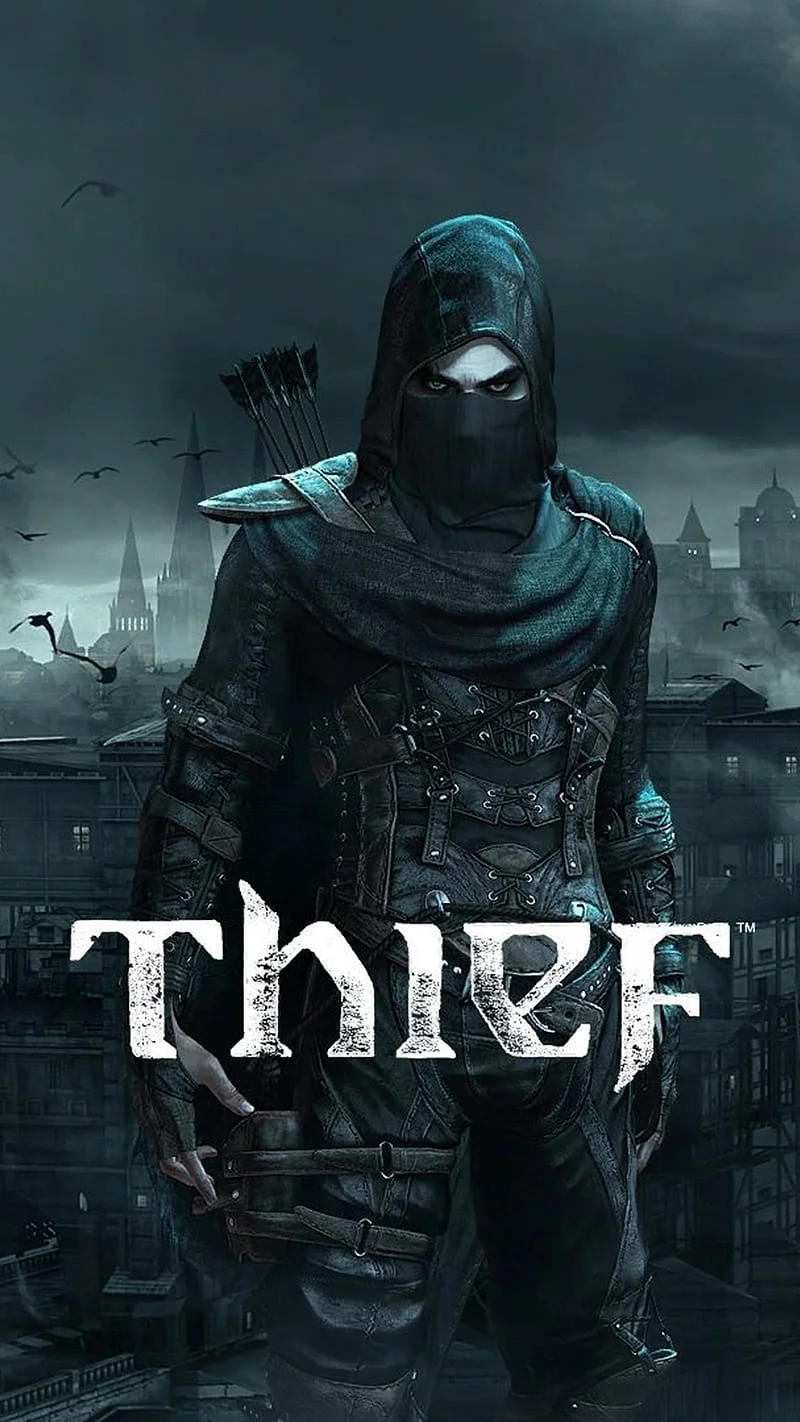
Thief
This combination delivers exceptional performance with an average of 120 FPS, perfect for high refresh rate gaming and competitive play.
Average FPS: resolution vs quality settings
| Ultra | High | Medium | Low | |
|---|---|---|---|---|
| 4K Ultra HD | 55 | 58 | 78 | 100 |
| 1440p QHD | 91 | 99 | 126 | 165 |
| 1080p Full HD | 132 | 140 | 185 | 207 |
Cell color: green is 120+ FPS, teal is 60+, amber is 30+, red is below 30.
Thief with Intel Core i7-14700F + NVIDIA GeForce RTX 3080, In-Depth Analysis
Thief, a 2014 stealth title, remains a demanding benchmark for modern hardware, and the pairing of the Intel Core i7-14700F with the NVIDIA GeForce RTX 3080 produces a wide spectrum of performance across resolutions and presets. The data shows that this combination is capable of delivering high refresh rates at 1080p and 1440p, while 4K Ultra presents a significant challenge that requires settings adjustments for a fluid experience. The measured FPS figures provide a clear picture of where this system excels and where its limitations lie, with the RTX 3080’s 10 GB of GDDR6X memory and the i7-14700F’s 20 cores playing distinct roles.
Resolution Scaling
The transition from 1920x1080 to 3840x2160 reveals a predictable but steep performance curve, heavily influenced by the graphics settings. At the High preset, the average frame rate drops from 140.3 FPS at 1080p to 99.3 FPS at 1440p, and finally to 58.3 FPS at 4K. This represents a 58.4% reduction in frame rate from 1080p to 4K, indicating that the GPU is the primary scaling factor at this quality level. The drop is substantial, yet the 4K result remains above 60 FPS, suggesting a playable experience with only minor tweaks.
The scaling pattern shifts dramatically when examining the Low preset. Here, the average frame rate at 1080p is 206.7 FPS, which is a massive 47.4% higher than the High preset at the same resolution. This indicates that the CPU is not the limiting factor at lower settings; the RTX 3080 is able to stretch its legs. At 1440p Low, the system still achieves 164.7 FPS, and even at 4K Low, it manages a very respectable 99.8 FPS. The performance delta between 1080p and 4K at Low settings is 51.7%, which is slightly less than at High, hinting that the GPU’s compute and memory bandwidth are being taxed more consistently at higher resolutions.
The most demanding scenario is the Ultra preset, where the 4K average drops to 55.4 FPS. This is the only measured configuration that falls below the 60 FPS threshold. The gap between High and Ultra at 4K is only 2.9 FPS, whereas at 1080p the gap is 8.3 FPS. This compression of frame rates at higher resolutions suggests that the system is becoming increasingly bottlenecked by the GPU’s raw pixel throughput and memory bandwidth, rather than the specific shader complexity of the Ultra preset. The data clearly indicates that for 4K gameplay, the user must choose between High settings for a near-60 FPS experience or lower presets for higher refresh rates, as the RTX 3080 is the decisive component.
Settings Recommendations
The measured FPS data offers clear guidance for optimizing the balance between visual fidelity and performance. For 4K displays, the High preset at 58.3 FPS is the optimal choice, as it provides a playable frame rate that is only 2.9 FPS short of the 60 FPS target. The Medium preset at 78.1 FPS offers a more comfortable margin for smoother gameplay, but the visual jump from Medium to High is generally more perceptible than from High to Ultra. Conversely, the Ultra preset at 55.4 FPS is not recommended for 4K, as the marginal visual improvement does not justify the performance cost that pushes the experience below the standard refresh rate threshold.
At 2560x1440, the situation is more forgiving. The Ultra preset achieves 90.6 FPS, which is well above the 60 FPS standard and suitable for higher refresh rate monitors. The High preset at 99.3 FPS provides an even smoother experience, making it the best choice for competitive play or for users who prioritize frame time consistency. The Low preset at 164.7 FPS is excessive for most displays, and the Medium preset at 126.2 FPS offers a good middle ground, but the data suggests that High or Ultra are the most sensible picks for 1440p.
For 1920x1080, the system is clearly powerful enough to handle any preset. The Ultra setting at 132 FPS is the recommended choice for maximum visual quality, as it still provides a high refresh rate experience. The High preset at 140.3 FPS is nearly identical in performance, making the choice between them purely aesthetic. The Medium preset at 185.4 FPS and Low at 206.7 FPS are only relevant for users with 240Hz displays or esports-oriented setups, but they come at a significant cost to image quality. The sweet spot for 1080p is undeniably the High or Ultra preset, where the i7-14700F’s strong single-core performance ensures that the GPU is fully utilized.
FAQ
Q: Can this system run Thief at 4K with a consistent 60 FPS?
A: At the High preset, the average frame rate is 58.3 FPS, which is slightly below 60 FPS. To achieve a consistent 60 FPS, the Medium preset at 78.1 FPS is the safer choice, as it provides a considerable performance buffer.
Q: What is the performance difference between Low and Ultra settings at 1080p?
A: The average frame rate drops from 206.7 FPS at Low to 132 FPS at Ultra, a difference of 74.7 FPS. This represents a 36.1% reduction in performance when moving to the highest quality preset.
Q: Is the CPU or GPU the limiting factor in this game?
A: The data suggests the GPU is the primary bottleneck, especially at higher resolutions. For example, at 4K Low the system achieves 99.8 FPS, while at 4K Ultra it drops to 55.4 FPS, showing that the graphics load heavily impacts performance. The CPU’s role becomes more apparent at lower resolutions, but the RTX 3080’s scaling dominates the results.
Q: How does the RTX 3080’s 10 GB VRAM affect 4K performance?
A: The 10 GB of GDDR6X memory on the RTX 3080 is sufficient for Thief at 4K, as the game’s 2014 release date means it does not require the larger memory pools of modern titles. The bandwidth of 760.3 GB/s is more critical, as it allows the GPU to handle the high pixel throughput demanded by 4K textures.
Q: What is the best preset for a 144Hz 1440p monitor?
A: The High preset at 99.3 FPS is the best match for a 144Hz display, as it comes closest to the refresh rate without exceeding it. The Ultra preset at 90.6 FPS also provides a good experience, but High offers a smoother frame pacing.
Q: How does the i7-14700F’s 20 cores contribute to the game’s performance?
A: Thief, like most games of its era, is not heavily threaded. The i7-14700F’s high single-core performance, evidenced by a Cinebench R23 single-core score of 5003, ensures that the game’s main thread is handled efficiently, preventing a CPU bottleneck at high frame rates.
Measured FPS Breakdown
At 1920x1080, the system demonstrates its peak capabilities. The Low preset delivers an average of 206.7 FPS, which is the highest measured score in the entire dataset. The Medium preset follows with 185.4 FPS, and the High preset drops to 140.3 FPS. The Ultra preset produces 132 FPS, showing a 74.7 FPS spread between the lowest and highest quality settings. These figures confirm that at 1080p, the RTX 3080 is rarely the limiting factor, and the i7-14700F’s processing power is sufficient to feed the GPU.
Moving to 2560x1440, the average frame rates scale down accordingly. The Low preset yields 164.7 FPS, which is still exceptionally high. The Medium preset achieves 126.2 FPS, while the High preset produces 99.3 FPS. The Ultra preset drops to 90.6 FPS, which is the first configuration to fall below the 100 FPS mark. The performance gap between Low and Ultra at this resolution is 74.1 FPS, nearly identical to the 1080p difference, indicating that the GPU is scaling linearly with the pixel count increase.
At 3840x2160, the performance curve becomes steeper. The Low preset delivers 99.8 FPS, which is still a very playable frame rate. The Medium preset drops to 78.1 FPS, and the High preset falls to 58.3 FPS. The Ultra preset bottoms out at 55.4 FPS, the only measured configuration below 60 FPS. The total spread between Low and Ultra at 4K is 44.4 FPS, which is significantly narrower than at lower resolutions. This compression indicates that the GPU’s memory bandwidth of 760.3 GB/s and pixel rate of 164.2 GPixel/s are being saturated, limiting the impact of settings changes.
GPU Role
The NVIDIA GeForce RTX 3080 is the dominant component in this configuration for Thief, as its performance characteristics directly determine the frame rates at each resolution. The GPU’s 10 GB of GDDR6X memory on a 320-bit bus, providing 760.3 GB/s of bandwidth, is a critical asset for 4K rendering. The game’s textures and geometry require substantial memory throughput, and the RTX 3080’s high bandwidth prevents stuttering and frame drops that could occur with a narrower memory interface. The 68 RT cores and 272 tensor cores are not utilized by this game, but the 8704 shading units are fully engaged, processing the complex lighting and shadow calculations that define the stealth genre’s atmosphere.
The GPU’s clock speeds, with a base of 1440 MHz and a boost of 1710 MHz, are relatively modest compared to modern designs, but they are sufficient for a game from 2014. The benchmark results show that the RTX 3080’s performance is well above the 80th percentile when compared to all GPUs, with a PassMark G3D score of 25086. Its nearest rival, the AMD Radeon Pro Duo, scores 35860 on average, which is only 0.2% higher, placing the RTX 3080 in a very competitive position. The GPU’s 29.77 TFLOPS of FP32 compute power is more than enough to handle Thief’s DirectX 11 workload, as evidenced by the high frame rates at lower resolutions.
The VRAM capacity of 10 GB is a potential concern for future titles, but for Thief, it is not a limiting factor. The measured FPS does not show any signs of texture thrashing or memory-related stutters, even at 4K Ultra. The GPU’s role is primarily defined by its raw throughput and memory bandwidth, which are both substantial. The data indicates that the RTX 3080 is a capable performer for this game, and its limitations are only revealed when pushing for 4K Ultra at high refresh rates, where the 55.4 FPS average suggests the GPU is at its absolute limit.
Hardware Specifications
Intel Core i7-14700F
NVIDIA GeForce RTX 3080
FPS Benchmarks by Resolution & Settings
Performance data for Intel Core i7-14700F + NVIDIA GeForce RTX 3080 in Thief
| Resolution | Settings | Avg FPS |
|---|---|---|
| 3840x2160 | Low | 99.8 |
| 3840x2160 | Medium | 78.1 |
| 3840x2160 | High | 58.3 |
| 3840x2160 | Ultra | 55.4 |
| 2560x1440 | Low | 164.7 |
| 2560x1440 | Medium | 126.2 |
| 2560x1440 | High | 99.3 |
| 2560x1440 | Ultra | 90.6 |
| 1920x1080 | Low | 206.7 |
| 1920x1080 | Medium | 185.4 |
| 1920x1080 | High | 140.3 |
| 1920x1080 | Ultra | 132.0 |
Thief with ii7-14700F + Other GPUs
See how Thief performs with the same CPU but different graphics cards.
Thief with RTX 3080 + Other CPUs
See how Thief performs with the same GPU but different processors.
Other Games with ii7-14700F + RTX 3080
Explore FPS benchmarks for other games using this same hardware combination.