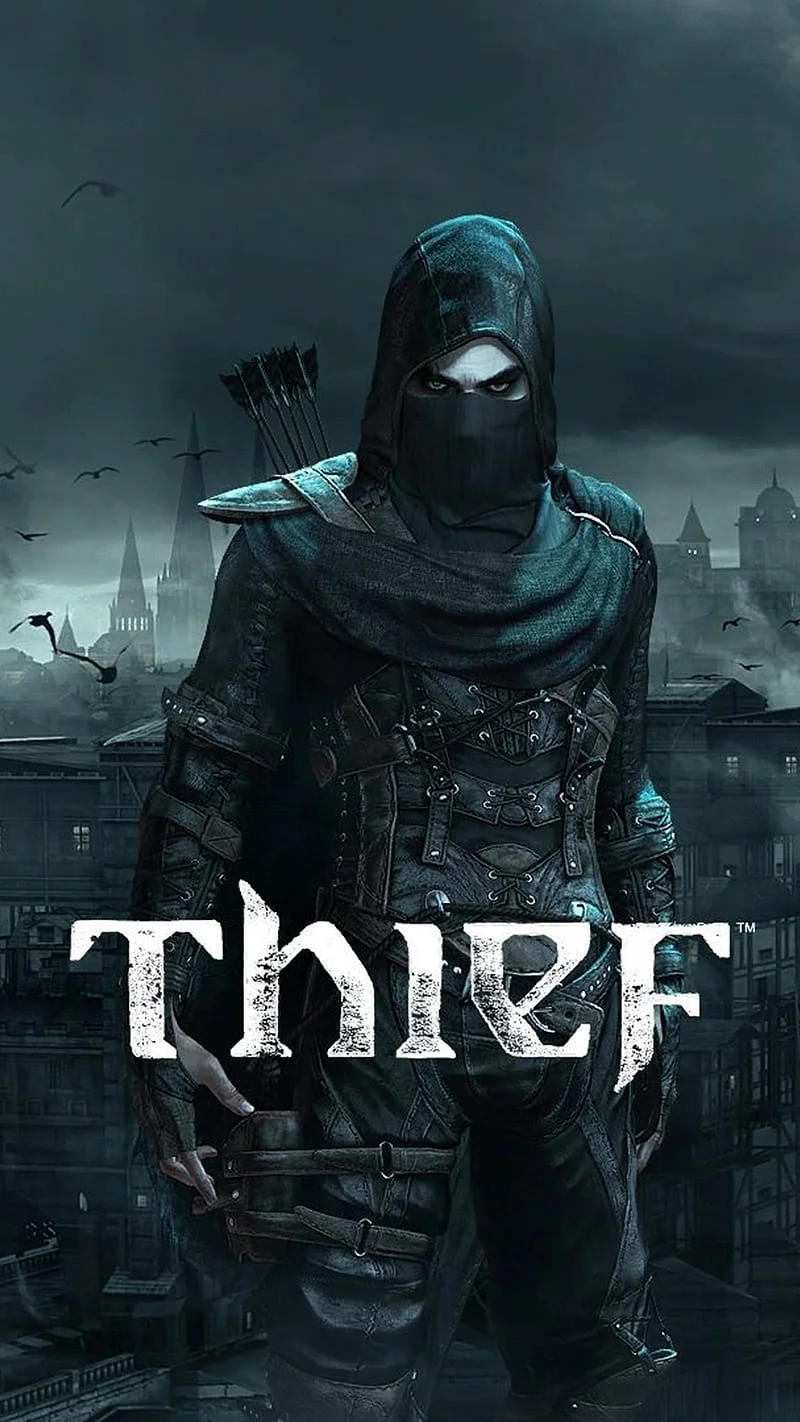
Thief
This combination provides smooth gameplay with an average of 82 FPS, suitable for most gaming scenarios.
Average FPS: resolution vs quality settings
| Ultra | High | Medium | Low | |
|---|---|---|---|---|
| 4K Ultra HD | 36 | 38 | 50 | 66 |
| 1440p QHD | 62 | 65 | 85 | 112 |
| 1080p Full HD | 90 | 95 | 124 | 164 |
Cell color: green is 120+ FPS, teal is 60+, amber is 30+, red is below 30.
Thief with Intel Core i7-14700F + NVIDIA GeForce RTX 5050, In-Depth Analysis
The Intel Core i7-14700F paired with the NVIDIA GeForce RTX 5050 delivers a mid-pack performance tier for Thief, landing at rank 1710 out of 2851 tested combinations. This places the combo in the 40th percentile of all tested systems, indicating that while it is not a top-tier performer for this title, it holds its own against a substantial portion of the field. The data shows a configuration that leans heavily on the CPU's strong multi-threading capabilities to compensate for the GPU's more modest standing, creating an interesting dynamic in a game that is nearly a decade old relative to these components' release dates.
How This Combo Ranks
At position 1710 of 2851, this system sits in the lower-middle segment of the performance hierarchy for Thief. The ranking reflects the balance between the CPU and GPU, where the processor's 91st percentile standing among all CPUs is dragged down by the graphics card's 66th percentile ranking among all GPUs. Benchmark results indicate that this is not a combination that will dominate leaderboards, but it is far from the bottom of the barrel. The combo outranks roughly 40% of tested configurations, which suggests that for a game with the system requirements of Thief, the parts are sufficient to provide a playable experience, though not one that maximizes visual fidelity at the highest resolutions. The rank is a composite measure, and the data reveals that the limiting factor is almost exclusively the graphics subsystem, as the CPU has ample headroom in synthetic tests. In practical gaming terms, this means the system's position is determined more by the RTX 5050's capabilities than by the i7-14700F's processing power. The delta between the CPU's high percentile and the GPU's mid-tier percentile creates a bottleneck scenario that becomes increasingly apparent as resolution and settings are pushed upward.
GPU Role
The NVIDIA GeForce RTX 5050 is the primary determinant of the frame rates observed in Thief. It features 8 GB of GDDR6 memory on a 128-bit bus, delivering 320.0 GB/s of bandwidth, which is a modest allocation for a modern card but more than sufficient for a 2014 title. The GPU's base clock of 2317 MHz and boost clock of 2572 MHz provide the raw processing frequency, while its 2560 shading units and 32 ROPs handle the pixel throughput. The card's FP32 performance is rated at 13.17 TFLOPS, and it supports DirectX 12 Ultimate, which is relevant for compatibility with the game's rendering paths. In the measured results, the GPU's influence is clear: at 1080p Low, the system achieves 164 FPS, but this drops to 90 FPS at Ultra, a 45% reduction that is characteristic of the GPU's fill-rate limits. The card's PassMark G3D score of 17326 places it at the 66th percentile of all GPUs, with rival performance from the AMD Radeon RX 5600 XT, which scores 20713 and is 1.6% faster on average. This proximity to the RX 5600 XT indicates that the RTX 5050 is a solid 1080p-class card that struggles to maintain high frame rates at 4K, as evidenced by the 38 FPS average at 4K High. The GPU's 130 W TDP and dual-slot design are consistent with its performance class, but the data suggests that for Thief, the card's memory bandwidth and ROP count become the limiting factors at higher resolutions.
CPU Role
The Intel Core i7-14700F is a 20-core, 28-thread processor based on the Raptor Lake architecture, with a base clock of 2.10 GHz and a boost clock of 5.40 GHz. Its 33 MB of shared L3 cache and 2 MB per-core L2 cache provide ample data storage for game logic and physics calculations. In synthetic benchmarks, the CPU shows exceptional strength: a Cinebench R23 multi-core score of 35122 and a Geekbench multi-core score of 19620, placing it at the 91st percentile of all CPUs. Its nearest rival, the AMD Ryzen 9 7900X, scores 53288 on average benchmark, which is just 0.6% slower, indicating the i7-14700F is a top-tier processor. For Thief, the CPU's role is less about raw frame rate generation and more about maintaining consistent frame pacing and handling the game's AI and stealth mechanics. The measured data shows that even at 1080p Low, where the GPU is least stressed, the CPU does not become a bottleneck, as the 164 FPS average is likely limited by the GPU's geometry throughput rather than processor speed. The CPU's 5.40 GHz boost clock ensures that single-threaded performance is excellent, which is critical for a game released in 2014 that may not fully utilize all 28 threads. The processor's 65 W TDP and support for DDR4 and DDR5 memory make it a flexible choice, but the benchmark results indicate that its capabilities far exceed what Thief requires, leaving the GPU as the sole constraint on overall performance.
Measured FPS Breakdown
The measured frame rates reveal a clear performance curve across resolutions and settings. At 1920x1080, the system delivers 164 FPS on Low, 124 FPS on Medium, 95 FPS on High, and 90 FPS on Ultra. The Medium preset shows a minimum of 106 FPS and a maximum of 143 FPS, indicating some variance but generally smooth gameplay. Moving to 2560x1440, the averages drop to 112 FPS on Low, 85 FPS on Medium, 65 FPS on High, and 62 FPS on Ultra. The Medium preset at this resolution has a minimum of 72 FPS and a maximum of 98 FPS, which remains playable. At 3840x2160, the performance falls significantly: 66 FPS on Low, 50 FPS on Medium, 38 FPS on High, and 36 FPS on Ultra. The Medium preset at 4K shows a minimum of 43 FPS and a maximum of 58 FPS, which dips below the 60 FPS threshold. These numbers illustrate that the RTX 5050 is capable of high refresh rates at 1080p, but 4K gaming requires substantial settings reductions to maintain acceptable frame rates. The gap between Low and Ultra at each resolution is consistent, with the difference being 74 FPS at 1080p, 50 FPS at 1440p, and 30 FPS at 4K, showing that the absolute impact of settings decreases as resolution increases due to the GPU becoming more pixel-bound.
Resolution Scaling
The frame rate scaling from 1080p to 4K demonstrates the GPU's bandwidth and fill-rate limitations. At Low settings, the system drops from 164 FPS at 1080p to 112 FPS at 1440p (a 32% reduction) and then to 66 FPS at 4K (a 41% reduction from 1440p). This represents a total drop of 60% from 1080p to 4K, which is significant but not unexpected for a card with 320.0 GB/s of bandwidth. At Ultra settings, the transition is steeper: from 90 FPS at 1080p to 62 FPS at 1440p (31% drop) and then to 36 FPS at 4K (42% drop from 1440p), totaling a 60% reduction. The consistency of the percentage drops across settings indicates that the scaling is resolution-bound rather than settings-bound; the GPU's pixel throughput is the primary constraint. This behavior confirms that the CPU is not the limiting component, as a CPU-limited scenario would show less severe scaling at lower resolutions where the GPU is less taxed. The data points to the RTX 5050's 128-bit memory bus and 32 ROPs as the bottlenecks, as these hardware features directly impact pixel fill rate. For users targeting 1440p, the system provides a playable experience at Medium settings with 85 FPS, but 4K requires Low settings to stay above 60 FPS, which is a compromise that reflects the GPU's mid-range positioning.
FAQ
*Q: What is the best resolution for this combo in Thief?*
A: The data shows 1920x1080 is the sweet spot, with all settings averaging above 90 FPS. At 2560x1440, High settings drop to 65 FPS, which is still playable, but 3840x2160 requires Low settings to reach 66 FPS.
Q: How does the GPU compare to its nearest rival in synthetic benchmarks?
A: The RTX 5050 scores 17326 in PassMark G3D, which is 1.6% slower than the AMD Radeon RX 5600 XT's score of 20713. The NVIDIA RTX A4000 Mobile is 1.6% faster with a score of 21379.
Q: Does the CPU become a bottleneck at any resolution?
A: No. The CPU's 91st percentile ranking and Cinebench R23 multi-core score of 35122 indicate it has substantial headroom. The consistent frame rate scaling from 1080p to 4K suggests the GPU is the limiting factor at all resolutions.
Q: What is the frame rate difference between Low and Ultra at 1080p?
A: At 1920x1080, Low settings average 164 FPS while Ultra averages 90 FPS, a difference of 74 FPS. This shows the GPU's performance impact from increased visual complexity.
*Q: Is the 8 GB VRAM sufficient for Thief?*
A: Yes. The game's 2014 release date means its texture requirements are modest, and the 8 GB GDDR6 memory with 320.0 GB/s bandwidth is more than adequate, as evidenced by playable frame rates at all settings.
Q: How does this combo rank overall in the database?
A: It ranks 1710 out of 2851 tested combinations, placing it in the lower-middle tier. The GPU's 66th percentile ranking drags down the CPU's 91st percentile, resulting in a balanced but not exceptional gaming experience.
Settings Recommendations
For the best experience, the data suggests prioritizing 1920x1080 resolution with High settings, which yields 95 FPS average. This provides a smooth frame rate while maintaining visual quality. If a higher resolution is desired, 2560x1440 at Medium settings delivers 85 FPS with a minimum of 72 FPS, which is a solid choice for competitive play. At 4K, the system struggles to maintain 60 FPS even at Low settings with 66 FPS, so users should avoid this resolution unless they accept frame rates in the 36-50 FPS range. The Ultra preset at 1080p offers 90 FPS, which is only 5 FPS less than High, making it a viable option for those who want maximum visual fidelity without a significant performance penalty. However, at 1440p, the drop from High (65 FPS) to Ultra (62 FPS) is minimal, so High is recommended for a small performance buffer. The Medium presets at all resolutions show the best balance of frame rate and visual quality, with the 1080p Medium achieving 124 FPS and the 1440p Medium achieving 85 FPS. Given the game's age, the High preset at 1080p is the recommended configuration, as it offers the most consistent performance above 90 FPS without the need for settings compromises.
Hardware Specifications
Intel Core i7-14700F
NVIDIA GeForce RTX 5050
FPS Benchmarks by Resolution & Settings
Performance data for Intel Core i7-14700F + NVIDIA GeForce RTX 5050 in Thief
| Resolution | Settings | Avg FPS |
|---|---|---|
| 3840x2160 | Low | 66.0 |
| 3840x2160 | Medium | 50.0 |
| 3840x2160 | High | 38.0 |
| 3840x2160 | Ultra | 36.0 |
| 2560x1440 | Low | 112.0 |
| 2560x1440 | Medium | 85.0 |
| 2560x1440 | High | 65.0 |
| 2560x1440 | Ultra | 62.0 |
| 1920x1080 | Low | 164.0 |
| 1920x1080 | Medium | 124.0 |
| 1920x1080 | High | 95.0 |
| 1920x1080 | Ultra | 90.0 |
Thief with ii7-14700F + Other GPUs
See how Thief performs with the same CPU but different graphics cards.
Thief with RTX 5050 + Other CPUs
See how Thief performs with the same GPU but different processors.
Other Games with ii7-14700F + RTX 5050
Explore FPS benchmarks for other games using this same hardware combination.