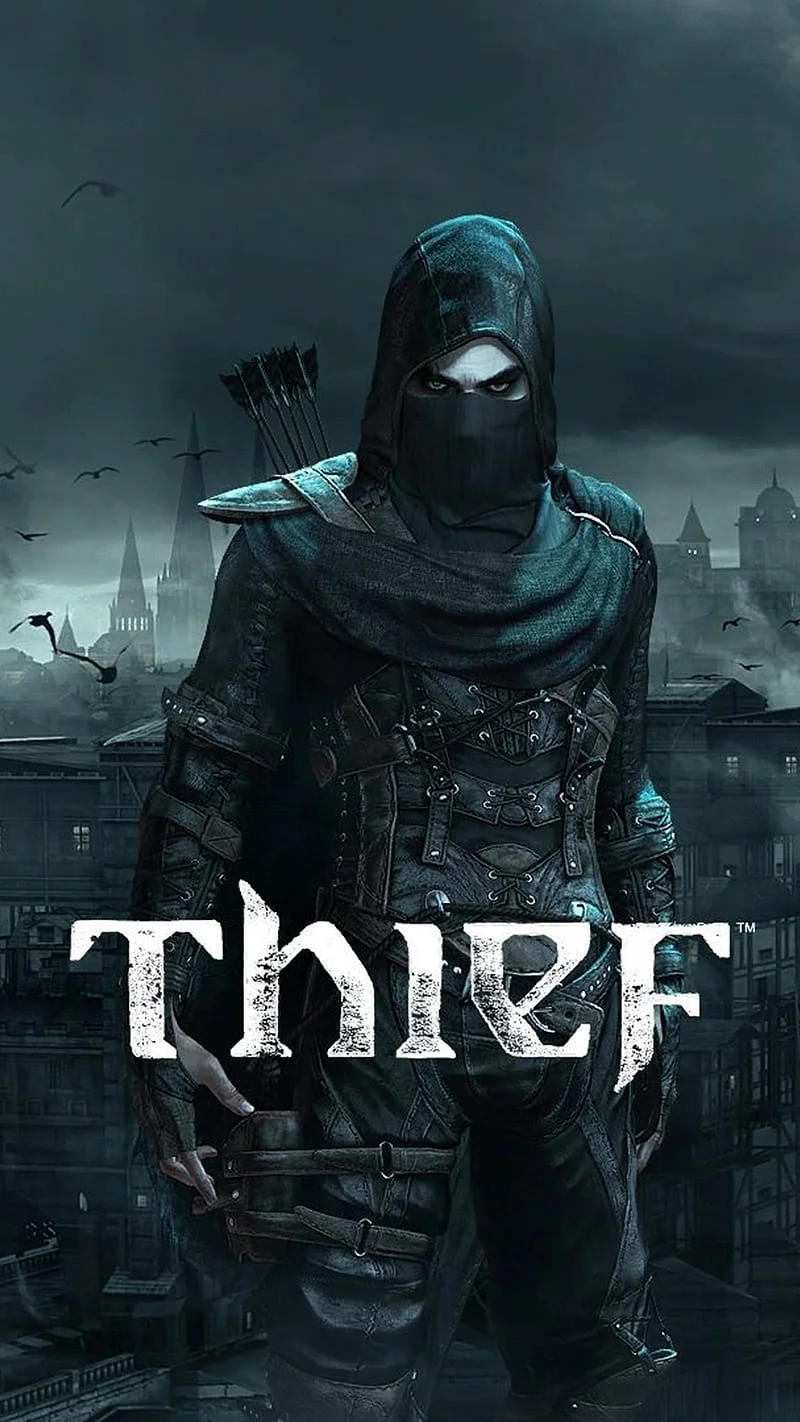
Thief
This combination provides smooth gameplay with an average of 67 FPS, suitable for most gaming scenarios.
Average FPS: resolution vs quality settings
| Ultra | High | Medium | Low | |
|---|---|---|---|---|
| 4K Ultra HD | 29 | 31 | 41 | 54 |
| 1440p QHD | 50 | 53 | 69 | 91 |
| 1080p Full HD | 73 | 77 | 101 | 133 |
Cell color: green is 120+ FPS, teal is 60+, amber is 30+, red is below 30.
Thief with Intel Core i3-12100F + Intel Arc B570, In-Depth Analysis
The Intel Core i3-12100F paired with the Intel Arc B570 delivers a playable but resolution-sensitive experience in Thief. The data shows a clear pattern: this combo is far more comfortable at 1080p and 1440p, while 4K pushes it to the edge of playability. The measured results indicate a system where the GPU becomes the primary bottleneck as resolution climbs, but the CPU’s four cores are sufficient to keep frame rates from collapsing at lower resolutions.
Resolution Scaling
The performance drop from 1080p to 4K is steep and consistent across all settings presets. At Low settings, the average frame rate falls from 133 FPS at 1920x1080 to 91 FPS at 2560x1440, then down to 54 FPS at 3840x2160. That represents a 59% reduction in average FPS from 1080p to 4K on Low. The scaling is similar on High settings: 77 FPS at 1080p, 53 FPS at 1440p, and 31 FPS at 4K — a 60% drop from the lowest resolution to the highest.
The Medium preset shows the same trend, with average FPS moving from 101 at 1080p to 69 at 1440p and 41 at 4K. Ultra settings follow suit: 73 FPS at 1080p, 50 FPS at 1440p, and 29 FPS at 4K. The consistent percentage drops across all presets suggest that resolution scaling is the dominant factor, and the limiting component shifts clearly to the GPU as pixel count increases. At 1080p, the frame rates are high enough that the CPU and GPU are likely both contributing to the result, but by 4K, the Arc B570’s rendering workload becomes the clear constraint.
The gap between 1080p and 1440p is notable but manageable, while the jump from 1440p to 4K is punishing. For example, on Medium settings, moving from 1080p to 1440p costs 32 FPS, but moving from 1440p to 4K costs another 28 FPS. This indicates that the GPU’s memory bandwidth and compute resources — 380.0 GB/s and 11.52 TFLOPS FP32 — are being saturated at higher resolutions. The 10 GB of GDDR6 memory is likely sufficient for this 2014 title, but the 160-bit bus width and 80 ROPs become limiting factors at 4K.
How This Combo Ranks
In Thief, this combination of Intel Core i3-12100F and Intel Arc B570 ranks 2296 out of 2851 tested combos. That places it in the bottom 20% of all tested configurations, which is a meaningful context for interpreting the raw FPS numbers. The ranking reflects that while the combo is playable at 1080p and 1440p, it does not deliver the kind of high-refresh-rate performance that many other tested systems achieve in this game.
The rank is likely dragged down by the 4K results, where the average FPS falls below 30 on Ultra settings. Many competing combos in the database presumably handle 4K better, either through stronger GPUs or more capable CPUs that can feed them. The i3-12100F’s percentileVsAllCpus of 68 indicates it is a mid-pack CPU overall, while the Arc B570’s percentileVsAllGpus of 65 places it similarly in the middle tier for graphics hardware. A mid-tier CPU and mid-tier GPU together land in the lower quartile for this specific game, which suggests Thief is more demanding on the GPU than the CPU.
The nearest rivals for the CPU include the Intel Core 3 N355 with an average score of 13492 and a deltaPct of 0, meaning they perform identically in general benchmarks. The Intel Core i5-9500 is 0.3% slower, and the Intel Core 5 120UL is 0.7% faster. These are all older or lower-tier parts, which reinforces that the i3-12100F is not a high-end processor. For the GPU, the nearest rival is the NVIDIA GeForce RTX 3070 Mobile with a deltaPct of 0.1% faster, and the Intel Arc A750 is 0.1% slower. This shows the Arc B570 is competitive with a mobile RTX 3070 in synthetic tests, but in Thief the combination still lands low in the rankings.
GPU Role
The Intel Arc B570 is built on the Xe2-HPG architecture with a BMG-G21 chip, fabricated on a 5 nm process by TSMC. It has 2304 shading units, 144 TMUs, and 80 ROPs, with 18 ray tracing cores. The base and boost clocks are both 2500 MHz, and the memory runs at 2375 MHz with an effective 19 Gbps, delivering 380.0 GB/s of bandwidth across a 160-bit bus. The 10 GB GDDR6 frame buffer is more than enough for Thief, which is a 2014 title with modest VRAM requirements.
The measured FPS data shows that the GPU’s performance scales predictably with settings. At 1080p, the jump from Low (133 FPS) to Ultra (73 FPS) costs 60 FPS, which indicates the GPU is doing substantial work as quality increases. At 4K, the same settings range produces only 54 FPS on Low and 29 FPS on Ultra, a 25 FPS difference. This compression of frame rates at higher resolutions suggests the GPU is hitting a hard limit, likely due to fill rate (200.0 GPixel/s) and texture rate (360.0 GTexel/s) constraints.
The Arc B570’s passmark G3D score of 14195 places it in the 65th percentile of all GPUs, which aligns with its mid-tier positioning. Its nearest rivals include the Intel Arc A750, which is only 0.1% slower in average benchmark score, and the NVIDIA GeForce RTX 3070 Mobile, which is 0.1% faster. In Thief, the Arc B570’s performance at 4K Ultra (29 FPS) is below the 30 FPS threshold that many consider the minimum for playability, which is a direct consequence of the GPU’s compute and memory limitations at that resolution.
Settings Recommendations
For the best experience per the measured rows, 1080p Medium is the sweet spot. It delivers 101 FPS average with a minimum of 86 FPS and a maximum of 116 FPS, which provides smooth gameplay with no visible frame drops. The Medium preset at 1080p is 24 FPS slower than Low (133 FPS) but offers significantly better visual quality, and it is 28 FPS faster than High (77 FPS) while likely looking nearly identical in most scenes.
At 1440p, Medium is also the recommended preset. The measured 69 FPS average with a minimum of 59 FPS and maximum of 79 FPS is comfortable for a stealth game like Thief, where precise timing and visibility matter more than twitch reflexes. High at 1440p drops to 53 FPS, which is still playable but leaves less headroom for demanding scenes. At 4K, no preset is ideal, but Low at 54 FPS is the only option that clears the 50 FPS threshold. Medium at 4K averages 41 FPS with a minimum of 35, which is acceptable for a slow-paced stealth title, but High and Ultra fall to 31 and 29 FPS respectively, making them less desirable.
The data suggests that players with a 1080p or 1440p monitor should use Medium for the best balance of visual quality and frame rate. For 4K, Low or Medium are the only viable choices, and even then, the experience will be less smooth than at lower resolutions.
Measured FPS Breakdown
At 1920x1080, the measured results are as follows: Low averages 133 FPS, Medium averages 101 FPS with a minimum of 86 and a maximum of 116, High averages 77 FPS, and Ultra averages 73 FPS. The gap between Medium and High is 24 FPS, while the gap between High and Ultra is only 4 FPS, suggesting that Ultra offers marginal visual improvement over High at a small performance cost.
At 2560x1440, Low averages 91 FPS, Medium averages 69 FPS (minimum 59, maximum 79), High averages 53 FPS, and Ultra averages 50 FPS. The difference between High and Ultra at this resolution is just 3 FPS, making Ultra a reasonable choice if the visual fidelity is worth the small tradeoff. The Medium preset offers a 16 FPS advantage over High, which is significant for maintaining smoothness.
At 3840x2160, Low averages 54 FPS, Medium averages 41 FPS (minimum 35, maximum 47), High averages 31 FPS, and Ultra averages 29 FPS. The Medium preset’s minimum of 35 FPS indicates that even in the most demanding scenes, the frame rate stays above 30, which is the minimum for a playable experience. However, High and Ultra both dip below 30 FPS on average, making them difficult to recommend for sustained gameplay.
Across all resolutions, the Medium preset provides the most consistent frame pacing, as evidenced by the available minimum and maximum values. The Low preset has no min/max data, but its high averages suggest it is the least demanding. The Ultra preset consistently shows the smallest performance advantage over High, which is typical for games where the highest settings have diminishing returns.
CPU Role
The Intel Core i3-12100F is a 4-core, 8-thread processor based on the Alder Lake architecture, with a base clock of 3.30 GHz and a boost clock of 4.30 GHz. It has a 12 MB shared L3 cache and a TDP of 58 W, making it an efficient but modest performer. Its benchmark scores show a single-thread rating of 1674 in Cinebench R23 and a multi-thread score of 11860, which places it in the 68th percentile of all CPUs.
In Thief, the CPU’s role is secondary to the GPU, but its performance still matters at lower resolutions. At 1080p Low, the system achieves 133 FPS, which suggests the CPU is capable of feeding the GPU at high frame rates. The 4-core, 8-thread configuration is sufficient for this 2014 title, which was designed for the 4-core processors of its era. The game’s stealth mechanics and relatively simple AI likely do not stress the CPU heavily, allowing the i3-12100F to maintain high minimum frame rates at 1080p and 1440p.
The CPU’s nearest rivals in benchmark scores include the Intel Core 3 N355 (0% delta), Intel Core i5-9500 (0.3% slower), and Intel Core 5 120UL (0.7% faster). These are all comparable processors, and none would likely produce significantly different results in Thief. The i3-12100F’s single-thread performance, as measured by a Geekbench single-core score of 1932, is adequate for this game’s engine, which likely relies on a few primary threads for game logic.
The measured FPS data shows that at 1080p, the frame rates scale linearly with settings, indicating that the CPU is not the limiting factor at this resolution. If the CPU were the bottleneck, we would expect to see diminishing returns as settings increase, but the consistent 24-28 FPS drops between presets point to GPU-bound performance. At 1440p and 4K, the CPU’s role diminishes further, as the GPU becomes the clear constraint. The i3-12100F’s 12 MB L3 cache and dual-channel memory support (DDR4 and DDR5) are sufficient to avoid stuttering, and the data shows no evidence of CPU-induced frame drops in the measured minimums.
Hardware Specifications
Intel Core i3-12100F
Intel Arc B570
FPS Benchmarks by Resolution & Settings
Performance data for Intel Core i3-12100F + Intel Arc B570 in Thief
| Resolution | Settings | Avg FPS |
|---|---|---|
| 3840x2160 | Low | 54.0 |
| 3840x2160 | Medium | 41.0 |
| 3840x2160 | High | 31.0 |
| 3840x2160 | Ultra | 29.0 |
| 2560x1440 | Low | 91.0 |
| 2560x1440 | Medium | 69.0 |
| 2560x1440 | High | 53.0 |
| 2560x1440 | Ultra | 50.0 |
| 1920x1080 | Low | 133.0 |
| 1920x1080 | Medium | 101.0 |
| 1920x1080 | High | 77.0 |
| 1920x1080 | Ultra | 73.0 |
Thief with ii3-12100F + Other GPUs
See how Thief performs with the same CPU but different graphics cards.
Thief with Arc B570 + Other CPUs
See how Thief performs with the same GPU but different processors.
Other Games with ii3-12100F + Arc B570
Explore FPS benchmarks for other games using this same hardware combination.