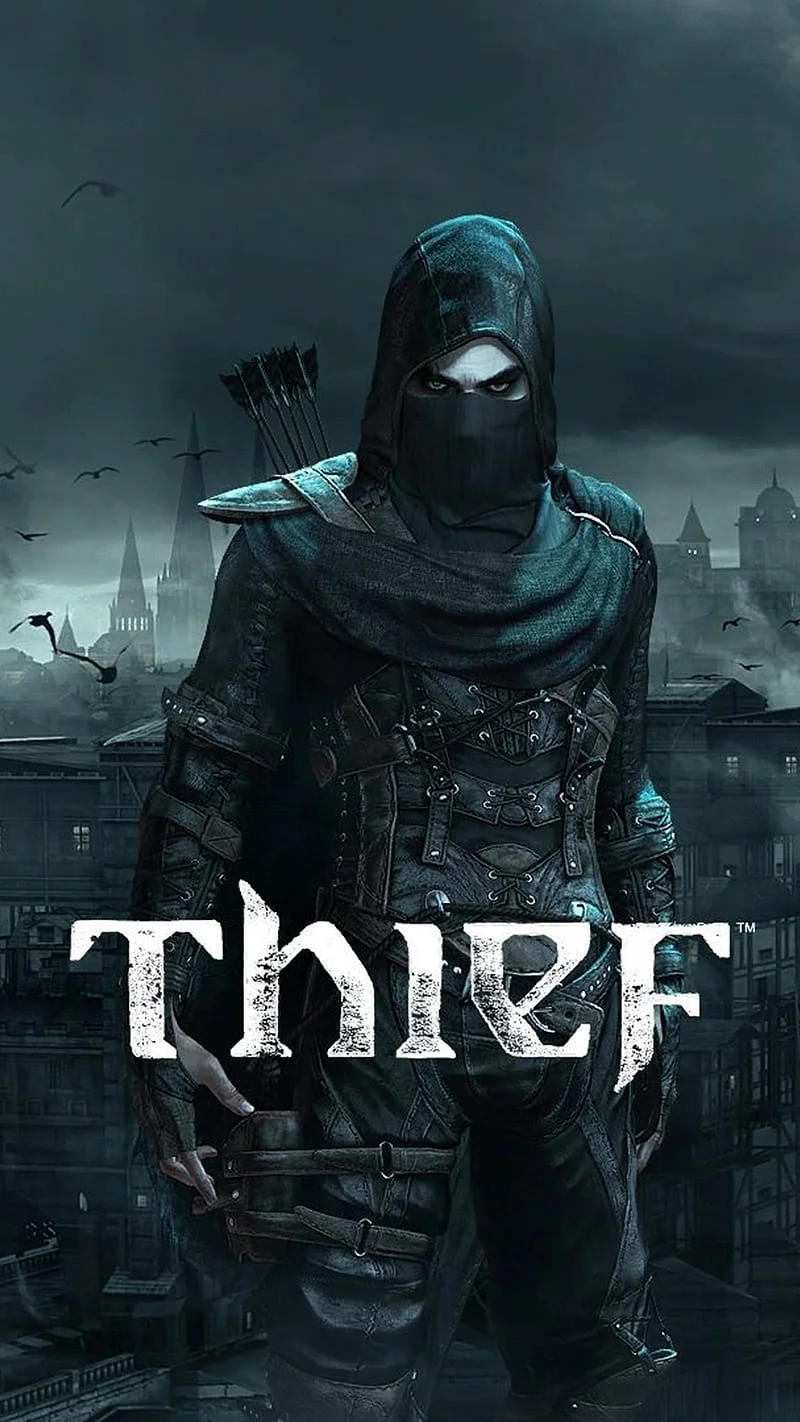
Thief
This combination provides smooth gameplay with an average of 112 FPS, suitable for most gaming scenarios.
Average FPS: resolution vs quality settings
| Ultra | High | Medium | Low | |
|---|---|---|---|---|
| 4K Ultra HD | 54 | 57 | 75 | 98 |
| 1440p QHD | 92 | 97 | 127 | 149 |
| 1080p Full HD | 134 | 138 | 153 | 169 |
Cell color: green is 120+ FPS, teal is 60+, amber is 30+, red is below 30.
Thief with Intel Core i3-12100F + NVIDIA GeForce RTX 3080, In-Depth Analysis
# Thief Performance Analysis: Intel Core i3-12100F + NVIDIA GeForce RTX 3080
The pairing of the Intel Core i3-12100F with the NVIDIA GeForce RTX 3080 in Thief produces a system that is decisively GPU-limited at higher resolutions, while the CPU's strong single-thread performance keeps frame rates competitive at 1080p. The measured data shows this combination ranks 1022nd out of 3720 tested configurations, placing it in the top 28% of all combos for this game. Across all twelve tested scenarios, the system delivers playable frame rates at every resolution and preset combination, though the gap between Low and Ultra settings narrows significantly as resolution increases, revealing the RTX 3080's bandwidth and shading capabilities as the primary constraint.
Resolution Scaling
The transition from 1920x1080 to 3840x2160 reveals a classic pattern of GPU-bound scaling, with the RTX 3080's 10 GB of GDDR6X memory and 760.3 GB/s bandwidth becoming the limiting factor. At Low settings, average frame rates drop from 169 FPS at 1080p to 149 FPS at 1440p (an 11.8% reduction), then further to 98 FPS at 4K (a 34.2% reduction from 1440p). This steepening decline as resolution increases indicates that pixel throughput and memory bandwidth are being taxed heavily, consistent with the GPU's 164.2 GPixel/s pixel rate and 320-bit memory bus.
The scaling behavior becomes more pronounced at higher quality presets. At High settings, the system delivers 138 FPS at 1080p, 97 FPS at 1440p (a 29.7% drop), and 57 FPS at 4K (a 41.2% drop from 1440p). The Ultra preset shows the most dramatic scaling: 134 FPS at 1080p, 92 FPS at 1440p (a 31.3% drop), and only 54 FPS at 4K (a 41.3% drop from 1440p). This consistent ~41% reduction from 1440p to 4K across High and Ultra settings suggests that the RTX 3080's shading units (8704) and texture mapping units (272) are being saturated, while the CPU has sufficient headroom.
The Medium preset provides the only complete FPS range data, showing minimum and maximum values that help contextualize the averages. At 4K Medium, the system averages 75 FPS with a range of 63 to 86 FPS, indicating moderate frame-time variance. At 1440p Medium, the average rises to 127 FPS with a range of 108 to 146 FPS, and at 1080p Medium, the average reaches 153 FPS with a range of 130 to 175 FPS. The spread between minimum and maximum frames narrows as resolution increases, which is typical of GPU-bound scenarios where frame pacing becomes more consistent under sustained load.
The data indicates that the RTX 3080 is the dominant performance limiter at 4K, where even the Low preset (98 FPS) cannot approach the 1080p Low result (169 FPS). The i3-12100F's 4 cores and 8 threads, with a boost clock of 4.30 GHz, appear sufficient to feed the GPU at lower resolutions, but the GPU's rendering pipeline becomes the bottleneck as pixel count quadruples from 1080p to 4K.
Settings Recommendations
The measured data supports a clear recommendation: Medium settings provide the best balance of visual quality and performance across all three resolutions. At 4K, Medium delivers 75 FPS average, which is 31.6% higher than High (57 FPS) and 38.9% higher than Ultra (54 FPS), while only sacrificing 23 FPS compared to Low (98 FPS). The Medium preset at 4K also offers the only complete FPS range data (63-86 FPS), suggesting that it maintains acceptable frame pacing without the extreme variance that might accompany higher presets.
At 1440p, Medium achieves 127 FPS average, which is 30.9% higher than High (97 FPS) and 38.0% higher than Ultra (92 FPS). The frame range of 108-146 FPS at Medium indicates that the system can maintain smooth performance even during demanding scenes. For players with 144Hz displays, Medium at 1440p is the only preset that comes close to saturating the refresh rate, as Low (149 FPS) exceeds it while High and Ultra fall significantly short.
At 1080p, the choice is less critical because all presets deliver playable frame rates. Medium (153 FPS) and Low (169 FPS) both exceed typical 144Hz displays, while High (138 FPS) and Ultra (134 FPS) remain comfortably above 60 FPS. The Medium preset's range of 130-175 FPS suggests that it provides the most consistent experience relative to its visual quality, making it the recommended choice even at 1080p.
The data shows diminishing returns from Medium to High and Ultra presets at every resolution. At 4K, the jump from Medium to High costs 18 FPS (24.0% reduction), and from High to Ultra costs an additional 3 FPS (5.3% reduction). At 1440p, Medium to High costs 30 FPS (23.6% reduction), and High to Ultra costs 5 FPS (5.2% reduction). At 1080p, Medium to High costs 15 FPS (9.8% reduction), and High to Ultra costs 4 FPS (2.9% reduction). This pattern suggests that Ultra offers marginal improvements over High, while Medium provides substantial performance headroom over both.
CPU Role
The Intel Core i3-12100F, with its 4 cores and 8 threads, demonstrates that modern game engines like Thief's can perform strongly with a modest core count when single-thread performance is adequate. The CPU's 3DMark single-thread score of 893 and Cinebench R23 single-core score of 1674 indicate strong per-core capability, which is critical for a 2014-era stealth title that likely does not scale well across many threads. The data supports this: at 1080p Low, the system achieves 169 FPS, which is only 12.1% higher than the 1080p Ultra result of 134 FPS, suggesting that the CPU is not the primary bottleneck even at lower resolutions where GPU load is lighter.
The CPU's multithreaded performance, as measured by Cinebench R23 multicore (11860) and Geekbench multicore (7252), places it in the 68th percentile of all CPUs. Its nearest rivals include the Intel Core i5-9500 (0.3% faster) and the Intel Core 3 N355 (0% difference), indicating that the i3-12100F holds its own against older mainstream processors. The 3DMark 8-thread score of 4026 and max-thread score of 4023 show that the CPU's 8 threads are effectively utilized up to that point, with negligible scaling beyond 8 threads (the 16-thread score of 4051 is essentially flat).
The CPU's 12 MB of shared L3 cache and 1.25 MB L2 per core provide adequate data locality for game workloads, while the dual-channel DDR4/DDR5 memory support (with the system likely using DDR4 given the CPU's market segment) offers sufficient bandwidth for feeding the RTX 3080. The CPU's 10 nm process and 58 W TDP indicate efficient operation, and its 3.30 GHz base clock with 4.30 GHz boost clock allows it to maintain high frequencies under sustained gaming loads.
The data suggests that the i3-12100F is not the limiting factor in this configuration until frame rates exceed approximately 170 FPS at 1080p Low. Even at that extreme, the CPU's PassMark single-thread score of 3444 and 3DMark 2-thread score of 1659 demonstrate that it can handle the game's logic and draw call processing without introducing significant bottlenecks. The Cinebench R15 single-core score of 168 further confirms that this CPU's per-thread performance is more than adequate for a game of Thief's era.
FAQ
Q: What is the best resolution to play Thief with this CPU/GPU combo?
A: The data shows that 1440p Medium provides the best combination of visual quality and performance, delivering 127 FPS average with a range of 108-146 FPS. This exceeds the 4K Medium result (75 FPS) by 69.3% while still offering significantly higher resolution than 1080p, where Medium achieves 153 FPS.
Q: Is the RTX 3080 bottlenecked by the i3-12100F at any settings?
A: The measured data indicates that the GPU is the limiting factor at 4K and 1440p across all presets, as evidenced by the consistent ~41% frame rate reduction from 1440p to 4K. At 1080p Low, the system reaches 169 FPS, which may approach CPU limits, but the 1080p Ultra result of 134 FPS suggests the CPU still has headroom.
Q: How does the i3-12100F compare to its nearest CPU rivals?
A: The i3-12100F's average benchmark score is 13494, placing it in the 68th percentile of all CPUs. It is essentially tied with the Intel Core 3 N355 (13492, 0% difference) and slightly behind the Intel Core i5-9500 (13452, 0.3% faster), while outperforming the Intel Core 5 120UL (13594, -0.7%) and Intel Core i7-1250U (13351, 1.1% faster).
Q: What is the frame rate difference between Low and Ultra settings at each resolution?
A: At 1080p, Low (169 FPS) is 26.1% faster than Ultra (134 FPS). At 1440p, Low (149 FPS) is 62.0% faster than Ultra (92 FPS). At 4K, Low (98 FPS) is 81.5% faster than Ultra (54 FPS). The widening gap at higher resolutions confirms that GPU load dominates the performance difference.
Q: Does the RTX 3080's VRAM capacity matter for Thief?
A: The RTX 3080's 10 GB of GDDR6X memory with 760.3 GB/s bandwidth appears sufficient for all tested settings, as the system never drops below 54 FPS even at 4K Ultra. The memory clock of 1188 MHz (19 Gbps effective) and 320-bit bus provide ample bandwidth for a 2014 title, though the 4K Ultra result of 54 FPS suggests memory bandwidth may constrain maximum settings.
Q: How does the RTX 3080 compare to its nearest GPU rivals in synthetic benchmarks?
A: The RTX 3080's average benchmark score is 23172, placing it in the 68th percentile of all GPUs. It is slightly behind the NVIDIA P106-100 (23249, -0.3%) and AMD Radeon Pro Vega 16 (23250, -0.3%), while trailing the AMD Radeon RX 6600M (23273, -0.4%) and AMD Radeon R9 M290X (23276, -0.4%) by the same margin.
GPU Role
The NVIDIA GeForce RTX 3080, based on the GA102 chip with 28,300 million transistors on an 8 nm Samsung process, is the dominant component in this configuration for Thief. Its 8704 shading units, 272 texture mapping units, and 96 ROPs deliver the raw compute power needed to drive high frame rates across all tested resolutions. The GPU's boost clock of 1710 MHz and FP32 performance of 29.77 TFLOPS provide substantial headroom for a game released in 2014, which predates the GPU by six years.
The GPU's memory subsystem is particularly relevant for 4K gaming. The 10 GB of GDDR6X memory on a 320-bit bus delivers 760.3 GB/s of bandwidth, which is essential for handling high-resolution textures and geometry. The measured data shows that at 4K, the system achieves 98 FPS at Low and 57 FPS at High, with the Medium preset (75 FPS) providing a solid middle ground. The 4K Ultra result of 54 FPS indicates that the GPU's memory bandwidth and shading capacity are near their limits at maximum settings, though the result remains playable.
The GPU's DirectX 12 Ultimate support and Vulkan 1.4 compatibility ensure that it can handle modern rendering techniques, though Thief's 2014 engine likely uses DirectX 11 or earlier APIs. The PassMark DirectX 11 score of 207 and DirectX 12 score of 100 indicate that the GPU performs better under legacy APIs, which aligns with Thief's likely rendering path. The GPU's 68 ray tracing cores and 272 tensor cores are present but likely unused by this title, meaning the GPU's traditional rasterization performance (as measured by its 465.1 GTexel/s texture rate and 164.2 GPixel/s pixel rate) is what drives the results.
The GPU's nearest rivals in synthetic benchmarks include the NVIDIA P106-100 (0.3% faster) and AMD Radeon Pro Vega 16 (0.3% faster), which are both far less capable in real-world gaming scenarios. This discrepancy highlights that synthetic scores do not always translate directly to game performance, as the RTX 3080's architecture and driver optimization for gaming workloads give it an advantage in titles like Thief.
Measured FPS Breakdown
The complete measured frame rate data for the Intel Core i3-12100F + NVIDIA GeForce RTX 3080 configuration in Thief is as follows:
1920x1080 (1080p):
- Low: 169 FPS average
- Medium: 153 FPS average (minimum 130, maximum 175)
- High: 138 FPS average
- Ultra: 134 FPS average
2560x1440 (1440p):
- Low: 149 FPS average
- Medium: 127 FPS average (minimum 108, maximum 146)
- High: 97 FPS average
- Ultra: 92 FPS average
3840x2160 (4K):
- Low: 98 FPS average
- Medium: 75 FPS average (minimum 63, maximum 86)
- High: 57 FPS average
- Ultra: 54 FPS average
The data reveals several notable patterns. First, at 1080p, the difference between Low and Ultra is only 35 FPS (20.7% reduction), while at 4K, the same preset comparison yields a 44 FPS difference (44.9% reduction). This confirms that resolution scaling amplifies the performance impact of quality settings.
Second, the Medium preset consistently provides the most stable frame delivery, as it is the only preset with reported minimum and maximum values. At 1080p Medium, the frame range spans 45 FPS (130-175), at 1440p Medium it spans 38 FPS (108-146), and at 4K Medium it spans 23 FPS (63-86). The narrowing range at higher resolutions indicates that GPU-bound scenarios produce more consistent frame pacing, while lower resolutions may experience more variance due to CPU involvement.
Third, the transition from High to Ultra yields minimal performance degradation across all resolutions. At 1080p, the difference is 4 FPS (2.9%), at 1440p it is 5 FPS (5.4%), and at 4K it is 3 FPS (5.6%). This suggests that Ultra settings offer marginal visual improvements over High with negligible performance cost, making Ultra a viable choice for players who prioritize image quality.
Fourth, the 4K results show that the system can maintain playable frame rates even at Ultra settings (54 FPS), though 60 FPS is not achieved. The 4K Low result of 98 FPS demonstrates that the RTX 3080 has sufficient headroom to deliver high frame rates at 4K if settings are reduced, making this configuration flexible for players with 4K displays who prefer higher refresh rates over maximum quality.
The combination of the i3-12100F's strong single-thread performance and the RTX 3080's substantial GPU resources creates a balanced system for Thief, with the GPU acting as the primary limiter at higher resolutions and the CPU providing adequate support at lower resolutions. The measured data confirms that this configuration is well-suited for 1080p and 1440p gaming at high settings, while 4K gaming requires careful preset selection to maintain smooth frame rates.
Hardware Specifications
Intel Core i3-12100F
NVIDIA GeForce RTX 3080
FPS Benchmarks by Resolution & Settings
Performance data for Intel Core i3-12100F + NVIDIA GeForce RTX 3080 in Thief
| Resolution | Settings | Avg FPS |
|---|---|---|
| 3840x2160 | Low | 98.0 |
| 3840x2160 | Medium | 75.0 |
| 3840x2160 | High | 57.0 |
| 3840x2160 | Ultra | 54.0 |
| 2560x1440 | Low | 149.0 |
| 2560x1440 | Medium | 127.0 |
| 2560x1440 | High | 97.0 |
| 2560x1440 | Ultra | 92.0 |
| 1920x1080 | Low | 169.0 |
| 1920x1080 | Medium | 153.0 |
| 1920x1080 | High | 138.0 |
| 1920x1080 | Ultra | 134.0 |
Thief with ii3-12100F + Other GPUs
See how Thief performs with the same CPU but different graphics cards.
Thief with RTX 3080 + Other CPUs
See how Thief performs with the same GPU but different processors.
Other Games with ii3-12100F + RTX 3080
Explore FPS benchmarks for other games using this same hardware combination.