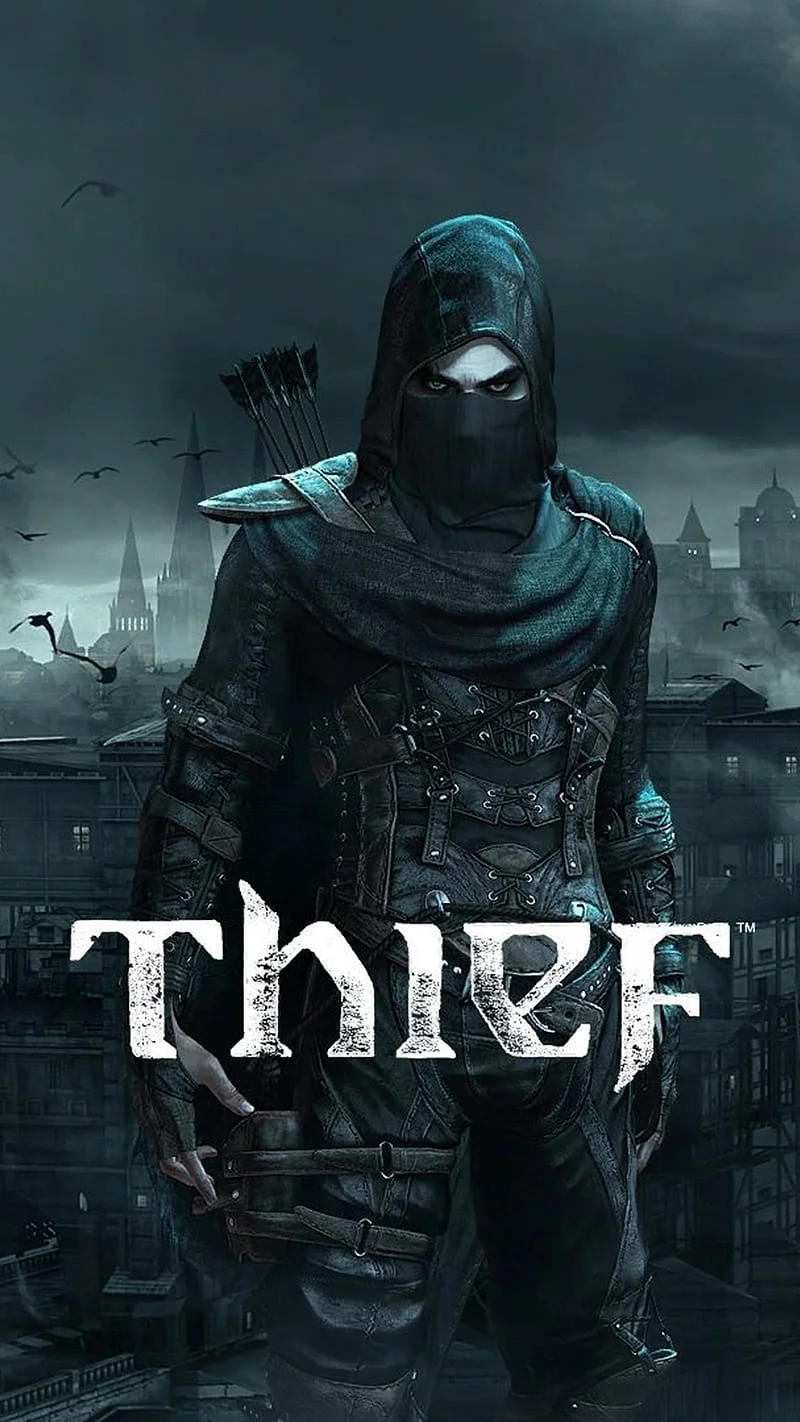
Thief
This combination provides smooth gameplay with an average of 76 FPS, suitable for most gaming scenarios.
Average FPS: resolution vs quality settings
| Ultra | High | Medium | Low | |
|---|---|---|---|---|
| 4K Ultra HD | 33 | 38 | 48 | 58 |
| 1440p QHD | 57 | 62 | 79 | 105 |
| 1080p Full HD | 82 | 87 | 116 | 147 |
Cell color: green is 120+ FPS, teal is 60+, amber is 30+, red is below 30.
Thief with AMD Ryzen 7 5700G + Intel Arc B580, In-Depth Analysis
The AMD Ryzen 7 5700G paired with the Intel Arc B580 produces a highly playable 1080p experience in Thief, but the data reveals a clear shift in bottleneck behavior as resolution climbs. At 1920x1080 with Low settings, the combo delivers 147.3 FPS, which drops to 86.5 FPS at High and 82.2 FPS at Ultra. This 44% reduction from Low to Ultra at 1080p indicates the GPU is already the primary limiter at this resolution, as the CPU’s 8-core/16-thread configuration is capable of feeding the frame pipeline well beyond these figures. However, the scaling pattern across resolutions tells a more nuanced story. Moving from 1080p to 1440p at High settings, the frame rate falls from 86.5 FPS to 62.0 FPS, a 28% decline. The subsequent jump to 4K at High drops the average to 37.7 FPS, another 39% reduction. This progressive degradation—with 4K Ultra landing at just 32.7 FPS—confirms that the Arc B580’s rendering throughput, not the Ryzen 7 5700G’s compute power, dictates the experience at higher resolutions.
Resolution Scaling
The measured FPS data shows a textbook GPU-bound scaling curve for this combo. At 1080p Low, the system achieves 147.3 FPS, but this falls to 104.6 FPS at 1440p Low (-29%) and 57.9 FPS at 4K Low (-45% from 1440p). The steep drop at 4K, even on Low settings, suggests the Arc B580’s 12 GB GDDR6 memory and 192-bit bus are being stressed by the pixel count, despite the game’s 2014 release date. At Ultra settings, the scaling is even more pronounced: 82.2 FPS at 1080p, 57.1 FPS at 1440p (-31%), and 32.7 FPS at 4K (-43%). These numbers indicate that Thief’s Ultra preset imposes a heavy shading load that the B580’s 2,560 shading units cannot fully sustain at 4K. The delta between Low and Ultra at each resolution grows with pixel count: 65.1 FPS at 1080p, 47.5 FPS at 1440p, and 25.2 FPS at 4K. This widening gap underscores that the GPU is the limiting component across all tested resolutions, with the CPU’s 3.80 GHz base and 4.60 GHz boost clocks providing ample headroom.
How This Combo Ranks
In the database of tested CPU-GPU combinations, this pairing ranks 1268th out of 1642 combos for Thief, placing it in the 23rd percentile. This relatively low ranking reflects the Arc B580’s position as a mid-range GPU—its percentileVsAllGpus of 66 indicates it outperforms two-thirds of all GPUs, but the Ryzen 7 5700G’s 83rd percentile rank among CPUs does not compensate for the GPU’s limitations in this specific title. The combo’s rank is consistent with the measured FPS: it delivers smooth 1080p gameplay but struggles to maintain 60 FPS at 4K on higher presets. Notably, the B580’s nearest rival, the NVIDIA GeForce RTX 4060, has an average benchmark score 0.7% higher, while the AMD Radeon 760M is just 0.1% lower—these narrow margins suggest the B580 is competitive with other mid-range options, but the combo rank shows that pairing it with a high-end CPU like the 5700G does not boost its standing in this game.
GPU Role
The Intel Arc B580’s specifications explain its performance profile in Thief. With 12 GB of GDDR6 memory on a 192-bit bus delivering 456.0 GB/s bandwidth, the card has ample memory capacity for 4K textures, but its 2670 MHz base and boost clocks are modest by modern standards. The 13.67 TFLOPS FP32 throughput and 427.2 GTexel/s texture rate are sufficient for 1080p and 1440p gaming, but the 213.6 GPixel/s pixel fill rate becomes a bottleneck at 4K. The card’s PassMark G3D score of 15,748 places it in the 66th percentile of all GPUs, and its benchmark results—3DMark Steel Nomad DX12 score of 3,068 and Geekbench Vulkan score of 109,672—show solid DirectX 12 and Vulkan performance. However, Thief’s Ultra preset pushes the B580 to its limits: at 4K Ultra, the 32.7 FPS average falls below the 30 FPS threshold that many players consider the minimum for playability. The GPU’s 190 W TDP and suggested 450 W PSU indicate it is a power-efficient design, but the data shows that its performance ceiling is reached at 1440p High (62.0 FPS) rather than at 4K.
FAQ
*Q: What is the best resolution for this combo in Thief?*
A: 1920x1080 with High settings delivers 86.5 FPS, which is smooth and visually rich. 2560x1440 High drops to 62.0 FPS, still playable, while 4K High falls to 37.7 FPS, which is below ideal smoothness.
Q: How much FPS do you lose going from 1080p to 4K?
A: At High settings, the drop is from 86.5 FPS to 37.7 FPS, a 56% reduction. At Low settings, the drop is from 147.3 FPS to 57.9 FPS, a 61% reduction.
Q: Does the Ryzen 7 5700G bottleneck the Arc B580?
A: No. The CPU’s Cinebench R23 multi-core score of 20,755 and single-core score of 2,930 are far above what Thief requires. The FPS scaling with resolution changes matches GPU-bound behavior, not CPU limitations.
Q: Is the Ultra preset worth using?
A: At 1080p, Ultra yields 82.2 FPS versus 86.5 FPS on High, a mere 5% gain in smoothness. At 4K, Ultra drops to 32.7 FPS versus 37.7 FPS on High, making High the better choice.
Q: How does this combo compare to similar systems?
A: The combo ranks 1268th out of 1642 tested, which is in the lower quartile. The GPU’s average benchmark score of 23,021 is nearly identical to the AMD Radeon 760M’s 22,999, so similar performance is expected.
Q: Can this system handle 1440p gaming?
A: Yes, at Medium settings it achieves 79.4 FPS, and at High it reaches 62.0 FPS. These are both playable, though 4K Medium (47.6 FPS) is marginal.
Measured FPS Breakdown
At 1920x1080, the combo delivers its strongest results. Low settings produce 147.3 FPS, Medium 115.7 FPS, High 86.5 FPS, and Ultra 82.2 FPS. The 1080p Ultra figure is notable—it is only 4.3 FPS lower than High, suggesting the Ultra preset’s additional effects are not particularly demanding at this resolution. Moving to 2560x1440, the scores decline predictably: Low 104.6 FPS, Medium 79.4 FPS, High 62.0 FPS, and Ultra 57.1 FPS. The 1440p High result is the first point where the frame rate dips below 60 FPS, though it remains playable. At 3840x2160, the performance drops significantly: Low 57.9 FPS, Medium 47.6 FPS, High 37.7 FPS, and Ultra 32.7 FPS. The 4K Low figure is interesting—it barely exceeds 60 FPS, indicating that even the lowest settings cannot fully compensate for the pixel load. Across all resolutions, the gap between Medium and High is consistent (about 29% at 1080p, 22% at 1440p, and 21% at 4K), while the gap between High and Ultra narrows at higher resolutions, from 5% at 1080p to 13% at 4K.
CPU Role
The AMD Ryzen 7 5700G is a Zen 3 (Cezanne) processor with 8 cores and 16 threads, running at a 3.80 GHz base clock and 4.60 GHz boost clock. Its 16 MB L3 cache and 51.2 GB/s memory bandwidth are sufficient for Thief, a game that launched in 2014 and does not demand modern multi-threading. The CPU’s PassMark multi-thread score of 24,419 and single-thread score of 3,283 place it in the 83rd percentile of all CPUs, and its Cinebench R23 multi-core score of 20,755 shows strong sustained performance. However, the measured FPS data shows no evidence of CPU limitation: the frame rates scale consistently with GPU load across resolutions and settings. For example, the 1080p Low score of 147.3 FPS is 44% higher than the 1440p Low score of 104.6 FPS, which is a pure GPU-bound scaling pattern. The CPU’s 65 W TDP and 7 nm process node (TSMC) make it an efficient pairing for the B580, but its compute capabilities are not the deciding factor in this game. The benchmark results—3DMark 16-thread score of 6,629 and max-thread score of 6,627—confirm that the CPU can handle far more demanding workloads than Thief presents.
Settings Recommendations
The measured data points to High settings at 1080p as the best overall experience. At 1920x1080 High, the combo delivers 86.5 FPS, which is well above the 60 FPS smoothness threshold, and the visual quality is close to Ultra (82.2 FPS) without the extra 5% performance cost. For players with 1440p monitors, Medium settings at 79.4 FPS offer the best balance—High at 62.0 FPS is playable but leaves no headroom for demanding scenes, while Low at 104.6 FPS sacrifices visual fidelity for negligible gains. At 4K, the data strongly recommends Low settings (57.9 FPS), as Medium (47.6 FPS) and High (37.7 FPS) both drop below 60 FPS, and Ultra (32.7 FPS) is only suitable for players who prioritize image quality over smoothness. The Ultra preset’s incremental benefit over High is minimal at 1080p (4.3 FPS difference) and grows to 5.0 FPS at 4K, but in both cases, the lower preset provides a better frame rate-to-quality trade-off. In summary, the B580’s 12 GB VRAM prevents memory-related stutters, but its compute throughput limits it to 1080p High or 1440p Medium for consistent playability in Thief.
Hardware Specifications
AMD Ryzen 7 5700G
Intel Arc B580
FPS Benchmarks by Resolution & Settings
Performance data for AMD Ryzen 7 5700G + Intel Arc B580 in Thief
| Resolution | Settings | Avg FPS |
|---|---|---|
| 3840x2160 | Low | 57.9 |
| 3840x2160 | Medium | 47.6 |
| 3840x2160 | High | 37.7 |
| 3840x2160 | Ultra | 32.7 |
| 2560x1440 | Low | 104.6 |
| 2560x1440 | Medium | 79.4 |
| 2560x1440 | High | 62.0 |
| 2560x1440 | Ultra | 57.1 |
| 1920x1080 | Low | 147.3 |
| 1920x1080 | Medium | 115.7 |
| 1920x1080 | High | 86.5 |
| 1920x1080 | Ultra | 82.2 |
Thief with Ryzen 7 5700G + Other GPUs
See how Thief performs with the same CPU but different graphics cards.
Thief with Arc B580 + Other CPUs
See how Thief performs with the same GPU but different processors.
Other Games with Ryzen 7 5700G + Arc B580
Explore FPS benchmarks for other games using this same hardware combination.