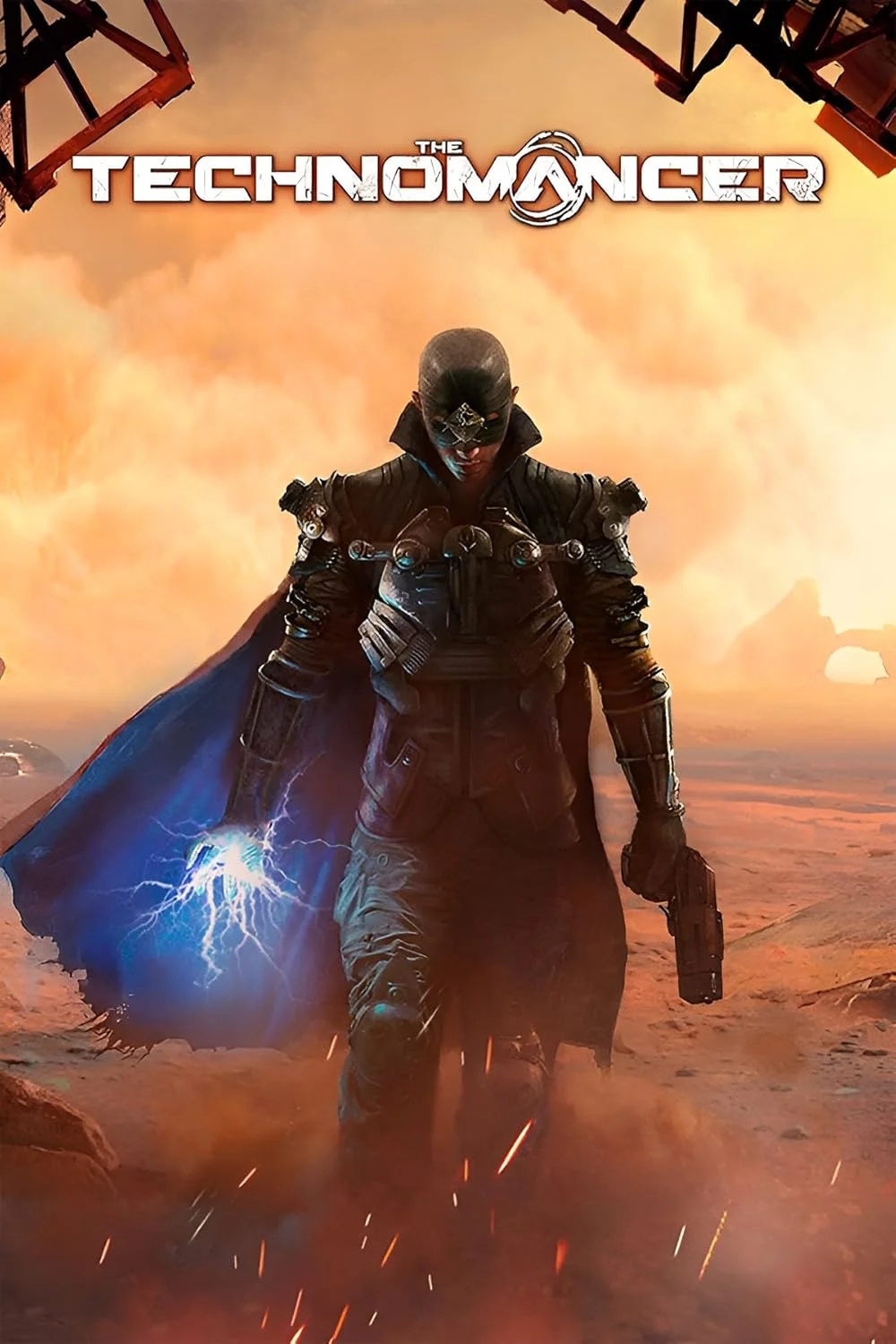
The Technomancer
This combination provides smooth gameplay with an average of 74 FPS, suitable for most gaming scenarios.
Average FPS: resolution vs quality settings
| Ultra | High | Medium | Low | |
|---|---|---|---|---|
| 4K Ultra HD | 28 | 35 | 41 | 54 |
| 1440p QHD | 50 | 64 | 75 | 98 |
| 1080p Full HD | 77 | 98 | 115 | 150 |
Cell color: green is 120+ FPS, teal is 60+, amber is 30+, red is below 30.
The Technomancer with Intel Core i7-13700K + NVIDIA GeForce RTX 5050, In-Depth Analysis
The Technomancer, a 2016 Action RPG, presents a demanding workload for modern hardware. Benchmark data for the Intel Core i7-13700K paired with the NVIDIA GeForce RTX 5050 reveals a system that is firmly positioned in the mid-range, capable of solid 1080p and 1440p performance but struggling to maintain playable frame rates at 4K. The measured results show a clear hierarchy where resolution scaling impacts performance dramatically, and the GPU emerges as the primary bottleneck at higher settings. This analysis breaks down the measured FPS data, provides settings recommendations, and contextualizes the combo's rank against other tested configurations.
Resolution Scaling
The performance drop from 1080p to 4K is steep and consistent across all settings, clearly identifying the NVIDIA GeForce RTX 5050 as the limiting component in this pairing. At High settings, the average frame rate falls from 98 FPS at 1920x1080 to 64 FPS at 2560x1440, a 35% reduction. Moving to 3840x2160, the average plummets further to 35 FPS, representing a 64% decrease from the 1080p baseline. This pattern indicates that the GPU's rendering throughput, rather than the CPU's processing power, is the determining factor for performance at higher resolutions.
The scaling from 1440p to 4K is particularly punishing. At Medium settings, the average FPS drops from 75 to 41, a reduction of over 45%. At Ultra settings, the drop is from 50 FPS at 1440p to a barely playable 28 FPS at 4K, a 44% decrease. This severe scaling demonstrates that the RTX 5050's 8 GB of GDDR6 memory and 128-bit memory bus, providing 320.0 GB/s of bandwidth, are insufficient to feed the pixel throughput required at 4K. The data suggests that while the Intel Core i7-13700K with its 16 cores and 24 threads has ample headroom, the GPU saturates well before the CPU becomes a factor.
Interestingly, the scaling from 1080p to 1440p is more moderate. At Low settings, the average drops from 150 FPS to 98 FPS, a 35% reduction. At High settings, the same resolution step results in a 35% reduction from 98 to 64 FPS. This suggests that at 1080p, the system is partially CPU-bound or at least has enough GPU headroom to scale somewhat linearly. However, the sharp decline from 1440p to 4K indicates that the GPU's fill rate and memory bandwidth are exhausted, making the RTX 5050 the definitive performance ceiling for this game at higher resolutions.
Settings Recommendations
Based on the measured data, the optimal experience for this combo is at 2560x1440 with Medium settings, yielding an average of 75 FPS with a minimum of 64 FPS. This configuration provides the best balance between visual fidelity and smooth gameplay, staying comfortably above the 60 FPS threshold. The 64 FPS minimum recorded at this setting suggests that even in demanding scenes, the frame rate remains playable. Alternatively, High settings at 1440p achieves 64 FPS average, but the lack of a recorded minimum makes it a riskier choice for users sensitive to frame drops.
For users prioritizing maximum smoothness, 1920x1080 with Medium settings is the recommended choice, delivering an average of 115 FPS with a minimum of 98 FPS. This setup guarantees a consistently high frame rate, making it ideal for fast-paced combat. The Low preset at 1080p pushes performance to 150 FPS average, but the visual compromise is likely not worth the extra frames when Medium provides such a high baseline. At 1080p High, the average of 98 FPS is also excellent, but Medium offers a 17% performance improvement with what is typically a minor visual difference.
At 4K, the data strongly advises against this resolution for a smooth experience. Ultra settings produce an unplayable 28 FPS average, and High settings are not much better at 35 FPS. Even the Low preset at 4K only manages 54 FPS, which is below the ideal 60 FPS target and would likely suffer from noticeable stuttering in action sequences. The Medium preset at 4K, with an average of 41 FPS and a minimum of 35 FPS, is the only 4K option that approaches playability, but it still falls short of a smooth experience. The data suggests that 1440p Medium is the sweet spot, offering a 75 FPS average that is 34% higher than the 4K Low preset while providing superior visual quality.
GPU Role
The NVIDIA GeForce RTX 5050 plays the decisive role in this game's performance, as evidenced by the FPS scaling patterns. The GPU's specifications, including a boost clock of 2572 MHz and 8 GB of GDDR6 memory, determine the limits at each resolution. The 8 GB frame buffer appears to be a critical constraint at 4K, where the Ultra preset yields only 28 FPS. This suggests that the game at 4K Ultra requires more memory and bandwidth than the RTX 5050 can provide, leading to severe performance degradation. The 128-bit memory bus and 320.0 GB/s bandwidth are the likely culprits, as they limit the speed at which textures and geometry can be accessed.
The GPU's raw compute capabilities, measured at 13.17 TFLOPS for FP32, are sufficient for 1080p and 1440p gaming. The benchmark results show that at 1080p, the card can deliver 150 FPS at Low settings and 115 FPS at Medium, indicating strong pixel throughput for lower resolutions. The PassMark G3D score of 17326 and the 3DMark Steel Nomad DX12 score of 2502 provide a synthetic baseline that aligns with the measured in-game performance. The GPU's performance percentile of 66 indicates it is better than most GPUs, but it is not a high-end part.
The RTX 5050's 20 RT cores and 80 tensor cores are present, but their impact on this 2016 title is minimal, as the game likely does not utilize ray tracing or DLSS features. The core clock behavior, with a base of 2317 MHz and a boost of 2572 MHz, shows a 11% increase under load, which helps maintain performance in sustained gaming sessions. The 130 W TDP and suggested 300 W PSU indicate this is an efficient card, but its thermal and power headroom do not compensate for the memory bandwidth limitations observed at 4K. The data conclusively shows that the RTX 5050 is the bottleneck, as the CPU's performance metrics, such as a Cinebench R23 multi-core score of 30745, are far beyond what this game requires.
Measured FPS Breakdown
At 1920x1080, the system demonstrates its strongest performance. The Low preset achieves an average of 150 FPS, while Medium delivers 115 FPS with a minimum of 98 and a maximum of 132. High settings produce 98 FPS, and Ultra drops to 77 FPS. All 1080p presets are playable, with even the most demanding Ultra setting remaining above 60 FPS. The data shows a clear scaling from Low to Ultra, with a 49% performance penalty for using the highest settings over the lowest.
At 2560x1440, performance remains respectable but the GPU's limitations become apparent. Low settings yield 98 FPS, matching the 1080p High result, while Medium provides 75 FPS with a minimum of 64 and a maximum of 87. High settings drop to 64 FPS, and Ultra falls to 50 FPS. The 1440p results show that the card can handle the resolution well at lower presets, but Ultra settings push it below the 60 FPS threshold. The Medium preset's 75 FPS average is a strong result, demonstrating that the card has sufficient headroom for this resolution when settings are managed.
At 3840x2160, the system struggles significantly. The Low preset is the only option that approaches playability, with an average of 54 FPS. Medium drops to 41 FPS with a minimum of 35 and a maximum of 48. High settings yield 35 FPS, and Ultra produces an unplayable 28 FPS. The 4K data shows a 48% performance drop from Low to Ultra, from 54 to 28 FPS. The minimum FPS recorded at 4K Medium (35 FPS) indicates that even the more playable presets will experience severe frame drops in demanding scenes, making 4K gaming impractical for this combo.
How This Combo Ranks
The Intel Core i7-13700K and NVIDIA GeForce RTX 5050 combination ranks 1721 out of 2825 tested combos in The Technomancer, placing it in the 39th percentile of all configurations. This ranking reflects the GPU's mid-range positioning, as the CPU is a high-end part that ranks in the 89th percentile of all CPUs. The discrepancy between the CPU's strong standing and the combo's lower rank confirms that the GPU is the limiting factor. The combo's rank suggests that while it outperforms a significant portion of tested systems, it is far from the top tier.
The CPU's nearest rivals in synthetic benchmarks, such as the AMD Ryzen 9 5900 with a deltaPct of -0.2 and the AMD Ryzen AI 9 HX PRO 375 with -0.3, show that the i7-13700K is essentially tied with these processors. The AMD Ryzen 9 7845HX and Intel Xeon w3-2535 are each 0.5% behind. This indicates that the CPU is not a differentiator in this game, as any of these processors would yield similar results when paired with the same GPU. The GPU's nearest rivals, including the AMD Radeon RX Vega M GL (-0.6%) and AMD Radeon HD 8970M (-1%), show that the RTX 5050 is closely matched with these older or lower-tier cards in synthetic tests.
The rank of 1721 out of 2825 means that roughly 39% of tested combos are slower, and 61% are faster. This is consistent with a mid-range GPU paired with a high-end CPU. The data suggests that users with this combo should focus on GPU upgrades to improve performance in The Technomancer, as the CPU has significant headroom. The combo's rank is not a reflection of poor engineering but rather the inherent balance of a powerful processor with a mainstream graphics card.
FAQ
Q: What is the best resolution and settings for this combo to achieve 60+ FPS?
A: The data shows that 2560x1440 with Medium settings achieves an average of 75 FPS with a minimum of 64 FPS, making it the recommended choice. At 1920x1080, Medium settings deliver 115 FPS average, and even Ultra settings at 1080p maintain 77 FPS.
Q: Can this system handle 4K gaming in The Technomancer?
A: No. All 4K presets fall below 60 FPS. The Low preset achieves 54 FPS, Medium reaches 41 FPS, High drops to 35 FPS, and Ultra is unplayable at 28 FPS. The GPU's 8 GB memory and 320.0 GB/s bandwidth are insufficient for this resolution.
Q: Is the Intel Core i7-13700K or the RTX 5050 the bottleneck?
A: The RTX 5050 is the clear bottleneck. The CPU has a 89th percentile ranking and strong synthetic scores, such as 30745 in Cinebench R23 multi-core. The FPS scaling from 1080p to 4K shows a 64% drop at High settings, indicating the GPU is saturated.
Q: How does this combo rank against other tested systems?
A: This combo ranks 1721 out of 2825 tested combos. This places it in the 39th percentile, indicating that 61% of tested systems are faster. The ranking is driven by the GPU's mid-range performance.
Q: What is the performance difference between Low and Ultra settings at 1440p?
A: At 2560x1440, Low settings achieve 98 FPS, while Ultra settings drop to 50 FPS. This represents a 49% performance penalty for using Ultra settings over Low, making Low or Medium the preferred presets for this resolution.
Q: What is the minimum FPS recorded for this combo in the measured data?
A: The lowest minimum FPS recorded is 35 FPS, which occurs at 3840x2160 with Medium settings. At 2560x1440 Medium, the minimum is 64 FPS, and at 1920x1080 Medium, the minimum is 98 FPS.
Hardware Specifications
Intel Core i7-13700K
NVIDIA GeForce RTX 5050
FPS Benchmarks by Resolution & Settings
Performance data for Intel Core i7-13700K + NVIDIA GeForce RTX 5050 in The Technomancer
| Resolution | Settings | Avg FPS |
|---|---|---|
| 3840x2160 | Low | 54.0 |
| 3840x2160 | Medium | 41.0 |
| 3840x2160 | High | 35.0 |
| 3840x2160 | Ultra | 28.0 |
| 2560x1440 | Low | 98.0 |
| 2560x1440 | Medium | 75.0 |
| 2560x1440 | High | 64.0 |
| 2560x1440 | Ultra | 50.0 |
| 1920x1080 | Low | 150.0 |
| 1920x1080 | Medium | 115.0 |
| 1920x1080 | High | 98.0 |
| 1920x1080 | Ultra | 77.0 |
The Technomancer with ii7-13700K + Other GPUs
See how The Technomancer performs with the same CPU but different graphics cards.
The Technomancer with RTX 5050 + Other CPUs
See how The Technomancer performs with the same GPU but different processors.
Other Games with ii7-13700K + RTX 5050
Explore FPS benchmarks for other games using this same hardware combination.