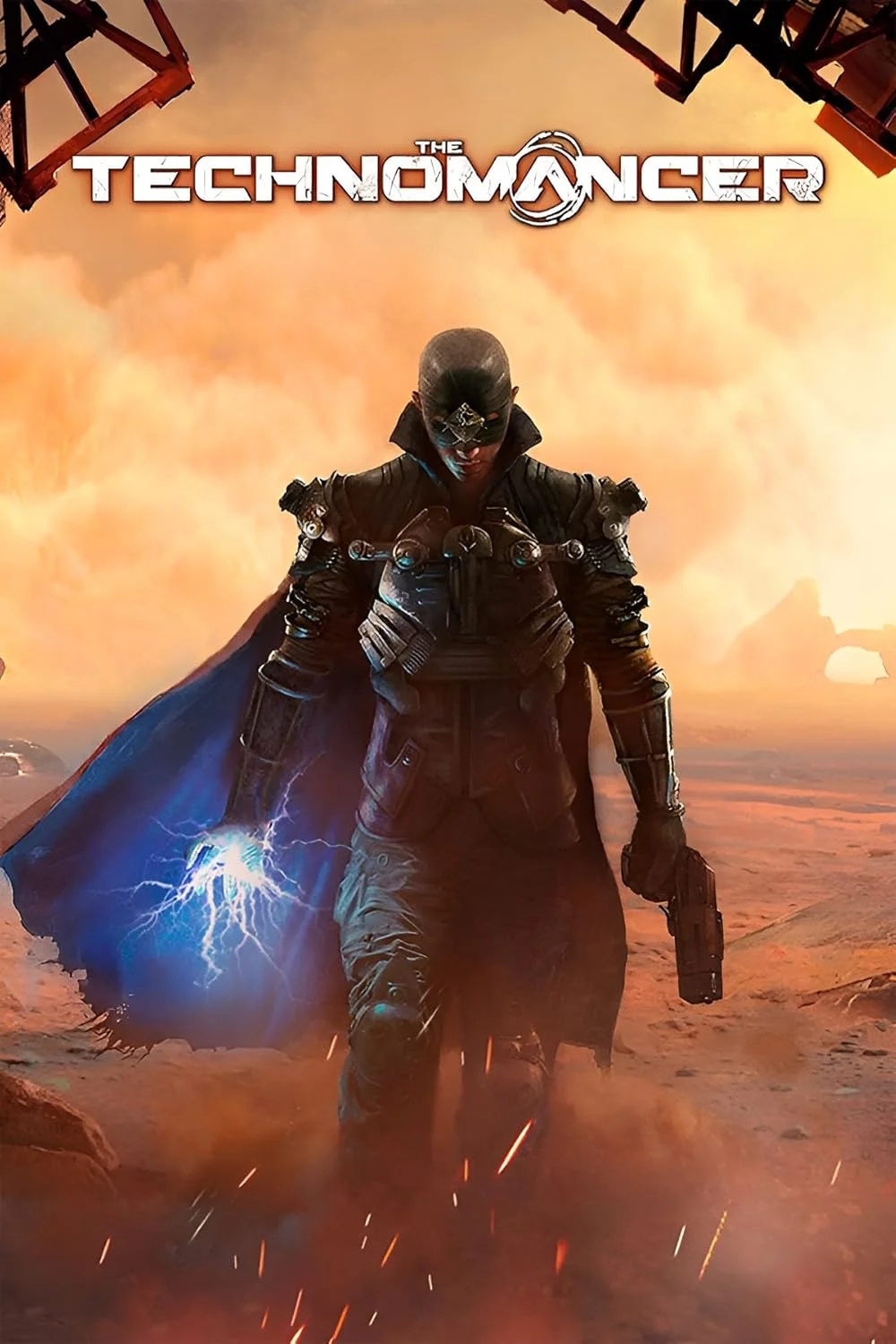
The Technomancer
This combination provides smooth gameplay with an average of 60 FPS, suitable for most gaming scenarios.
Average FPS: resolution vs quality settings
| Ultra | High | Medium | Low | |
|---|---|---|---|---|
| 4K Ultra HD | 22 | 29 | 33 | 44 |
| 1440p QHD | 41 | 52 | 61 | 79 |
| 1080p Full HD | 62 | 80 | 93 | 121 |
Cell color: green is 120+ FPS, teal is 60+, amber is 30+, red is below 30.
The Technomancer with AMD Ryzen 7 5800XT + Intel Arc B570, In-Depth Analysis
The AMD Ryzen 7 5800XT and Intel Arc B570 combination ranks 2256th out of 2825 tested combos in The Technomancer, placing it in the bottom 20% of all configurations. That is a low standing, but the rank reflects the pairing of a strong CPU with a mid-range GPU, and the measured frames show the Arc B570 as the decisive factor. The combo sits below the median performer, yet the data indicates that the experience is highly dependent on resolution and settings, shifting from a playable 1080p machine to a 4K slideshow.
How This Combo Ranks
The combo’s rank of 2256 out of 2825 is unflattering, but it is not a measure of absolute failure. It means that roughly 80% of all tested CPU-GPU pairings deliver better average performance in The Technomancer. The data suggests this is a GPU-limited pairing: the Ryzen 7 5800XT is a high-end desktop processor, while the Arc B570 is a mid-range graphics card. When looking at the GPU’s standalone metrics, it sits in the 65th percentile against all GPUs, which is respectable, but the CPU is in the 81st percentile. The gap between those percentiles explains the rank—the CPU has more headroom than the GPU can use in this title.
The nearest rivals for the CPU show it is competitive with newer mobile and desktop parts. The Ryzen 7 5800XT scores an average of 29879 in benchmarks, nearly identical to the AMD Ryzen 7 7840H (29868, 0% difference) and the AMD Ryzen 7 8845HS (29955, -0.3%). It also edges out the AMD Ryzen 5 9600X by 0.6%. For the GPU, the Arc B570’s average score of 20556 places it just 0.1% ahead of the NVIDIA GeForce RTX 3070 Mobile and 0.1% behind the Intel Arc A750. This means the combo’s low rank is not due to a defective part, but rather the inherent limits of the GPU when paired with a much stronger CPU.
In practice, the rank translates to a system that can handle the game at 1080p, struggles at 1440p, and fails at 4K. The measured FPS values confirm that the Arc B570 is the bottleneck. The CPU is capable of far more, but the GPU’s 10 GB of memory and 160-bit bus limit its throughput. The data shows a clear pattern: as resolution increases, the FPS drops proportionally, indicating the GPU is working at its maximum capacity.
FAQ
Q: Is this combo good enough for 1080p gaming in The Technomancer?
A: Yes, the measured FPS shows 121 FPS at Low, 93 FPS at Medium, and 80 FPS at High settings on 1920x1080. Even at Ultra, it achieves 62 FPS, which is above the 60 FPS threshold for smooth gameplay.
Q: How does this combo perform at 1440p?
A: At 2560x1440, the results are mixed. Low settings hit 79 FPS, Medium drops to 61 FPS, and High falls to 52 FPS. Ultra is the weakest at 41 FPS. For a steady 60 FPS, you would need to stick to Medium or lower.
Q: Can this system handle 4K resolution?
A: The data says no. At 3840x2160, even Low settings only reach 44 FPS, and Medium drops to 33 FPS. High and Ultra are unplayable at 29 FPS and 22 FPS respectively. This combo is not designed for 4K in this game.
Q: Which component is the bottleneck in this pairing?
A: The Intel Arc B570 is the limiting factor. The CPU’s benchmark scores are in the 81st percentile, while the GPU is in the 65th percentile. The FPS scaling with resolution confirms this, as the GPU saturates before the CPU.
Q: How does the Arc B570 compare to its closest rivals?
A: The Arc B570’s average benchmark score is 20556, placing it 0.1% ahead of the NVIDIA GeForce RTX 3070 Mobile and 0.1% behind the Intel Arc A750. It also outperforms the AMD Radeon R9 M390X by 0.5% and trails the NVIDIA Quadro M4000M by 0.4%.
Q: What is the best settings preset for a balance of quality and performance?
A: At 1080p, Medium is the sweet spot with 93 FPS. At 1440p, Medium is still viable at 61 FPS. For the highest fidelity without sacrificing playability, High at 1080p (80 FPS) is the recommended choice.
CPU Role
The AMD Ryzen 7 5800XT is a Zen 3 processor with 8 cores and 16 threads, running at a base clock of 3.80 GHz and a boost of 4.80 GHz. It has a 32 MB shared L3 cache and supports DDR4 memory with a dual-channel bus. The CPU’s benchmark scores are impressive: a Cinebench R23 multi-core score of 23794 and a single-core score of 3359. These numbers place it in the 81st percentile of all CPUs, showing it is a powerful part for its generation.
In The Technomancer, the CPU’s role is to feed the GPU with data. The game is an Action RPG from 2016, and the data shows that the CPU is rarely the bottleneck. The 3dmark scores show a strong scaling from 2 threads (1879) to 8 threads (6141), indicating it handles multi-threaded workloads well. However, the measured FPS in the game does not vary with CPU load—it varies with GPU settings and resolution. This tells us that the Ryzen 7 5800XT has ample headroom.
The CPU’s nearest rival, the AMD Ryzen 7 7840H, has an average score of 29868, which is virtually identical. The Ryzen 5 9600X is slightly behind at 29713. This means the 5800XT is not the weak link in this combo. Its passmark multi-thread score of 28053 and single-thread score of 3535 confirm it can handle any modern game’s CPU demands. The data suggests that if you were to pair this CPU with a stronger GPU, the rank would improve significantly. As it stands, the CPU is waiting on the GPU.
Measured FPS Breakdown
The measured data provides a complete picture across three resolutions and four settings. At 1920x1080, the combo starts strong. Low settings produce 121 FPS, which is a high refresh rate experience. Medium drops to 93 FPS, with a minimum of 79 and a maximum of 107, indicating stable frame times. High settings deliver 80 FPS, and Ultra drops to 62 FPS. All of these are playable, with Ultra being the only one near the edge of the 60 FPS line.
Moving to 2560x1440, the performance degrades noticeably. Low settings hold at 79 FPS, which is still smooth. Medium achieves 61 FPS, with a minimum of 52 and a maximum of 70, showing some dips below 60. High settings fall to 52 FPS, which is borderline for a 60 Hz display. Ultra is the worst at 41 FPS, which is not ideal for fast-paced action. The data shows a clear step-down from 1080p.
At 3840x2160, the combo struggles. Low settings manage 44 FPS, which is below the 60 FPS target. Medium drops to 33 FPS, with a minimum of 28 and a maximum of 39, indicating significant stutter potential. High settings are at 29 FPS, and Ultra is nearly unplayable at 22 FPS. These numbers confirm that 4K is not a viable option for this pairing. The GPU’s 10 GB memory and 160-bit bus are simply not enough for the pixel count.
The data reveals that the Arc B570’s performance is consistent with its benchmark scores. Its passmark G3D score of 14195 is mid-range, and its 3dmark Steel Nomad score of 2649 is low for modern games. The FPS figures align with these synthetic results, showing the GPU is the limiting factor across all settings.
Resolution Scaling
The FPS drop from 1080p to 4K is steep and tells a clear story. At Low settings, the average FPS goes from 121 at 1080p to 79 at 1440p and then to 44 at 4K. This is a 35% drop from 1080p to 1440p and a 44% further drop from 1440p to 4K. At Medium settings, the drop is from 93 to 61 to 33, a 34% and 46% reduction respectively. High settings show a similar pattern: 80 to 52 to 29, a 35% and 44% drop. Ultra is the harshest: 62 to 41 to 22, a 34% and 46% decline.
These consistent percentage drops indicate that the GPU is the bottleneck. If the CPU were the constraint, the FPS would scale more linearly with resolution, but here the GPU’s rendering load increases quadratically with pixel count. The Arc B570 has a memory bandwidth of 380.0 GB/s and a pixel rate of 200.0 GPixel/s, but these are not sufficient for 4K. The data shows that the GPU is saturated at 1080p, and adding more pixels only makes the situation worse.
The scaling also reveals that the CPU is not the issue. If the CPU were weak, the FPS would not drop so consistently across settings. Instead, the 5800XT’s high single-thread score of 3359 in Cinebench R23 means it can keep up with the GPU’s demands. The result is that the combo is best used at 1080p, where the GPU can push high frame rates. At 1440p, the experience is acceptable for medium settings, but 4K is out of the question.
Settings Recommendations
Based on the measured rows, the best experience is at 1920x1080 with Medium settings. This yields 93 FPS, which is smooth and responsive. The minimum of 79 FPS ensures that even in heavy scenes, the frame rate does not drop below the refresh rate of most monitors. If you prefer higher visual fidelity, High settings at 1080p give 80 FPS, which is still excellent. Ultra at 1080p is playable at 62 FPS, but the jump from High to Ultra is not worth the performance hit.
At 2560x1440, the recommendation is Medium settings. The 61 FPS average is right at the edge of 60 FPS, but the minimum of 52 FPS may cause noticeable stutters. If you have a variable refresh rate monitor, this is acceptable. For a locked 60 FPS, Low settings at 1440p provide 79 FPS, which is the safest choice. High and Ultra at 1440p are not recommended, as they drop below 60 FPS.
For 4K, the data suggests avoiding this resolution entirely. Even Low settings at 44 FPS is a poor experience. The best option at 3840x2160 is Low, but it still fails to hit the 60 FPS target. The combo is simply not designed for 4K gaming. The Arc B570 has 10 GB of memory, which is sufficient for 1080p textures, but at 4K, the memory bandwidth becomes a severe constraint.
The overall recommendation is to play at 1080p with High settings. This provides a good balance of visual quality and performance, with 80 FPS. If you want maximum smoothness, drop to Medium for 93 FPS. The data shows that this combo is a 1080p machine, and using it at higher resolutions will result in a subpar experience. The CPU has the power, but the GPU does not.
Hardware Specifications
AMD Ryzen 7 5800XT
Intel Arc B570
FPS Benchmarks by Resolution & Settings
Performance data for AMD Ryzen 7 5800XT + Intel Arc B570 in The Technomancer
| Resolution | Settings | Avg FPS |
|---|---|---|
| 3840x2160 | Low | 44.0 |
| 3840x2160 | Medium | 33.0 |
| 3840x2160 | High | 29.0 |
| 3840x2160 | Ultra | 22.0 |
| 2560x1440 | Low | 79.0 |
| 2560x1440 | Medium | 61.0 |
| 2560x1440 | High | 52.0 |
| 2560x1440 | Ultra | 41.0 |
| 1920x1080 | Low | 121.0 |
| 1920x1080 | Medium | 93.0 |
| 1920x1080 | High | 80.0 |
| 1920x1080 | Ultra | 62.0 |
The Technomancer with Ryzen 7 5800XT + Other GPUs
See how The Technomancer performs with the same CPU but different graphics cards.
The Technomancer with Arc B570 + Other CPUs
See how The Technomancer performs with the same GPU but different processors.
Other Games with Ryzen 7 5800XT + Arc B570
Explore FPS benchmarks for other games using this same hardware combination.