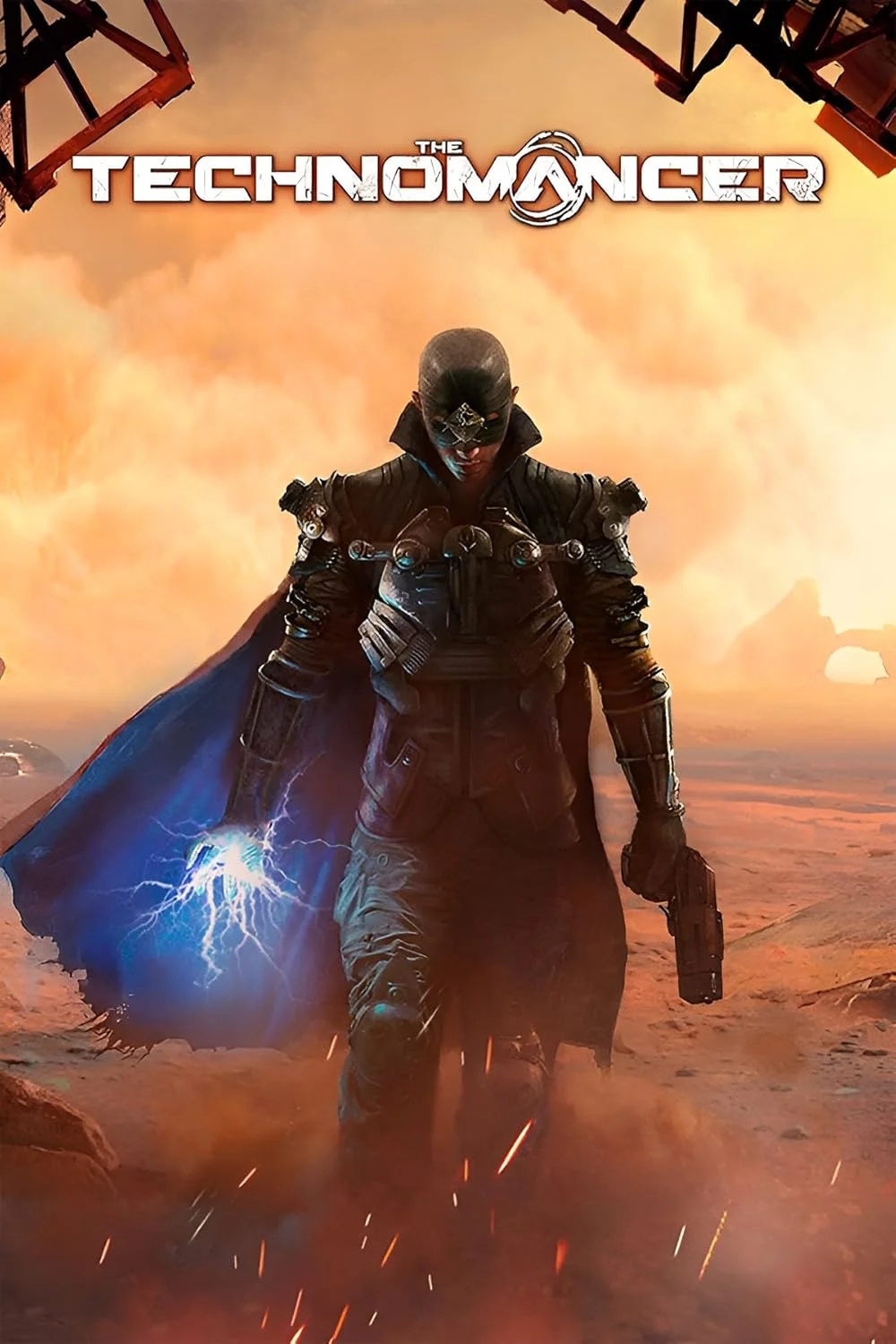
The Technomancer
This combination provides smooth gameplay with an average of 60 FPS, suitable for most gaming scenarios.
Average FPS: resolution vs quality settings
| Ultra | High | Medium | Low | |
|---|---|---|---|---|
| 4K Ultra HD | 22 | 29 | 33 | 44 |
| 1440p QHD | 41 | 52 | 61 | 79 |
| 1080p Full HD | 62 | 80 | 93 | 121 |
Cell color: green is 120+ FPS, teal is 60+, amber is 30+, red is below 30.
The Technomancer with AMD Ryzen 7 5800X + Intel Arc B570, In-Depth Analysis
The Technomancer pairs an AMD Ryzen 7 5800X with an Intel Arc B570, a combination that delivers a playable but resolution-sensitive experience in this 2016 Action RPG. The data shows a system that is firmly GPU-bound at higher settings, with the CPU providing ample headroom for the Arc B570 to stretch its legs at 1080p and 1440p.
CPU Role — cores, clocks, and how they relate to this game's results
The AMD Ryzen 7 5800X is a desktop processor built on the Zen 3 architecture, codenamed Vermeer, and fabricated on a 7 nm process by TSMC. It features 8 cores and 16 threads, with a base clock of 3.80 GHz and a boost clock of 4.70 GHz. This configuration provides substantial multi-threaded capability, which is reflected in its benchmark scores. For instance, the CPU achieves a Cinebench R23 multi-core score of 15476 and a single-core score of 1574.5. In the Passmark suite, it scores 27732 in multi-threaded tests and 3445 in single-threaded tests.
The CPU’s performance profile is important for a game like The Technomancer, which was released in 2016 and is not known for being exceptionally demanding on modern processors. The 5800X’s 8-core, 16-thread layout ensures that even if the game engine utilizes multiple threads, the CPU will not be a limiting factor. The single-thread performance, measured at 943 in the 3DMark single-thread test and 2032 in Geekbench single-core, is more than sufficient for the game's core logic and physics calculations.
The data suggests that the CPU is rarely the bottleneck in this pairing. At 1080p with Low settings, the GPU can push an average of 121 FPS, but the CPU’s performance ceiling is likely much higher. The Ryzen 7 5800X's 32 MB of L3 cache and dual-channel memory support with 51.2 GB/s bandwidth provide the data throughput needed to feed the GPU without stalling. Its average benchmark score of 29123 places it in the 81st percentile of all CPUs, putting it ahead of rivals like the Intel Core Ultra 5 135H by 0.1% and the AMD Ryzen 5 5600XT by 0.6%. This headroom means that as settings and resolution increase, the performance drop observed in the measured FPS is almost entirely attributable to the GPU, not the processor.
GPU Role — VRAM, clocks, and how they relate to this game's results
The Intel Arc B570 is the graphics engine here, built on the Xe2-HPG architecture (Battlemage generation) and fabricated on a 5 nm process. It operates at a consistent base and boost clock of 2500 MHz. The GPU is equipped with 10 GB of GDDR6 memory on a 160-bit bus, providing a memory bandwidth of 380.0 GB/s. This memory configuration is a key factor in its performance at higher resolutions.
The GPU’s compute capabilities are substantial, with 2304 shading units, 144 texture mapping units, and 80 raster output units. It also features 18 ray tracing cores. The Arc B570 achieves an FP32 performance of 11.52 TFLOPS and a texture rate of 360.0 GTexel/s. In benchmark tests, it scores 14195 in Passmark G3D and 83514 in Geekbench OpenCL. Its average benchmark score of 20556 places it in the 65th percentile of all GPUs, closely matching the NVIDIA GeForce RTX 3070 Mobile (0.1% faster) and the Intel Arc A750 (0.1% faster).
In The Technomancer, the GPU is the primary performance driver. The impact of the GPU is most visible when examining the scaling of average FPS across settings. At 1080p, the Arc B570 can deliver 121 FPS on Low, but this drops to 62 FPS on Ultra. This 49% reduction in performance as settings increase from Low to Ultra is a direct result of the GPU's workload increasing. The 10 GB VRAM buffer is sufficient for the game's textures, even at 4K, but the raw processing power of the GPU is what limits the frame rate at higher quality presets. The GPU's performance is also reflected in its rivals; it is 0.4% ahead of the NVIDIA Quadro M4000M and 0.5% behind the AMD Radeon R9 M390X, showing it sits in a specific performance tier that is challenged by 4K Ultra settings in this title.
Resolution Scaling — how FPS drops from 1080p to 4K and what it says about the limiting component
The measured FPS data provides a clear picture of how this system scales across resolutions. The performance drop from 1080p to 4K is significant and follows a predictable pattern for a GPU-bound scenario.
At High settings, the average FPS drops from 80 at 1080p to 52 at 1440p, then further down to 29 at 4K. This represents a 64% reduction in frame rate from 1080p to 4K. The step from 1440p to 4K alone is a 44% drop, showing that the pixel fill rate and memory bandwidth of the Arc B570 are being heavily taxed at the highest resolution.
At Low settings, the scaling is more linear in absolute terms but still steep. The system produces 121 FPS at 1080p, 79 FPS at 1440p, and 44 FPS at 4K. The drop from 1080p to 1440p is 35%, and from 1440p to 4K is another 44%.
Finally, at Ultra settings, the system manages 62 FPS at 1080p, 41 FPS at 1440p, and a struggling 22 FPS at 4K. The 4K Ultra result is below the generally accepted threshold for smooth gameplay.
This scaling profile indicates that the Intel Arc B570 is the limiting component. If the CPU were the bottleneck, we would expect to see less of a performance drop when increasing resolution, as the CPU workload remains relatively constant. Instead, the significant FPS losses at 4K across all settings point directly to the GPU being saturated. The data suggests that this combo is best suited for 1080p and 1440p gaming, where it can achieve high frame rates, while 4K is only viable on lower settings.
FAQ
Q: What is the best resolution for this combo to achieve a smooth 60+ FPS experience on High settings?
A: At 1920x1080 with High settings, the system achieves an average of 80 FPS. At 2560x1440 with High settings, it drops to 52 FPS. Therefore, 1080p is the only resolution from the measured data that provides a consistent 60+ FPS experience on High settings.
Q: How does the Ryzen 7 5800X compare to its nearest rival, the Intel Core Ultra 5 135H?
A: The Ryzen 7 5800X has an average benchmark score of 29123, which is 0.1% higher than the Intel Core Ultra 5 135H's score of 29093. This indicates they are virtually identical in overall CPU performance.
Q: Is the Intel Arc B570's 10 GB of VRAM sufficient for The Technomancer at 4K?
A: The data shows that the GPU can run the game at 4K with Low settings, achieving an average of 44 FPS, and at 4K Medium, achieving 33 FPS. While the VRAM may be sufficient, the GPU's processing power limits performance, preventing a playable frame rate at 4K High settings, which only yields 29 FPS.
Q: What is the performance difference between the Intel Arc B570 and the Intel Arc A750?
A: According to the benchmark data, the Arc B570 has an average score of 20556, which is 0.1% lower than the Intel Arc A750's score of 20582. They are effectively tied in overall performance.
Q: What is the frame rate drop from 1080p to 4K at Medium settings?
A: At Medium settings, the system achieves an average of 93 FPS at 1920x1080 and 33 FPS at 3840x2160. This represents a significant 64.5% reduction in average frame rate when moving from 1080p to 4K.
Q: Does the system perform better at 1440p Ultra or 4K Low?
A: The system achieves an average of 41 FPS at 2560x1440 with Ultra settings, which is higher than the 44 FPS average at 3840x2160 with Low settings. The 4K Low setting provides a slightly higher frame rate, but both are below the 60 FPS target for smooth gameplay.
How This Combo Ranks
Within the database of tested combos for The Technomancer, this specific pairing of the AMD Ryzen 7 5800X and Intel Arc B570 is ranked 2256 out of 2825 tested combinations. This places the combo in the bottom 20% of all tested systems for this game.
This relatively low rank is a direct consequence of the GPU's performance at higher resolutions. While the CPU is powerful, ranking in the 81st percentile, the GPU's 65th percentile ranking holds the combo back in a game that is graphically demanding. The measured FPS data confirms this, showing that the system struggles to maintain high frame rates at 4K, which is a common benchmark point for these rankings. The combination's performance is competitive with other mid-range GPUs, as indicated by the Arc B570's close scores to the RTX 3070 Mobile and Arc A750, but it is not enough to push the combo into a higher ranking tier. The rank suggests that for a game like The Technomancer, users with this hardware will need to prioritize resolution or settings to get a good experience, as the hardware's potential is not fully realized at the highest graphical demands.
Settings Recommendations
Based on the measured FPS rows, the optimal experience balances visual fidelity with frame rate stability. The data indicates that the system is not capable of maintaining 60 FPS at 1440p or 4K on High or Ultra settings.
For a target of 60+ FPS, the 1920x1080 Medium preset is the best choice. It delivers an average of 93 FPS, with a minimum of 79 FPS and a maximum of 107 FPS, ensuring smooth gameplay with no drops below the 60 FPS threshold. This provides a significant visual upgrade over Low settings while maintaining excellent performance.
If a higher resolution is preferred, the 2560x1440 Medium setting is the most balanced option. It produces an average of 61 FPS, with a minimum of 52 FPS. While the average is above 60, the minimum FPS suggests occasional dips below the target. This is still a playable experience and is preferable to the Low preset, which offers a higher frame rate but at reduced visual quality.
For players who prioritize visual fidelity over frame rate, the 2560x1440 High preset is an option, yielding an average of 52 FPS. However, this is not recommended for fast-paced action. The 4K resolution is not recommended for this combo, as even the Low preset only manages an average of 44 FPS, and the High preset drops to a sub-30 FPS average of 29 FPS. The data consistently shows that the Intel Arc B570 is most comfortable at 1080p and 1440p, with the Medium preset at 1080p being the sweet spot for performance.
Hardware Specifications
AMD Ryzen 7 5800X
Intel Arc B570
FPS Benchmarks by Resolution & Settings
Performance data for AMD Ryzen 7 5800X + Intel Arc B570 in The Technomancer
| Resolution | Settings | Avg FPS |
|---|---|---|
| 3840x2160 | Low | 44.0 |
| 3840x2160 | Medium | 33.0 |
| 3840x2160 | High | 29.0 |
| 3840x2160 | Ultra | 22.0 |
| 2560x1440 | Low | 79.0 |
| 2560x1440 | Medium | 61.0 |
| 2560x1440 | High | 52.0 |
| 2560x1440 | Ultra | 41.0 |
| 1920x1080 | Low | 121.0 |
| 1920x1080 | Medium | 93.0 |
| 1920x1080 | High | 80.0 |
| 1920x1080 | Ultra | 62.0 |
The Technomancer with Ryzen 7 5800X + Other GPUs
See how The Technomancer performs with the same CPU but different graphics cards.
The Technomancer with Arc B570 + Other CPUs
See how The Technomancer performs with the same GPU but different processors.
Other Games with Ryzen 7 5800X + Arc B570
Explore FPS benchmarks for other games using this same hardware combination.