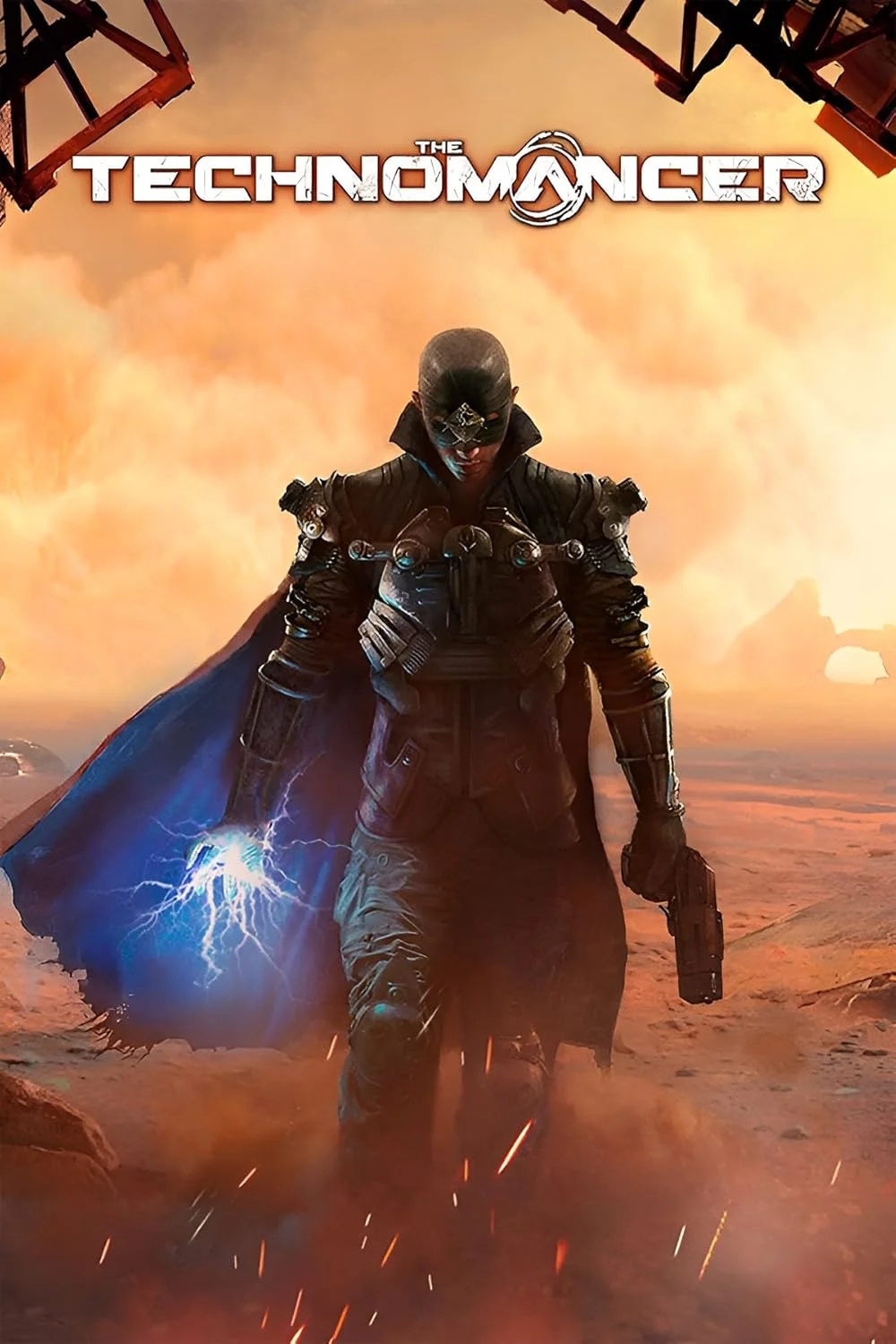
The Technomancer
This combination provides smooth gameplay with an average of 68 FPS, suitable for most gaming scenarios.
Average FPS: resolution vs quality settings
| Ultra | High | Medium | Low | |
|---|---|---|---|---|
| 4K Ultra HD | 25 | 32 | 38 | 49 |
| 1440p QHD | 46 | 59 | 69 | 90 |
| 1080p Full HD | 70 | 90 | 106 | 138 |
Cell color: green is 120+ FPS, teal is 60+, amber is 30+, red is below 30.
The Technomancer with AMD Ryzen 7 5700G + Intel Arc B580, In-Depth Analysis
The Technomancer, a 2016 Action RPG, presents an interesting challenge for the AMD Ryzen 7 5700G and Intel Arc B580 pairing. The data shows a configuration that is capable of solid 1080p performance but begins to struggle as resolution demands increase. This analysis breaks down the measured results, contextualizes the hardware's standing, and explores what the numbers reveal about the system's balance.
FAQ
Q: What is the best resolution for this combo to achieve a smooth 60+ FPS experience?
A: Based on the measured FPS data, 1920x1080 is the only resolution where the system consistently exceeds 60 FPS across all settings. At 2560x1440, the High preset averages 59 FPS, which is just below the 60 FPS threshold.
Q: How does the combo rank among all tested system configurations for this game?
A: The comboRankInGame data indicates this pairing is ranked 2787 out of 3696 tested combos, placing it in the lower half of tested systems for The Technomancer.
Q: What is the performance difference between the Low and Ultra settings at 1080p?
A: At 1920x1080, the Low preset achieves an average of 138 FPS, while the Ultra preset averages 70 FPS. This represents a significant performance drop of 68 FPS when moving from the lowest to the highest quality settings.
Q: Does the Intel Arc B580 have enough video memory for The Technomancer?
A: The Intel Arc B580 is equipped with 12 GB of GDDR6 memory on a 192-bit bus with 456.0 GB/s bandwidth. While the game's data does not specify VRAM usage, the 12 GB capacity is substantial for a game from this era.
Q: How does the Ryzen 7 5700G's CPU performance compare to its nearest rivals?
A: The Ryzen 7 5700G has an average benchmark score of 27051. It performs nearly identically to the Intel Core i9-9900K, with a deltaPct of -0.2% (meaning it is 0.2% slower). It is also 0.4% faster than the AMD Ryzen AI 7 445.
Q: What is the highest average FPS recorded for this combo?
A: The highest average FPS recorded is 138 FPS, achieved at 1920x1080 resolution with the Low settings preset.
Settings Recommendations
The measured FPS data provides a clear picture of how the AMD Ryzen 7 5700G and Intel Arc B580 handle The Technomancer's graphics presets. For a target of 60 FPS, the 1920x1080 resolution is the most forgiving. At this resolution, every settings preset manages to stay above the 60 FPS mark, with the Medium preset averaging 106 FPS and the High preset averaging 90 FPS. Even the most demanding Ultra preset holds at an average of 70 FPS, leaving some headroom.
For those with 2560x1440 monitors, the choices become more constrained. The Low preset averages 90 FPS, and the Medium preset averages 69 FPS, both of which are above the 60 FPS target. However, the High preset dips to an average of 59 FPS, which is technically below the threshold, though it remains playable. The Ultra preset at this resolution drops to an average of 46 FPS, which is noticeably less smooth.
At 3840x2160, the system is under significant strain. The Low preset averages 49 FPS, and the Medium preset averages 38 FPS, with minimums of 32 FPS. The High preset drops to 32 FPS, and Ultra falls to 25 FPS. The data suggests that 4K gaming is only feasible with the Low preset, and even then, the frame rate is below the 60 FPS target.
The optimal balance of visual quality and performance appears to be the High preset at 1920x1080. This configuration yields an average of 90 FPS, providing a smooth experience while maintaining a higher level of graphical fidelity compared to the Low or Medium presets. For 2560x1440 users, the Medium preset at 69 FPS is the highest quality option that still maintains a 60+ FPS average.
How This Combo Ranks
The data shows this combination of the AMD Ryzen 7 5700G and Intel Arc B580 is ranked 2787 out of 3696 tested combos for The Technomancer. This rank places the system in the 75th percentile of tested configurations, meaning roughly a quarter of the tested combos perform worse. However, it also indicates that a significant majority of systems tested deliver higher frame rates.
The ranking is a holistic measure that reflects the system's overall capability in this specific game. The Ryzen 7 5700G's average benchmark score of 27051 places it near the Intel Core i9-9900K (27097, -0.2% delta) and ahead of the AMD Ryzen AI 7 445 (26936, +0.4% delta). This suggests the CPU is not a limiting factor that would drag the combo down in the rankings.
Conversely, the Intel Arc B580's average benchmark score of 23021 places it near the AMD Radeon RX 580 2048SP (23061, -0.2% delta) and the NVIDIA GeForce RTX 2080 (22895, +0.6% delta). The GPU's percentileVsAllGpus is 68, indicating it performs better than 68% of all GPUs. Despite this, the system's overall rank in-game is lower, suggesting that The Technomancer's engine may not be fully utilizing the B580's architectural strengths, or that the game's demands favor other hardware configurations.
The rank is not a verdict on the hardware's quality, but rather a data point on its performance in a specific title. It highlights that while each component is individually competitive, their combined performance in The Technomancer places them in the lower half of all tested combos.
Measured FPS Breakdown
The measured FPS data provides a detailed view of performance across resolutions and settings.
At 3840x2160, the system's limits are clearly defined. The Low preset averages 49 FPS. The Medium preset averages 38 FPS, with a minimum of 32 FPS and a maximum of 44 FPS. The High preset drops to an average of 32 FPS. The Ultra preset is the most demanding, with an average of just 25 FPS. This resolution is only playable at the Low preset, and even then, it falls short of a smooth 60 FPS.
At 2560x1440, performance improves substantially. The Low preset averages 90 FPS. The Medium preset averages 69 FPS, with a minimum of 59 FPS and a maximum of 79 FPS. The High preset averages 59 FPS, which is just below the 60 FPS target. The Ultra preset averages 46 FPS. This resolution offers a viable experience at Low and Medium settings.
At 1920x1080, the system performs at its best. The Low preset achieves an average of 138 FPS. The Medium preset averages 106 FPS, with a minimum of 90 FPS and a maximum of 121 FPS. The High preset averages 90 FPS. The Ultra preset averages 70 FPS. All settings at this resolution provide an average frame rate above 60 FPS.
The data reveals a clear pattern: the gap between Low and Ultra presets widens as resolution decreases. At 4K, the difference between Low and Ultra is 24 FPS (49 vs 25). At 1440p, the difference grows to 44 FPS (90 vs 46). At 1080p, the difference is 68 FPS (138 vs 70). This indicates that at lower resolutions, the CPU and GPU have more headroom to render the additional visual effects of higher presets.
GPU Role
The Intel Arc B580 is the primary driver of graphical performance in this combo. Its specifications paint a picture of a modern mid-range graphics card. The GPU has 12 GB of GDDR6 memory on a 192-bit bus, providing 456.0 GB/s of bandwidth. It is built on the 5 nm process with the Xe2-HPG architecture and features 2560 shading units.
The B580's base and boost clocks are both listed at 2670 MHz. This consistent clock speed helps maintain predictable performance across different workloads. The GPU's FP32 performance is rated at 13.67 TFLOPS, which is a measure of its raw compute power.
The benchmark results show the Arc B580 has an average score of 23021. Its percentileVsAllGpus is 68, meaning it outperforms 68% of all GPUs in the database. Its nearest rivals, based on average score, are the AMD Radeon RX 580 2048SP (23061, -0.2% delta) and the NVIDIA GeForce RTX 2080 (22895, +0.6% delta). This places its raw compute performance in a similar tier to these older, established cards.
In The Technomancer, the GPU's role is evident in the frame rate scaling with settings. At 1080p, the Ultra preset yields 70 FPS, while Low yields 138 FPS. This 68 FPS difference is a direct result of the GPU's workload increasing with more complex shaders and effects. The 4K results, where even Low only reaches 49 FPS, suggest the GPU is the primary bottleneck at this resolution, as the 12 GB VRAM and 456.0 GB/s bandwidth may be insufficient to feed the high pixel count efficiently.
CPU Role
The AMD Ryzen 7 5700G is a capable 8-core, 16-thread processor based on the Zen 3 architecture. It has a base clock of 3.80 GHz and a boost clock of 4.60 GHz. With 16 MB of L3 cache and a TDP of 65W, it is a power-efficient desktop part.
The CPU's benchmark scores reveal a strong multi-threaded performance profile. Its Cinebench R23 multicore score is 12830.5, and its Geekbench multicore score is 9950. The passmark_multithread score is 24419. Its single-thread performance is also solid, with a Geekbench singlecore score of 1894 and a Cinebench R23 singlecore score of 1494.
The Ryzen 7 5700G's average benchmark score is 27051, and its percentileVsAllCpus is 79. This indicates it is a stronger performer relative to its CPU peers than the Arc B580 is relative to its GPU peers. Its nearest rival, the Intel Core i9-9900K, has an average score of 27097, a difference of only -0.2%.
In The Technomancer, the CPU's role is to feed the GPU with draw calls and handle game logic. The high thread count (16 threads) is beneficial for modern games that can utilize multiple cores. The data suggests the CPU is not the primary bottleneck in most scenarios. At 1080p Low, the system hits 138 FPS, which is a high frame rate that requires significant CPU input. The fact that the frame rate scales down as resolution increases (to 49 FPS at 4K Low) indicates that the GPU becomes the limiting factor at higher resolutions.
Resolution Scaling
The FPS data shows a clear and expected trend: performance decreases as resolution increases from 1920x1080 to 3840x2160. By examining the percentage drop, we can infer which component is the primary bottleneck.
Looking at the High preset, the average FPS drops from 90 at 1080p to 59 at 1440p, a 34.4% decrease. Moving from 1440p to 4K, the frame rate drops from 59 to 32, a 45.8% decrease. The steeper percentage drop at higher resolutions indicates that the GPU is becoming progressively more stressed.
For the Low preset, the trend is similar. At 1080p, the average is 138 FPS. At 1440p, it is 90 FPS, a 34.8% drop. At 4K, it is 49 FPS, a 45.6% drop from the 1440p figure. The consistency of these percentage drops across different presets is notable.
The data for the Medium preset also fits this pattern. The average drops from 106 FPS at 1080p to 69 FPS at 1440p (a 34.9% decrease) and then to 38 FPS at 4K (a 44.9% decrease from 1440p).
The Ultra preset shows the most dramatic scaling. It drops from 70 FPS at 1080p to 46 FPS at 1440p (a 34.3% decrease) and then to 25 FPS at 4K (a 45.7% decrease from 1440p).
The consistent ~35% drop from 1080p to 1440p, and the ~45% drop from 1440p to 4K, points to a system that is limited by the GPU's pixel throughput and memory bandwidth at higher resolutions. The CPU's performance is sufficient to maintain high frame rates at 1080p, but the GPU cannot sustain that level of output when the pixel count quadruples. The Arc B580's 456.0 GB/s bandwidth and 213.6 GPixel/s pixel rate are the specs that come under the most pressure as resolution increases.
Hardware Specifications
AMD Ryzen 7 5700G
Intel Arc B580
FPS Benchmarks by Resolution & Settings
Performance data for AMD Ryzen 7 5700G + Intel Arc B580 in The Technomancer
| Resolution | Settings | Avg FPS |
|---|---|---|
| 3840x2160 | Low | 49.0 |
| 3840x2160 | Medium | 38.0 |
| 3840x2160 | High | 32.0 |
| 3840x2160 | Ultra | 25.0 |
| 2560x1440 | Low | 90.0 |
| 2560x1440 | Medium | 69.0 |
| 2560x1440 | High | 59.0 |
| 2560x1440 | Ultra | 46.0 |
| 1920x1080 | Low | 138.0 |
| 1920x1080 | Medium | 106.0 |
| 1920x1080 | High | 90.0 |
| 1920x1080 | Ultra | 70.0 |
The Technomancer with Ryzen 7 5700G + Other GPUs
See how The Technomancer performs with the same CPU but different graphics cards.
The Technomancer with Arc B580 + Other CPUs
See how The Technomancer performs with the same GPU but different processors.
Other Games with Ryzen 7 5700G + Arc B580
Explore FPS benchmarks for other games using this same hardware combination.